
Megtekintés AR előnézet Váltás nyomtatványra Kézzel festett másolat rendelése Küldés
Részletek Útmutató Kedvencekhez ad Letöltés Hasonló darabok X-ray felvétel Diavetítés Kérdések és válaszok Presentation Statisztika

Self-Portrait

Méretek
70.0 x 60.0 cm

Explore John Opie’s 1789 ‘Self-Portrait,’ a dramatic Baroque masterpiece featuring chiaroscuro & intense emotion. Oil on canvas, Cornish art history.

John Opie RA (1761-1807) kornett, történelmi és portréfestő volt, aki neves személyek ábrázolásáról és rembrandti stílusáról ismert. A Royal Academy tagja és művészeti író.

Szerezzen be nyomtatásra kész fájlt, amely messze túlmutat a webes előnézeten. Minden általunk értékesített digitális kép az adatbázisunkban található nagy felbontású mesterfájlból származik – általában 5 000 és 15 000 pixel szélességű –, így magabiztosan nyomtathat nagy méretben, sokat vághat a képen, vagy reprodukálhatja a legfinomabb részleteket is.

Stúdiómból egyetlen fájl sem távozik feltartózkodás nélkül. Egy digitális szakértő az eredeti festménnyel összehasonlítja a színeket, és szükség esetén korrigálja azokat, majd professzionális retusználó eszközökkel javítja a tisztaságot és a részletgazdagságot — miközben mindig hű marad a művész vonalvezetéséhez és stílusához. Az eredmény egy olyan kép, amely úgy néz ki, mint egy festmény, és nem úgy, mint egy szűrőzött szkenn.

A végső munka befejezése előtt jóvá kell hagynia a képet: szakértőnk 72 órán belül elküldi azt e-mailben ellenőrzésre. Nem tetszett? Kérhet javításokat vagy korrekciókat, illetve visszatérítést kérhet, amennyiben a minőség nem felel meg az elvárásoknak.

Ez az a minőség, amelyre a kiadók, a design stúdiók, a galériák és a nyomdaték megbízhatnak.

Digitális kép

Töltsön le nagy felbontású fájlt személyes kiállításokhoz, nyomtatáshoz és kreatív projektekhez. ( Váltás nyomtatványra Kézzel festett másolat rendelése)

Összesített ár

Ft 8143,97

Minden digitális kép rendeléséhez tartozó extrák

Szakértői digitális kézbesítés, garantáltan

Amikor a WahooArt.com szolgáltatást választja, nem csupán egy képet kap – professzionálisan felmagasított digitális műalkotást kap, amely precizitással készült, és amelyet megelégsedési gwarancia tesz biztoslássá. Az alábbiakban automatikusan minden benne 】

Gyors e-mail teslimítés

A nagy felbontású digitális képmásolatát a megrendelést követő 72 órán belül e-mailben elküldjük Önnek – azonnal használható formátumban.

MI-alapú digitális fájljavítás

Műve professzionális módon kerül optimalizálásra fejlett mesterséges intelligencia eszközök és manuális szerkesztés segítségével, biztosítva a maximális részletességet, tisztaságot és színpontosságot.

Örök életű ingyenes újradelivery

Véletlenül törölted vagy elvesztetted a fájlodat? Ne aggódj – bármikor ingyen újra megküldjük neked.

Nincs importköltség – soha

Élvezze műalkotásait azonnal, vám, illeték vagy szállítási költség nélkül – a digitális letöltések mindig adamentesek.

Színpontosság garantálása

Professzionális eszközök és színkezelés segítségével garantáljuk, hogy digitális képe a lehető legpontosabban tükrözze az eredeti színeket.

100 napos elégedettségi garancia

Ha nemມີ elégedett a digitális képével, 100 napon belül felülvizsgáljuk vagy 100% visszatérítjük az amountot – kérdés बिना.

100% Pénzvisszatérítési garancia

Nem tetszett a vásárlás? 100 napon belül teljes visszatérítést garantálunk a digitális fájl megvételétől számítva – kérdés nélkül.

Tömegrendelési kedvezmények

Vásároljon 3 képet, spóroljon 10%-et - Vásároljon 5-öt, spóroljon 15%-et - Vásároljon 10+ képet, spóroljon 20%-at. Kiváló kreatív projektekhez, galériákhoz és ügynökségekhez.

Gyors információk

  • Influences:
    • Caravaggio
    • Velazquez
  • Movement: Baroque
  • Artistic style: Portraiture, realistic
  • Medium: Oil on canvas
  • Dimensions: 70 x 60 cm

Művészeti kvíz

Minden kérdésre csak egy helyes válasz létezik.

Kérdés 1:
What artistic movement is most strongly reflected in John Opie’s ‘Self-Portrait’?
Kérdés 2:
The dark background in the ‘Self-Portrait’ primarily serves to:
Kérdés 3:
According to the provided text, what was John Opie’s early career path before becoming a painter?
Kérdés 4:
In what year was John Opie born?
Kérdés 5:
The text mentions that Opie’s early success was largely due to the mentorship of which figure?

The Enigmatic Gaze: Unveiling John Opie’s Self-Portrait

John Opie's 1789 “Self-Portrait” isn’t merely a likeness; it’s a carefully constructed window into the soul of a burgeoning artistic talent. Painted in oil on canvas, this oval composition immediately commands attention with its dramatic chiaroscuro – a masterful manipulation of light and shadow that plunges the viewer into an atmosphere of profound introspection. The portrait depicts Opie himself, not as a triumphant figure, but as a contemplative man, his gaze fixed directly upon the observer, inviting us to share in his thoughts and emotions. The choice of this particular pose—a slight turn of the head, a subtle furrowing of the brow—suggests a mind wrestling with ideas, a quiet intensity that belies the young artist’s burgeoning fame.
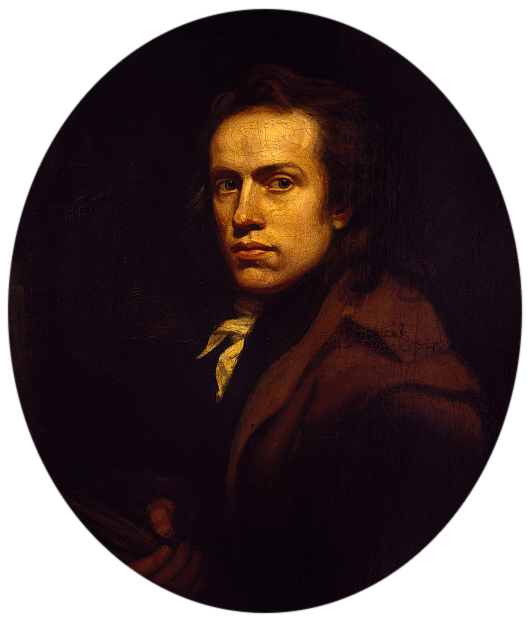
Self-Portrait by John Opie

Baroque Drama and Cornish Roots

Opie’s style is deeply rooted in the Baroque tradition, a movement known for its theatricality, emotional intensity, and dramatic use of light. The influence of Caravaggio and Rembrandt—artists who were masters of chiaroscuro—is readily apparent in Opie's work. The stark contrast between the illuminated areas of the face and clothing and the deep shadows that envelop the background creates a sense of depth and volume, drawing our attention to the central figure. This technique wasn’t simply aesthetic; it was a deliberate choice to convey a powerful emotional state – here, a blend of seriousness, intelligence, and perhaps even melancholy. Born in Trevellas, Cornwall, Opie's artistic sensibility was profoundly shaped by his Cornish heritage, evident in the ruggedness of his features and the earthy tones that dominate the palette.

A Study in Form and Texture

Beyond the dramatic lighting, a closer examination reveals Opie’s meticulous attention to detail. The artist skillfully employs lines to define the contours of the face, clothing, and hair, creating a sense of solidity and form. The layering of paint—a technique known as impasto—adds texture to the surface, particularly in the rendering of the fabric draped over his shoulders and the delicate details of his hands. Note the subtle variations in color and tone that suggest the play of light on different surfaces. This careful observation and execution demonstrate Opie’s commitment to realism, a hallmark of his style.

Symbolism and the Portraiture of the Mind

The portrait transcends a simple likeness; it's a symbolic representation of the artist’s inner world. The direct gaze invites engagement, suggesting that Opie is not simply presenting himself but offering an invitation to share in his thoughts. The serious expression—a hallmark of many self-portraits from this period—hints at intelligence, introspection, and perhaps even a touch of melancholy. Considering the historical context – the late 18th century was a time of intellectual ferment and social change – Opie’s portrait can be interpreted as an exploration of identity in a rapidly evolving world. The choice to depict himself alone reinforces this sense of internal reflection, suggesting that the artist is grappling with profound questions about his place in society and his role as a creative force.

Further Exploration

Kérdések és válaszok

Milyen hangulatot árasztana egy szobában egy „Self-Portrait”, John Opie alkotása reprodukció?

A „Self-Portrait”, John Opie alkotása Dramatic hangulata tökéletesen illeszkedik a javasolt helyszínhez: egy Living Room.

Ki készítette a(t): "Self-Portrait"?

A "Self-Portrait" alkotója John Opie. A mű John Opie nevére van katalógusozva.

Milyen tónus felé hajlik a "Self-Portrait"?

A „Self-Portrait”, John Opie alkotása domináns színe a Warm Sunset Tones. Ez a szín a paletta alapvető tónusa.


Művész életrajza

A Cornish Prodigy Ascends: The Life and Art of John Opie

John Opie, born in the humble surroundings of Harmony Cottage, Trevellas, Cornwall in 1761, emerged as one of the most remarkable artistic figures of his generation. His story is a compelling narrative of raw talent nurtured against the odds, rising from a carpenter’s son to become a celebrated portraitist and history painter, a Royal Academician, and an influential voice within the British art world. Opie's early life was marked by a precocious aptitude for both drawing and mathematics – a duality that perhaps informed his meticulous approach to composition and form. Even as a young boy, he demonstrated an independent spirit, establishing an evening school to teach reading, writing, and arithmetic to local children while simultaneously mastering Euclid’s geometry. This thirst for knowledge, coupled with his artistic inclination, was initially met with resistance from his father, who insisted on an apprenticeship in carpentry. However, fate intervened in the form of Dr. John Wolcot, known as Peter Pindar, a physician and satirist whose discerning eye recognized the extraordinary potential within the young Opie.

Mentorship, London, and Royal Patronage

Wolcot became Opie’s champion, securing his release from the carpentry apprenticeship and providing him with invaluable guidance, encouragement, and crucial introductions. This mentorship proved pivotal in launching Opie's career. In 1781, they journeyed to London together, where Wolcot shrewdly presented Opie as a self-taught prodigy – a “Cornish wonder” untouched by formal artistic training. This narrative captivated the London art scene, drawing comparisons to masters like Caravaggio and Velázquez from none other than Sir Joshua Reynolds himself. The initial success was swift and dazzling. Commissions poured in, including portraits of members of the British royal family—the Duke and Duchess of Gloucester, Lady Salisbury, and Mary Delany among them. Opie’s residence on Castle Street became a hub of fashionable society, his talent commanding attention and admiration. However, the partnership with Wolcot eventually dissolved as Opie asserted his independence, seeking to forge his own path without the constraints of their profit-sharing agreement. This period solidified Opie's reputation, establishing him as a leading portraitist capable of capturing not only physical likeness but also the character and social standing of his sitters.

Beyond Portraiture: Historical Paintings and Academic Recognition

While initially celebrated for his portraits, Opie harbored ambitions beyond simply recording the faces of the elite. He yearned to engage with grand historical narratives, seeking to establish himself as a painter of significant subjects. This ambition led him to explore history painting, culminating in works like *The Assassination of James I* (1786) and *The Murder of Rizzio* (1787). The latter proved particularly impactful, earning him immediate election as an Associate of the Royal Academy and full membership the following year. These historical paintings demonstrated a growing mastery of composition, dramatic lighting—often reminiscent of Rembrandt—and a commitment to conveying emotional intensity. Opie’s dedication to his craft extended beyond painting; he actively sought to broaden his intellectual horizons through the study of Latin, French literature, and cultivated social circles. He also became deeply involved with John Boydell's Shakespeare Gallery, creating five paintings inspired by the Bard’s plays, further cementing his position within the artistic establishment.

A Legacy of Artistry and Thought

Opie’s later life was marked by both professional success and personal challenges. His first marriage proved unhappy, ending in divorce in 1796. However, he found lasting happiness with Amelia Alderson, a writer and abolitionist whom he married in 1798. Their partnership fostered mutual support and intellectual stimulation. In 1805, Opie was appointed Professor of Painting at the Royal Academy, a testament to his standing within the art world. His lectures, delivered in 1806 and published posthumously in 1809 with a memoir by Amelia, revealed a thoughtful and articulate mind deeply engaged with the principles of artistic creation. He advocated for the formation of a national gallery—a visionary idea that would eventually become reality—and offered insightful commentary on the state of British art. John Opie’s untimely death in April 1807 at the age of 46 cut short a promising career, but his legacy endures. He left behind a substantial body of work – over 500 portraits and 250 other paintings—that offers a fascinating glimpse into the social and cultural landscape of late 18th and early 19th century Britain. He remains a significant figure in British art history, celebrated for his technical skill, insightful portraiture, and contributions to artistic discourse.
John Opie

John Opie

1761 - 1807

Érmeradatok

  • Artistic Movement Or Style: Történetfestészet és portretészet
  • Artists Who Influenced This Artist:
    • Caravaggio
    • Velázquez
  • Date Of Birth: 1761
  • Date Of Death: 1807
  • Full Name: John Opie
  • Nationality: Brit
  • Notable Artworks: ['Shakespeare Gallery-művek']
  • Place Of Birth: Trevellas, Egyesült Királyság