


Kézzel festett olajvastú vászon, az Ön által választott méretben és keretben, művészeink készítik meglévőre. ( Nyomat rendelése Kép letöltése)





























Válasszon előre meghatározott méreteink közül, amelyek megfelelnek a műalkotás eredeti arányainak.

Ön megadhat saját méreteket egy adott kerethez vagy térhez igazításhoz. Ha a kiválasztott méret nem egyezik az eredeti kép arányával, akkor a műalkotást levágjuk, vagy további kézzel festett elemekkel meghosszabbítjuk a festményt. A gyártás megkezdése előtt küldünk Önnek egy digitális előnézetet jóváhagyásra.
Kérjük, vegye figyelembe, hogy a képernyőn megjelenő előnézet nem tükrözi a tényleges vágást vagy kiterjesztést. Csak az előnézet fog pontosan mutatni a végső kompozíciót.
Bár egyedi méretek állnak rendelkezésre, javasoljuk, hogy válasszon egy méretet az előre meghatározott listából az eredeti arányok megőrzése érdekében.
Világszerte elérhető szállítás () 3-4 hét alatt a szokásos 5 hét helyett. (6 szeptember). A minőség nem kérdőjelezhető.


Sir Michael Foster
Reprodukció mérete
In John Maler Collier’s 1907 masterpiece, Sir Michael Foster, we are invited into a private moment of profound scientific contemplation. This oil painting is far more than a mere formal likeness; it is a window into the very heart of Victorian intellectualism. The portrait captures the esteemed physiologist not as a distant icon, but as a man deeply immersed in the dialogue between human thought and the natural world. Collier, a master of the Pre-Raphaelite tradition, utilizes his brush to weave a narrative of authority and curiosity, presenting Foster against a backdrop that serves as both setting and symbol. The presence of the chalkboard, inscribed with the foundational elements of biochemistry—terms such as Proteins, Fats, and Carbohydrates—transforms the canvas from a simple portrait into an evocative landscape of the mind, celebrating the era's relentless pursuit of knowledge.
The composition is masterfully balanced to command the viewer's attention. While Foster’s figure is positioned with a slight, naturalistic off-balance that suggests a momentary pause in his work, he radiates an undeniable sense of stability and presence. His hands, clasped with composed dignity, anchor the lower portion of the frame, while the verticality of his posture provides a structural strength that mirrors the seriousness of his profession. This careful arrangement creates a captivating tension between the man and his environment, suggesting that while the scientist stands before the data, he is also an integral part of the scientific story being written upon the board behind him.
Collier’s technical prowess is most evident in his sophisticated use of color and light. The palette is intentionally restrained, dominated by deep, somber tones of brown, black, and charcoal that evoke the quiet, studious atmosphere of an academic sanctum. These dark hues provide a velvety depth to the background, allowing the subject to emerge with striking clarity. However, it is the strategic introduction of a vibrant crimson tie that breathes life into the composition. This singular splash of color acts as a visual heartbeat, injecting a sense of passion and intellectual daring into an otherwise muted scene, symbolizing the fire of inquiry that burns beneath the surface of formal Victorian decorum.
The tactile quality of the painting is nothing short of extraordinary, making it a piece that truly comes alive when viewed in person. The artist employs a range of textures to create a sensory experience: the rugged, meticulously detailed rendering of Foster’s facial hair contrasts beautifully with the smooth, refined fabric of his dark suit. Even the chalkboard itself is treated with a nuanced touch; by subtly blurring the edges of the chalk writing, Collier suggests the ephemeral nature of thought and the physical materiality of the medium. This interplay of sharp detail and soft, atmospheric transitions creates a sense of three-dimensional depth, drawing the eye through layers of light and shadow.
For the discerning collector or interior designer, Sir Michael Foster offers an unparalleled opportunity to introduce a sense of history, gravity, and sophistication into a space. The painting’s classical composition and rich, dark tones make it an ideal centerpiece for a library, a study, or a formal dining room, where it can serve as a conversation piece that honors the legacy of human achievement. Its aesthetic appeal lies in its ability to bridge the gap between the historical and the contemporary; while the subject matter is rooted in 1907, the painting's emotional resonance and masterful execution remain eternally relevant.
Owning a high-quality reproduction of this work allows one to inhabit the atmosphere of the Pre-Raphaelite era, bringing the quiet dignity of the Victorian scientific revolution into the modern home. It is an investment in art that does not merely decorate a wall but enriches the soul, offering a constant reminder of the beauty found in discipline, the elegance of intellect, and the enduring power of a life dedicated to discovery.

John Maler Collier, a name perhaps less familiar today than some of his contemporaries, nevertheless occupies a significant place in the annals of Victorian art. Born in London in 1850 and passing away in 1934, he dedicated his life to capturing the essence of British society through the medium of portraiture, imbuing each canvas with a Pre-Raphaelite sensibility that emphasized meticulous detail, vibrant color, and a subtle narrative depth. His legacy extends beyond mere likeness; Collier sought to reveal character, status, and even a hint of the sitter’s inner world within the confines of his carefully constructed compositions.
Collier's journey began in an environment steeped in privilege and intellectual pursuit. His family boasted a distinguished lineage – a Quaker merchant grandfather who served as Member of Parliament, and a father who ascended to the roles of Attorney General and judge in the Privy Council. This advantageous background provided him with access to quality education at Eton College, laying the groundwork for his later artistic endeavors. Formal training commenced at the Munich Academy, where he honed his skills under established masters, absorbing the principles of classical technique. Further enriching his artistic palette was a period of study in Paris, working alongside Jean-Paul Laurens, whose influence is subtly discernible in Collier’s approach to composition and dramatic lighting. These formative experiences shaped him into an artist poised to embrace the Pre-Raphaelite aesthetic.
Collier's artistic style is inextricably linked to the Pre-Raphaelite Brotherhood, a movement that championed a return to the detailed realism and vibrant colors of medieval art. Unlike some of his contemporaries who embraced more abstract or impressionistic approaches, Collier remained steadfast in his commitment to meticulous observation and faithful representation. However, he transcended mere replication; his portraits are not simply likenesses but carefully constructed narratives. He masterfully employed symbolism and subtle gestures to convey deeper meanings about his subjects – their social standing, intellectual pursuits, or even their personal histories. The rich color palettes characteristic of the Pre-Raphaelites are evident in Collier’s work, lending a luminous quality to his portraits that draws the viewer into the world he created.
Collier's reputation as a leading portrait painter rested on his ability to secure commissions from some of the most prominent figures of his time. His studio doors welcomed luminaries from across British society, including Charles Darwin, whose thoughtful gaze he immortalized with remarkable accuracy; Thomas Henry Huxley, his father-in-law and a towering figure in Victorian science; Rudyard Kipling, the celebrated author; and even Sir Lawrence Alma-Tadema, another esteemed artist. He also received significant royal patronage, undertaking portraits of the Duke of York (later King George V) as Master of Trinity House, and the Prince of Wales (later Edward VIII), a portrait that was prominently displayed at the Durbar Hall in Jodhpur, Rajputana – a testament to his artistic standing on the world stage. These commissions solidified his position among the elite portraitists of the era.
While Collier’s work experienced fluctuations in critical reception throughout his career—some finding his style overly solemn, others praising his vibrant color sense—his contribution to Victorian art remains undeniable. His meticulous record-keeping, documented in the “Sitters Book” now housed at the National Portrait Gallery, provides invaluable insight into his artistic process and the individuals he portrayed. The fact that sixteen of his paintings reside within the National Portrait Gallery’s collection, alongside two held by the Tate Gallery, speaks to the enduring appeal and historical significance of his work. John Collier's portraits offer a captivating glimpse into the lives and personalities of those who shaped Victorian Britain, ensuring his place as a master of portraiture whose legacy continues to resonate today.

1850 - 1934 , Egyesült Királyság

Immerse yourself in the romantic beauty of Dante Gabriel Rossetti. Explore 25 iconic Pre-Raphaelite masterpieces, from soulful portraits to symbolic legends. Find museum-quality art reproductions and timeless decor inspiration. Discover all masterpieces on WahooArt.com.

Immerse yourself in the grandeur of Sir Joshua Reynolds. Explore 25 iconic masterpieces of British portraiture, from his 'Grand Style' to classical elegance. Find inspiration for museum-quality art reproductions and decor. Discover all masterpieces on WahooArt.com.
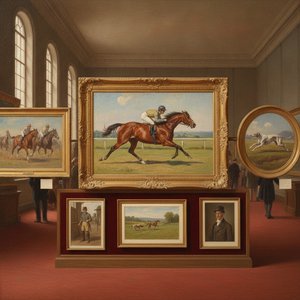
Experience the vibrant spirit of British equestrian art through the top 25 masterpieces by Sir Alfred James Munnings. From impressionistic landscapes to iconic horse portraits, explore timeless stories and museum-quality reproductions for your decor. Discover all masterpieces on WahooArt.com.

 Megtekintés
 Küldés
 Megosztás
 Részletek

 Letöltés
 Hasonló darabok
 X-ray felvétel
 Diavetítés


 Összes részlet megjelenítése







 Az üvegkeretes opció csak 110 cm alatti méretben érhető el


