Múzeumi minőségű giclée vagy vászonnyomat, gyors gyártással és rugalmas finomítási lehetőségekkel. ( Kézzel festett másolat rendelése Áttérés digitális képre)
Válasszon előre meghatározott méreteink közül, amelyek megfelelnek a műalkotás eredeti arányainak.

Írja be a keretének vagy a falának megfelelő szélességet és magasságot. A nyomatot csak le lehet vágni, soha nem tehető nagyobbá, mint az eredeti kép, így egy eltérő alakú méretnél a kép egy része elveszik. Mielőtt bármit kinyatintanánk, küldünk egy digitális próbamodellt jóváhagyásra. Az oldalon látható kép nem tartalmazza a valós levágást — ezt csak a próbamodell mutatja meg.
Világszerte történő kiszállítás területére mindössze 2 hét alatt, a szokásos 4-5 hét helyett. (21 november)
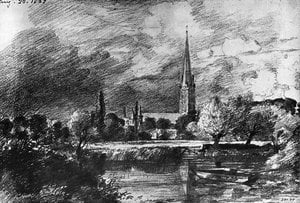
Flatford Mill
Reprodukció mérete
John Constable’s Flatford Mill, completed in 1816-17, stands as a cornerstone of Romantic landscape painting—a testament to the burgeoning fascination with capturing the sublime beauty of the English countryside. More than just a depiction of a riverside scene, it embodies a profound philosophical stance: Constable sought not merely to represent what he saw but to convey the very essence of rural life and its connection to the divine.
The painting’s visual arrangement is deceptively simple yet meticulously crafted. Constable expertly utilizes perspective—a technique pioneered by Leonardo da Vinci—to create a convincing illusion of depth, drawing viewers into the tranquil expanse of the River Stour. At its heart lies a modest boat moored on the bank, anchoring the eye and establishing a sense of stillness. Scattered around are figures – notably a gentleman on horseback – adding movement against the backdrop of rolling hills and a sky brimming with fluffy cumulus clouds. The inclusion of a bird perched atop a tree branch subtly reinforces the painting’s connection to nature, mirroring Constable's belief that art should aspire to reflect God’s creation.
Constable’s artistic brilliance resides primarily in his masterful manipulation of light. He employs atmospheric perspective—a technique where distant objects appear paler and less detailed—to heighten the sense of depth and convey the ethereal quality of dawn or dusk. The dominant hues are soft golds and muted blues, reflecting the golden glow of sunrise and the cool serenity of the river water. These colors aren’t merely decorative; they communicate emotion – warmth, peace, and contemplation. Constable's brushstrokes are loose and expressive, capturing the fleeting effects of light on foliage and water surfaces with remarkable accuracy.
Painted during a period marked by intellectual ferment—the Romantic movement—Flatford Mill reflects the broader artistic preoccupation with emotion and imagination. Influenced by thinkers like Rousseau and Wordsworth, Constable sought to elevate landscape painting beyond mere topographical representation. He aimed to evoke feelings of awe and wonder, prompting viewers to contemplate the grandeur of God’s universe and their own place within it. This ambition aligns perfectly with the prevailing ethos of the time—a rejection of Enlightenment rationalism in favor of subjective experience.
WahooArt.com recognizes Flatford Mill's enduring appeal, offering meticulously crafted oil painting reproductions that faithfully preserve Constable’s artistic vision. These reproductions utilize archival-quality pigments and canvases, guaranteeing longevity and ensuring that the painting’s luminous colors and textural nuances remain vibrant for generations to come. It’s a chance to bring home a piece of Romantic art history—a timeless symbol of beauty and tranquility.
A „Flatford Mill”, John Constable alkotása mű kiterjesztett valóság technológiával, egy kompatibilis eszközön keresztül, a mű Kiterjesztett valóság előnézet oldalán megtekinthető a saját falán is.
A „Flatford Mill”, John Constable alkotása a Iconic kategóriába tartozik, és a Romantic Landscape Painting irányzat részeként tekinthető.
A "Flatford Mill" alkotását John Constable készítette, aki Egyesült Királyság-ban született, a Romantic Landscape Painting irányzat keretein belül. A művész származása összeköti a művet a Romantic Landscape Painting stílussal, amelyet Egyesült Királyság művészei gyakoroltak.


1776 - 1837 , Egyesült Királyság

Journey through the sublime beauty of Romantic landscape painting. Explore 10 iconic masterpieces by legends like Friedrich and Turner that capture nature's raw emotion. Find museum-quality art reproductions for your decor. Discover all masterpieces on WahooArt.com.

Immerse yourself in the soulful landscapes of John Constable. Explore our curated list of 25 iconic masterpieces, from atmospheric skies to the beauty of Dedham Vale. Find inspiration for museum-quality art reproductions and decor. Discover all masterpieces on WahooArt.com.

Explore the profound legacy of John Constable. Discover how his mastery of light, atmosphere, and the English landscape redefined Romanticism through timeless, museum-quality oil reproductions for discerning collectors.

Explore the life & art of John Constable, the Romantic painter who revolutionized landscape with emotive scenes of rural England. Discover his techniques, legacy, and key works – perfect for collectors & enthusiasts.

Explore 25 iconic Tate Gallery masterpieces, from Turner to Hockney. Discover museum-quality art on WahooArt.com.
 Megtekintés
 Küldés
 Megosztás
 Részletek
 Útmutató

 Letöltés
 Hasonló darabok
 X-ray felvétel
 Diavetítés
 Kérdések és válaszok
 Statisztika

 Összes részlet megjelenítése






































 Az üvegkeretes opció csak 110 cm alatti méretben érhető el