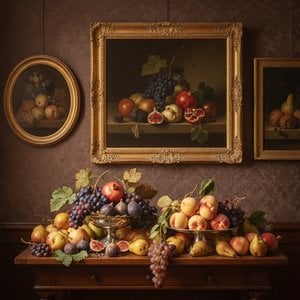
The Four Elements: Earth – A Window into Early Netherlandish Life
Joachim Beuckelaer’s “The Four Elements: Earth,” painted in 1569, isn't merely a still life; it’s a vibrant snapshot of 16th-century Antwerp—a bustling marketplace teeming with the bounty of the land and subtly interwoven with biblical narrative. This remarkable painting, now residing at the National Gallery in London, offers a captivating glimpse into the daily lives, economic realities, and spiritual beliefs of a burgeoning urban society. Beuckelaer, a master of depicting scenes of everyday life—markets, kitchens, and domestic interiors—elevates the commonplace to an artful level, demonstrating a keen eye for detail and a sophisticated understanding of visual storytelling.
The scene unfolds within a modest farmhouse setting, bathed in warm light that highlights the astonishing variety of produce on display. Mountains of vegetables – cabbages, turnips, carrots, beets, leeks, and countless others – tumble from overflowing baskets and spill across tables, creating an impression of overwhelming abundance. The artist’s meticulous rendering captures not just the appearance of these items but also their textures and colors with remarkable accuracy. The sheer volume of food is a deliberate statement, reflecting the prosperity of the region and hinting at the importance of agriculture in its economy. Beyond the immediate visual spectacle, however, lies a deeper symbolic meaning rooted in the Renaissance fascination with classical elements.
A Symphony of Color and Symbolism
Beuckelaer’s masterful use of color is central to the painting's impact. The earthy tones – browns, greens, yellows, and reds – dominate the palette, mirroring the natural world depicted before us. Yet, within this grounded scheme, flashes of vibrant hues—the crimson of a ripe apple, the deep purple of a beet—draw the eye and create a sense of visual delight. The arrangement of the fruits and vegetables isn’t random; it's carefully orchestrated to evoke a feeling of abundance and fertility. Notice how some items are piled high, suggesting wealth and prosperity, while others are arranged in more modest groupings, perhaps representing the everyday needs of a household.
Crucially, “The Four Elements: Earth” is not simply a depiction of a market scene; it’s a carefully constructed allegory. In the background, partially obscured by the tables laden with produce, we glimpse a familiar biblical episode – the Flight into Egypt. The arched doorway and the figures crossing the bridge are unmistakable references to the story of Mary and Joseph seeking refuge from King Herod. This juxtaposition of earthly abundance and divine narrative serves as a subtle reminder of the relationship between material prosperity and spiritual salvation—a common theme in Northern European art of this period.
Technique and Context
Executed in oil on wood, “The Four Elements: Earth” showcases Beuckelaer’s exceptional skill in rendering textures and creating a sense of depth. The artist employs a technique known as *sfumato*, subtly blurring the edges of objects to create an atmospheric effect and enhance the illusion of three-dimensionality. This masterful use of light and shadow, combined with his meticulous attention to detail, results in a remarkably lifelike portrayal of the marketplace.
Painted during the waning years of the religious iconoclasm—a period of intense upheaval and destruction of religious images in Antwerp—the painting reflects a shift in artistic focus towards secular subjects. Beuckelaer’s decision to depict a bustling market scene, rather than a traditional religious image, demonstrates this trend. The work is part of a larger series exploring the four elements – Water, Air, and Fire – further solidifying Beuckelaer's place as a pivotal figure in the transition from medieval to Renaissance art. His work provides invaluable insight into the daily lives and beliefs of people living during that time.
A Timeless Appeal
“The Four Elements: Earth” is more than just a beautiful painting; it’s a window into the past—a tangible connection to a vibrant and complex society. Its rich symbolism, masterful technique, and captivating subject matter continue to resonate with viewers today. Whether you are an art enthusiast, a collector seeking a unique addition to your collection, or simply someone looking for inspiration, this remarkable painting offers a profound and rewarding experience.



 Megtekintés
 Áttérés Nyomtatványra
 Küldés
 Megosztás
 Részletek

 Letöltés
 Hasonló darabok
 X-ray felvétel
 Diavetítés
 Statisztika


 Összes részlet megjelenítése






































 Az üvegkeretes opció csak 110 cm alatti méretben érhető el