Megtekintés AR előnézet Kézzel festett másolat rendelése Áttérés digitális képre Küldés
Részletek Útmutató Kedvencekhez ad Letöltés Hasonló darabok X-ray felvétel Diavetítés Statisztika

Squelettes a l' atelie

James Ensor’s ‘Squelettes a l’atelier’ – a haunting Symbolist/Expressionist scene of death & creation. Explore this chaotic, impastoed artwork's unsettling beauty & symbolic depth.

James Ensor (1860-1949) belgiai festő, az expresszionizmus és szürrealizmus úttörője. Szokatlan maskarák, karneválok és groteszk képeivel a psziché mélyebb rétegeibe hatol. Fedezd fel a sötét világát!

Giclée / Műnyomat

Múzeumi minőségű giclée vagy vászonnyomat, gyors gyártással és rugalmas finomítási lehetőségekkel. ( Kézzel festett másolat rendelése Áttérés digitális képre)

Corner sample of the P118B picture frame: formázott polisztirol, 5 cm wide and 3 cm thick
P118B Ft10
Corner sample of the P118H picture frame: formázott polisztirol, 5 cm wide and 3 cm thick
P118H Ft10
Corner sample of the P118W picture frame: formázott polisztirol, 5 cm wide and 3 cm thick
P118W Ft10
Corner sample of the P438Z picture frame: formázott polisztirol, 5.5 cm wide and 3.5 cm thick
P438Z Ft10
Corner sample of the P508JH picture frame: formázott polisztirol, 7 cm wide and 3.5 cm thick
P508JH Ft12
Corner sample of the P508YH picture frame: formázott polisztirol, 7 cm wide and 3.5 cm thick
P508YH Ft12
Corner sample of the P805H picture frame: formázott polisztirol, 5 cm wide and 3.5 cm thick
P805H Ft10
Corner sample of the P805Z picture frame: formázott polisztirol, 5 cm wide and 3.5 cm thick
P805Z Ft10
Corner sample of the P919BZ picture frame: formázott polisztirol, 7 cm wide and 3.5 cm thick
P919BZ Ft10
Corner sample of the P919G picture frame: formázott polisztirol, 7 cm wide and 3.5 cm thick
P919G Ft10
Corner sample of the P919XJ picture frame: formázott polisztirol, 7 cm wide and 3.5 cm thick
P919XJ Ft10
Corner sample of the P959ZH picture frame: formázott polisztirol, 5 cm wide and 3 cm thick
P959ZH Ft10
Corner sample of the P968JZ picture frame: formázott polisztirol, 6 cm wide and 4 cm thick
P968JZ Ft12
Corner sample of the W106C picture frame: tömörfa, 5 cm wide and 3 cm thick
W106C Ft8
Corner sample of the W218G picture frame: tömörfa, 5 cm wide and 3 cm thick
W218G Ft10
Corner sample of the W218JH picture frame: tömörfa, 5 cm wide and 3 cm thick
W218JH Ft8
Corner sample of the W218Y picture frame: tömörfa, 5 cm wide and 3 cm thick
W218Y Ft10
Corner sample of the W307PJ picture frame: tömörfa, 6 cm wide and 3 cm thick
W307PJ Ft10
Corner sample of the W316G picture frame: tömörfa, 6 cm wide and 3 cm thick
W316G Ft10
Corner sample of the W316PJ picture frame: tömörfa, 6 cm wide and 3 cm thick
W316PJ Ft8
Corner sample of the W316Y picture frame: tömörfa, 6 cm wide and 3 cm thick
W316Y Ft10
Corner sample of the W398PJ picture frame: tömörfa, 5 cm wide and 3 cm thick
W398PJ Ft8
Corner sample of the W4111J picture frame: tömörfa, 6.5 cm wide and 3.5 cm thick
W4111J Ft10
Corner sample of the W500HY picture frame: tömörfa, 7 cm wide and 5 cm thick
W500HY Ft15
Corner sample of the W500JH picture frame: tömörfa, 7 cm wide and 5 cm thick
W500JH Ft15
Corner sample of the W692G picture frame: tömörfa, 8 cm wide and 4 cm thick
W692G Ft12
Corner sample of the W849H picture frame: tömörfa, 5 cm wide and 3 cm thick
W849H Ft8
Corner sample of the W940BG picture frame: tömörfa, 7.5 cm wide and 4.5 cm thick
W940BG Ft15
Corner sample of the W953PJ picture frame: tömörfa, 6 cm wide and 3.5 cm thick
W953PJ Ft8

Standard méret
egyedi méretű
CM
INCH

Válasszon előre meghatározott méreteink közül, amelyek megfelelnek a műalkotás eredeti arányainak.

szélesség
magasság

Írja be a keretének vagy a falának megfelelő szélességet és magasságot. A nyomatot csak le lehet vágni, soha nem tehető nagyobbá, mint az eredeti kép, így egy eltérő alakú méretnél a kép egy része elveszik. Mielőtt bármit kinyatintanánk, küldünk egy digitális próbamodellt jóváhagyásra. Az oldalon látható kép nem tartalmazza a valós levágást — ezt csak a próbamodell mutatja meg.

Világszerte történő kiszállítás területére mindössze 2 hét alatt, a szokásos 4-5 hét helyett. (27 október)

Ingyenes globális expressz szállítás
Prémium minőségű len vászon
Teljes körű szállítási biztosítás
Vámvisszatérítési Garancia
Hiteles színarányosság garancia
100 napos visszaküldési lehetőség (csak hibás termékek esetén)
100% pénzvisszatérítési garancia
Több darab vásárlásakor kedvezmény

Összesített ár

Ft 21953

Squelettes a l' atelie

Giclée / Műnyomat

Reprodukció mérete

-

Összesített ár

Ft 21953

Gyors információk

  • title: Squelettes a l' atelie
  • subject: Intersection of art, death, and the creative process
  • artist: James Ensor
  • medium: Oil on canvas (likely)

Művészeti kvíz

Minden kérdésre csak egy helyes válasz létezik.

Kérdés 1:
What is a prominent recurring motif in 'Squelettes à l'atelier', directly reflecting themes of mortality and the transient nature of life?
Kérdés 2:
Which artistic movements heavily influenced James Ensor's style, as seen in 'Squelettes à l'atelier'?
Kérdés 3:
The composition of 'Squelettes à l'atelier' is best described as…
Kérdés 4:
What does the setting of an artist's studio in 'Squelettes à l'atelier' likely symbolize?
Kérdés 5:
Based on the description, what can be inferred about Ensor's painting technique in this work?

A Glimpse into the Artist’s Soul: Decoding Ensor's ‘Squelettes à l'Atelier’

James Ensor’s ‘Squelettes à l'Atelier’ (Skeletons in the Studio) is a powerfully unsettling and deeply symbolic work, offering a rare glimpse into the anxieties and creative processes of one of Belgium’s most important artists. Painted at an unknown date, this piece encapsulates Ensor’s unique vision – a blend of macabre humor, social critique, and introspective exploration of mortality and artistic creation.

Subject Matter & Composition

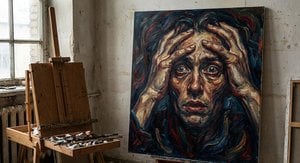
The artwork presents a chaotic scene within what is clearly an artist's studio. The space is crammed with the tools of the trade—paint tubes, brushes, canvases—scattered amongst skeletal figures. A central skeleton, draped in red fabric, dominates the foreground, reclining as if posing for a portrait or perhaps even *as* the artist himself. This isn’t a scene of horror in the traditional sense; rather, it's an intensely personal and theatrical tableau. The composition is deliberately cluttered, creating a claustrophobic atmosphere that draws the viewer into the heart of Ensor’s world. A window offers limited illumination, casting dramatic shadows and emphasizing the contrast between life (represented by the potential for creation) and death.

Style & Technique

‘Squelettes à l'Atelier’ is a prime example of Ensor’s distinctive style, heavily influenced by Symbolism and early Expressionism. The loose, gestural brushstrokes and impasto textures convey a sense of urgency and emotional intensity. Ensor eschews precise detail in favor of expressive form and color. Warm, earthy tones dominate the palette, punctuated by the striking red of the central skeleton’s garment. This painterly approach—evident in the visible brushwork—emphasizes the act of painting itself, blurring the line between subject and process.

Symbolism & Interpretation

The symbolism within this work is rich and multi-layered:
  • Skeletons: Represent mortality, decay, and the ever-present awareness of death that haunted Ensor throughout his life.
  • Masks (implied): Though not explicitly present in all interpretations, masks are a recurring motif in Ensor’s work, symbolizing hidden identities, societal hypocrisy, and the performative nature of existence. Their absence here could suggest a stripping away of pretense, revealing the raw reality of artistic struggle.
  • The Studio: Represents both the sanctuary of creative expression and the site of intense psychological turmoil.
  • Red Fabric: The color red often symbolizes passion, vitality, but also blood and sacrifice – hinting at the cost of artistic creation.
The overall scene can be interpreted as a meditation on the artist’s role in confronting mortality through their work. It suggests that art is born from a confrontation with death, a process of transforming decay into something meaningful.

Historical Context & Ensor's Legacy

Born in 1860, James Ensor experienced a period of significant social and artistic change. He rejected the academic traditions of his time, forging his own path through experimentation and introspection. His work anticipated many of the themes that would later define Expressionism and Surrealism. Ensor’s fascination with grotesque imagery and psychological depth set him apart from his contemporaries and profoundly influenced generations of artists to come. ‘Squelettes à l'Atelier’ is a testament to his unique vision, offering a powerful commentary on the human condition and the enduring power of art.

Emotional Impact & Aesthetic Appeal

This artwork evokes a complex range of emotions – unease, fascination, melancholy, and even a strange sense of humor. It's not a piece that offers easy answers; instead, it invites viewers to contemplate their own mortality and the mysteries of the creative process. Its dramatic composition, expressive brushwork, and symbolic depth make it a compelling focal point for any collection or interior space. A reproduction of ‘Squelettes à l'Atelier’ would add a touch of intellectual intrigue and artistic sophistication to a home or office, sparking conversation and inspiring contemplation.

Kérdések és válaszok

Hogyan építhető be „Squelettes a l' atelie”, James Ensor alkotása a lakberendezésbe?

A „Squelettes a l' atelie”, James Ensor alkotása ajánlott Conversation célokra, lehetőleg egy Living Room helyiségbe. A felhasználás módja és a tér kialakítása együtt segít eldönteni, hogy melyik reprodukció illik bele.

„Squelettes a l' atelie”, James Ensor alkotása egy világos vagy egy sötét tónusú alkotás?

A "Squelettes a l' atelie" alkotás fényerisége összességében balanced, luminanciája pedig Soft Shadow.

Hol tekinthető meg a(z) "Squelettes a l' atelie" előnézete?

A „Squelettes a l' atelie”, James Ensor alkotása előnézete megtekinthető a mű Előnézet oldalán.


A művész életrajza

A Life Immersed in Masks and Shadows: The World of James Ensor

James Sidney Edouard Ensor (Oostende, 1860. április 13. – Oestende, 1949. november 19.) belga expresszionista festő. Élete egy különleges keverék volt: apja angol, anyja belgák, ami talán a művész egész életében visszatérő témáihoz, a maszkokhoz és a hamis arcokhoz vezetett. A gyermekkorában, Ostend városka hangulatos tengerparti üdülőhelyén töltött évei nagyban befolyásolták őt – a karnaválok bizarr látlelete, a különös tárgyak, a szórakozás és a kalandok mind a művész fantáziáját ébresztették meg. Szülei egy emléktárgy-üzletet üzték, ahol maszkokat is árultak – ezek nagy hatással voltak későbbi munkásságára. Hosszú életének nagy részét Oostendében élte le, teljes magányosságban.

From Somber Realism to Grotesque Visions

Ensor korai művei inkább a hagyományos megközelítést tükrözik, azaz realista képeket festettek, melyek mély árnyalatúak és szomorúak. Művei, mint például *Russian Music* (1881) és *The Drunkards* (1883), egybenzős tehetséget mutatnak, de még ezekben az eleinte is feltűnő, zavaró képek jelei láthatók. Egy fordulópontot jelentett a művész életében, amikor a színeinek világossága nőtt, és a témái egyre bizarrabbak lettek. Elkezdte, hogy vásznait szellemekkel, sírszemélyekkel, harcoló koporsókkel és alegorikus alakokkal tölti meg – egy olyan világgal, amely a fantázia és a groteszk határán áll. Ez nem csupán stilisztikai változás volt; egy tudatos kutatás a lényeges emberi létezés sötétebb oldalai iránt, egy társadalmi normákat elutasító és az irracionálisra való hajlanás. Stílusa azonnal felismerhető volt: merész festői, élénk színei és színházi hangulata – egyedi vizuális nyelv, amely...

Masterpieces of Disquiet: Key Works and Recurring Themes

Ensor művészetében számos darab emelkedett ikonikus státusszra. *The Scandalized Masks* (1883) egykorai kiemelkedő alkotása, amely a maszkok erejét és képességeit mutatja be, hogy feltárják a rejtett érzelmeket. Talán legkontroversobb műve, *Christ's Entry into Brussels* (1888-1889), ma már világszerte elismert mesterdarab – egy szatíra vallási alázatlanságra és társadalmi közömbösségre. A Krisztus ostendában megjelenő, groteszk maszkokkal öltözött tömegének képe mélyen megrendítő, és a vallásos ideálok és az emberi viselkedés közötti szakadékot mutatja be. *Skeletons Fighting over a Hanged Man* (1891) egy szívszorító meditatív alkotás halállal, hanyatlással és az élet értelmetlenségével kapcsolatban, míg *Tribulations of Saint Anthony* (1887) összetett alegorikus témákat jelenít meg a szenvedélyről, a bűnről és a spirituális küzdelmekről. A művész egész életében visszatérő téma a halál, a társadalmi kritikák, vallási szatíra és az elképzelés végtelen ereje – témák, amelyek örök érvényűek.

A Pioneer of Modernism: Influences and Legacy

Bár Ensor ellenállta az egyszerű kategóriazást, művészi utóbbania összetett és izgalmas. A korai munkái hatása Bruegel a Nagyra volt jellemző, akinek zsúfolt képei és morálisan megítélő történetei inspirálták őt is. Goya munkássága is fontos szerepet játszott Ensor életművének kialakításában. James Abbott McNeill Whistler estételi szürrealizmusának hangsúlyozása is befolyásolta a művész stílusát. Azonban Ensor nem csupán egy utódot volt; összehangolt ezeket az érveket valami teljesen eredetiébe. Ma őt tekintik kulcsfigurává a 19. századi szimbolizmus és a korai 20. századi expresszionizmus és szürrealizmus átmenetében – egy igazi modern művészpénzső. Független, merészen kihívó stílusa, groteszk képeinek használata és az akadémiai normák elutasítása útját cleared a következő generációk számára. Bár kezdetben ellenállást talált munkájának, Ensor később jutott el elismertséghez, amikor 1929-ben báróssá nevezte ki Albert I király, és 1933-ban kapta meg a Légion d'Honneur kitüntetését. Halálával 1949-ben Oostendében, egy rövid betegség után búcsúzott el, hátrahagyva egy olyan művészeti örökséget, amely ma is magunkba foglalja és szórakoztatja a közönséget. *A hagyománynak örököse az művészet erejének tanúsága, ami szembenézhet a kellemetlen igazságokkal és feltárja az emberi létezés mélységeit.*
James Ensor

James Ensor

1860 - 1949 , Belgium

Rövid információk

  • Artistic Movement Or Style: Kifejező, szürreális
  • Artists Or Movements Influenced By This Artist:
    • Kifejezőművészet
    • Szürrealizmus
  • Artists Who Influenced This Artist:
    • Bruegel
    • Goya
    • Whistler
  • Date Of Birth: 1860. ápril 13.
  • Date Of Death: 1949. nov 19.
  • Full Name: James Sidney Edouard Ensor
  • Nationality: Belga
  • Notable Artworks:
    • A Szánalmas Maszkok
    • Skeptikusok
    • Krisztus bejárása
    • Szentháromszéki szenvázatok
  • Place Of Birth: Ostend, Belgium
Fedezze fel a műalkotásokat témák, stílusok és jellemzők szerint csoportosítva.