MegtekintésMegtekintés Műalkotás AR előnézeteMűalkotás AR előnézete Áttérés Nyomtatványra Áttérés NyomtatványraÁttérés digitális képre Áttérés digitális képre KüldésKüldés
RészletekRészletek Kedvencekhez ad Kedvencekhez ad LetöltésLetöltés Hasonló darabokHasonló darabok X-ray felvételX-ray felvétel DiavetítésDiavetítés StatisztikaStatisztika

Wapping

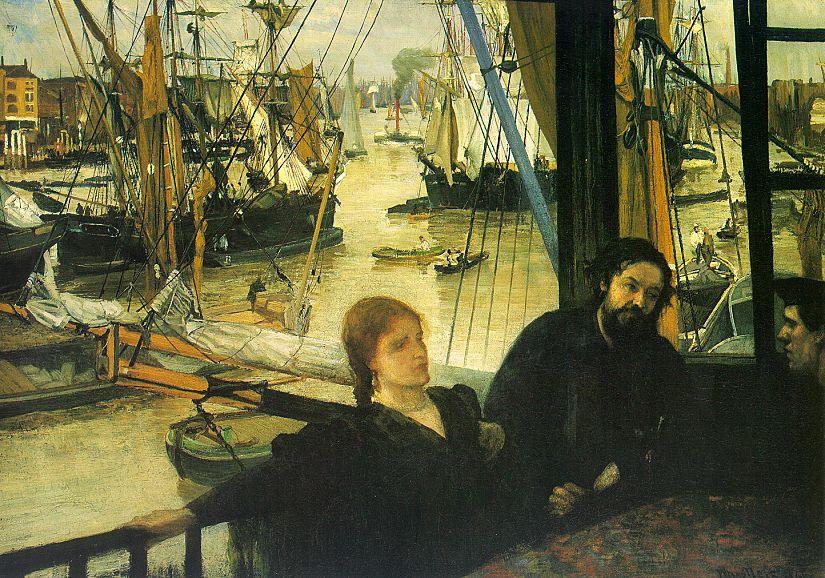
James Abbott McNeill Whistler’s ‘Wapping’ (1860) captures a serene Thames scene with leisure and light. Explore this iconic work reflecting Whistler's 'art for art's sake' philosophy & early artistic style.

Whistler: A mester Franciaországból érkezett, és az "art for art's sake" elvet követve a tonalizmus úttörője volt. Kiemelkedő nokturnái, portréi és a londoni művészettörténet meghatározó alakja.

Kézzel készített olajfestmény reprodukció

Kézzel festett olajvastú vászon, az Ön által választott méretben és keretben, művészeink készítik meglévőre. (Áttérés Nyomtatványra Áttérés NyomtatványraÁttérés digitális képre Áttérés digitális képre)

P118B $10
P118H $10
P118W $10
P438Z $10
P508JH $12
P508YH $12
P805H $10
P805Z $10
P919BZ $10
P919G $10
P919XJ $10
P959ZH $10
P968JZ $12
W106C $8
W218G $10
W218JH $8
W218Y $10
W307PJ $10
W316G $10
W316PJ $8
W316Y $10
W398PJ $8
W4111J $10
W500HY $15
W500JH $15
W692G $12
W849H $8
W940BG $15
W953PJ $8

Standard méret
egyedi méretű
CM
INCH

Válasszon előre meghatározott méreteink közül, amelyek megfelelnek a műalkotás eredeti arányainak.

szélesség
magasság

Ön megadhat saját méreteket egy adott kerethez vagy térhez igazításhoz. Ha a kiválasztott méret nem egyezik az eredeti kép arányával, akkor a műalkotást levágjuk, vagy további kézzel festett elemekkel meghosszabbítjuk a festményt. A gyártás megkezdése előtt küldünk Önnek egy digitális előnézetet jóváhagyásra.
Kérjük, vegye figyelembe, hogy a képernyőn megjelenő előnézet nem tükrözi a tényleges vágást vagy kiterjesztést. Csak az előnézet fog pontosan mutatni a végső kompozíciót.
Bár egyedi méretek állnak rendelkezésre, javasoljuk, hogy válasszon egy méretet az előre meghatározott listából az eredeti arányok megőrzése érdekében.

Példák arra, mit lehet módosítani: az arc kicserélése az ügyfél fotójára; háziállat hozzáadása (pl. macska helyett kutya); rejtett üzenet elhelyezése a háttérben; a háttér tájának vagy elemeinek megváltoztatása.
A rendelést követően a WahooArt.com csapata e-mailt küld az ügyfélnek az instrukciókért, és biztosít egy előnézeti képet (mockup).

Világszerte elérhető szállítás () 3-4 hét alatt a szokásos 5 hét helyett. (11 szeptember). A minőség nem kérdőjelezhető.

why_choose_icon
Ingyenes globális expressz szállítás
why_choose_icon
Prémium minőségű len vászon
why_choose_icon
Teljes körű szállítási biztosítás
why_choose_icon
Vámvisszatérítési Garancia
why_choose_icon
Hiteles színpontosság garancia
why_choose_icon
100 napos visszaküldési lehetőség (csak hibás termékek esetén)
why_choose_icon
100% pénzvisszatérítési garancia
why_choose_icon
Több darab vásárlása esetén kedvezmény

Összesített ár

$ 272

reproduction

Wapping

Reprodukciós technika

Reprodukció mérete

-

Összesített ár

$ 272

Gyors információk

  • Year: 1860
  • Artist: James Whistler
  • Subject or theme: River scene, leisure
  • Influences:
    • Velázquez
    • Rembrandt
  • Title: Wapping
  • Movement: Aestheticism
  • Medium: Oil on canvas

Művészeti kvíz

Minden kérdésre csak egy helyes válasz létezik.

Kérdés 1:
What is the primary subject matter of James Abbott McNeill Whistler’s ‘Wapping’?
Kérdés 2:
According to the provided information, in what year was ‘Wapping’ initially created?
Kérdés 3:
Which artistic philosophy is most closely associated with James Abbott McNeill Whistler’s work, as exemplified by ‘Wapping’?
Kérdés 4:
The painting depicts a group of people near the water’s edge. What is one prominent element visible in this scene?
Kérdés 5:
James Abbott McNeill Whistler’s ‘Wapping’ is considered characteristic of his early work. What artistic technique does it prominently showcase?
James Abbott McNeill Whistler, a renowned American artist, created the captivating oil on canvas painting titled 'Wapping'. This piece, dated 1860, is housed at the National Gallery of Art in Washington, United States. 'Wapping' offers a serene and idyllic scene, showcasing a group of people enjoying their time by the water's edge.

Composition and Atmosphere

The painting features several boats in the background, some of which appear to be sailing or floating along the river. The overall atmosphere is one of leisure and relaxation as the group enjoys their time near the water. A dog is also present in the scene, located towards the left side of the painting.

Artistic Significance

Whistler's 'Wapping' exemplifies his ability to capture everyday life with elegance and simplicity. The use of oil on canvas allows for a rich and vibrant depiction of the scene, drawing the viewer into the tranquil atmosphere. This piece is characteristic of Whistler's early work, showcasing his skill in capturing light and color.

Whistler's Artistic Philosophy

James Abbott McNeill Whistler was known for his "art for art's sake" philosophy, which emphasized the importance of aesthetics over narrative or moral content. This is evident in 'Wapping', where the focus is on the beauty of the scene rather than any specific story or message.

Other Notable Works by Whistler

Whistler created several other notable works, including 'Symphony in White, No. 1: The White Girl' and 'Symphony in White, No. 2: The Little White Girl'. These paintings also reflect his emphasis on aesthetics and the use of white as a dominant color.

Relevance to Modern Art

Whistler's influence can be seen in later art movements, such as Japonisme, which was popular during the late 19th century. His work continues to inspire artists today, with many contemporary pieces drawing from his emphasis on beauty and simplicity.

Conclusion

'CITE>'Wapping' by James Abbott McNeill Whistler is a masterpiece that captures the essence of leisure and relaxation. Its serene atmosphere and beautiful composition make it a significant piece in the history of art. For those interested in exploring more of Whistler's work, Painting by 'James Abbott Mcneill Whistler' | James Abbott Mcneill Whistler: Wapping and Symphony in White, No. 1: The White Girl are excellent resources.
  • Artist: James Abbott McNeill Whistler
  • Painting Title: Wapping
  • Museum: National Gallery of Art (Washington, United States)
  • Medium: Oil On Canvas
  • Date: 1860
For a deeper understanding of Whistler's artistic philosophy and other notable works, visit Painting by 'James Abbott Mcneill Whistler' | James Abbott Mcneill Whistler: George W. Vanderbilt and Symphony in White, No. 2: The Little White Girl.

A művész életrajza

A Life Shaped by Aestheticism: The World of James Abbott McNeill Whistler

James Abbott McNeill Whistler, born in Lowell, Massachusetts in 1834, was a figure perpetually at odds with convention—a painter who championed “art for art’s sake” during an era obsessed with moralizing narratives. His early life, marked by frequent relocations due to his father's railroad engineering career, instilled within him a sense of adaptability and exposure to diverse environments. A brief, unhappy stint at West Point proved ill-suited to his artistic temperament, followed by work with the U.S. Coast and Geodetic Survey that, while delaying, did not extinguish his burgeoning passion for art. These formative years were characterized by an innate talent for drawing and a resolute desire to forge a path as a professional artist, a pursuit that would ultimately lead him across the Atlantic and into the heart of the European avant-garde. The seeds of Whistler’s artistic rebellion were sown early, nurtured by a spirit that resisted conformity and embraced aesthetic exploration above all else.

Parisian Beginnings and the Cultivation of Style

The pivotal moment in Whistler's artistic journey arrived with his move to Paris in 1855. Here, under the tutelage of Sébastien Bouré, he honed his skills in oil painting, watercolor, and printmaking, absorbing the influences of French Realism and the Barbizon School painters. However, Whistler quickly transcended mere imitation, developing a distinctive style characterized by tonal harmonies and atmospheric effects. He wasn’t interested in replicating reality; rather, he sought to capture its *essence*, its fleeting moods and subtle nuances. This period marked a crucial shift from representational accuracy towards an exploration of pure aesthetic form. His early works already hinted at the delicate balance between observation and abstraction that would define his mature style. Whistler was particularly drawn to Japanese prints (ukiyo-e), finding in their bold compositions, flattened perspectives, and emphasis on decorative patterns a powerful source of inspiration. He meticulously studied these works, adapting their principles to his own artistic practice, influencing his use of color, line, and spatial arrangement. It was in Paris that Whistler began to articulate his belief that art should be judged solely on its aesthetic qualities, free from didactic or moralizing constraints—a philosophy that would become the cornerstone of his artistic practice and a defining characteristic of the Aesthetic movement.

Nocturnes, Portraits, and the Pursuit of Harmony

Whistler’s artistic vision crystallized in several key themes and stylistic choices. He championed the concept of “art for art’s sake,” rejecting narratives laden with moral or social commentary. His work became an exercise in capturing subtle nuances of light, color, and atmosphere—a pursuit that led to his iconic *Nocturnes*. These atmospheric paintings of twilight scenes, often depicting the Thames River at night, were not intended as literal depictions but rather as evocative impressions, studies in tonal harmony and mood. He frequently employed limited palettes – often dominated by shades of grey, blue, and gold – and delicate brushwork, creating a sense of ethereal beauty and quiet contemplation. Whistler’s approach to portraiture was equally distinctive. He wasn't concerned with capturing perfect likenesses; instead, he focused on formal arrangements and tonal relationships, treating his sitters as compositional elements within a carefully constructed aesthetic framework. *Arrangement in Grey and Black No. 1*—better known as *Whistler’s Mother*—demonstrates this approach perfectly, transforming a familial portrait into an iconic image of Victorian motherhood through its masterful use of form and tone. The painting's power lies not in the depiction of a specific individual but in its exploration of balance, harmony, and visual relationships.

Controversy, Influence, and Lasting Legacy

Whistler’s career was not without controversy. The infamous libel suit brought against him by the critic John Ruskin in 1878, sparked by *Nocturne in Black and Gold – The Falling Rocket*, became a landmark moment in art history. Whistler successfully defended his artistic autonomy, arguing that his paintings were not intended to be realistic representations but rather aesthetic arrangements of color and form. This case elevated his profile and ignited important debates about the nature of art criticism and artistic freedom. Beyond this legal battle, Whistler’s influence extended far and wide. He was deeply inspired by Japanese prints (ukiyo-e), which informed his compositional principles and emphasis on decorative patterns, as well as the tonal mastery of Spanish painters like Velázquez. His advocacy for “art for art’s sake” profoundly impacted the Aesthetic movement in England and America, paving the way for modernism and challenging conventional notions about artistic purpose. He left an indelible mark on American art, inspiring generations of artists to embrace formalist approaches and explore the expressive potential of color and composition. Whistler died in London in 1903, leaving behind a body of work that continues to captivate and inspire. His unwavering commitment to aesthetic principles and his relentless pursuit of beauty cemented his place as a pivotal figure in the history of art.
  • Notable Works: *The Forge* (1861), *Portrait of Charles Lang Freer* (1873), *Brown and Gold: The Gold Girl—Connie Gilchrist* (1876-77), *Arrangement in Grey and Black No. 1 (Whistler’s Mother)* (1871), *Nocturne in Black and Gold – The Falling Rocket* (1875).
  • Influences: Japanese prints, Velázquez.

Whistler

Whistler

1834 - 1903 , Egyesült Államok

A művészről röviden

  • Artistic Movement Or Style: Tonalizmus, Esztétika
  • Artists Or Movements Influenced By This Artist: ['Esztétikai mozgalom']
  • Artists Who Influenced This Artist:
    • Velázquez
    • Japán nyomatok
  • Date Of Birth: 1834. július 14.
  • Date Of Death: 1903. augusztus 17.
  • Full Name: James Abbott McNeill Whistler
  • Nationality: Amerikai
  • Notable Artworks:
    • Anyja portréja
    • Éjszakai Színrevület
    • A Forge
  • Place Of Birth (City And Country): Lowell, Massachusetts, USA
Fedezze fel a műalkotásokat témák, stílusok és jellemzők szerint csoportosítva.