
INGYENES MŰVÉSZETI TANÁCSADÁS

x
Nyomat vásárlása Nyomat vásárlásaKép letöltése Kép letöltése MegosztásMegosztás
RészletekRészletek Kedvencekhez ad Kedvencekhez ad LetöltésLetöltés Hasonló alkotásokHasonló alkotások X-ray felvételX-ray felvétel DiavetítésDiavetítés

Rye

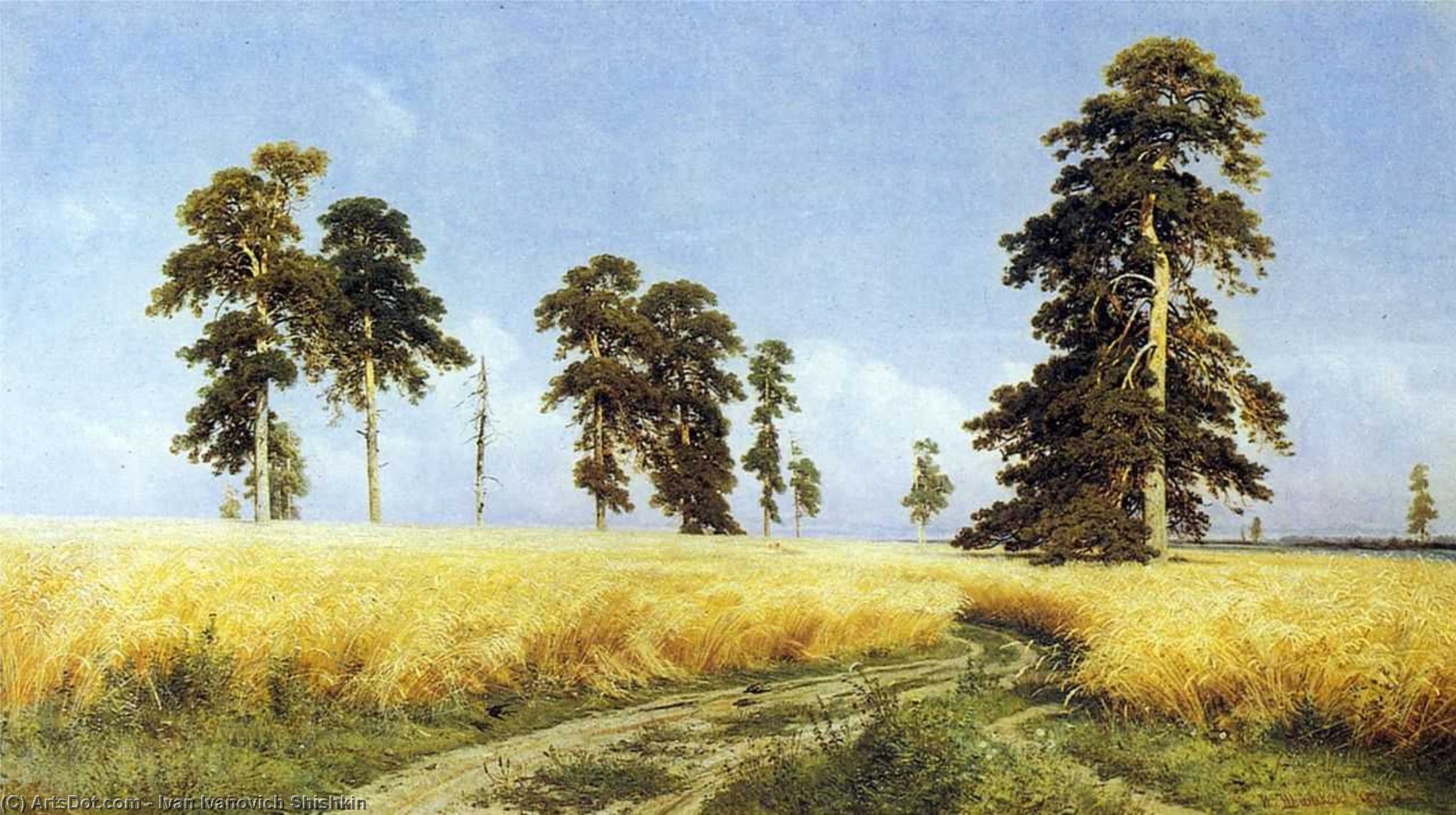
Experience the serene beauty of Ivan Shishkin's 'Rye' (1878). A stunning oil painting capturing a golden field and towering pines, showcasing Russian landscape artistry.

Shishkin (1832-1898) ikonikus orosz tájképfestője, aki a vadmocsár és erdők lenyűgöző részleteivel, a természet szépségével és mélységével hívta meg közönségét. Fedezze fel a 19. századi Oroszország művészetének csodáit!

Kézzel készített olajfestmény reprodukció

Kézzel festett olajvastú vászon, az Ön által választott méretben és keretben, művészeink készítik meglévőre.

P118B $10
P118H $10
P118W $10
P438Z $10
P508JH $12
P508YH $12
P805H $10
P805Z $10
P919BZ $10
P919G $10
P919XJ $10
P959ZH $10
P968JZ $12
W106C $8
W218G $10
W218JH $8
W218Y $10
W307PJ $10
W316G $10
W316PJ $8
W316Y $10
W398PJ $8
W4111J $10
W500HY $15
W500JH $15
W692G $12
W849H $8
W940BG $15
W953PJ $8

Standard
custom
CM
INCH

Válasszon előre meghatározott méreteink közül, amelyek megfelelnek a műalkotás eredeti arányainak.

szélesség
magasság

Ön megadhat saját méreteket egy adott kerethez vagy térhez igazításhoz. Ha a kiválasztott méret nem egyezik az eredeti kép arányával, akkor a műalkotást levágjuk, vagy további kézzel festett elemekkel meghosszabbítjuk a festményt. A gyártás megkezdése előtt küldünk Önnek egy digitális előnézetet jóváhagyásra.
Kérjük, vegye figyelembe, hogy a képernyőn megjelenő előnézet nem tükrözi a tényleges vágást vagy kiterjesztést. Csak az előnézet fog pontosan mutatni a végső kompozíciót.
Bár egyedi méretek állnak rendelkezésre, javasoljuk, hogy válasszon egy méretet az előre meghatározott listából az eredeti arányok megőrzése érdekében.

Példák arra, mit lehet módosítani: az arc kicserélése az ügyfél fotójára; háziállat hozzáadása (pl. macska helyett kutya); rejtett üzenet elhelyezése a háttérben; a háttér tájának vagy elemeinek megváltoztatása.
A rendelést követően a WahooArt.com csapata e-mailt küld az ügyfélnek az instrukciókért, és biztosít egy előnézeti képet (mockup).

Világszerte elérhető szállítás () 3-4 hét alatt a szokásos 5 hét helyett. (3 július). A minőség nem kérdőjelezhető.

why_choose_icon
Ingyenes globális expressz szállítás
why_choose_icon
Prémium minőségű len vászon
why_choose_icon
Teljes szállítási biztosítás
why_choose_icon
Vámvisszatérítési Garancia
why_choose_icon
Tökéletes színpontosság garancia
why_choose_icon
60 napos visszaküldési lehetőség (csak gyártási hibák esetén)
why_choose_icon
100%-os pénzvisszatérítési garancia
why_choose_icon
Kedvezmény több termény esetén

Összesen

-

reproduction

Rye

Reprodukciós technika

A reprodukció mérete

-

Összesített ár

-

Rövid tények

  • Title: Rye
  • Artist: Ivan Shishkin
  • Year: 1878
  • Artistic style: Realistic landscape
  • Location: Tretyakov Gallery, Moscow
  • Influences: Romanticism
  • Medium: Oil on canvas

Művészeti kvíz

Minden kérdésre csak egy helyes válasz létezik.

Kérdés 1:
What is the primary subject of Ivan Shishkin’s painting ‘Rye’?
Kérdés 2:
In what year was Ivan Shishkin’s painting ‘Rye’ created?
Kérdés 3:
Which museum houses the original painting ‘Rye’?
Kérdés 4:
What artistic movement is Ivan Shishkin most closely associated with?
Kérdés 5:
The painting ‘Rye’ exemplifies Shishkin's characteristic style. Which of the following best describes this style?

A műalkotás leírása

The Soul of the Russian Field: Ivan Shishkin’s “Rye”

Ivan Ivanovich Shishkin's "Rye," painted in 1878, isn’t merely a depiction of a field; it’s a profound meditation on the relationship between humanity and nature, a cornerstone of Russian landscape painting. This oil-on-canvas masterpiece, currently residing within the hallowed halls of the Tretyakov Gallery in Moscow, captures a quintessential moment in the rural cycle – the golden promise of harvest against the backdrop of an enduring forest. Shishkin, a master of meticulous observation and tonal subtlety, elevates the commonplace to the sublime, inviting viewers into a world brimming with quiet beauty and understated power.

Shishkin’s artistic journey began under the influence of German Romanticism, yet he swiftly forged his own distinctive style, one characterized by an almost obsessive attention to detail. He wasn't interested in grand vistas or dramatic skies; instead, he focused on the intimate details of the Russian countryside – the textures of bark, the sway of grasses, the subtle shifts in light and shadow. “Rye” exemplifies this approach perfectly. The painting’s power lies not in its scale but in its ability to draw us into a specific, palpable moment. Notice how Shishkin renders the individual stalks of rye, each subtly different in hue and form, creating an impression of immense density and abundance. The trees, rendered with remarkable realism, stand as silent witnesses to centuries of seasons, their weathered forms anchoring the scene in time.

A Symphony of Light and Tone

Shishkin’s technique is a testament to his mastery of color and light. He employs a limited palette – primarily ochres, browns, greens, and blues – yet manages to create an astonishing range of tones through careful layering and blending. The painting's luminosity stems from his use of broken brushstrokes, allowing light to penetrate the layers of paint and reflect back onto the canvas. This creates a shimmering effect, particularly noticeable in the field of rye, which seems to pulse with warmth and vitality. The sky, rendered in muted blues and greys, provides a serene counterpoint to the vibrant earth tones below. The artist’s ability to capture the fleeting effects of light – the way it filters through the trees, casts shadows across the field, and illuminates the individual stalks of grain – is truly remarkable.

Symbolism Woven into the Landscape

Beyond its purely aesthetic qualities, “Rye” is rich in symbolic meaning. The vast expanse of the rye field represents abundance, fertility, and the promise of a bountiful harvest—a vital element for the Russian peasantry. The forest, with its ancient trees, symbolizes endurance, resilience, and the timelessness of nature. The dirt road that winds through the scene can be interpreted as a path towards prosperity or perhaps a journey into the unknown. The presence of both healthy and decaying trees speaks to the cyclical nature of life and death, reminding us of the constant renewal inherent in the natural world. It’s a subtle but powerful commentary on the interconnectedness of all things.

A Legacy of Russian Landscape Art

“Rye” stands as a pivotal work in the history of Russian landscape painting, firmly establishing Shishkin's reputation as one of its foremost practitioners. His meticulous observation and his ability to capture the essence of the Russian countryside profoundly influenced generations of artists who followed. The painting’s enduring appeal lies not only in its technical brilliance but also in its capacity to evoke a sense of nostalgia for a simpler time, a connection to the land, and an appreciation for the beauty of the natural world. Reproductions of this iconic work offer art enthusiasts a chance to bring a piece of Russian artistic heritage into their homes, allowing them to experience the soul of the Russian field firsthand.

Further Exploration

For deeper insights into Ivan Shishkin and his remarkable oeuvre, we encourage you to explore resources such as the Tretyakov Gallery’s website (https://www.tretyakovgallery.ru/en/) and online databases like WahooArt.com (https://WahooArt.com). You can also delve into the life and work of Shishkin through articles such as “Ivan Ivanovich Shishkin” on Wikipedia (https://en.wikipedia.org/wiki/Ivan_Ivanovich_Shishkin) and explore related works, including "Firry forest (etude)" (https://artvee.com/dl/rye-fields/).

Hasonló műalkotások


A művész életrajza

The Soul of the Russian Forest: A Life in Landscape

Ivan Ivanovich Shishkin, a name synonymous with the vast and soulful landscapes of Russia, was born into a world steeped in tradition on January 25, 1832, in Yelabuga, Vyatka Governorate. His early life, though rooted in the mercantile pursuits of his father, revealed an innate sensitivity to the natural world—a sensibility that would blossom into a lifelong artistic obsession. After completing his education at the Kazan Gymnasium, Shishkin embarked on a rigorous academic journey, first at the Moscow School of Painting, Sculpture and Architecture for four years, then continuing at the prestigious Saint Petersburg Imperial Academy of Arts from 1856 to 1860. It was here, under the tutelage of renowned masters, that his technical skills were honed, culminating in a gold medal upon graduation—a testament to his exceptional talent and dedication. This academic foundation provided him with the tools to translate his deep connection with nature onto canvas with unparalleled realism.

A Master of Realism and the Peredvizhniki Movement

Shishkin’s artistic development was profoundly shaped by his association with the *Peredvizhniki*, or Wanderers, a group of Russian artists who rejected the constraints of academic tradition in favor of bringing art directly to the people. This movement championed realism and sought to depict life as it truly was—often focusing on social issues and the beauty of the Russian countryside. Shishkin’s landscapes perfectly aligned with this ethos; he wasn't merely painting scenery, but capturing the very essence of Russia’s forests, fields, and skies. He became a member of the Imperial Academy in St. Petersburg and later headed the landscape painting class at the Highest Art School there from 1873 to 1898, influencing generations of artists with his meticulous technique and unwavering commitment to portraying nature's grandeur. His dedication wasn’t simply about accurate depiction; it was about evoking a profound emotional response in the viewer—a sense of awe, tranquility, and connection to the land. The Peredvizhniki sought to represent Russia as it *was*, not as idealized by the Academy, and Shishkin's work embodied this spirit perfectly.

Iconic Visions: Works That Defined a Nation

Shishkin’s oeuvre is populated with masterpieces that have become ingrained in the Russian cultural consciousness. Morning in a Pine Forest, perhaps his most famous work—often mistakenly credited as solely his, though featuring bears painted by Konstantin Savitsky—captures a serene yet powerful scene of sunlight filtering through towering pines. The painting’s enduring appeal lies not only in its technical brilliance but also in its symbolic resonance: the forest representing Russia itself, strong, resilient, and untamed. A Rye Field, with its sweeping expanse of golden wheat under a vast sky, exemplifies his ability to convey the scale and beauty of the Russian plains. Rain in an Oak Forest demonstrates his mastery of atmospheric effects, evoking the damp earthiness and somber mood of a forest after a downpour. These works weren’t simply landscapes; they were national symbols, imbued with a sense of pride and belonging. His attention to detail was legendary—every leaf, every blade of grass rendered with painstaking accuracy, yet always serving the larger composition and emotional impact. Other notable paintings include *The Oak Grove*, showcasing the strength and age of ancient trees, and *Winter Road*, depicting the stark beauty of a snowy Russian landscape.

Technique and Influences: A Synthesis of Observation and Tradition

Shishkin’s artistic style was characterized by an extraordinary level of detail and realism, influenced by both academic training and his experiences with the Peredvizhniki. He meticulously studied nature, often sketching *en plein air* (outdoors) to capture the fleeting effects of light and atmosphere. His early exposure to Düsseldorf's landscape painting school instilled in him a strong emphasis on linear precision and tonal modeling—techniques he skillfully integrated into his own style. However, unlike many Western artists who focused solely on technical accuracy, Shishkin infused his landscapes with a deep understanding of Russian folklore and symbolism. He wasn’t simply depicting trees; he was portraying the spirit of the forest, its ancient wisdom, and its connection to the Russian people. His work also reflected a keen interest in botany, evident in the precise rendering of plant life—a skill that earned him respect among scientists as well as artists.

Legacy and Enduring Influence

Ivan Ivanovich Shishkin passed away on March 20, 1898, leaving behind a legacy that continues to inspire artists and captivate audiences today. His contributions to Russian landscape painting are immeasurable; he elevated the genre to new heights of realism and emotional depth. His work is prominently featured in numerous museum collections, including the Kartinnaja galerija Tambov and the Yaroslavl Arts Museum, and can be found on platforms like Kramskoy Museum of Fine Arts (Voronezh, Russia) and WahooArt. Even beyond the art world, his influence extends to scientific circles—a minor planet, 3558 Shishkin, was named in his honor by Soviet astronomer Lyudmila Zhuravlyova in 1978, a fitting tribute to an artist who so profoundly captured the beauty and majesty of the natural universe. *Shishkin’s paintings remain powerful reminders of the enduring connection between humanity and the land—a testament to his skill, vision, and unwavering dedication to portraying the soul of the Russian forest.*
Ivan Ivanovich Shishkin

Ivan Ivanovich Shishkin

1832 - 1898 , Oroszország

Rövid tények

  • Artistic Movement Or Style: Peredvizhniki
  • Artists Or Movements Influenced By This Artist: ['Impressionizmus']
  • Artists Who Influenced This Artist:
    • Kramskoy
    • Venetsianov
  • Date Of Birth: 1832 jan 25.
  • Date Of Death: 1898 mar 20.
  • Full Name: Ivan Ivanovich Shishkin
  • Nationality: Orosz
  • Notable Artworks:
    • Regényső fásült
    • Szélmalom
    • Ősz naplemente
  • Place Of Birth: Yelabuga, Oroszország
Fedezze fel a műalkotásokat témák, stílusok és jellemzők szerint csoportosítva.



































