Szerezzen be nyomtatásra kész fájlt, amely messze túlmutat a webes előnézeten. Minden általunk értékesített digitális kép az adatbázisunkban található nagy felbontású mesterfájlból származik – általában 5 000 és 15 000 pixel szélességű –, így magabiztosan nyomtathat nagy méretben, sokat vághat a képen, vagy reprodukálhatja a legfinomabb részleteket is.
Stúdiómból egyetlen fájl sem távozik feltartózkodás nélkül. Egy digitális szakértő az eredeti festménnyel összehasonlítja a színeket, és szükség esetén korrigálja azokat, majd professzionális retusználó eszközökkel javítja a tisztaságot és a részletgazdagságot — miközben mindig hű marad a művész vonalvezetéséhez és stílusához. Az eredmény egy olyan kép, amely úgy néz ki, mint egy festmény, és nem úgy, mint egy szűrőzött szkenn.
A végső munka befejezése előtt jóvá kell hagynia a képet: szakértőnk 72 órán belül elküldi azt e-mailben ellenőrzésre. Nem tetszett? Kérhet javításokat vagy korrekciókat, illetve visszatérítést kérhet, amennyiben a minőség nem felel meg az elvárásoknak.
Ez az a minőség, amelyre a kiadók, a design stúdiók, a galériák és a nyomdaték megbízhatnak.
Töltsön le nagy felbontású fájlt személyes kiállításokhoz, nyomtatáshoz és kreatív projektekhez. ( Váltás nyomtatványra Kézzel festett másolat rendelése)
Amikor a WahooArt.com szolgáltatást választja, nem csupán egy képet kap – professzionálisan felmagasított digitális műalkotást kap, amely precizitással készült, és amelyet megelégsedési gwarancia tesz biztoslássá. Az alábbiakban automatikusan minden benne 】
A nagy felbontású digitális képmásolatát a megrendelést követő 72 órán belül e-mailben elküldjük Önnek – azonnal használható formátumban.
Műve professzionális módon kerül optimalizálásra fejlett mesterséges intelligencia eszközök és manuális szerkesztés segítségével, biztosítva a maximális részletességet, tisztaságot és színpontosságot.
Véletlenül törölted vagy elvesztetted a fájlodat? Ne aggódj – bármikor ingyen újra megküldjük neked.
Élvezze műalkotásait azonnal, vám, illeték vagy szállítási költség nélkül – a digitális letöltések mindig adamentesek.
Professzionális eszközök és színkezelés segítségével garantáljuk, hogy digitális képe a lehető legpontosabban tükrözze az eredeti színeket.
Ha nemມີ elégedett a digitális képével, 100 napon belül felülvizsgáljuk vagy 100% visszatérítjük az amountot – kérdés बिना.
Nem tetszett a vásárlás? 100 napon belül teljes visszatérítést garantálunk a digitális fájl megvételétől számítva – kérdés nélkül.
Vásároljon 3 képet, spóroljon 10%-et - Vásároljon 5-öt, spóroljon 15%-et - Vásároljon 10+ képet, spóroljon 20%-at. Kiváló kreatív projektekhez, galériákhoz és ügynökségekhez.
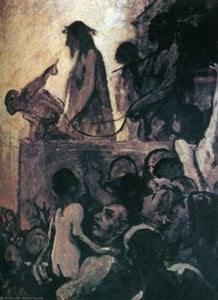
Honoré Daumier's "Scene from a Comedy," painted in 1858, isn’t merely a depiction of two figures; it’s a meticulously crafted snapshot of Parisian society and the biting social commentary that defined the artist’s career. Housed within the walls of the Musée d’Orsay, this oil on canvas offers a rare glimpse into Daumier's world – a world brimming with observation, critique, and an undeniable sense of humor laced with profound sadness. Measuring just 33 x 25 cm, its intimate scale belies the expansive social commentary it contains, inviting viewers to step closer and contemplate the subtle power dynamics at play.
The painting immediately draws the eye to the stark contrast between the two men. On the left stands an older gentleman, rendered in dark tones of coat and shirt, his face a study in sternness – a palpable embodiment of authority or perhaps simply ingrained habit. His posture is rigid, suggesting a lifetime spent upholding established norms. Juxtaposed against him is a younger figure, dressed more casually, tilted back with a relaxed amusement that hints at a different perspective, a willingness to question or even mock the older man’s demeanor. This immediate visual dichotomy establishes the core of Daumier's work: a deliberate exploration of conflicting viewpoints and the inherent tensions within social structures.
Daumier’s mastery lies not just in capturing faces, but in conveying emotion through gesture and body language. The realism of his approach is evident in the meticulous detail with which he renders the textures of fabric, the subtle lines etched on the older man's face, and the slight tilt of the younger figure’s head. The dark background, punctuated by hints of blue and gray, serves to amplify these details, creating a sense of depth and drawing the viewer’s attention directly to the figures. This strategic use of light and shadow is characteristic of Daumier's style – a deliberate choice to highlight the emotional core of his subjects.
Furthermore, note the lack of elaborate setting or narrative context. Daumier strips away extraneous details, focusing instead on the immediate interaction between these two individuals. This minimalist approach forces the viewer to actively engage with the painting, interpreting the unspoken tensions and considering the broader social implications of their encounter. It’s a testament to Daumier's skill that such profound commentary can be conveyed through such simple means.
"Scene from a Comedy" is deeply rooted in its historical context. Created during the mid-19th century, it reflects the social and political upheavals of France at that time – a period marked by rapid industrialization, growing class divisions, and increasing calls for reform. Daumier’s work served as a powerful critique of these changes, exposing the hypocrisy and injustices inherent in the established order. His frequent use of caricature and satire allowed him to reach a wide audience, challenging conventional wisdom and sparking debate about the direction of French society.
As explored in articles like “Honoré Daumier: Social Commentary & Artistic Innovation in 19th-Century France,” Daumier’s art wasn't simply humorous; it was a direct engagement with pressing social issues. His work, alongside pieces like "Ratapoil (rear view)" and "The Defender," became a voice for the marginalized and a challenge to the status quo. He used his artistic platform to expose corruption, criticize political figures, and advocate for greater social equality – a remarkably courageous stance for an artist of his time.
WahooArt offers meticulously crafted hand-painted reproductions of “Scene from a Comedy,” allowing art lovers to experience Daumier’s genius in stunning detail. Each reproduction is created by skilled artisans who painstakingly recreate the artist's techniques, capturing the nuances of his style and ensuring an authentic representation of this iconic work. Whether displayed in a private collection or incorporated into a larger interior design scheme, a WahooArt reproduction provides a beautiful and meaningful connection to one of art history’s most insightful social commentators.
To delve further into Daumier's life and work, we encourage you to explore the resources available on our website and through external links such as Wikipedia. Discover the rich tapestry of his artistic vision and appreciate the enduring legacy of a man who used art as a weapon against injustice – a legacy that continues to resonate with audiences today.
A formátum (Portrait) és a javasolt helyiség (Living Room) a „Scene from a Comedy”, Daumier Honore alkotása alkotáshoz tartozó két elhelyezési adat.
A „Scene from a Comedy”, Daumier Honore alkotása művészeti irányata a Satirical Realism. Ez a klasszifikáció a művet a kapcsolódó alkotók és alkotások közé sorolja.
A "Scene from a Comedy" 1858-ban készült. Ez az időpont meghatározó jelentőséggel bír Daumier Honore pályájában és az adott korszak kontextusában is.


1808 - 1879 , Franciaország
 Megtekintés
 Küldés
 Megosztás
 Részletek
 Útmutató

 Letöltés
 Hasonló darabok
 X-ray felvétel
 Diavetítés
 Kérdések és válaszok
 Statisztika


 Összes részlet megjelenítése