MegtekintésMegtekintés Műalkotás AR előnézeteMűalkotás AR előnézete Kézzel festett másolat rendelése Kézzel festett másolat rendeléseSwitch to Digital Image Switch to Digital Image KüldésKüldés
RészletekRészletek Kedvencekhez ad Kedvencekhez ad LetöltésLetöltés Hasonló darabokHasonló darabok X-ray felvételX-ray felvétel DiavetítésDiavetítés StatsStats

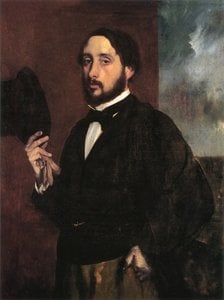
Three Heads

Explore Edgar Degas’ "Three Heads," a masterpiece of Impressionism! Discover its bold brushstrokes, intimate portraits & unique style – a captivating work of art.

Degas: Francia egyik legjelentősebb festője, a balett táncosai, párizsi élete és innovatív technikái világsühmeki művész. Egyedi látásmódja, dinamikus kompozíciói és precíz ábrázolása teszik igazán különlegessé.

Giclée / Műnyomat

Múzeumi minőségű giclée vagy vászonnyomat, gyors gyártással és rugalmas finomítási lehetőségekkel. (Kézzel festett másolat rendelése Kézzel festett másolat rendeléseSwitch to Digital Image Switch to Digital Image)

P118B $10
P118H $10
P118W $10
P438Z $10
P508JH $12
P508YH $12
P805H $10
P805Z $10
P919BZ $10
P919G $10
P919XJ $10
P959ZH $10
P968JZ $12
W106C $8
W218G $10
W218JH $8
W218Y $10
W307PJ $10
W316G $10
W316PJ $8
W316Y $10
W398PJ $8
W4111J $10
W500HY $15
W500JH $15
W692G $12
W849H $8
W940BG $15
W953PJ $8

Standard méret
egyedi méretű
CM
INCH

Válasszon előre meghatározott méreteink közül, amelyek megfelelnek a műalkotás eredeti arányainak.

szélesség
magasság

Megadhat saját méreteket is egy konkrét kerethez vagy helyszínhez igazítva. Amennyiben a kiválasztott méret nem egyezik az eredeti kép arányokkal, a műalkotást le fogjuk vágni, vagy kiegészítjük a képet tükrözött vagy egyszínű szélekkel. A gyártás megkezdése előtt egy digitális tervezetet küldünk jóváhagyásra.
Kérjük, vegye figyelembe, hogy a képernyőn látható előnézet nem tükrözi a tényleges levágást vagy kiegészítést. Csak a tervezet mutatja pontosan a végső kompozíciót.
Bár az egyedi méretek is elérhetőek, az eredeti arányok megőrzése érdekében azt javasoljuk, hogy válasszon a előre meghatározott listából származó méretet.

Világszerte történő kiszállítás területére mindössze 2 hét alatt, a szokásos 4-5 hét helyett. (8 szeptember)

why_choose_icon
Ingyenes globális expressz szállítás
why_choose_icon
Prémium minőségű len vászon
why_choose_icon
Teljes körű szállítási biztosítás
why_choose_icon
Vámvisszatérítési Garancia
why_choose_icon
Hiteles színpontosság garancia
why_choose_icon
100 napos visszaküldési lehetőség (csak hibás termékek esetén)
why_choose_icon
100% pénzvisszatérítési garancia
why_choose_icon
Több darab vásárlása esetén kedvezmény

Összesített ár

$ 68

reproduction

Three Heads

Giclée / Műnyomat

Reprodukció mérete

-

Összesített ár

$ 68

Gyors információk

  • title: Three Heads
  • year: 1871
  • movement: Impressionism
  • medium: Oil on canvas
  • style: Realism, Impressionistic
  • notable elements: Light and shadow, bold brushstrokes, vivid colors, chiaroscuro

Művészeti kvíz

Minden kérdésre csak egy helyes válasz létezik.

Kérdés 1:
In what year was Edgar Degas's 'Three Heads' painted?
Kérdés 2:
To which art movement is Edgar Degas and his painting 'Three Heads' most closely associated?
Kérdés 3:
The use of strong contrasts between light and dark in 'Three Heads' is a technique known as:
Kérdés 4:
What is the primary subject matter of Degas’s ‘Three Heads’?
Kérdés 5:
Degas, while associated with Impressionism, preferred to be called a:

A Glimpse into Modern Life: Decoding Degas’ “Three Heads”

Edgar Degas' 1871 oil painting, “Three Heads,” offers a captivating study of masculine introspection and the burgeoning spirit of modernism. Far from a traditional portrait, this work is a fragment – a snapshot of observation that embodies the core tenets of Impressionism, though Degas himself resisted the label, preferring to be known as a realist. The painting doesn’t present us with grand narratives or idealized figures; instead, it offers an intimate and psychologically resonant encounter with three men lost in their own thoughts.

Subject & Composition: A Moment Captured

The composition is strikingly unconventional. We are presented not with full figures, but with cropped heads and shoulders, tightly framed against a blurred background. This deliberate cropping creates a sense of immediacy – as if we’ve stumbled upon a private moment. The three men, distinct in their facial features and expressions, aren't interacting; they exist within their own internal worlds. One appears contemplative, another perhaps melancholic, while the third seems lost in distant reverie. Their varied gazes avoid direct engagement with the viewer, enhancing the feeling of voyeurism and psychological depth. The lack of a defined setting further emphasizes the focus on individual character and emotional state.

Technique & Style: A Masterclass in Impressionistic Realism

Degas’ technique is masterful. He employs loose, visible brushstrokes, characteristic of Impressionism, but with a precision rooted in his academic training. The application of paint isn't blended smoothly; instead, it retains a textural quality that conveys movement and energy. His use of light and shadow – a technique reminiscent of chiaroscuro – sculpts the faces, highlighting their individual features and adding depth to the composition. The color palette is restrained yet rich, dominated by earthy tones punctuated by subtle variations in hue. This limited palette contributes to the painting’s overall mood of quiet contemplation. Degas' ability to capture fleeting expressions and psychological nuance sets him apart from his contemporaries.

Historical Context: Paris in Transition

“Three Heads” was created during a period of significant social and political upheaval in France, following the Franco-Prussian War and the Paris Commune. This era witnessed rapid urbanization, industrialization, and a shift in societal values. Degas, unlike many Impressionists who focused on landscapes and scenes of leisure, often depicted modern life within urban settings – capturing the anxieties and complexities of a changing world. While not explicitly political, “Three Heads” reflects this sense of transition and uncertainty through its focus on individual introspection rather than grand historical narratives.

Symbolism & Emotional Impact: The Weight of Modernity

The symbolism within "Three Heads" is subtle but potent. The men’s averted gazes and introspective expressions can be interpreted as a reflection of the alienation and psychological strain experienced in modern urban life. Their isolation, despite their proximity to one another, speaks to a growing sense of individualism and disconnection. The painting evokes a mood of quiet melancholy and thoughtful observation. It invites viewers to contemplate not only the subjects’ inner lives but also their own place within the rapidly changing world around them.

Degas' Legacy & Similar Works

Edgar Degas left an indelible mark on the art world, influencing generations of artists with his innovative techniques and insightful depictions of modern life. Works like Les Pointes and Madame Gobillard, Yves Morisot, also available through WahooArt.com, demonstrate his continued exploration of human form and psychological depth. His portrait Lorenzo Pagans and Auguste de Gas, the Artist's Father, housed in the Musée d’Orsay, showcases a similar focus on intimate character studies. For those seeking to bring the beauty and intellectual stimulation of Degas’ work into their homes or collections, WahooArt.com offers meticulously crafted reproductions that capture the essence of his artistic vision.

A művész életrajza

A Life Immersed in Movement

Edgar Degas, born Hilaire-Germain-De Gas in Paris on July 19, 1834, remains one of the most intriguing and complex figures in French art history. Often associated with Impressionism, a label he actively resisted, Degas was fundamentally a realist—a meticulous observer of the world around him, dedicated to portraying it with startling honesty and a unique visual language. His early life, comfortably bourgeois thanks to his banker father’s wealth and his mother's Creole background, provided him with access to education and artistic training, though he often felt constrained by academic expectations. Initially enrolled at the Lycée Louis-le-Grand, Degas’s true education began in the Louvre, where he spent countless hours copying works by masters like Raphael and Rembrandt, honing his skills and developing a deep appreciation for classical form. However, this wasn't simply imitation; it was a process of intense study and critical engagement with artistic tradition—a foundation upon which he would later build his own distinctive style. His father’s encouragement, recognizing his son’s innate talent, allowed him to establish a studio within their grand home, providing a space for experimentation and self-discovery.

Beyond Impressionism: A Unique Artistic Vision

While many of his contemporaries, including Monet and Renoir, sought to capture the fleeting effects of light outdoors, Degas largely worked within the confines of his Parisian studio. His subject matter was decidedly modern—a departure from the historical or mythological scenes favored by traditional academic painters. He found inspiration in the vibrant, often overlooked details of everyday Parisian life: the bustling activity of laundresses at the Seine, the alluring figures of cabaret singers and dancers, the quiet elegance of milliners crafting their creations. It is this fascination with ballet that defines much of his oeuvre—a world of grueling rehearsals, physical strain, and fleeting moments of grace amidst a demanding profession. Degas didn’t simply paint beautiful ballerinas; he captured the *reality* of their lives, revealing both their beauty and their hardship. His compositions are often unconventional, cropping figures in unexpected ways, utilizing asymmetrical arrangements, and employing a dynamic sense of movement that draws the viewer into the scene. He was particularly adept at capturing the subtle nuances of gesture and expression, conveying not just what he saw but also *how* it felt to be present in those moments. His work is characterized by an intimate, almost voyeuristic perspective, as if he were a silent observer privy to private dramas unfolding before him.

Influences and Artistic Development

Degas’s artistic journey was shaped by a remarkably diverse range of influences. His early training emphasized classical principles, particularly the meticulous draftsmanship championed by Jean-Auguste-Dominique Ingres, whose emphasis on precise form and idealized beauty left an indelible mark on his work. However, he also admired the Realist movement, spearheaded by artists like Gustave Courbet, who challenged academic conventions and sought to depict contemporary life with unflinching honesty. A pivotal moment in his development came through his association with Camille Pissarro, a leading Impressionist who encouraged him to experiment with new techniques and broadened his artistic horizons. Degas was deeply captivated by Japanese prints—Ukiyo-e—which exerted a profound influence on his compositions, color palettes, and use of asymmetrical arrangements. He studied the bold lines, flattened perspectives, and decorative patterns of these woodblock prints, incorporating them into his own work to create a sense of dynamism and visual interest. Furthermore, Degas embraced photography as a tool for studying movement and capturing fleeting moments in time—a technique he skillfully integrated into his paintings, particularly his depictions of dancers. He wasn’t simply copying what he saw; he was actively synthesizing diverse influences into something entirely new and uniquely his own.

Major Works and Techniques

Degas's artistic output spanned a remarkable range of subjects and media. His paintings of ballet dancers—such as *The Dance Class*, *Little Dancer on the Bar* (bronze sculpture), and *L’Étoile*—are arguably his most famous works, capturing the intensity of rehearsals and the fleeting beauty of performance with unparalleled skill. He also produced a significant body of pastel drawings, often depicting scenes from Parisian life—laundresses at work, milliners displaying their wares, and street vendors hawking their goods. His use of pastels was particularly innovative, employing a loose, expressive technique that captured the immediacy of observation. Beyond painting and sculpture, Degas also experimented with monotypes (unique prints) and drypoint etchings, further expanding his artistic repertoire. His ability to capture movement—not through blurred lines or hazy effects, but through precise observation and careful rendering of form—is a hallmark of his work.

Legacy and Lasting Impact

Edgar Degas died in Paris on September 27, 1917, leaving behind a vast and influential body of work that continues to captivate audiences today. He paved the way for future generations of artists who sought to break free from traditional conventions and explore new ways of representing the world around them. His innovative approach to composition, his masterful draftsmanship, and his unflinching portrayal of modern life have had a profound impact on the course of art history. He wasn’t merely a painter of dancers or racehorses; he was a keen observer of human nature, a master of form and movement, and a true innovator who redefined the possibilities of art. His influence can be seen in the work of Pablo Picasso and Henri Matisse, among others, solidifying his place as one of the most important figures in modern art.
  • Innovative Composition: Degas frequently employed unconventional cropping and asymmetrical arrangements.
  • Capturing Movement: He masterfully depicted movement through precise observation and rendering.
  • Diverse Subject Matter: His work encompassed ballet, Parisian life, and horse racing.

hilaire-germain-edgar degas

hilaire-germain-edgar degas

1834 - 1917 , Franciaország

A művészről röviden

  • Artistic Movement Or Style: Impressionizmus, Realizmus
  • Artists Or Movements Influenced By This Artist:
    • Picasso
    • Matisse
  • Artists Who Influenced This Artist:
    • Ingres
    • Courbet
    • Pissarro
  • Date Of Birth: 1834. július 19.
  • Date Of Death: 1917. szeptember 27.
  • Full Name: Hilaire-Germain-Edgar De Gas
  • Nationality: Francia
  • Notable Artworks:
    • Táncosok csoportja
    • A táncmester
    • Kávéházi jelenet
  • Place Of Birth: Párizs, Franciaország
Fedezze fel a műalkotásokat témák, stílusok és jellemzők szerint csoportosítva.