MegtekintésMegtekintés Műalkotás AR előnézeteMűalkotás AR előnézete Kézzel festett másolat rendelése Kézzel festett másolat rendeléseKép letöltése Kép letöltése KüldésKüldés
RészletekRészletek Kedvencekhez ad Kedvencekhez ad LetöltésLetöltés Hasonló darabokHasonló darabok X-ray felvételX-ray felvétel DiavetítésDiavetítés

untitled (2087)

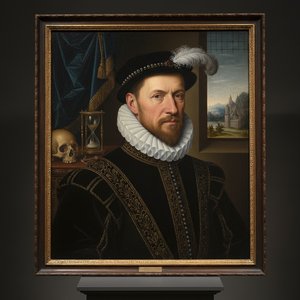
Admire Hans Holbein’s "Untitled (2087)", a stunning Renaissance portrait of a writing man. Oil on canvas, rich detail & timeless elegance – explore this captivating masterpiece.

Holbein mester nagyszerű portréja két udvariembert, tele rejtett szimbólumokkal és vallási feszültségekkel. Fedezd fel a 16. századi angol diplomácia és hit titkait! #holbein #festészet #portré

Giclée / Műnyomat

Múzeumi minőségű giclée vagy vászonnyomat, gyors gyártással és rugalmas finomítási lehetőségekkel. (Kézzel festett másolat rendelése Kézzel festett másolat rendeléseKép letöltése Kép letöltése)

P118B $10
P118H $10
P118W $10
P438Z $10
P508JH $12
P508YH $12
P805H $10
P805Z $10
P919BZ $10
P919G $10
P919XJ $10
P959ZH $10
P968JZ $12
W106C $8
W218G $10
W218JH $8
W218Y $10
W307PJ $10
W316G $10
W316PJ $8
W316Y $10
W398PJ $8
W4111J $10
W500HY $15
W500JH $15
W692G $12
W849H $8
W940BG $15
W953PJ $8

Standard méret
egyedi méretű
CM
INCH

Válasszon előre meghatározott méreteink közül, amelyek megfelelnek a műalkotás eredeti arányainak.

szélesség
magasság

Megadhat saját méreteket is egy konkrét kerethez vagy helyszínhez igazítva. Amennyiben a kiválasztott méret nem egyezik az eredeti kép arányokkal, a műalkotást le fogjuk vágni, vagy kiegészítjük a képet tükrözött vagy egyszínű szélekkel. A gyártás megkezdése előtt egy digitális tervezetet küldünk jóváhagyásra.
Kérjük, vegye figyelembe, hogy a képernyőn látható előnézet nem tükrözi a tényleges levágást vagy kiegészítést. Csak a tervezet mutatja pontosan a végső kompozíciót.
Bár az egyedi méretek is elérhetőek, az eredeti arányok megőrzése érdekében azt javasoljuk, hogy válasszon a előre meghatározott listából származó méretet.

Világszerte történő kiszállítás területére mindössze 2 hét alatt, a szokásos 4-5 hét helyett. (6 szeptember)

why_choose_icon
Ingyenes globális expressz szállítás
why_choose_icon
Prémium minőségű len vászon
why_choose_icon
Teljes körű szállítási biztosítás
why_choose_icon
Vámvisszatérítési Garancia
why_choose_icon
Hiteles színpontosság garancia
why_choose_icon
100 napos visszaküldési lehetőség (csak hibás termékek esetén)
why_choose_icon
100% pénzvisszatérítési garancia
why_choose_icon
Több darab vásárlása esetén kedvezmény

Összesített ár

$ 68

reproduction

untitled (2087)

Giclée / Műnyomat

Reprodukció mérete

-

Összesített ár

$ 68

Gyors információk

  • artist: Hans Holbein the Younger
  • notable_elements: Writing with a quill pen, hands, upper torso
  • medium: oil on canvas
  • title: untitled (2087)
  • subject: Portrait of a man writing

Művészeti kvíz

Minden kérdésre csak egy helyes válasz létezik.

Kérdés 1:
Hans Holbein the Younger is most renowned for his work within which artistic movement?
Kérdés 2:
Based on the description, what is a primary focus of this portrait?
Kérdés 3:
What painting technique is suggested by the description of 'smooth brushstrokes and rich color saturation'?
Kérdés 4:
The act of writing in this portrait subtly symbolizes what concepts?

A Moment of Contemplation: Exploring Hans Holbein the Younger’s “untitled (2087)”

This captivating portrait by Hans Holbein the Younger, circa 1530-1540, offers a compelling glimpse into the world of Renaissance scholarship and power. The artwork depicts a man intently engaged in the act of writing with a quill pen on parchment – a scene rendered with remarkable realism and psychological depth.

Subject & Composition

The composition is deliberately focused, cropping tightly around the subject’s upper torso and hands. This intimate framing draws the viewer into the immediacy of the moment, emphasizing the concentration and precision required for writing. The man's gaze is directed downwards, lost in thought as he forms letters on the page. While his identity remains unknown, the quality of his attire – a richly textured velvet robe – suggests a person of considerable status, perhaps a scholar, diplomat, or member of the court.

Style & Technique

Holbein’s mastery of Northern Renaissance realism is on full display here. The painting showcases his exceptional skill in rendering textures: the smooth sheen of velvet, the delicate roughness of parchment, and the tactile quality of the quill itself. His technique, employing layers of oil paint applied with meticulous brushwork, creates a luminous surface and a remarkable sense of three-dimensionality. The directional lighting further enhances these textural details, casting subtle shadows that define form and volume. The artist’s attention to detail is characteristic of his work during his time as court painter to King Henry VIII.

Historical Context & Symbolism

During the 16th century, writing was not merely a practical skill but a symbol of learning, authority, and communication. The act itself held significant weight, representing the preservation of knowledge, the execution of official decrees, or the crafting of persuasive arguments. Holbein, working within the humanist circles of his time, understood this symbolism implicitly. The painting subtly evokes these associations, suggesting that the man is engaged in a task of importance – perhaps composing a letter, drafting a legal document, or recording historical events. The choice of parchment over more modern writing surfaces further reinforces the connection to tradition and scholarship.

Emotional Impact & Interpretation

“untitled (2087)” evokes a sense of quiet contemplation and solemnity. The focused intensity of the subject’s concentration, combined with the muted color palette and subtle lighting, creates an atmosphere of intellectual rigor and perhaps even a hint of melancholy. The painting invites viewers to reflect on the power of words, the weight of responsibility, and the enduring human pursuit of knowledge. It is a work that rewards close observation, revealing new layers of meaning with each viewing.

For Collectors & Designers

This artwork – or a high-quality reproduction thereof – would be a striking addition to any collection focused on Renaissance portraiture or Northern European art. Its restrained elegance and intellectual depth make it particularly well-suited for libraries, studies, or formal living spaces. The rich color palette complements both traditional and contemporary interiors, adding a touch of historical sophistication and artistic gravitas. The intimate scale of the composition allows it to be appreciated in a variety of settings, from grand estates to more modest homes.

A művész életrajza

A Life Etched in Detail: The World of Hans Holbein the Younger

Born around 1497 in Augsburg, Germany, Hans Holbein the Younger emerged as a defining figure of the Northern Renaissance—a master portraitist whose work continues to resonate with breathtaking realism and psychological depth. His upbringing within an artistically gifted family laid the foundation for his exceptional talent; his father, Hans Holbein the Elder, was a respected painter and printmaker who instilled in young Hans a meticulous approach to observation and technique. This early training wasn’t merely about mastering brushstrokes or mixing pigments—it was about learning to *see*, to capture not just likeness but the very essence of a subject. Holbein's initial artistic explorations occurred within his father’s workshop, where he honed his skills before embarking on a journey that would lead him through Switzerland and ultimately to the heart of the English court.

From Basel to the Tudor Court: A Rising Star

After completing his apprenticeship, Holbein traveled extensively throughout Switzerland, establishing himself as an independent artist with a growing reputation. He spent several formative years in Basel, creating not only striking portraits but also religious works and intricate woodcut designs—most notably the haunting series depicting the *Dance of Death*. These early pieces reveal a burgeoning mastery of composition and a developing fascination with capturing the complexities of human emotion. His father’s influence was paramount; Holbein inherited his meticulous attention to detail and unwavering dedication to artistic excellence. The Basel period solidified Holbein's reputation as a visionary artist, pushing boundaries in both painting and printmaking—a testament to his innate talent and relentless pursuit of perfection. He skillfully blended German artistic traditions with the compositional principles of the Italian Renaissance, absorbing inspiration from masters like Albrecht Dürer.

The Art of Perception: Style and Masterpieces

Holbein's artistic style is characterized by an extraordinary commitment to realism, achieved through painstaking attention to detail in rendering textures, fabrics, and the subtle nuances of facial features. He didn’t simply *paint* portraits; he meticulously constructed them, layer upon layer, capturing not just physical appearances but also the personality and inner life of his sitters. His innovative compositions further enhanced the impact of his work, often employing symbolic objects or backgrounds to convey deeper meaning. The Ambassadors (1533) stands as a testament to this approach—a complex and symbolically rich double portrait showcasing both Holbein’s technical brilliance and intellectual depth. The anamorphic skull subtly embedded within the painting serves as a stark *memento mori*, reminding viewers of the inevitability of death. This masterful depiction exemplifies Holbein's ability to transform visual representation into profound contemplation about mortality and human existence. He achieved unparalleled realism by utilizing techniques honed during his apprenticeship, meticulously studying anatomy and mastering chiaroscuro—the dramatic interplay of light and shadow—to create breathtakingly lifelike images.

A Patronage That Shaped His Career: The English Court

It was in 1526 that fate intervened, drawing Holbein towards England, an event that would irrevocably alter his artistic trajectory. He arrived bearing a letter of introduction from Erasmus, the renowned humanist scholar, which opened doors to the influential circles of English society. His talent quickly captivated prominent figures like Sir Thomas More, who became both a patron and a subject for several compelling portraits. This connection proved pivotal, leading to Holbein’s appointment as a court painter to King Henry VIII in 1536—a position he held, with some interruptions, until his untimely death in 1543. His relationship with Henry VIII was marked by both artistic collaboration and political intrigue, reflecting the turbulent atmosphere of Tudor England. He produced iconic portraits of the king, solidifying his place in English history as a symbol of royal authority and artistic achievement.

Legacy and Influence: A Lasting Impression

Holbein’s legacy is profound; Holbein’s portraits set a new standard for realism and psychological insight in portraiture, influencing generations of artists who followed. He achieved unparalleled renown through his meticulous observation and masterful execution—a testament to his unwavering dedication to artistic excellence. His depictions of key figures during the Tudor period provide invaluable insights into the lives and personalities of those who shaped English history.
  • His portraits of Henry VIII became iconic representations of royal power.
  • His depiction of Erasmus of Rotterdam captured the scholar’s profound intellectual gravitas.
  • He skillfully blended German artistic traditions with the compositional principles of the Italian Renaissance, absorbing inspiration from masters like Albrecht Dürer.
Holbein's work continues to inspire artists and scholars alike—a beacon of artistic innovation and a symbol of enduring human fascination with beauty and truth. He remains one of the most admired and studied painters of the Renaissance—a master whose artistry transcends time, ensuring his place in art history for centuries to come. He didn’t merely record appearances—he captured moments in time, preserving them for posterity.
Hans Holbein a Fiatalabb

Hans Holbein a Fiatalabb

1497 - 1543 , Olaszország

A művészről röviden

  • Artistic Movement Or Style: Északnémeti Reneszánszi
  • Artists Or Movements Influenced By This Artist: ['Korábbi portrétfestők']
  • Artists Who Influenced This Artist: ['Albrecht Dürer']
  • Date Of Birth: 1497
  • Date Of Death: 1543
  • Full Name: Hans Holbein der Jüngere
  • Nationality: Német-svájci
  • Notable Artworks:
    • Az Építők
    • Henry VIII portréja
    • Erasmus portréja
    • Nikolaus Kratzer
  • Place Of Birth: Augsburg, Németország
Fedezze fel a műalkotásokat témák, stílusok és jellemzők szerint csoportosítva.