Áttérés Nyomtatványra Áttérés NyomtatványraKézzel festett másolat rendelése Kézzel festett másolat rendelése KüldésKüldés
RészletekRészletek Kedvencekhez ad Kedvencekhez ad LetöltésLetöltés Hasonló darabokHasonló darabok DiavetítésDiavetítés StatisztikaStatisztika

Schauspieler

A striking porcelain mannequin sculpture titled Schauspieler by Hanne-Rose Genzken explores themes of identity through vibrant accessories and conceptual design, inviting you to explore this unique contemporary masterpiece.

Explore the layered sculptures & installations of Hanne-Rose Genzken (Isa Genzken). German artist blending concrete, textiles & more since the 70s – a key figure in contemporary art.

Vásároljon nagy felbontású, javított digitális képet, amely minőségében messze felülmúlja az online előnézetet.

Minden fájlt szakembereink a legmodernebb eszközök és precíz, kézi retusálás segítségével készítenek el aprólékosan. Gondoskodunk arról, hogy minden kép kivételes tisztasággal, pontos színhelyességgel és részletgazdag finomsággal rendelkezzen.

A végleges fájl 72 órán belül e-mailben megérkezik, professzionális, szerkesztői és nyomtatási környezetbe optimalizálva az azonnali használathoz. Ez ugyanaz a minőség, amelyben a legmeghatározóbb tervezőstúdiók, kiadók és galériák is megbízhatnak.

Digitális kép

Töltsön le nagy felbontású fájlt személyes kiállításokhoz, nyomtatáshoz és kreatív projektekhez. (Áttérés Nyomtatványra Áttérés NyomtatványraKézzel festett másolat rendelése Kézzel festett másolat rendelése)

Összesített ár

$ 24,90

Minden digitális kép rendeléséhez tartozó extrák

Szakértői digitális kézbesítés, garantáltan

Amikor a WahooArt.com szolgáltatást választja, nem csupán egy képet kap – professzionálisan felmagasított digitális műalkotást kap, amely precizitással készült, és amelyet megelégsedési gwarancia tesz biztoslássá. Az alábbiakban automatikusan minden benne 】

shipping_icon
Gyors e-mail teslimítés

A nagy felbontású digitális képmásolatát a megrendelést követő 72 órán belül e-mailben elküldjük Önnek – azonnal használható formátumban.

canvas_icon
MI-alapú digitális fejlesztésű fájl

Műve professzionális módon kerül optimalizálásra fejlett mesterséges intelligencia eszközök és manuális szerkesztés segítségével, biztosítva a maximális részletességet, tisztaságot és színpontosságot.

insurance_icon
Örök életű ingyenes újradelivery

Véletlenül törölted vagy elvesztetted a fájlodat? Ne aggódj – bármikor ingyen újra megküldjük neked.

tax_icon
Nincs importköltség – soha

Élvezze műalkotásait azonnal, vám, illeték vagy szállítási költség nélkül – a digitális letöltések mindig adamentesek.

color_icon
Színpontosság garantálása

Professzionális eszközök és színkezelés segítségével garantáljuk, hogy digitális képe a lehető legpontosabban tükrözze az eredeti színeket.

return_icon
100 napos elégedettségi garancia

Ha nemມີ elégedett a digitális képével, 100 napon belül felülvizsgáljuk vagy 100% visszatérítjük az amountot – kérdés बिना.

guarantee_icon
100% Pénzvisszatérítési garancia

Nem tetszett a vásárlás? 100 napon belül teljes visszatérítést garantálunk a digitális fájl megvételétől számítva – kérdés बिना.

discount_icon
Tömegrendelési kedvezmények

Vásároljon 3 képet, spóroljon 10%-et - Vásároljon 5-öt, spóroljon 15%-et - Vásároljon 10+ képet, spóroljon 20%-at. Kiváló kreatív projektekhez, galériákhoz és ügynökségekhez.

Gyors információk

  • Notable elements or techniques: Molding, assembling, and decorative elements
  • Artistic style: Conceptual art
  • Title: Schauspieler
  • Medium: Porcelain, plaster, fabric, and plastic
  • Subject or theme: Performance, identity, and artificiality

The Enigma of the Performed Self

In the evocative sculpture Schauspieler, the artist Hanne-Rose Genzken invites viewers into a profound meditation on the nature of identity and the theatricality of existence. At first glance, the piece presents a striking, partially nude porcelain mannequin, frozen in a moment of static poise. Yet, beneath its smooth, alabaster surface lies a complex dialogue between the real and the artificial. The figure is adorned with an eclectic array of accessories—vibrant sunglasses, a lush floral headdress, and delicate gloves—that serve to both mask and accentuate the form. This juxtaposition creates a sense of staged reality, where the mannequin becomes a vessel for exploring how we construct our public personas through costume and ornament.

The aesthetic language of Schauspieler leans heavily into the realm of conceptual art, utilizing the starkness of the mannequin to challenge traditional notions of sculpture. The composition is centered and commanding, demanding attention through its sheer presence. While the porcelain body offers a cool, almost clinical texture, the colorful embellishments inject a sudden, rhythmic vitality into the work. This interplay between the monochromatic, geometric lines of the figure and the organic, flamboyant shapes of the accessories creates a visual tension that is both unsettling and mesmerizing. It is a piece that refuses to be merely decorative, instead acting as a mirror to the performative layers of modern life.

A Symphony of Material and Meaning

Technically, Genzken demonstrates a masterful command over diverse media, blending the permanence of porcelain with the ephemeral qualities of fabric and plastic. The smooth, slightly glossy finish of the sculpture’s primary form provides a pristine canvas for the more tactile elements of the piece. Through the meticulous application of paint and the careful assembly of disparate materials, the artist achieves a sense of "objecthood" that is central to her practice. This technique of layering—adding textures, colors, and accessories onto a foundational structure—serves as a powerful metaphor for the way human character is built through accumulated experiences and social adornments.

For the discerning collector or interior designer, Schauspieler offers more than just visual intrigue; it provides a sophisticated focal point that sparks intellectual curiosity. The sculpture’s neutral palette of off-white and beige allows it to integrate seamlessly into contemporary, minimalist environments, while its bold pops of color can serve as a daring accent in more eclectic settings. It is an artwork that embodies the tension between vulnerability and artifice, making it an ideal acquisition for those who appreciate art that challenges the boundaries of representation. To possess a reproduction of this work is to bring a piece of contemporary history into one's space—a silent, beautiful actor perpetually performing its role in the theater of the home.


A művész életrajza

Early Life and Artistic Foundations

Hanne-Rose Genzken, known widely as Isa Genzken, emerged as a pivotal figure in the contemporary art landscape, her journey beginning in the quiet northern German city of Bad Oldesloe in 1948. Her formative years unfolded against the backdrop of post-war Germany, an environment steeped in reconstruction and grappling with its complex past—a context that would subtly yet profoundly influence her artistic trajectory. She pursued formal training at the Hamburg University of Fine Arts from 1968 to 1971, followed by studies at the Berlin University of the Arts. Recognizing the financial demands of art school, Genzken supplemented her education with part-time modeling work, an experience that perhaps subtly informed her later engagement with notions of representation and the body in her sculptures.

A crucial turning point arrived in 1973 when she transferred to the Kunstakademie Düsseldorf. This move placed her within a vibrant artistic milieu alongside peers like Katharina Fritsch and Thomas Struth, fostering an environment of critical dialogue and experimentation. The academy’s faculty—including influential figures such as Joseph Beuys, Bernd and Hilla Becher, and Gerhard Richter—provided a stimulating intellectual atmosphere that encouraged Genzken to push the boundaries of artistic convention.

A Multifaceted Practice: Sculpture, Installation, and Beyond

Isa Genzken’s work defies easy categorization. While sculpture remains central to her practice, she consistently expands into diverse media including photography, video, film, collage, and even assemblage. This refusal to be confined by a single discipline is a hallmark of her artistic approach. Her early sculptures, particularly the Hyperbolos and Ellipsoids series from the late 1970s, demonstrate a fascination with minimalist forms and geometric abstraction. However, these were not merely exercises in formal purity; they subtly questioned the utopian ideals often associated with Minimalism.

Throughout the 1980s, Genzken’s work began to engage more directly with architecture, exploring themes of urban space, modernity, and alienation. She conceived a series of plaster and concrete sculptures that investigated architectural structures—often fragmented or incomplete—reflecting a critical perspective on the built environment. This period also saw her collaboration with Gerhard Richter on the design of the König-Heinrich-Platz underground station in Duisburg, an ambitious project that further solidified her interest in public space.

Navigating Personal and Sociopolitical Landscapes

Genzken’s life has been marked by both artistic triumph and personal challenges. Her diagnosis with bipolar disorder profoundly impacted her creative process, leading to periods of intense productivity interspersed with times of withdrawal and treatment for substance abuse. She openly acknowledges the influence of these experiences on her work, suggesting that her art serves as a means of processing and confronting complex emotional states.

The 1990s witnessed a significant shift in Genzken’s aesthetic. She began incorporating found objects—plastic furniture, mannequins, everyday detritus—into her sculptures and installations. These assemblages often possess a raw, unsettling quality, reflecting the anxieties and contradictions of contemporary consumer culture. The Empire/Vampire series, created in response to the September 11th attacks, exemplifies this period, using fragmented figures and discarded materials to evoke a sense of trauma and disorientation.

Legacy and Historical Significance

Isa Genzken’s influence on contemporary art is undeniable. Her willingness to embrace diverse media, her critical engagement with architecture and consumer culture, and her unflinching exploration of personal experience have inspired generations of artists. She challenges traditional notions of sculpture, blurring the boundaries between high art and everyday life.

Her work resonates deeply within a postmodern context, questioning grand narratives and embracing fragmentation and ambiguity. She is celebrated for her ability to create works that are both visually striking and intellectually provocative—works that demand attention not only for their formal qualities but also for the complex social and political issues they address.

  • Genzken’s sculptures often incorporate materials associated with construction and demolition, reflecting a critical perspective on urban development and societal decay.
  • Her use of mannequins and dolls raises questions about representation, identity, and the commodification of the body.
  • She consistently challenges traditional notions of artistic authorship, embracing chance encounters and found objects in her creative process.

Isa Genzken continues to live and work in Berlin, remaining a vital force in the contemporary art world. Her prolific output and unwavering commitment to experimentation ensure her enduring legacy as one of the most important artists of our time.

hanne-rose genzken

hanne-rose genzken

1948 - , Germany

Érdekességek

  • Artistic Movement Or Style: Contemporary Art
  • Date Of Birth: 1948
  • Full Name: Hanne-Rose Genzken
  • Nationality: German
  • Notable Artworks:
    • Schauspieler
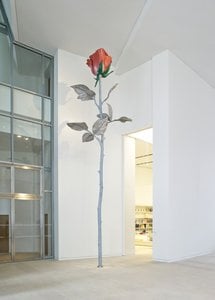
    • Rose
    • Untitled
  • Place Of Birth: Bad Oldesloe, Germany