


Múzeumi minőségű giclée vagy vászonnyomat, gyors gyártással és rugalmas finomítási lehetőségekkel. ( Kézzel festett másolat rendelése Kép letöltése)





























Válasszon előre meghatározott méreteink közül, amelyek megfelelnek a műalkotás eredeti arányainak.

Megadhat saját méreteket is egy konkrét kerethez vagy helyszínhez igazítva. Amennyiben a kiválasztott méret nem egyezik az eredeti kép arányokkal, a műalkotást le fogjuk vágni, vagy kiegészítjük a képet tükrözött vagy egyszínű szélekkel. A gyártás megkezdése előtt egy digitális tervezetet küldünk jóváhagyásra.
Kérjük, vegye figyelembe, hogy a képernyőn látható előnézet nem tükrözi a tényleges levágást vagy kiegészítést. Csak a tervezet mutatja pontosan a végső kompozíciót.
Bár az egyedi méretek is elérhetőek, az eredeti arányok megőrzése érdekében azt javasoljuk, hogy válasszon a előre meghatározott listából származó méretet.
Világszerte történő kiszállítás területére mindössze 2 hét alatt, a szokásos 4-5 hét helyett. (7 szeptember)


Nagyharangozó
Reprodukció mérete
Gustav Klimt, a name synonymous with opulent beauty and profound introspection, emerged from the vibrant artistic landscape of late 19th-century Austria. Born in Baumgarten in 1862, his early life was marked by a delicate balance between familial hardship and an undeniable artistic talent—a legacy subtly shaped by his father’s profession as a gold engraver. This lineage instilled within Klimt a deep appreciation for texture, light, and the inherent allure of precious materials, elements that would profoundly influence his distinctive style. Klimt wasn't merely a painter; he was a pivotal figure in the formation of the Vienna Secession, a revolutionary artistic movement that dared to challenge the rigid conventions of academic art. Founded in 1897, the Secession sought to liberate artistic expression, rejecting established norms and embracing a diverse range of styles – from Art Nouveau’s flowing lines to Symbolism's evocative imagery. Klimt’s contribution was particularly significant; he spearheaded this movement away from traditional subject matter, focusing instead on exploring themes of sensuality, eroticism, and the female form with unprecedented boldness.
Klimt's "Nude," created in 1914, is a quintessential example of his Symbolist approach to painting. This oil on canvas depicts a reclining nude woman, a recurring motif throughout Klimt’s oeuvre, yet here it possesses a unique intensity and layered symbolism. The figure lies comfortably in bed, her posture relaxed, one leg raised, the other gently lowered – an image of quiet repose and sensual awareness. Noticeably absent are dramatic poses or overt displays of nudity; instead, Klimt masterfully employs subtle gestures and carefully considered composition to convey a sense of profound intimacy and vulnerability. The surrounding space is rendered with a deliberate restraint, dominated by soft, muted tones that draw the viewer’s attention entirely to the central figure. The scattered circles throughout the scene are not merely decorative elements; they can be interpreted as representing fragments of memory, fleeting emotions, or perhaps even the fragmented nature of female experience itself – a recurring theme in Klimt's work.
Klimt’s relationship with women was complex and deeply intertwined with his artistic vision. He frequently depicted them as powerful muses, embodying both beauty and mystery. The “Nude” is part of a larger body of work dedicated to exploring the female form, culminating in the current exhibition at the Belvedere Palace & Museum in Vienna: "The Women of Klimt, Schiele and Kokoschka." This remarkable display offers a comprehensive overview of how these three influential artists – Klimt, Egon Schiele, and Oskar Kokoschka – each approached the representation of women, revealing their diverse perspectives and artistic techniques. Klimt’s depictions often transcend mere physical beauty, delving into the psychological complexities and emotional states of his subjects. The woman in "The Nude" isn't simply a beautiful object; she is a vessel for Klimt’s exploration of sensuality, desire, and perhaps even loneliness.
Klimt’s distinctive style is immediately recognizable through his masterful use of color, texture, and decorative elements. He frequently employed gold leaf – a technique directly inherited from his father's profession – to create shimmering surfaces that evoke a sense of opulence and timelessness. The application of this material isn’t merely superficial; it adds depth and luminosity to the painting, transforming the canvas into a richly textured tapestry. The influence of Japanese art is also evident in Klimt’s work, particularly in his use of flattened perspectives, simplified forms, and decorative patterns. “The Nude” exemplifies these influences, creating an image that is both intensely personal and universally resonant. Klimt's legacy continues to inspire artists today, cementing his place as one of the most important figures in modern art.


1862 - 1918 , Ausztria

Explore the profound impact of the Vienna Secession movement. Discover how visionaries like Gustav Klimt revolutionized modern art through symbolism, gold leaf, and bold ornamentation in this deep dive into the aesthetic revolution that redefined the visual landscape of Europe.

Discover the profound allure of oil on canvas. Explore the mastery of impasto textures, the science of pigment longevity, and expert guides to selecting museum-quality reproductions that elevate your collection with timeless elegance and tactile depth.
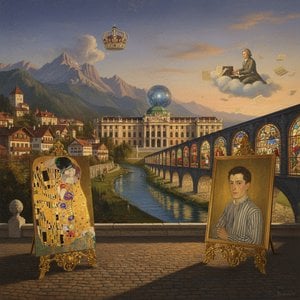
Embark on a sophisticated journey through Austrian art history. Explore the golden brilliance of Gustav Klimt and the elegance of the Vienna Secession through an expert lens, celebrating the enduring soul of Central European masterpieces.

 Megtekintés
 Küldés
 Megosztás
 Részletek

 Letöltés
 Hasonló darabok
 X-ray felvétel
 Diavetítés

 Összes részlet megjelenítése







 Az üvegkeretes opció csak 110 cm alatti méretben érhető el


