Megtekintés AR előnézet Kézzel festett másolat rendelése Áttérés digitális képre Küldés
Részletek Útmutató Kedvencekhez ad Letöltés Hasonló darabok X-ray felvétel Diavetítés Kérdések és válaszok Letöltés Statisztika

The Flight into Egypt

Méretek
47.0 x 34.0 cm

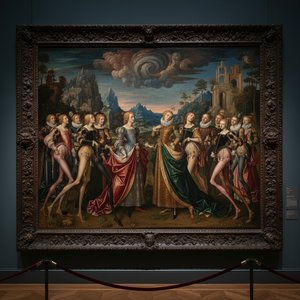
Witness the biblical Flight into Egypt by Giuseppe Cesari! This stunning 1595 oil-on-panel painting captures Mary, Joseph, and baby Jesus fleeing to Egypt – a masterpiece of Mannerist art.

Fedezze fel Giuseppe Cesari manierista festményeit, beleértve Caravaggio korai képzését is. Ismerje meg római vallásos jeleneteit és portréit (1568-1640).

Giclée / Műnyomat

Múzeumi minőségű giclée vagy vászonnyomat, gyors gyártással és rugalmas finomítási lehetőségekkel. ( Kézzel festett másolat rendelése Áttérés digitális képre)

Corner sample of the P118B picture frame: formázott polisztirol, 5 cm wide and 3 cm thick
P118B Ft10
Corner sample of the P118H picture frame: formázott polisztirol, 5 cm wide and 3 cm thick
P118H Ft10
Corner sample of the P118W picture frame: formázott polisztirol, 5 cm wide and 3 cm thick
P118W Ft10
Corner sample of the P438Z picture frame: formázott polisztirol, 5.5 cm wide and 3.5 cm thick
P438Z Ft10
Corner sample of the P508JH picture frame: formázott polisztirol, 7 cm wide and 3.5 cm thick
P508JH Ft12
Corner sample of the P508YH picture frame: formázott polisztirol, 7 cm wide and 3.5 cm thick
P508YH Ft12
Corner sample of the P805H picture frame: formázott polisztirol, 5 cm wide and 3.5 cm thick
P805H Ft10
Corner sample of the P805Z picture frame: formázott polisztirol, 5 cm wide and 3.5 cm thick
P805Z Ft10
Corner sample of the P919BZ picture frame: formázott polisztirol, 7 cm wide and 3.5 cm thick
P919BZ Ft10
Corner sample of the P919G picture frame: formázott polisztirol, 7 cm wide and 3.5 cm thick
P919G Ft10
Corner sample of the P919XJ picture frame: formázott polisztirol, 7 cm wide and 3.5 cm thick
P919XJ Ft10
Corner sample of the P959ZH picture frame: formázott polisztirol, 5 cm wide and 3 cm thick
P959ZH Ft10
Corner sample of the P968JZ picture frame: formázott polisztirol, 6 cm wide and 4 cm thick
P968JZ Ft12
Corner sample of the W106C picture frame: tömörfa, 5 cm wide and 3 cm thick
W106C Ft8
Corner sample of the W218G picture frame: tömörfa, 5 cm wide and 3 cm thick
W218G Ft10
Corner sample of the W218JH picture frame: tömörfa, 5 cm wide and 3 cm thick
W218JH Ft8
Corner sample of the W218Y picture frame: tömörfa, 5 cm wide and 3 cm thick
W218Y Ft10
Corner sample of the W307PJ picture frame: tömörfa, 6 cm wide and 3 cm thick
W307PJ Ft10
Corner sample of the W316G picture frame: tömörfa, 6 cm wide and 3 cm thick
W316G Ft10
Corner sample of the W316PJ picture frame: tömörfa, 6 cm wide and 3 cm thick
W316PJ Ft8
Corner sample of the W316Y picture frame: tömörfa, 6 cm wide and 3 cm thick
W316Y Ft10
Corner sample of the W398PJ picture frame: tömörfa, 5 cm wide and 3 cm thick
W398PJ Ft8
Corner sample of the W4111J picture frame: tömörfa, 6.5 cm wide and 3.5 cm thick
W4111J Ft10
Corner sample of the W500HY picture frame: tömörfa, 7 cm wide and 5 cm thick
W500HY Ft15
Corner sample of the W500JH picture frame: tömörfa, 7 cm wide and 5 cm thick
W500JH Ft15
Corner sample of the W692G picture frame: tömörfa, 8 cm wide and 4 cm thick
W692G Ft12
Corner sample of the W849H picture frame: tömörfa, 5 cm wide and 3 cm thick
W849H Ft8
Corner sample of the W940BG picture frame: tömörfa, 7.5 cm wide and 4.5 cm thick
W940BG Ft15
Corner sample of the W953PJ picture frame: tömörfa, 6 cm wide and 3.5 cm thick
W953PJ Ft8

Standard méret
egyedi méretű
CM
INCH

Válasszon előre meghatározott méreteink közül, amelyek megfelelnek a műalkotás eredeti arányainak.

szélesség
magasság

Írja be a keretének vagy a falának megfelelő szélességet és magasságot. A nyomatot csak le lehet vágni, soha nem tehető nagyobbá, mint az eredeti kép, így egy eltérő alakú méretnél a kép egy része elveszik. Mielőtt bármit kinyatintanánk, küldünk egy digitális próbamodellt jóváhagyásra. Az oldalon látható kép nem tartalmazza a valós levágást — ezt csak a próbamodell mutatja meg.

Világszerte történő kiszállítás területére mindössze 2 hét alatt, a szokásos 4-5 hét helyett. (10 november)

Ingyenes globális expressz szállítás
Prémium minőségű len vászon
Teljes körű szállítási biztosítás
Vámvisszatérítési Garancia
Hiteles színarányosság garancia
100 napos visszaküldési lehetőség (csak hibás termékek esetén)
100% pénzvisszatérítési garancia
Több darab vásárlásakor kedvezmény

Összesített ár

Ft 22551

The Flight into Egypt

Giclée / Műnyomat

Reprodukció mérete

-

Összesített ár

Ft 22551

Gyors információk

  • Dimensions: 47 x 34 cm
  • Notable elements: Landscape, Holy Family
  • Artist: Giuseppe Cesari
  • Movement: Mannerism
  • Title: The Flight into Egypt
  • Artistic style: Baroque

Művészeti kvíz

Minden kérdésre csak egy helyes válasz létezik.

Kérdés 1:
What biblical event does the painting "The Flight into Egypt" depict?
Kérdés 2:
According to the description, what is Mary wearing in the painting?
Kérdés 3:
The painting was created by which artist?
Kérdés 4:
What is depicted in the background of the painting, suggesting movement and urgency?
Kérdés 5:
The style of "The Flight into Egypt" is most closely associated with which historical art movement?

The Flight into Egypt by Giuseppe Cesari – A Baroque Narrative of Faith and Refuge

Giuseppe Cesari’s “The Flight into Egypt,” completed in 1595, is more than just a biblical scene; it's a meticulously crafted tableau brimming with symbolic depth and the palpable drama characteristic of the late Mannerist and early Baroque periods. Housed within the Galleria Borghese in Rome, this oil-on-panel work offers a rare glimpse into the artistic sensibilities of a master often overshadowed by his more celebrated contemporaries, yet undeniably possessing a profound understanding of light, composition, and emotional resonance.

The painting immediately draws the viewer into a world of heightened realism and carefully orchestrated movement. Cesari’s masterful use of chiaroscuro – the dramatic interplay of light and shadow – dominates the scene, lending it an almost theatrical quality. The figures are bathed in a warm, golden glow emanating from an unseen source, while the surrounding landscape is plunged into relative darkness, creating a powerful sense of depth and emphasizing the urgency of their flight. Notice how the artist subtly employs atmospheric perspective; distant trees recede into a hazy blue, further enhancing the illusion of space and conveying the vastness of the journey.

At the heart of the composition lies Mary, seated on a humble donkey, her posture radiating both vulnerability and unwavering faith. She cradles the infant Jesus with an expression of serene devotion, his face tilted upwards as if receiving guidance from above. Joseph, depicted as a strong and protective figure, guides their way, his hand outstretched to ensure their safety. The figures are not idealized; they possess a tangible humanity – Mary’s slightly furrowed brow, Joseph's weary but determined gaze – which imbues the scene with an immediate sense of connection. The detail in their clothing—Mary’s vibrant red dress contrasting sharply with the muted tones of the landscape—adds to the visual richness and reinforces the narrative’s central theme of refuge and protection.

A Mannerist Foundation, a Baroque Expression

Cesari's work firmly resides within the Mannerist tradition, a transitional period between the High Renaissance and the Baroque. While retaining elements of classical balance and proportion, Mannerism embraced exaggeration, stylized forms, and an intense emotionality – qualities that would be further amplified in the Baroque era. The elongated figures, the dramatic lighting, and the heightened sense of movement all reflect these influences. However, Cesari’s style is distinct from the more overtly theatrical works of artists like Bronzino or Parmigianino; there's a quiet dignity and emotional restraint that sets his work apart.

The painting’s landscape, painted with meticulous detail, isn’t merely a backdrop but an integral part of the narrative. It’s a stylized representation of the countryside, incorporating elements like a temple – likely referencing the Temple of the Sibyl at Tivoli, a frequent motif in Italian art – which symbolizes prophecy and divine guidance. The inclusion of a small bird soaring overhead adds to the sense of movement and urgency, suggesting that their journey is fraught with peril.

Symbolism and Narrative Resonance

“The Flight into Egypt” is rich in symbolic meaning. The flight itself represents not only Mary and Joseph’s escape from Herod's murderous intent but also a deeper allegory of the Holy Family’s rejection of worldly power and their embrace of spiritual truth. The donkey, a humble animal, symbolizes humility and service – qualities essential to the Christian narrative. The infant Jesus, bathed in light, embodies divine grace and salvation.

The painting's enduring appeal lies in its ability to evoke a profound sense of empathy and wonder. It’s a timeless depiction of faith, family, and the struggle for survival—themes that resonate deeply with viewers across cultures and generations. The scene captures a moment of intense vulnerability and unwavering hope, reminding us of the power of love and devotion in the face of adversity.

A Masterpiece for the Collector

Reproductions of “The Flight into Egypt” by Giuseppe Cesari offer an exceptional opportunity to bring this captivating artwork into your home or office. WahooArt’s hand-painted reproductions faithfully capture the original's intricate details, vibrant colors, and dramatic lighting, ensuring that you own a piece of art history. Whether displayed in a grand salon or a cozy study, this painting will undoubtedly serve as a source of inspiration and contemplation for years to come.

For more information about Cesari’s life and work, and to explore other stunning reproductions available at WahooArt.com, please visit the links provided below:

Explore further with these additional resources:

Kérdések és válaszok

Mely paletta és domináns szín határozza meg a "The Flight into Egypt" alkotást?

A „The Flight into Egypt”, Giuseppe Cesari alkotása színek identitása: egy Earthy paletta, amelyet Sap Green (#6f624a) dominál.

Megrendelhető-e a "The Flight into Egypt" olajfestmény kézzel festett másolata?

A „The Flight into Egypt”, Giuseppe Cesari alkotása kézzel festett másolataival a ez a weboldal oldalon találkozhat, kézzel festett olajfesték reprodukció lino vászonon formában, melyet a(z) Kézzel festett másolat oldalon lehet megrendelni.

Mely művész és mely stílus áll a "The Flight into Egypt" mögött?

Giuseppe Cesari a Baroque irányzatban alkototta meg a "The Flight into Egypt" című művét.


A művész életrajza

Giuseppe Cesari: A Master of Mannerist Grandeur

Giuseppe Cesari, aki Arpino telepén, körülbelül 1568-ban született, és tragikus módon, Rómában hunyt el 1640-ben, a magyar művészettörténet gazdag szövetében egy lenyűgöző, mégis néha rejtélyes alak maradt. Bár nem mindig részesült olyan lelkes dicséretben, mint kortársai – különösen azok, akik a magasrenesszánshoz vagy a barokkhoz kapcsolódtak –, Cesari pályája egy rendkívüli korszakot ölel fel, közvetítve és aktívan részt véve a művészeti stílusok és a megbízások alapvető változásában. Története szorosan összefonódott az ambícióval, a technikai képességgel és azzal a kitartó küzdelemmel, amellyel próbált örök örökséget hagyni Római művészet ragyogó színterének közepén. Ő a manierizmus kulcsfontosságú alakja volt, stilisztikai hídként szolgálva a reneszánsz klasszikus ideálai és azok a drámai innovációk között, amelyek később a barokk korszakot meghatározták. Cesari korai évei még némi titokba burkolóznak, bár általánosságban elfogadott, hogy Arpino kis települése mellett, Róma és Nápoly között született. Apja, aki szintén Giuseppe nevű volt, festőként tevékenykedett, így a fiatal művész kezdetektől megkapta az alapokat a művészeti technikákhoz. Azonban az életútját valóban Rómába költözése formálta át. A város, amely a pápi megbízások szíve volt és mágneseként vonzotta a művészeket Itália egész територіїéről és túlerről is, összehasonlíthatatlan lehetőségeket kínált – de ugyanilyen vad versenyzést is. Kezdetben Benedetto Cesani sanzonált tanusa volt, aki a Vatikán freskóiról ismert, majd végül Carlo Maderno neves épészszel került kapcsolatba. Ez a kapcsolódás döntő fontosságúnak bizonyult, kapukat nyitva jelentve a jelentős megbízások előtt, és bemutatva őt a római művészeti világ befolyásos alakjainak körében.

A udvari festő felemelkedése

Cesari pályája igazi virágzását VIII. Clemensz pápa uralkodása alatt (1592–1605) érte el. Gyorsan kitartóvá vált keresett festővé, olyan tekintélyes megbízásokat kapva, amelyek megszilárdították hírnevét és jelentős vagyont hoztak számára. Legnagyobb elismerését kétségtelenül az Szent দোm (Szent Péter-bazilika) díszítésével kapcsolatos munkálatai során szerezte. 1603 és 1612 között bizalommal rá bízatták a kupolát díszítő pompás mozaikok tervezését – egy monumentális feladat, amely bemutatta technikai tudását és művészeti ambícióját. Ezek a mozaikok, amelyek Krisztus életének és a Szűz Mária történetének jeleneteit ábrázolják, a manierista mozaikművészet legnemesebb példái közé tartoznak. A Szent Péter-bazilikaon túl Cecari számos más megbízást is elvállalt, beleértve a palotákat, templomokat és magánrezidenciákat Rómában, ahol freskókat készített. Termékeny művész volt, hatalmas munkásságot alkotva, amely tükrözi sokszínű képességeit és stilisztikai preferenciáit. Cesari művészeti stílusa gyakran manieristaként írják le, amelyet eleganciája, kifinomultsága és bonyolult részletgazdagsága jellemzik. Kompozíciói jellemzően egyensúlyozottak és szimmetrikusak, tükrözve olyan művészek hatását, mint Giulio Romano vagy Pontormo. Gazdag színpalettát használt, gyakran alkalmazva az aranyozást is, hogy pompás és monumentális érzetet keltsen. Bár jelentős szakértelmet demonstrált a freskóművészetben – ami különösen a Szent Péter-bazilikában látható –, egyaránt jártas volt a kis méretű, magánbemutatásra szánt táblaképek készítésében is. Ezek az alkotások gyakran vallásos vagy mitológiai témákat ábrázoltak, aprólék részletességgel és egy határozott flamand hatással kivitelezve. Stílusa gyakran csiszoltnak és valamileg „szándékosan díszesnek” írják, hiányozva tőle az olyan későbbi barokk művészeknél, mint Caravaggio, a nyers érzelmi intenzitás.

Hatások és örökség

Cesari művészeti fejlődése kétségtelenül meghatározta a korában Rómában jelen lévő sokszínű stílusok hatása. Elsorbant a magasrenesszáns klasszikus mesterei, Raphael és Michelangelo hatásait magába szívta, miközben befogadta a manierizmus különcibb tendenciáit is. Carlo Maderno, a korszak egyik vezető épésze, társaságának köszönhetően tovább szélesedtek művészeti horizontjai, amelynek során olyan innovatív építészeti koncepciókkal és tervezési elvekkel ismerkedhetett meg. Jelentős sikere ellenére Cesari öröksége néha ambigus marad. Bár életében széles körű népszerűségnek örvendett, munkásságát gyakran technikailag magasan színvonalúnak, de az eredetiség vagy a mély érzelmi á profundidad hiányában tartják. Ennek ellenére a Szent Péter-bazilika díszítésébe való hozzájárulása biztosítja, hogy neve örökre összekapcsolódjon a kereszténység egyik legikonikusabb épületével.

Elfeledett mester?

Giuseppe Cesari története megható emlékeztetőként szolgál azoknak a művészeknek, akik a reneszánsz megbízórendszer összetett és versenyző világában navigáltak. Pályája, amely egyszerre volt a diadalok és az elfeledtség jele, értékes betekintést nyújt az európai művészettörténet egy döntő korszakának műalkotási és fogadtatási dinamikájába. Annak ellenére, hogy korabeli, felmagasabb rangú kortársai árnyékába került, Cesari munkássága továbbra is tanulmányozásra és csodálatra készen áll, technikai tudása, elegáns stílusa és Róm viszonylagos vizuális tájképéhez tett jelentős hozzájárulása miatt. A további kutatások és kritikai újragondolás talán egy mélyebb megértést képes felvállalni erről a gyakran alábecsült manierista monumentális művészéről.
Giuseppe Cesari

Giuseppe Cesari

1568 - 1640 , Olaszország

Rövid információk

  • Artistic Movement Or Style: Mannerista
  • Artists Or Movements Influenced By This Artist: ['Flemish Mannerism']
  • Artists Who Influenced This Artist: ['Caravaggio']
  • Date Of Birth: 1568
  • Date Of Death: 1640
  • Full Name: Giuseppe Cesari
  • Nationality: Olasz
  • Notable Artworks: ['Szent Péter-bazilika mozaikjai']
  • Place Of Birth: Arpino, Olaszország
Fedezze fel a műalkotásokat témák, stílusok és jellemzők szerint csoportosítva.