


 PaintingSurrealist Landscape
 Modern
 59.0 x 49.0 cm
 Legion of Honor
Kézzel festett olajvastú vászon, az Ön által választott méretben és keretben, művészeink készítik meglévőre. ( Nyomat rendelése Kép letöltése)





























Válasszon előre meghatározott méreteink közül, amelyek megfelelnek a műalkotás eredeti arányainak.

Ön megadhat saját méreteket egy adott kerethez vagy térhez igazításhoz. Ha a kiválasztott méret nem egyezik az eredeti kép arányával, akkor a műalkotást levágjuk, vagy további kézzel festett elemekkel meghosszabbítjuk a festményt. A gyártás megkezdése előtt küldünk Önnek egy digitális előnézetet jóváhagyásra.
Kérjük, vegye figyelembe, hogy a képernyőn megjelenő előnézet nem tükrözi a tényleges vágást vagy kiterjesztést. Csak az előnézet fog pontosan mutatni a végső kompozíciót.
Bár egyedi méretek állnak rendelkezésre, javasoljuk, hogy válasszon egy méretet az előre meghatározott listából az eredeti arányok megőrzése érdekében.
Világszerte elérhető szállítás () 3-4 hét alatt a szokásos 5 hét helyett. (6 szeptember). A minőség nem kérdőjelezhető.


Piazza d
Reprodukció mérete
In the hauntingly quiet realm of Giorgio de Chirico’s Piazza d, the boundaries between reality and the subconscious dissolve into a monochrome stillness. This evocative composition serves as a profound exploration of the human psyche, rooted deeply in the existential anxieties that defined early 20th-century Europe. The artwork presents a meticulously crafted illusion, where a solitary statue—a male figure lying prone upon a cobblestone pavement—confronts a nondescript building façade. There is an immediate, unsettling sense of disorientation captured here; the stark juxtaposition of the heavy, resting form against the architectural void mirrors the artist’s lifelong preoccupation with fractured realities and the elusive, often deceptive nature of human perception.
The technique employed by de Chirico is a masterclass in metaphysical tension. While his style is undeniably a precursor to Surrealism, it is anchored by a rigorous, academic draftsmanship learned during his formative years. He utilizes a deliberate flattening of perspective to strip the scene of depth, creating an atmosphere of dreamlike stasis. By choosing a monochrome palette, de Chirico removes the emotional distractions of color, forcing the viewer to confront the raw power of form and texture. The subtle gradations of light and shadow are particularly striking, sculpting the contours of the statue to convey a sense of both monumental permanence and profound vulnerability.
Beyond its visual strikingness, Piazza d is laden with symbolic weight that resonates with anyone who has ever felt the sting of isolation. The statue itself acts as a powerful motif for humanity’s confrontation with mortality and decay. As the figure lies in a state of repose—perhaps sleeping, perhaps eternally still—it embodies a melancholic contemplation of existence. This sense of unease was deeply influenced by the intellectual upheaval of de Chirico's era, particularly the Nietzschean philosophies that challenged traditional moral frameworks and left the individual adrift in an increasingly irrational world.
For the discerning collector or interior designer, this piece offers more than mere decoration; it provides a focal point for deep intellectual engagement. The presence of secondary figures—shadowy individuals engaged in quiet activities near benches—adds layers of narrative complexity, suggesting that even within the vast, empty squares of our dreams, we are never truly alone, yet always fundamentally separate. This artwork is an ideal acquisition for those seeking to infuse a space with sophistication, mystery, and a timeless, contemplative energy.

1888 - 1978 , Görögország

Fedezze fel a manga és anime lenyűgöző világát! Mélyreható elemzések, történelmi áttekintés és szakértői vélemények a japán animáció művészetéről és kulturális hatásáról. Prémium minőségű gyűjtemények és exkluzív betekintések várják Önt!

Fedezze fel az anime és manga lenyűgöző hatását a kortárs művészetre! Mélyreható elemzésünk bemutatja az új esztétikai trendeket, inspiráló művészeket és a jövő vizuális kultúráját.
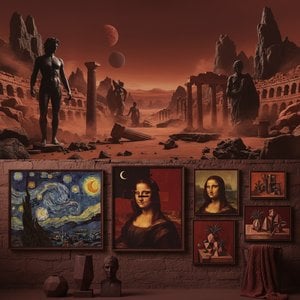
Fedezze fel a 10 leghíresebb festményt, melyeket a 'Mars Black' mély árnyalatai dominálnak! Rembrandt, Goya és Picasso remekművei – történetük, technikájuk és időtlenségük. Múzeumi minőségű művészeti reprodukciók otthonába. Fedezze fel a teljes gyűjteményt a WahooArt.com-on!

Alakítsa át fényképeit egyedi anime stílusú műalkotásokká a WahooArt segítségével! Képzett művészek, minőségi anyagok és 100% elégedettségi garancia. Örökké megőrzött emlékek – rendelje meg most!

Fedezze fel James Abbott McNeill Whistler 25 legszebb művét! Ismerje meg a Nocturnok, portrék és az amerikai impresszionizmus mesterét. Elegáns faliképek otthonába – WahooArt.com kínálatából. Böngésszen online!

 Megtekintés
 Küldés
 Megosztás
 Részletek

 Letöltés
 Hasonló darabok
 X-ray felvétel
 Diavetítés
 Összes részlet megjelenítése







 Az üvegkeretes opció csak 110 cm alatti méretben érhető el


