


Szerezzen be nyomtatásra kész fájlt, amely messze túlmutat a webes előnézeten. Minden általunk értékesített digitális kép az adatbázisunkban található nagy felbontású mesterfájlból származik – általában 5 000 és 15 000 pixel szélességű –, így magabiztosan nyomtathat nagy méretben, sokat vághat a képen, vagy reprodukálhatja a legfinomabb részleteket is.
Stúdiómból egyetlen fájl sem távozik feltartózkodás nélkül. Egy digitális szakértő az eredeti festménnyel összehasonlítja a színeket, és szükség esetén korrigálja azokat, majd professzionális retusználó eszközökkel javítja a tisztaságot és a részletgazdagságot — miközben mindig hű marad a művész vonalvezetéséhez és stílusához. Az eredmény egy olyan kép, amely úgy néz ki, mint egy festmény, és nem úgy, mint egy szűrőzött szkenn.
A végső munka befejezése előtt jóvá kell hagynia a képet: szakértőnk 72 órán belül elküldi azt e-mailben ellenőrzésre. Nem tetszett? Kérhet javításokat vagy korrekciókat, illetve visszatérítést kérhet, amennyiben a minőség nem felel meg az elvárásoknak.
Ez az a minőség, amelyre a kiadók, a design stúdiók, a galériák és a nyomdaték megbízhatnak.
Töltsön le nagy felbontású fájlt személyes kiállításokhoz, nyomtatáshoz és kreatív projektekhez. ( Váltás nyomtatványra Kézzel festett másolat rendelése)
Amikor a WahooArt.com szolgáltatást választja, nem csupán egy képet kap – professzionálisan felmagasított digitális műalkotást kap, amely precizitással készült, és amelyet megelégsedési gwarancia tesz biztoslássá. Az alábbiakban automatikusan minden benne 】
A nagy felbontású digitális képmásolatát a megrendelést követő 72 órán belül e-mailben elküldjük Önnek – azonnal használható formátumban.
Műve professzionális módon kerül optimalizálásra fejlett mesterséges intelligencia eszközök és manuális szerkesztés segítségével, biztosítva a maximális részletességet, tisztaságot és színpontosságot.
Véletlenül törölted vagy elvesztetted a fájlodat? Ne aggódj – bármikor ingyen újra megküldjük neked.
Élvezze műalkotásait azonnal, vám, illeték vagy szállítási költség nélkül – a digitális letöltések mindig adamentesek.
Professzionális eszközök és színkezelés segítségével garantáljuk, hogy digitális képe a lehető legpontosabban tükrözze az eredeti színeket.
Ha nemມີ elégedett a digitális képével, 100 napon belül felülvizsgáljuk vagy 100% visszatérítjük az amountot – kérdés बिना.
Nem tetszett a vásárlás? 100 napon belül teljes visszatérítést garantálunk a digitális fájl megvételétől számítva – kérdés nélkül.
Vásároljon 3 képet, spóroljon 10%-et - Vásároljon 5-öt, spóroljon 15%-et - Vásároljon 10+ képet, spóroljon 20%-at. Kiváló kreatív projektekhez, galériákhoz és ügynökségekhez.

Gianni Bertini (1922–2010) was far more than a mere painter; he was a restless architect of the visual imagination, a man who navigated the turbulent currents of the postwar era with an unyielding curiosity. Born in Pisa, Italy, Bertini’s early intellectual formation was rooted in the precision of mathematics—a discipline that would later manifest in his meticulous manipulation of textures and layers. This scientific rigor did not stifle his creativity but rather provided the structural foundation upon which he built a complex, multi-layered aesthetic. His journey took him from the historical echoes of the Italian Renaissance to the vibrant, experimental heart of Paris in 1951, a transition that allowed him to bridge the gap between classical grandeur and the burgeoning anxieties of modern consumer culture.
His artistic evolution was marked by a profound refusal to remain tethered to any single movement. While his early years saw him exploring figurative and geometric abstraction, he soon found himself drawn to the visceral energy of Arte Nucleare and the gestural freedom of informal painting. In works such as La Toile de Penelope, created alongside his wife Licia Monesi, Bertini demonstrated a remarkable ability to weave together disparate elements—using textile collage and irregular stitching to evoke both the ancient myth of the weaver and the raw, expressionist textures of the mid-century avant-garde. This period of his life was characterized by a deep engagement with mythology, using figures like Oedipus and Artemis not merely as subjects, but as vessels for exploring a reconstructed humanism in a world recovering from the scars of war.
What truly set Bertini apart from his contemporaries was his audacious embrace of the machine. At a time when many artists sought refuge in the purity of the brushstroke, Bertini looked toward the burgeoning technologies of mass media. He became a pioneer of material transfer and photomechanical screen printing, techniques that allowed him to imprint images directly onto canvas using specialized adhesives. This process created a visual language that was strikingly contemporary—reminiscent of the Pop Art movement seen in the works of Warhol, yet imbued with a much sharper, more critical edge regarding the impact of mass production on the human psyche.
This fascination with the mechanical led to his development of Mec-Art, a concept that merged graphic experimentation with industrial processes. His work often featured:
Through these methods, Bertini achieved a style that was both tactile and ephemeral, capturing the frantic energy of the 20th century through a lens of controlled experimentation.
Beyond the canvas, Bertini was a central figure in the interdisciplinary dialogues of the postwar avant-garde. He moved fluidly between the worlds of visual art, poetry, and performance, collaborating closely with experimental poets like Henri Chopin and participating in the radical actions of Nouveau Réalisme. His "bertinizations" represented an attempt to infuse everyday reality with a heightened, often surrealist, iconography, challenging the boundaries between high art and the mundane objects of consumer life.
His historical significance lies in his role as a bridge-builder—between science and art, between ancient myth and modern technology, and between the Italian tradition and the French experimental scene. Even as he explored the mechanical, he never lost sight of the human element; his work remained a profound investigation into the soul's struggle within an increasingly mechanized world. Today, the retrospective exhibitions of his work, such as those held in Lecce, continue to reveal the complexity of a man who refused to be categorized, celebrating a legacy defined by tireless research, aesthetic courage, and an eternal quest for the new.
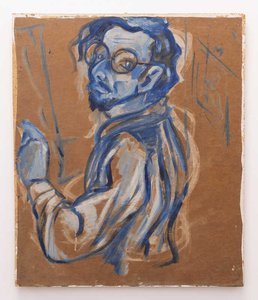
1922 - 2010 , Italy
 Megtekintés
 Küldés
 Megosztás
 Részletek
 Útmutató

 Letöltés
 Hasonló darabok
 X-ray felvétel
 Diavetítés
 Q&A
Q&A Statisztika
 Összes részlet megjelenítése


