


 Oil On CanvasWallArtDutch Golden Age
 1654
1654 70.0 x 60.0 cm
 Staatliche Museen zu Berlin
Vásároljon nagy felbontású, javított digitális képet, amely minőségében messze felülmúlja az online előnézetet.
Minden fájlt szakembereink a legmodernebb eszközök és precíz, kézi retusálás segítségével készítenek el aprólékosan. Gondoskodunk arról, hogy minden kép kivételes tisztasággal, pontos színhelyességgel és részletgazdag finomsággal rendelkezzen.
A végleges fájl 72 órán belül e-mailben megérkezik, professzionális, szerkesztői és nyomtatási környezetbe optimalizálva az azonnali használathoz. Ez ugyanaz a minőség, amelyben a legmeghatározóbb tervezőstúdiók, kiadók és galériák is megbízhatnak.
Töltsön le nagy felbontású fájlt személyes kiállításokhoz, nyomtatáshoz és kreatív projektekhez. ( Nyomat rendelése Kézzel festett másolat rendelése)
Amikor a WahooArt.com szolgáltatást választja, nem csupán egy képet kap – professzionálisan felmagasított digitális műalkotást kap, amely precizitással készült, és amelyet megelégsedési gwarancia tesz biztoslássá. Az alábbiakban automatikusan minden benne 】

A nagy felbontású digitális képmásolatát a megrendelést követő 72 órán belül e-mailben elküldjük Önnek – azonnal használható formátumban.

Műve professzionális módon kerül optimalizálásra fejlett mesterséges intelligencia eszközök és manuális szerkesztés segítségével, biztosítva a maximális részletességet, tisztaságot és színpontosságot.

Véletlenül törölted vagy elvesztetted a fájlodat? Ne aggódj – bármikor ingyen újra megküldjük neked.

Élvezze műalkotásait azonnal, vám, illeték vagy szállítási költség nélkül – a digitális letöltések mindig adamentesek.

Professzionális eszközök és színkezelés segítségével garantáljuk, hogy digitális képe a lehető legpontosabban tükrözze az eredeti színeket.

Ha nemມີ elégedett a digitális képével, 100 napon belül felülvizsgáljuk vagy 100% visszatérítjük az amountot – kérdés बिना.

Nem tetszett a vásárlás? 100 napon belül teljes visszatérítést garantálunk a digitális fájl megvételétől számítva – kérdés बिना.

Vásároljon 3 képet, spóroljon 10%-et - Vásároljon 5-öt, spóroljon 15%-et - Vásároljon 10+ képet, spóroljon 20%-at. Kiváló kreatív projektekhez, galériákhoz és ügynökségekhez.
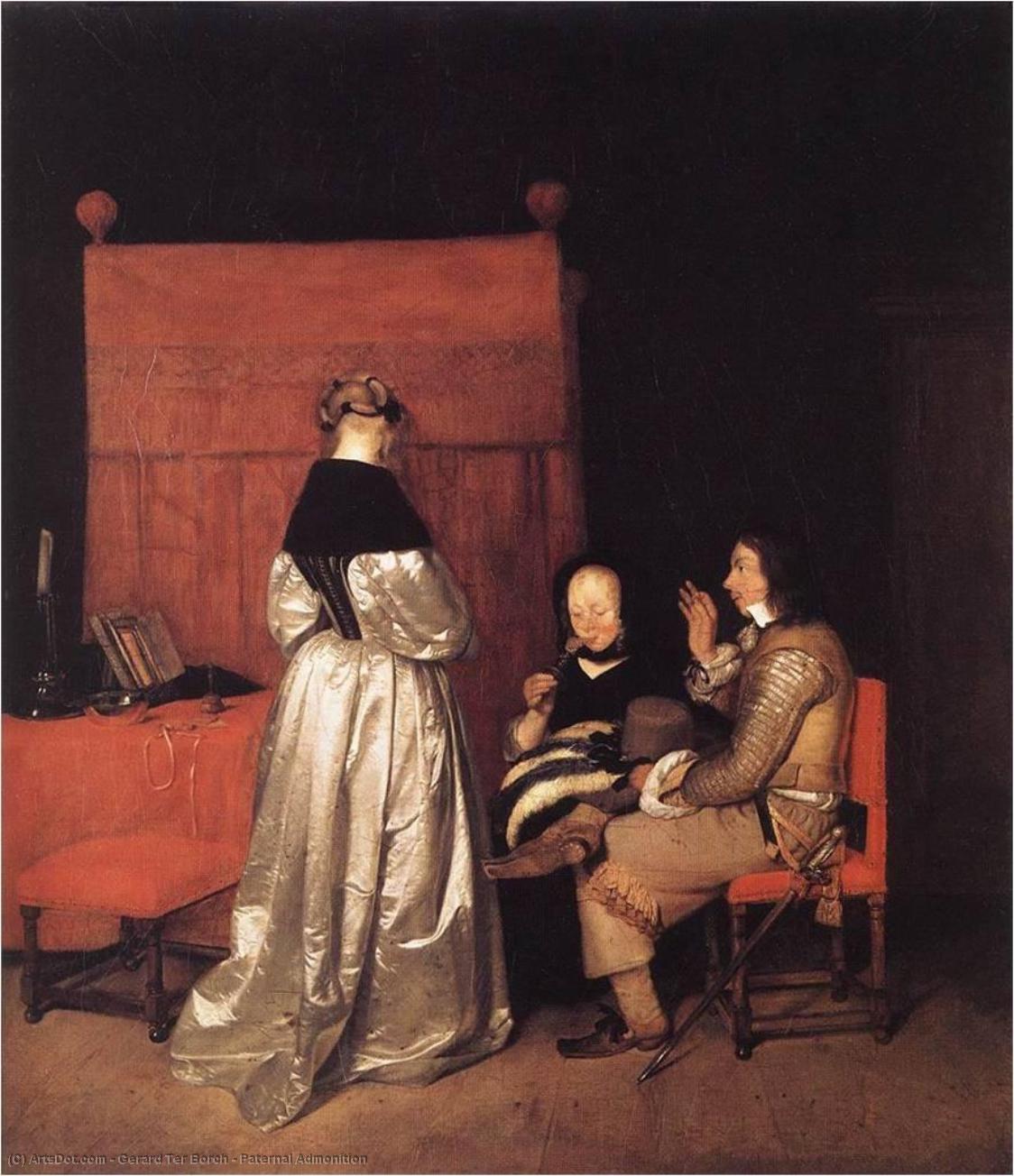
Gerard ter Borch's *Paternal Admonition*, painted around 1654, isn’t merely a portrait; it’s a meticulously crafted tableau of unspoken tension and veiled desire. Within the confines of a modestly furnished room—a subtle blend of domestic comfort and quiet restraint—three figures occupy a space brimming with psychological depth. The painting immediately draws the eye to the woman seated between two men, her posture suggesting both vulnerability and a carefully guarded composure. Her silver satin gown, shimmering with an almost ethereal light, acts as a focal point, demanding attention while simultaneously hinting at a hidden world of pleasure and intrigue.
Ter Borch’s genius lies not in dramatic gestures or overt displays of emotion, but rather in his ability to capture the subtle nuances of human interaction. The man, dressed in the formal attire of a military officer, holds a hat on his lap – a gesture that simultaneously conveys authority and a certain awkwardness. His gaze is directed towards the woman, yet his expression remains ambiguous, leaving us to ponder his intentions. The third figure, partially obscured behind the seated woman, adds another layer of complexity to the scene, suggesting a silent observer or perhaps even a participant in this unspoken exchange.
Technically, *Paternal Admonition* is a remarkable achievement. Ter Borch was a pioneer in Dutch genre painting, renowned for his unparalleled skill in rendering texture and light. He employed a technique of carefully layered glazes to create an astonishingly realistic depiction of fabrics – the luxurious sheen of the satin, the velvet upholstery, even the delicate folds of the woman’s dress are rendered with breathtaking detail. The use of chiaroscuro—the dramatic contrast between light and shadow—further enhances the painting's depth and atmosphere, drawing our attention to key elements while simultaneously creating a sense of mystery.
Notice how the light source seems to originate from an unseen window, casting soft shadows that accentuate the contours of the figures and their surroundings. This masterful manipulation of light not only adds visual interest but also contributes significantly to the painting’s overall mood—a blend of intimacy, restraint, and underlying tension.
The initial interpretation of *Paternal Admonition* as a scene of paternal guidance has been largely superseded by more nuanced readings. While the man undoubtedly holds a position of authority, many scholars now believe that the painting depicts an amorous negotiation between a soldier and a prostitute within a brothel setting. The presence of the bed, the mirror, and the various objects of feminine beauty on the table all lend credence to this interpretation.
However, Ter Borch’s genius lies in his refusal to offer easy answers. He presents us with a scene pregnant with ambiguity, inviting us to interpret the unspoken dynamics between the figures. The woman's averted gaze and the man's hesitant posture suggest a delicate dance of power and desire—a silent conversation that transcends simple categorization.
*Paternal Admonition* offers a fascinating glimpse into the social customs and moral sensibilities of 17th-century Holland. The painting reflects a society where appearances were carefully cultivated, and private interactions often concealed deeper desires. Ter Borch’s ability to capture this complex interplay of public and private life is what makes his work so enduringly captivating.
Reproductions of *Paternal Admonition* can bring this world into your own space, offering a subtle yet powerful reminder of the complexities of human relationships and the enduring allure of unspoken desires. Its quiet intensity and masterful technique make it a truly exceptional addition to any art collection or interior design scheme.

Gerard ter Borch (tulajdonképpen Gerard Terburg, de Magyarországon Gerard Terboch néven vált ismertté a művészettörténeti szakirodalomban; Zwolle, 1617. — Deventer, 1681. december 8.) holland életképfestő, a holland festészet aranykorának egyik kiemelkedő és egyéniségét idéző alkotója volt. Egy új irányzatot alapított a holland művészetben, melyet az ő kortársai követtek el.
Gerard ter Borch született Zwolleban, 1617 decemberében. Édesapja, Gerard ter Borch az idősb., szintén művész volt, aki nagy gondosanával foglalkozott rajzolással és festéssel, valamint metszeteket gyűjtött és készített. Édesanyja pedig Gesina ter Borch volt, aki szintén követett el a művészi pályát.
Ter Borch tanulmányait Zwolleban kezdte meg, majd később Amszterdamban és Haarlemban tanult Pieter de Molijn tájképfestő irányításával. Érdemes megjegyezni, hogy Pieter de Molijn nagy befolyást gyakorolt rá.
Ter Borch stílusa egyedi és innovatív volt. Az ő műveiben különösen hangsúlyos szerepet játszik a fény használata és az anyagok részletes ábrázolása. Együttműködése Guillaume Cornelis Boelennel és Jacob Saamannal jelentős előrelépést tett a holland életképművészet fejlődésében.
Ter Borch első jelentős művének tekinthető az 1634-es *Man on Horseback*, melyet Pieter de Molijn irányításával készített Haarlemban. Ez a festmény mutatja meg Ter Borch egyéniségét és új stílusát.
Ter Borch nagy hatással volt későbbi holland művészekre, köztük Gabriel Metsuhoz, Gerrit Douhoz és Johannes Vermeerhez. Az ő innovatív megközelítése és új irányzata jelentős előrelépést tett a holland életképművészet fejlődésében.
Ter Borch művei nagy népszerűségre találtak meg az időszakban, és számos múzeum és kollekció őrzött példányukat. Együttműködése és befolyása tovább él a holland művészettörténetben.
Ter Borch egy igazán különleges művészi személyiség volt, aki új irányzatot alapított a holland életképművészet aranykorában és nagy hatással volt későbbi kollégáihoz.

1617 - 1681 , Hollandia

 Megtekintés
 Küldés
 Megosztás
 Részletek

 Letöltés
 Hasonló darabok
 X-ray felvétel
 Diavetítés
 Összes részlet megjelenítése


