

Az ezen az oldalon megjelenített műalkotások szerzői jogi védelem alatt állnak, ami azt jelenti, hogy törvényileg nem készíthetünk és nem adhatunk el belőlük pontos másolatokat. Ez a védelem olyan nemzetközi megállapodások alapján érvényesül, mint például a Berni Egyezmény és a nemzeti jogszabályok által, beleértve azokat is, amelyeket meghatározott Az USA szerzői jogi törvénye – 17. cím.
Ez a módszer teljes mértékben megfelel a szerzői jogi szabályozásnak, mivel nem tartalmazza a védett műalkotás másolását vagy duplikálását. Ehelyett ez egy kreatív újinterpretáció – egy új festmény, amely az eredetivel való összefüggései miatt hatással van rá, de nem az az.
Múzeumi minőségű giclée vagy vászonnyomat, gyors gyártással és rugalmas finomítási lehetőségekkel. ( Kézzel festett másolat rendelése Áttérés digitális képre)





























Válasszon előre meghatározott méreteink közül, amelyek megfelelnek a műalkotás eredeti arányainak.

Írja be a keretének vagy a falának megfelelő szélességet és magasságot. A nyomatot csak le lehet vágni, soha nem tehető nagyobbá, mint az eredeti kép, így egy eltérő alakú méretnél a kép egy része elveszik. Mielőtt bármit kinyatintanánk, küldünk egy digitális próbamodellt jóváhagyásra. Az oldalon látható kép nem tartalmazza a valós levágást — ezt csak a próbamodell mutatja meg.
Világszerte történő kiszállítás területére mindössze 2 hét alatt, a szokásos 4-5 hét helyett. (11 november)
Pierrot
Reprodukció mérete
Pierrot is a work by the French artist Georges Rouault, executed in 1910. Born in Paris, France, in 1871, Rouault remained connected to his home city until his death in Paris, France, in 1958. This piece emerged during a period when the artist was establishing his presence in the Parisian art scene, having previously studied under Gustave Moreau at the École des Beaux-Arts.
The work belongs to a broader thematic interest in the figures of the circus and the marginalized. Rouault frequently utilized clowns and performers to explore the human condition, often employing a rough painterly style characterized by heavy black contouring. This technique, reminiscent of the stained glass for which he trained as an apprentice, defines the structural boundaries of his subjects.
Other notable works from this period of the artist's development include:
Executed as a drawing, this work utilizes oil and pastel on paper to define its subject. The medium allows for a specific interplay of texture and color, characteristic of the artist's technical approach. The application of material emphasizes a rough, painterly quality that prioritizes expressive form over precise anatomical accuracy.
The composition relies on heavy black contouring to frame luminous color fields. This technique, reminiscent of the stained glass work from the artist's early apprenticeship, creates a sense of weight and structural clarity. The interplay between the dark outlines and the internal light suggests a tension between the figure and its immediate space. Such formal qualities reflect a transition toward the emotional intensity of Expressionism, using distorted lines to convey internal states rather than mere physical likeness.
The ownership history of this work traces a path from Paris to the United States. It was previously held in the collection of André Lhôte in Paris. The piece later moved to the collection of Theodore Schempp in New York, New York.
In 1938, the work was part of a gift from Joseph Pulitzer, Jr. of St. Louis, Missouri. Following this transfer, it was eventually given to the Fogg Art Museum in 1976.
The work is held by the Harvard Art Museums. It is part of the Fogg Museum collection, specifically within the Modern and Contemporary Art division. This piece was acquired through the Gift of Mr. and Mrs. Joseph Pulitzer, Jr.
Visitors seeking to view this drawing may find it within the museum's permanent holdings. While availability for public display can change, the object remains a significant part of the institution's modern collections. The museum provides access to its various departments through scheduled gallery rotations.
A „Pierrot”, Georges Rouault alkotása szerzői jogi státusza: a mű még szerzői jog védi. Ez határozza meg, hogy a kép másolatai szabadon készíthetők-e.
A „Pierrot”, Georges Rouault alkotása előnézete megtekinthető a mű Előnézet oldalán.
A Portrait formájú, a „Pierrot” című alkotás reprodukcióját egy Living Room számára javasoljuk.


1871 - 1958 , Franciaország
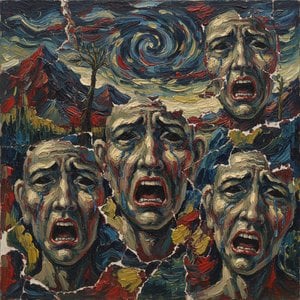
Explore the profound psychological depth of Expressionist art. From Munch to Van Gogh, discover how distorted forms and bold colors convey raw human emotion through our expert guide on this transformative movement.

Explore the profound emotional depth of Expressionist painting. From the bold colors of Emil Nolde to the distorted forms of Kirchner, discover how this movement redefined art through raw feeling and visceral texture in our expert guide to art history.
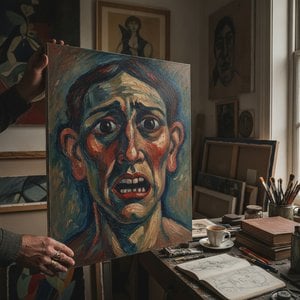
Discover the profound power of Expressionist art. From the raw intensity of Edvard Munch to the visceral textures of Neo-Expressionism, explore how subjective emotion and distorted reality define this movement. An expert guide for discerning collectors seeking depth and soul in fine art.

Explore the profound psychological depth of Expressionist portraiture. From Munch to Schiele, discover how distorted forms and visceral brushstrokes unmask raw human emotion in this definitive guide for art enthusiasts and collectors.
 Megtekintés
 Küldés
 Megosztás
 Részletek
 Útmutató

 Letöltés
 Hasonló darabok
 X-ray felvétel
 Diavetítés
 Kérdések és válaszok
 Statisztika

 Összes részlet megjelenítése









 Az üvegkeretes opció csak 110 cm alatti méretben érhető el


