A művész életrajza
Georges Seurat: A Pontok Művészete és a Modern Világ Befogása
Georges Pierre Seurat, aki 1859. december 2-án született Párizsban, egy kulcsfontosságú alak volt az impresszionizmustól a modern művészet felé való átmenetben. Rövid, de rendkívül intenzív karrierje forradalmasította a festészetet a pontillizmus kifejlesztésével, egy olyan technikával, amely a tudományos elveken és a vizuális igazság megválasztásának eltökéltségén alapult. Seurat története a módszeres megfigyelésről, az intellektuális szigorúságról és a fény és szín árnyalatainak mély érzékenységéről szól – olyan tulajdonságok, amelyek megkülönböztették kortársaitól, és máig lenyűgözik a közönséget. Fiatal korában, bár látszólag hagyományos élete alapot fektett le jövőbeli művészi felfedezéseihez. A család nem sokkal születése után költözött a Boulevard de Magenta-ra, és apja, Antoine Chrysostome Seurat, egykori jogász majd ingatlanbefektető, kényelmes nevelést biztosított számára, amely lehetővé tette Georges számára, hogy művészeti tanulmányokat folytasson. Formális képzését Justin Lequien szobrásznál kezdte el a École Municipale de Sculpture et Dessin-en, majd 1878-ban beiratkozott a híres École des Beaux-Arts-ra, ahol Henri Lehmann tanár irányításával tanulhatott. Ezek az időszakok megalapozta számára a hagyományos technikák szilárd alapját, mégis már ekkor is egyedi művészi személyiség kezdett kibontakozni – a finom érzékenység és a rendszerszintű elemzés iránti növekvő érdeklés keveréke.
A Tudományos Színlelketől a Chromoluminarizmusig
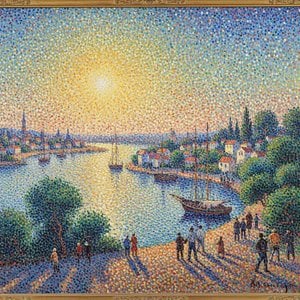
Seurat művészi fejlődése nem volt hirtelen innováció, hanem inkább az intellektuális kíváncsiság és a szigorú kísérletezés által hajtott fokozatos evolúció. Eleinte munkái az akkori akadémiai normáknak megfelelően tükrözték a rajzi készséget és a bevált kompozíciós elveket. Hamarosan megkérdőjelezte ezeket a konvenciókat, egy tudományosabb megközelítést keresve a festészetben. Merüljön el a színelmélet virágzásában, Michel Eugène Chevreul és Ogden Rood tudósok írásait tanulmányozva, akik a juxtapózált színek optikai hatásait vizsgálták. Ez a kutatás lett forradalmi technikájának alapköve, a chromoluminarizmusnak – a szín tudománya – és annak gyakorlati alkalmazásának, a pontillizmusnak. A lényeg egyszerű volt: tiszta színek apró, elkülönített pontjait vigyen fel egy vászonra, hogy a néző szeme optikailag összekeverje őket, és élénk, ragyogó hatást hozzon létre. Ez nem csupán a világosabb színek eléréséről szólt; arról volt, hogyan érzékeli az emberi látórendszer a fényt és a színeket, és hogyan hasznosítsa ezt az ismeretet egy dinamikusabb és vonzóbb festményélmény létrehozására. Munkáihoz Conté ceruzával készített vázlatokat durva papíron, gondosan leképezve minden pont elhelyezését, szinte matematikai pontossággal közelítve meg a művészeti folyamatot.
Művek és Művészi Látásmód: A Pontok Szimfóniája
Seurat kutatásainak és kísérleteinek csúcspontja talán legjobban A vasárnap délután La Grande Jatte szigetén (1884-1886) című monumentális munkájában nyilvánul meg, amely a neoimpresszionizmus kezdetét jelentette. Ez az ikonikus festmény, amely párizsiakat ábrázol egy kellemes délutánon a Széna partján, a pontillista technikáját a teljességével mutatja be. Az alakok, gondosan elhelyezett színpontokként, vibrálnak és ragyognak a fényben, nyugodt csend atmoszféráját teremtve. Alfalfa, Saint-Denis (1886-1887) című művével a színelméletet vidéki tájra alkalmazta, míg korábbi alkotásai, mint például a Saint-Ouen tája (1882-1883), az evolúcióját és a fény és légkör hatásainak megörökítésére való növekvő érdeklődését mutatják. Még a modern párizsi élet ábrázolásai is, mint például A Párizsi Torony (1889), egyedi technikája révén átalakultak, amelyben az ipari modernitás és a művészi innováció harmonikus keveréke mutatkozik. A Fürdőzők Asnières-ben (1884) című alkotása is jelentős munka volt, amely a szórakozás témáját dolgozta fel sajátos stílusával, előrevetítve a *La Grande Jatte*-ban látható kifinomultabb megközelítést. Ezek a festmények nem csupán jelenetek ábrázolásai voltak; gondosan szerkesztett vizuális kísérletek voltak, amelyek a szín és az érzékelés lehetőségeit kívánták feltárni.
Egy Tartós Hatás: A Muvészet Utódai
Bár élete tragikusan rövid volt – Seurat 31 éves korában hunyt el 1891-ben –, hatása a művészeti világra rendkívül nagy és messzeható volt. Munkája megkérdőjelezte a hagyományos művészi konvenciókat, utat nyitva számos későbbi irányzat számára. A szubjektív kifejezés hangsúlyozása és az új technikák felfedezése olyan művészekkel rezonált, akik a hagyományos akadémiai korlátoktól akartak elszakadni. Seurat hatása megfigyelhető a fauve-okban, akik merész színeket és kifejező ecsetvonásokat fogadtak el; a kubistákban, akik geometriai formákra bontották az alakokat; és az expresszionistákban, akik az érzelmi intenzitást és a spontán gesztust helyezték előtérbe. Seurat tudományos megközelítése a festészethez, bár kezdetben vitatott volt, végül kibővítette a művészi lehetőség definícióját. Megmutatta, hogy a művészet egyszerre lehet intellektuálisan szigorú és érzelmileg kifejező – egy olyan szintézis, amely máig inspirálja a művészeket. Seurat öröksége túlmutat technikai innovációin; egy olyan alkotásművészeti hagyatot hagyott hátra, amely páratlan pontossággal és szépséggel ragadja meg a modern élet lényegét, megerősítve helyét a modern művészet egyik igazi úttörőjeként. Festményei tanúk maradnak a megfigyelés, a kísérletezés és az emberi vágyról, hogy a körülöttünk lévő világot művészi kifejezés tükrében értsük meg.



 Megtekintés
 Kézzel festett másolat rendelése
 Küldés
 Megosztás
 Részletek

 Letöltés
 Hasonló darabok
 X-ray felvétel
 Diavetítés
 Statisztika


 Összes részlet megjelenítése






































 Az üvegkeretes opció csak 110 cm alatti méretben érhető el