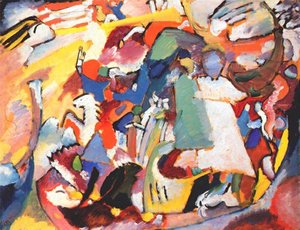
PaintingCubism
 1975Modern
 87.0 x 114.0 cm
 Pinacoteca Universidad de Colima
Múzeumi minőségű giclée vagy vászonnyomat, gyors gyártással és rugalmas finomítási lehetőségekkel. ( Kézzel festett másolat rendelése Kép letöltése)





























Válasszon előre meghatározott méreteink közül, amelyek megfelelnek a műalkotás eredeti arányainak.

Megadhat saját méreteket is egy konkrét kerethez vagy helyszínhez igazítva. Amennyiben a kiválasztott méret nem egyezik az eredeti kép arányokkal, a műalkotást le fogjuk vágni, vagy kiegészítjük a képet tükrözött vagy egyszínű szélekkel. A gyártás megkezdése előtt egy digitális tervezetet küldünk jóváhagyásra.
Kérjük, vegye figyelembe, hogy a képernyőn látható előnézet nem tükrözi a tényleges levágást vagy kiegészítést. Csak a tervezet mutatja pontosan a végső kompozíciót.
Bár az egyedi méretek is elérhetőek, az eredeti arányok megőrzése érdekében azt javasoljuk, hogy válasszon a előre meghatározott listából származó méretet.
Világszerte történő kiszállítás területére mindössze 2 hét alatt, a szokásos 4-5 hét helyett. (6 szeptember)


The dance
Reprodukció mérete

In the grand tapestry of Mexican modernism, few artists managed to weave together the structural rigor of European avant-garde with the soulful warmth of regional tradition as masterfully as Gabriel Portly Del Toro. Born in 1927 in the culturally rich landscape of Colima, Mexico, his life and work served as a bridge between the monumental social realism of the muralist movement and the fragmented, rhythmic beauty of Cubism. His artistic journey was not merely a pursuit of aesthetic perfection but a profound exploration of identity, where the geometric precision of modern art met the sun-drenched, folkloric essence of his homeland.
Portillo del Toro’s early years were deeply rooted in the textures of Colima, an environment that nurtured his initial appreciation for indigenous art forms and local folklore. This foundational connection to Mexican heritage would later become the heartbeat of his compositions. Seeking to refine this raw, intuitive talent, he pursued formal studies at the Universidad Nacional Autónoma de México (UNAM). It was within these hallowed halls that he encountered the towering shadows of legends like Diego Rivera and José Clemente Orozco. While he absorbed their commitment to art as a vehicle for national consciousness, Portillo del Toro chose a different path—one that moved away from strictly didactic social realism toward a more lyrical, abstract language of form and color.
As his style matured, the influence of Cubism became the defining architectural element of his oeuvre. Inspired by the revolutionary techniques of Picasso and Braque, he embraced the fragmentation of perspective, allowing him to depict multiple viewpoints within a single plane. Yet, unlike the often austere or intellectualized Cubism of Europe, Portillo del Toro infused his geometric compositions with a vibrant, pulsating energy. He utilized bold, deliberate strokes to define shapes, yet his brushwork remained fluid, breathing life into every canvas so that even the most structured forms seemed to vibrate with movement.
His subject matter often returned to the serene and the pastoral, finding extraordinary beauty in the everyday rhythms of Mexican life. His paintings frequently act as windows into sun-soaked moments, where the boundaries between humanity and nature dissolve:
Beyond the individual beauty of his canvases, Gabriel Portillo del Toro’s significance lies in his role as a transitional figure in Mexican art history. He proved that the revolutionary spirit of the muralists could be translated into a more personal, decorative, and abstract vocabulary without losing its cultural soul. His monumental murals, which adorned public spaces across Mexico, solidified his reputation as an artist capable of commanding large-scale narratives, while his smaller paintings offered a more intimate dialogue with the viewer.
Through his death in 2013, a significant chapter of Mexican modernism closed, yet his legacy remains vibrant. His work continues to resonate with collectors and scholars because it refuses to be categorized solely as either traditional or abstract. Instead, it exists in that magical, liminal space where the geometric precision of the modern age meets the eternal, sun-drenched spirit of Mexico. To look upon a Portillo del Toro painting is to witness a lasting dialogue between form and feeling, a legacy of color that continues to illuminate the history of Latin American art.

1927 - 2013 , Mexico

Fedezze fel a boldogság művészetét! 10 ikonikus festmény – Van Gogh, Monet, Renoir és más mesterek alkotásai. Ismerje meg a történetüket, színeiket és inspiráló erejüket. Museum-minőségű nyomatok otthonába a WahooArt.com kínálatában! Fedezze fel a teljes gyűjteményt online.
Fedezze fel Pierre-Auguste Renoir 25 legszebb művét! Ismerje meg az impresszionizmus gyöngyszemeit, a színek és fény játékát. Vásároljon exkluzív Renoir reprodukciókat otthonába a WahooArt.com kínálatából – minőségi faliképek és inspiráló dekoráció.

Explore the exquisite costume studies of Albert Kretschmer (1825-1891). Discover his detailed illustrations, influence on art history & connection to early Expressionism. Learn about collecting this remarkable artist's work.

Explore the life & art of Sir Nathaniel Dance-Holland, a leading Georgian portraitist. Discover his masterful technique, influential patrons, and lasting impact on 18th-century British society. A guide for discerning collectors.

Fedezze fel Henri Matisse 25 legikonikusabb művét! Ismerje meg a fauvizmus színeit, az expresszionizmus formáit és a modern művészet mesterének életművét. Vászonképek, nyomatok – inspiráció otthonába a WahooArt.com-on!

 Megtekintés
 Küldés
 Megosztás
 Részletek

 Letöltés
 Hasonló darabok
 X-ray felvétel
 Diavetítés
 Összes részlet megjelenítése







 Az üvegkeretes opció csak 110 cm alatti méretben érhető el