BronzeSculpture
 1905
1905 28.0 x 60.0 cm
 Amon Carter Museum of American Art
Kézzel festett olajvastú vászon, az Ön által választott méretben és keretben, művészeink készítik meglévőre. ( Nyomat rendelése Kép letöltése)
Válasszon előre meghatározott méreteink közül, amelyek megfelelnek a műalkotás eredeti arányainak.

Ön megadhat saját méreteket egy adott kerethez vagy térhez igazításhoz. Ha a kiválasztott méret nem egyezik az eredeti kép arányával, akkor a műalkotást levágjuk, vagy további kézzel festett elemekkel meghosszabbítjuk a festményt. A gyártás megkezdése előtt küldünk Önnek egy digitális előnézetet jóváhagyásra.
Kérjük, vegye figyelembe, hogy a képernyőn megjelenő előnézet nem tükrözi a tényleges vágást vagy kiterjesztést. Csak az előnézet fog pontosan mutatni a végső kompozíciót.
Bár egyedi méretek állnak rendelkezésre, javasoljuk, hogy válasszon egy méretet az előre meghatározott listából az eredeti arányok megőrzése érdekében.
Világszerte elérhető szállítás () 3-4 hét alatt a szokásos 5 hét helyett. (7 szeptember). A minőség nem kérdőjelezhető.


The Rattlesnake
Reprodukció mérete
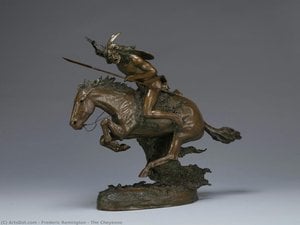
Frederic Remington’s “The Rattlesnake,” completed in 1905, isn't merely a sculpture; it’s a visceral embodiment of the American West as it was fading into legend. Born in Canton, New York, Remington wasn’t a native son of the frontier—his lineage traced back to French Basque roots and a family deeply intertwined with the Remington Arms dynasty – yet he possessed an almost obsessive fascination with its rugged spirit. This piece, rendered in rich, dark bronze, captures a pivotal moment of tension and skill, a fleeting glimpse into the life of a cowboy confronting a formidable adversary: nature itself.
Remington’s work during this period was profoundly shaped by his experiences as a war correspondent for Hearst's newspaper. He witnessed firsthand the realities of frontier life – the cattle drives, the Native American conflicts, and the evolving relationship between man and land. “The Rattlesnake” reflects this engagement, moving beyond romanticized depictions to present a scene of raw, immediate action. It’s a testament to Remington’s ability to translate observation into powerful visual storytelling.
At first glance, the sculpture presents a seemingly simple tableau: a cowboy, mid-action, attempting to trick a horse. However, closer inspection reveals a meticulously crafted composition brimming with dynamic energy. The rider, clad in a dusty chaps coat and a wide-brimmed hat, leans forward with an intense focus, his hand gripping the horse’s mane as if desperately holding on for dear life. The horse itself is caught in a moment of startled panic, its legs splayed out in a rearing posture, its head thrown back to reveal a flash of teeth and a coiled rattlesnake poised to strike.
“The Rattlesnake” exemplifies Remington's mastery of bronze casting, utilizing the lost-wax method – a technique that allows for intricate detail and remarkable realism. The sculpture’s rich, dark patina is not simply a surface treatment; it’s the result of carefully controlled oxidation during the casting process, enhancing the material’s depth and texture. The base of the sculpture, constructed from wood, provides a grounding element, subtly suggesting the rugged terrain of the American West.
Lost-Wax Casting Process:Beyond its technical brilliance, “The Rattlesnake” resonates with profound symbolism. It speaks to the enduring spirit of the American West – a land of both opportunity and peril, where courage, skill, and a deep connection to nature were essential for survival. The sculpture captures a fleeting moment of intense action, but it also evokes a sense of timelessness, reminding us of the challenges faced by those who shaped this nation’s identity.
Remington's work continues to captivate audiences with its raw energy and evocative storytelling. “The Rattlesnake” stands as a powerful testament to his artistic vision and a lasting symbol of the American West.


1861 - 1909 , Egyesült Államok

Discover the enduring allure of bronze sculptures at WahooArt.com. From classical lost-wax casting to modern metal masterpieces, explore museum-quality artworks designed to elevate luxury interiors. Expert curation, authenticity guaranteed, and worldwide shipping for discerning collectors.

Discover the enduring elegance of bronze sculpture. From ancient Roman strength to Art Deco sophistication, explore our expert guide on collecting, casting techniques, and integrating timeless metal masterpieces into your fine art collection.

Discover the enduring allure of bronze sculpture. From the intricate lost-wax process to Neoclassical masterpieces, our expert guide offers connoisseurs deep insights into evaluating patina, historical significance, and integrating metal fine art into sophisticated collections.

 Küldés
 Megosztás
 Részletek

 Letöltés
 Hasonló darabok
 Diavetítés
 Összes részlet megjelenítése




































 Az üvegkeretes opció csak 110 cm alatti méretben érhető el