MegtekintésMegtekintés Műalkotás AR előnézeteMűalkotás AR előnézete Áttérés Nyomtatványra Áttérés NyomtatványraKézzel festett másolat rendelése Kézzel festett másolat rendelése KüldésKüldés
RészletekRészletek Kedvencekhez ad Kedvencekhez ad LetöltésLetöltés Hasonló darabokHasonló darabok X-ray felvételX-ray felvétel DiavetítésDiavetítés StatisztikaStatisztika

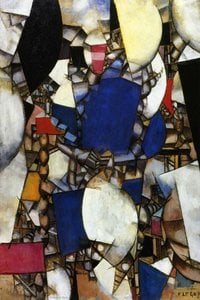
Project Costume Skating Rink

Discover Fernand Léger’s ‘Project Costume Skating Rink,’ a quirky, expressionistic illustration of a bowler-hatted figure. Explore this unique hand-drawn artwork's bold style & charming simplicity.

Fedezd fel a modern művészet egyik kiemelkedő alakját, Fernand Léger-t! Tubism, gépek és a modern élet festményei – egy forradalmi festőművész öröksége.

Vásároljon nagy felbontású, javított digitális képet, amely minőségében messze felülmúlja az online előnézetet.

Minden fájlt szakembereink a legmodernebb eszközök és precíz, kézi retusálás segítségével készítenek el aprólékosan. Gondoskodunk arról, hogy minden kép kivételes tisztasággal, pontos színhelyességgel és részletgazdag finomsággal rendelkezzen.

A végleges fájl 72 órán belül e-mailben megérkezik, professzionális, szerkesztői és nyomtatási környezetbe optimalizálva az azonnali használathoz. Ez ugyanaz a minőség, amelyben a legmeghatározóbb tervezőstúdiók, kiadók és galériák is megbízhatnak.

Digitális kép

Töltsön le nagy felbontású fájlt személyes kiállításokhoz, nyomtatáshoz és kreatív projektekhez. (Áttérés Nyomtatványra Áttérés NyomtatványraKézzel festett másolat rendelése Kézzel festett másolat rendelése)

Összesített ár

$ 24,90

Minden digitális kép rendeléséhez tartozó extrák

Szakértői digitális kézbesítés, garantáltan

Amikor a WahooArt.com szolgáltatást választja, nem csupán egy képet kap – professzionálisan felmagasított digitális műalkotást kap, amely precizitással készült, és amelyet megelégsedési gwarancia tesz biztoslássá. Az alábbiakban automatikusan minden benne 】

shipping_icon
Gyors e-mail teslimítés

A nagy felbontású digitális képmásolatát a megrendelést követő 72 órán belül e-mailben elküldjük Önnek – azonnal használható formátumban.

canvas_icon
MI-alapú digitális fejlesztésű fájl

Műve professzionális módon kerül optimalizálásra fejlett mesterséges intelligencia eszközök és manuális szerkesztés segítségével, biztosítva a maximális részletességet, tisztaságot és színpontosságot.

insurance_icon
Örök életű ingyenes újradelivery

Véletlenül törölted vagy elvesztetted a fájlodat? Ne aggódj – bármikor ingyen újra megküldjük neked.

tax_icon
Nincs importköltség – soha

Élvezze műalkotásait azonnal, vám, illeték vagy szállítási költség nélkül – a digitális letöltések mindig adamentesek.

color_icon
Színpontosság garantálása

Professzionális eszközök és színkezelés segítségével garantáljuk, hogy digitális képe a lehető legpontosabban tükrözze az eredeti színeket.

return_icon
100 napos elégedettségi garancia

Ha nemມີ elégedett a digitális képével, 100 napon belül felülvizsgáljuk vagy 100% visszatérítjük az amountot – kérdés बिना.

guarantee_icon
100% Pénzvisszatérítési garancia

Nem tetszett a vásárlás? 100 napon belül teljes visszatérítést garantálunk a digitális fájl megvételétől számítva – kérdés बिना.

discount_icon
Tömegrendelési kedvezmények

Vásároljon 3 képet, spóroljon 10%-et - Vásároljon 5-öt, spóroljon 15%-et - Vásároljon 10+ képet, spóroljon 20%-at. Kiváló kreatív projektekhez, galériákhoz és ügynökségekhez.

Gyors információk

  • artist: Fernand Léger
  • dimensions: 24 x 16 cm
  • notable elements: Bold outlines, simplified forms, symbolic clothing
  • style: Naive art, Folk art, Abstract
  • medium: Ink or marker on paper
  • year: Unknown

Művészeti kvíz

Minden kérdésre csak egy helyes válasz létezik.

Kérdés 1:
Fernand Léger is most closely associated with which artistic movement, characterized by the emphasis of cylindrical forms?
Kérdés 2:
What is a defining characteristic of 'Project Costume Skating Rink's' visual style?
Kérdés 3:
The clothing depicted in the artwork – a bowler hat and coat – likely serves to evoke what feeling or idea?
Kérdés 4:
Based on the description, which technique was most likely used to create this artwork?

A Whimsical World of ‘Tubism’: Fernand Léger’s Project Costume Skating Rink

  • Subject & Composition: This captivating work by Fernand Léger, *Project Costume Skating Rink*, presents a stylized figure – seemingly a woman – adorned in formal attire: a bowler hat and coat. The composition is strikingly modern, prioritizing simplified forms over realistic representation. The figure isn’t placed centrally, creating a dynamic visual tension within the frame. The artwork's vertical format emphasizes the figure’s elongated silhouette.
  • Style & Technique: Léger’s distinctive “Tubism” is on full display here. Emerging from his exploration of Cubism, this style replaces fragmented planes with bold, cylindrical shapes and strong outlines. Executed with what appears to be ink or marker on paper, the piece exhibits a charming naiveté – reminiscent of folk art – alongside deliberate artistic choices. The visible lines and minimal texture contribute to its raw, immediate appeal.
  • Historical Context: Fernand Léger (1881-1955) was a pivotal figure in 20th-century art. Initially influenced by Impressionism, he rapidly embraced Cubism, developing his unique “Tubist” aesthetic around 1910. He became associated with the Puteaux Group, a collective of avant-garde artists exploring abstraction and modern form. This work likely dates from a period where Léger was experimenting with designs for costumes and stage sets – reflecting his interest in bringing art into everyday life.
  • Symbolism & Interpretation: The bowler hat and coat suggest a certain formality, perhaps even a touch of melancholy or anonymity. The figure’s stylized form invites multiple interpretations; it's not a portrait aiming for likeness but rather an exploration of the human form as geometric abstraction. The skating rink context hints at leisure and movement, yet the static pose creates a compelling contrast. The simplicity of the background focuses all attention on the figure and its symbolic weight.
  • Emotional Impact & Aesthetic Appeal: *Project Costume Skating Rink* possesses a unique blend of quirkiness and sophistication. Its bold colors and simplified forms are visually arresting, while the underlying sense of isolation or introspection adds emotional depth. The artwork’s charm lies in its ability to be both playful and thought-provoking – making it an ideal piece for collectors seeking distinctive modern art.
  • For Collectors & Designers: This work's compact size (24 x 16 cm) makes it versatile for a variety of spaces. Its strong graphic quality lends itself well to both contemporary and vintage interiors. A high-quality reproduction would be an excellent addition to any art collection, bringing Léger’s innovative vision into the home or office. The piece's bold aesthetic complements minimalist designs while adding a touch of artistic intrigue.
Discover more about Fernand Léger and his contributions to modern art – a forerunner to Pop Art whose work continues to inspire generations.

A művész életrajza

A Life Forged in Form: The World of Fernand Léger

Fernand Léger, born Joseph Fernand Henri Léger in 1881 amidst the rural landscapes of Argentan, Normandy, stands as a pivotal figure in the evolution of modern art. His journey from the farmlands of his youth to the forefront of Parisian avant-garde circles is a testament to an unwavering artistic vision and a relentless pursuit of capturing the spirit of the machine age. Unlike many of his contemporaries who embraced abstraction as a retreat from representation, Léger sought to *integrate* modernity – its dynamism, its mechanical forms, its very essence – into a new visual language that was both powerfully abstract and deeply rooted in the observable world. His early life, steeped in the physicality of agricultural labor, provided a grounding contrast to the industrialized future he would so passionately depict. Initially destined for architecture, Léger’s path shifted towards painting after arriving in Paris around 1900, supporting himself through drafting work while honing his artistic skills. This period was marked by traditional academic training, but it wasn't until encountering the groundbreaking work of Paul Cézanne that a true transformation began to unfold.

The Birth of ‘Tubism’ and the Section d’Or

Cézanne’s retrospective in 1907 acted as a catalyst, liberating Léger from conventional representation and propelling him towards a more geometric and structural approach. He began dismantling forms, analyzing their underlying structures, and rebuilding them on canvas with a newfound emphasis on solidity and volume. This exploration quickly led him into the orbit of Cubism, but Léger wasn’t content to simply replicate the styles of Picasso or Braque. Instead, he developed his own distinct idiom – a personal form of Cubism that critics playfully dubbed “Tubism.” Characterized by cylindrical forms, flattened planes, and bold color contrasts, Tubism celebrated the machine aesthetic long before it became a widespread artistic preoccupation. It was an art born from observing the burgeoning industrial world, recognizing beauty in its functional shapes and mechanical rhythms. Léger’s approach differed significantly; he wasn't interested in dissecting objects into fragmented geometric pieces as Picasso and Braque did. Instead, he sought to capture their essence – their inherent stability and movement – through simplified, almost monumental forms. This resulted in a style that felt both dynamic and strangely static, capturing the feeling of machinery in motion while simultaneously presenting it as a solid, enduring presence. The group *Section d’Or* (The Golden Section), formed with artists like Jean Metzinger, Henri Le Fauconnier, Francis Picabia, and Marcel Duchamp, further nurtured this exploration. This collective sought to apply mathematical principles – particularly the golden ratio – to their art, believing that these proportions held a key to achieving harmony and visual balance. Léger’s work became deeply intertwined with the Section d'Or’s investigations, reflecting a desire for order and rationality within the increasingly chaotic world of modern life.

War, Mechanization, and a New Aesthetic

The outbreak of World War I profoundly impacted Léger’s life and work. Serving at the front from 1914 to 1916 exposed him to the brutal realities of modern warfare – artillery barrages, aerial combat, and the dehumanizing effects of mechanized conflict. This experience didn't lead to disillusionment or a rejection of modernity; rather, it solidified his fascination with machines and their power. Sketches made during his service documented the stark beauty of military technology, transforming instruments of destruction into subjects of artistic contemplation. The repetitive patterns of trenches, the gleaming metal of tanks, and the angular forms of aircraft became sources of inspiration for Léger’s evolving style. Upon returning to civilian life, Léger’s aesthetic underwent a further evolution. His paintings began to reflect a more streamlined, mechanistic sensibility, celebrating the dynamism and efficiency of the industrial world. *Soldier with a Pipe* (1916) exemplifies this shift, showcasing simplified forms and bold colors that evoke the feeling of mechanical precision. This wasn't merely an aesthetic choice; it was a philosophical statement – an affirmation of modernity’s potential for progress and renewal, even in the wake of devastating conflict. He began to incorporate industrial materials into his work, experimenting with metal and other unconventional media alongside traditional paint.

Legacy and Lasting Influence

In his post-war years, Léger continued to explore the intersection of art and industry, creating works that celebrated modern life with a unique blend of abstraction and figuration. His *Paysages animés* (Animated Landscapes) series from 1921 showcased figures and animals seamlessly integrated into streamlined compositions, blurring the boundaries between organic and inorganic forms. He also experimented with sculpture and filmmaking, expanding his artistic practice beyond the confines of traditional painting. Léger’s influence on subsequent generations of artists is undeniable. His bold simplification of form, his embrace of industrial imagery, and his celebration of popular culture anticipated the emergence of Pop Art decades later. Artists like Roy Lichtenstein and Andy Warhol owe a clear debt to Léger's pioneering work. He bridged the gap between abstract art and figurative representation, demonstrating that it was possible to create works that were both intellectually rigorous and visually engaging. Léger’s legacy is not merely as a painter, but as a prophet of modernity – a visionary who dared to find beauty in the machine age and to translate its energy onto canvas with unparalleled boldness and originality. A true pioneer whose work continues to resonate with audiences today.

Useful Information

  • Born: Argentan, France (1881)
  • Died: Gif-sur-Yvette, France (1955)
  • Key Works: *The Sitted Woman*, *Machine Element*, *The Great Parade*, *The City*
  • Movement(s): Cubism, Tubism, Modernist Art

Léger Ferenc

Léger Ferenc

1881 - 1955 , Franciaország

Érdekességek

  • Artistic Movement Or Style: Kubizmus, Tubizmus
  • Artists Or Movements Influenced By This Artist: ['Pop Art']
  • Artists Who Influenced This Artist: ['Paul Cézanne']
  • Date Of Birth: 1881. Feb 4.
  • Date Of Death: 1955. Aug 17.
  • Full Name: Fernand Léger
  • Nationality: Francia
  • Notable Artworks:
    • A ülő nő
    • Gépi elem
    • A nagy menet
    • Az animált táj
  • Place Of Birth: Argentan, Francia