Megtekintés Műalkotás AR előnézete Áttérés Nyomtatványra Áttérés digitális képre Küldés
Részletek Kedvencekhez ad Letöltés Hasonló darabok X-ray felvétel Diavetítés Statisztika

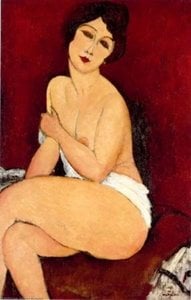
Seated female nude. study

Experience the raw emotional intensity of Ernst Ludwig Kirchner's Seated Female Nude study, a masterpiece of German Expressionism featuring bold colors and vibrant textures that invites you to explore this iconic work.

Ernst Ludwig Kirchner (1880-1938): A vezető német expresszionista, a Die Brücke alapító tagja. Fedezd fel lenyűgöző, érzelemre hangolt alkotásait a modern városokról, nők frånkójáról és tájakról – egy korai 20. századi művészet erőteljes hangszórója.

Kézzel készített olajfestmény reprodukció

Kézzel festett olajvastú vászon, az Ön által választott méretben és keretben, művészeink készítik meglévőre. ( Áttérés Nyomtatványra Áttérés digitális képre)

P118B $10
P118H $10
P118W $10
P438Z $10
P508JH $12
P508YH $12
P805H $10
P805Z $10
P919BZ $10
P919G $10
P919XJ $10
P959ZH $10
P968JZ $12
W106C $8
W218G $10
W218JH $8
W218Y $10
W307PJ $10
W316G $10
W316PJ $8
W316Y $10
W398PJ $8
W4111J $10
W500HY $15
W500JH $15
W692G $12
W849H $8
W940BG $15
W953PJ $8

Standard méret
egyedi méretű
CM
INCH

Válasszon előre meghatározott méreteink közül, amelyek megfelelnek a műalkotás eredeti arányainak.

szélesség
magasság

Ön megadhat saját méreteket egy adott kerethez vagy térhez igazításhoz. Ha a kiválasztott méret nem egyezik az eredeti kép arányával, akkor a műalkotást levágjuk, vagy további kézzel festett elemekkel meghosszabbítjuk a festményt. A gyártás megkezdése előtt küldünk Önnek egy digitális előnézetet jóváhagyásra.
Kérjük, vegye figyelembe, hogy a képernyőn megjelenő előnézet nem tükrözi a tényleges vágást vagy kiterjesztést. Csak az előnézet fog pontosan mutatni a végső kompozíciót.
Bár egyedi méretek állnak rendelkezésre, javasoljuk, hogy válasszon egy méretet az előre meghatározott listából az eredeti arányok megőrzése érdekében.

Példák arra, mit lehet módosítani: az arc kicserélése az ügyfél fotójára; háziállat hozzáadása (pl. macska helyett kutya); rejtett üzenet elhelyezése a háttérben; a háttér tájának vagy elemeinek megváltoztatása.
A rendelést követően a WahooArt.com csapata e-mailt küld az ügyfélnek az instrukciókért, és biztosít egy előnézeti képet (mockup).

Világszerte elérhető szállítás () 3-4 hét alatt a szokásos 5 hét helyett. (18 szeptember). A minőség nem kérdőjelezhető.

why_choose_icon
Ingyenes globális expressz szállítás
why_choose_icon
Prémium minőségű len vászon
why_choose_icon
Teljes körű szállítási biztosítás
why_choose_icon
Vámvisszatérítési Garancia
why_choose_icon
Hiteles színpontosság garancia
why_choose_icon
100 napos visszaküldési lehetőség (csak hibás termékek esetén)
why_choose_icon
100% pénzvisszatérítési garancia
why_choose_icon
Több darab vásárlása esetén kedvezmény

Összesített ár

$ 272

reproduction

Seated female nude. study

Reprodukciós technika

Reprodukció mérete

-

Összesített ár

$ 272

Gyors információk

  • Title: Seated female nude. study
  • Artist: Ernst Ludwig Kirchner
  • Artistic style: Subjective Expression
  • Notable elements or techniques: Impasto, Bold colors
  • Movement: Expressionism
  • Influences: Dürer
  • Subject or theme: Female nude

Művészeti kvíz

Minden kérdésre csak egy helyes válasz létezik.

Kérdés 1:
Which art movement is Ernst Ludwig Kirchner's 'Seated Female Nude. study' a cornerstone of?
Kérdés 2:
What is the primary technique used to create the palpable, textured surface in this painting?
Kérdés 3:
How does the artist use color in this artwork to achieve emotional impact?
Kérdés 4:
What is a notable characteristic of the composition's perspective in this piece?
Kérdés 5:
In terms of subject matter, what does the presence of the second, subtly rendered figure contribute to the scene?

An Intimate Encounter with Expressionist Rawness

In the quiet, tension-filled space of Ernst Ludwig Kirchner’s “Seated Female Nude. Study,” we are invited into a moment that transcends mere observation, pulling us into the very heart of German Expressionism. Created around 1909, this work serves as a profound window into an era defined by psychological depth and the rejection of superficial beauty. The painting captures a solitary female figure, seated with her legs crossed in a state of repose, yet there is nothing passive about the energy radiating from the canvas. A second, more ghostly male form lingers in the background, creating a deliberate, unsettling juxtaposition that heightens the sense of isolation and vulnerability. It is not merely a study of the human anatomy, but an exploration of the soul’s exposure to the world.

To gaze upon this piece is to experience the visceral power of Die Brücke—the "Bridge" movement—where artists sought to bridge the gap between the internal psyche and the external reality. The subject matter, while centered on the nude form, challenges the traditional, idealized depictions of femininity prevalent in academic art. Instead, Kirchner presents a figure that feels immediate and raw, reflecting the burgeoning anxieties of a modernizing Europe. For the collector or the designer, this artwork offers more than just visual interest; it provides a focal point of profound emotional gravity, making it an ideal centerpiece for spaces that value intellectual depth and avant-garde sophistication.

A Symphony of Color and Texture

The technical mastery of Kirchner in this study lies in his ability to use color as a direct conduit for emotion. Eschewing the naturalistic palettes of his predecessors, he employs a vibrant, almost jarring array of yellows, greens, reds, and deep blacks. These colors are not blended into smooth gradients but are applied with thick, impasto brushstrokes that create a palpable, tactile surface. This fragmented approach to color creates a rhythmic tension across the canvas, where light is not something that falls upon objects, but something that seems to erupt from within them. The use of bright yellows and greens to indicate highlights adds a flickering, nervous energy to the figure’s skin, emphasizing the painting's psychological intensity.

The composition further reinforces this sense of unrest through its deliberate rejection of traditional perspective. Kirchner utilizes a flattened plane, where objects and figures exist with a claustrophobic proximity. This lack of depth forces the viewer into an intimate, almost confrontational relationship with the seated figure. The lines are often thick, angular, and unrefined, serving to define shapes through movement rather than anatomical precision. For those looking to adorn a contemporary interior, the bold geometry and striking color contrasts of this reproduction offer a sophisticated way to introduce movement and a sense of historical importance into a room.

Symbolism and the Modern Spirit

Beyond its formal brilliance, “Seated Female Nude. Study” resonates with a deep symbolic weight. The vulnerability of the nude form acts as a metaphor for the human condition in the early 20th century—a period marked by rapid industrialization and the fracturing of old societal certainties. The tension between the central figure and the shadowy presence in the background speaks to the complexities of identity, intimacy, and the encroaching pressures of modern life. It is an artwork that does not seek to provide answers, but rather to pose evocative questions about presence and absence.

Owning a high-quality reproduction of such a masterpiece allows one to bring this historical dialogue into the modern home. Whether placed in a curated gallery wall or standing alone as a bold statement piece, the painting’s ability to evoke feelings of both introspection and dynamism is unparalleled. It remains a timeless testament to Kirchner's legacy, offering an enduring source of inspiration for anyone moved by the raw, unyielding beauty of the human spirit captured through the lens of Expressionism.


A művész életrajza

A Life Forged in Expression: The World of Ernst Ludwig Kirchner

Ernst Ludwig Kirchner, a name inextricably linked to the raw emotional core of German Expressionism, emerged from a Germany poised on the cusp of profound transformation. His birth in Aschaffenburg, Bavaria, in 1880, wasn’t merely an arrival into the world; it was the beginning of a life deeply intertwined with artistic rebellion and personal struggle. The fragmented landscapes that shaped his early years – dictated by his father's profession as a paper scientist – instilled within him a persistent sense of displacement, a feeling that would become a recurring theme in his art. From Frankfurt to Perlen, and finally settling in Chemnitz, young Kirchner absorbed the anxieties simmering beneath the surface of a rapidly modernizing nation. Initially guided towards architecture at the Königliche Technische Hochschule in Dresden, it was the magnetic pull of painting – fueled by an admiration for masters like Albrecht Dürer and a growing disillusionment with academic conventions – that ultimately defined his artistic destiny. He found kinship with fellow revolutionaries – Fritz Bleyl, Karl Schmidt-Rottluff, and Erich Heckel – forging bonds that would irrevocably alter the course of 20th-century art.

The Bridge Between Worlds: Die Brücke and Artistic Revolution

In 1905, Kirchner became a founding member of *Die Brücke* (“The Bridge”), an artistic collective dedicated to dismantling traditional aesthetic boundaries and forging a new path toward a more visceral, emotionally charged form of expression. This wasn’t simply a stylistic choice; it represented a fundamental philosophical stance. The group sought inspiration from sources often dismissed by the established art world – the primal artistry of Africa and Oceania, the intensely colored visions of Vincent van Gogh, and the haunting psychological depths explored by Edvard Munch. Rejecting the idealized beauty championed by academic painting, *Die Brücke* embraced distortion, jarring color palettes, and expressive brushwork to convey the anxieties and alienation inherent in modern life. Kirchner’s early works, born from this collaborative spirit, pulsed with a restless energy, reflecting the group's shared desire to break free from artistic constraints. The studio became a crucible for experimentation, a space where social norms were challenged alongside artistic conventions. The exploration of the human form, particularly the female nude, within both urban and natural settings, became a recurring motif, allowing Kirchner to investigate movement, emotion, and the complexities of modern existence.

Defining a Style: Urban Anxieties and Bold Visions

Kirchner’s artistic style is immediately recognizable for its distinctive characteristics. He didn't treat color as a mere tool for accurate representation; instead, he wielded it with deliberate intensity to evoke powerful emotional responses – vibrant, often non-naturalistic hues that heightened the sense of unease or urgency within his compositions. His brushstrokes were energetic and visible, contributing to the overall feeling of immediacy and raw emotion. Figures and objects were frequently distorted or elongated, reflecting a subjective rather than objective reality. Kirchner’s paintings weren't simply depictions of scenes; they were profound explorations of the human psyche, capturing the psychological impact of modern urban life in early 20th-century Germany. Paintings like *The Street* (1908) are not merely representations of cityscapes; they are portraits of alienation, capturing the frenetic energy and emotional detachment experienced by individuals navigating a rapidly changing world. He didn’t shy away from portraying the darker aspects of modernity – the loneliness, the anonymity, the overwhelming sense of being swallowed by the sheer scale of urban existence. This unflinching gaze established him as a chronicler of his time, an artist who dared to confront the anxieties simmering beneath the surface of societal progress.

Influences and Development: A Synthesis of Traditions

Kirchner’s artistic development was shaped by a complex interplay of influences. He initially admired the precision and clarity of Albrecht Dürer's work, seeking a connection to Germany’s rich artistic heritage. However, he quickly moved beyond academic conventions, embracing the bold color palettes and expressive distortions of Vincent van Gogh and the psychologically charged landscapes of Edvard Munch. Crucially, Kirchner found inspiration in non-European art – particularly the primitive sculptures of Africa and Oceania – which offered him a direct connection to primal emotions and spiritual energies. This fascination with “primitive” forms led him to experiment with woodcut printing, developing a distinctive technique characterized by bold lines and stark contrasts. The influence of *Die Brücke* itself was paramount; the group’s shared commitment to emotional expression and their rejection of traditional aesthetics fostered a dynamic creative environment where Kirchner's style continued to evolve.

Tragedy and Legacy: A Lasting Impact

Kirchner’s life was tragically marked by personal struggles, culminating in his untimely death in 1938. The horrors of World War I triggered a severe mental breakdown, forcing him to retreat to Switzerland in search of solace. However, even in exile, he continued to create, his work reflecting the lingering trauma and isolation he experienced. The rise of Nazism brought further hardship; over 600 of his works were confiscated and branded as “degenerate” art – a devastating blow that underscored the political climate’s hostility towards modern artistic expression. Facing persecution and declining health, Kirchner tragically took his own life in Davos, Switzerland, in 1938. Despite this heartbreaking end, Ernst Ludwig Kirchner's legacy remains profoundly influential. He stands as a central figure of German Expressionism, inspiring generations of artists with his bold style, emotionally resonant depictions of modern life, and unwavering commitment to artistic truth. His work continues to be exhibited in major museums worldwide, serving as a powerful reminder of the enduring power of art to confront, challenge, and ultimately illuminate the human condition.
  • Influenced By: Albrecht Dürer, Vincent van Gogh, Edvard Munch, Primitive Art (African & Oceanic)
  • Influenced: Kirchner’s work profoundly impacted subsequent generations of Expressionist and Modern artists. His exploration of psychological themes and his innovative use of color and form continue to inspire contemporary art practices.

Ernst Ludwig Kirchner

Ernst Ludwig Kirchner

1880 - 1938 , Németország

A művészről röviden

  • Artistic Movement Or Style: Expressionizmus
  • Artists Or Movements Influenced By This Artist:
    • Die Brücke
    • Modern művészet
  • Artists Who Influenced This Artist:
    • Albrecht Dürer
    • Van Gogh
    • Munch
  • Date Of Birth: 1880. május 6.
  • Date Of Death: 1938. június 15.
  • Full Name: Ernst Ludwig Kirchner
  • Nationality: Német
  • Notable Artworks:
    • A utca (1908)
    • Szárazföldi táncos (1912)
    • Önismeret (1910)
  • Place Of Birth: Aschaffenburg, Németország
Fedezze fel a műalkotásokat témák, stílusok és jellemzők szerint csoportosítva.