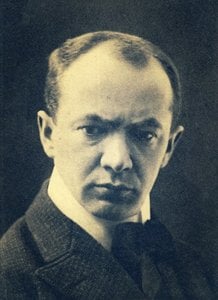
The Visionary of Zionism: The Life and Art of Ephraim Moses Lilien
In the delicate, swirling lines of the Art Nouveau movement, few voices resonate with as much cultural depth and spiritual longing as that of Ephraim Moses Lilien. Born in 1874 in Drohobych, Poland, under the name Maurycy Lilien, this multifaceted creator—a photographer, painter, illustrator, and engraver—did not merely participate in the aesthetic trends of his era; he transformed them. His life was a profound journey through the heart of European fine arts and the burgeoning spirit of Jewish national identity. Educated at the prestigious Academy of Fine Arts in both Vienna and Krakow, Lilien possessed a technical mastery that allowed him to bridge the gap between classical academic training and the avant-garde decorative styles of the early twentieth century.
Lilien’s artistic evolution was deeply intertwined with his personal convictions and his travels. His work serves as a visual chronicle of a period marked by intense political and cultural shifts. Between 1906 and 1918, his excursions to Ottoman Palestine provided him with a direct connection to the landscapes and people that would become central motifs in his oeuvre. This period of exploration allowed him to infuse his Art Nouveau sensibilities with an authentic, lived experience of the Jewish homeland, creating a visual language that was simultaneously modern and ancient.
A Synthesis of Style and Spirit
The true brilliance of Lilien lies in his ability to weave the organic, flowing ornamentation of Art Nouveau into the sacred iconography of Judaism. His compositions often feature the sinuous curves and botanical motifs characteristic of the period, yet these elements are repurposed to tell stories of faith, heritage, and hope. He was a master of the graphic medium, using engraving and illustration to create works that were both aesthetically exquisite and ideologically potent.
Among his most enduring contributions to the art world are:
- The Portrait of Theodor Herzl: A poignant depiction of the founder of the Zionist movement, which captures not just a likeness, but the very essence of leadership and the weight of a historical mission.
- Jerusalem Cityscapes: Evocative renderings of the holy city that reflect his deep fascination with the topography and atmosphere of the Levant.
- Graphic Illustrations: A diverse body of work for various publications that demonstrated his versatility as an editor and a visual storyteller, bringing complex narratives to life through intricate line work.
Legacy and Historical Significance
As a pioneering Zionist artist, Lilien’s impact extends far beyond the boundaries of traditional art history. He was instrumental in creating a new visual vocabulary for a people seeking to redefine their place in the modern world. By blending the contemporary European aesthetic with Jewish themes, he provided a sense of dignity and modernity to Zionist imagery, paving the way for future generations of artists to explore similar intersections of identity and style.
Though his life was tragically short, ending in Badenweiler, Germany, in 1925, his artistic footprint remains indelible. Today, his works are preserved in esteemed institutions such as the Kunstsammlungen und Museen Augsburg, serving as a testament to his role as a bridge-builder between cultures and eras. To study the work of Ephraim Moses Lilien is to witness the birth of a modern Jewish aesthetic, a beautiful confluence of decorative elegance and profound historical purpose.



 Megtekintés
 Áttérés Nyomtatványra
 Küldés
 Megosztás
 Részletek

 Letöltés
 Hasonló darabok
 X-ray felvétel
 Diavetítés
 Statisztika


 Összes részlet megjelenítése






































 Az üvegkeretes opció csak 110 cm alatti méretben érhető el