
MegtekintésMegtekintés Műalkotás AR előnézeteMűalkotás AR előnézete Kézzel festett másolat rendelése Kézzel festett másolat rendeléseKép letöltése Kép letöltése KüldésKüldés
RészletekRészletek Kedvencekhez ad Kedvencekhez ad LetöltésLetöltés Hasonló darabokHasonló darabok X-ray felvételX-ray felvétel DiavetítésDiavetítés

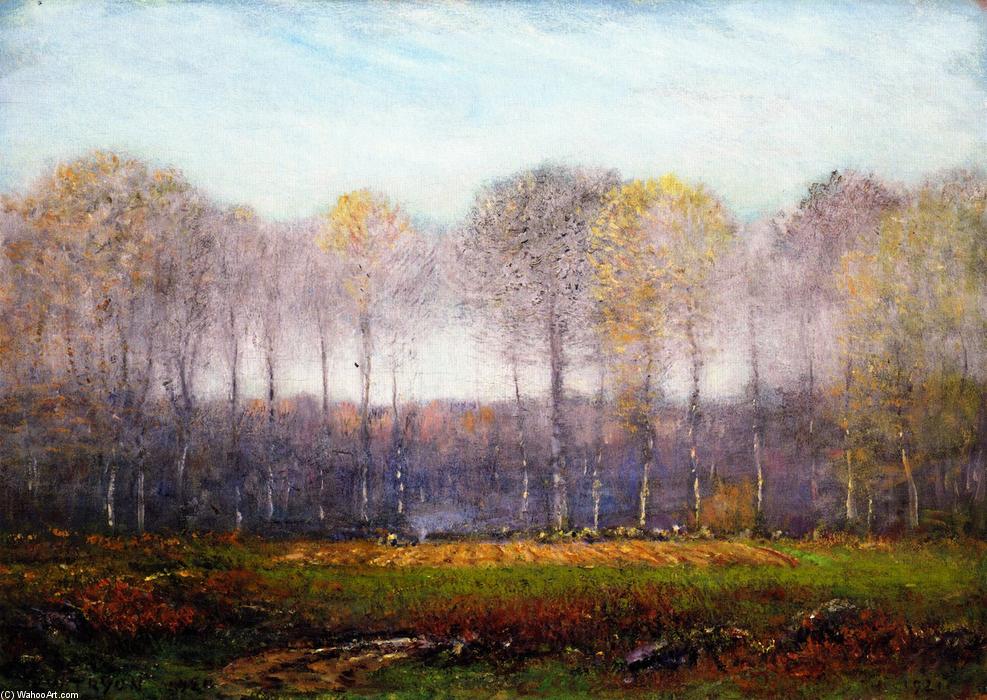
October Morning

Discover "October Morning" by Dwight William Tryon – a serene landscape painting capturing autumn's beauty. Explore its history, value & more at Invaluable.

Dwight William Tryon (1849-1925) amerikai tonalista festő, a csendes tájak és tengerparti jelenetek híres alkotója. Whistler hatása érezhető munkáiban, melyek nyugodt légkört és természet szépségét ábrázolják.

Giclée / Műnyomat

Múzeumi minőségű giclée vagy vászonnyomat, gyors gyártással és rugalmas finomítási lehetőségekkel. (Kézzel festett másolat rendelése Kézzel festett másolat rendeléseKép letöltése Kép letöltése)

P118B $10
P118H $10
P118W $10
P438Z $10
P508JH $12
P508YH $12
P805H $10
P805Z $10
P919BZ $10
P919G $10
P919XJ $10
P959ZH $10
P968JZ $12
W106C $8
W218G $10
W218JH $8
W218Y $10
W307PJ $10
W316G $10
W316PJ $8
W316Y $10
W398PJ $8
W4111J $10
W500HY $15
W500JH $15
W692G $12
W849H $8
W940BG $15
W953PJ $8

Standard méret
egyedi méretű
CM
INCH

Válasszon előre meghatározott méreteink közül, amelyek megfelelnek a műalkotás eredeti arányainak.

szélesség
magasság

Megadhat saját méreteket is egy konkrét kerethez vagy helyszínhez igazítva. Amennyiben a kiválasztott méret nem egyezik az eredeti kép arányokkal, a műalkotást le fogjuk vágni, vagy kiegészítjük a képet tükrözött vagy egyszínű szélekkel. A gyártás megkezdése előtt egy digitális tervezetet küldünk jóváhagyásra.
Kérjük, vegye figyelembe, hogy a képernyőn látható előnézet nem tükrözi a tényleges levágást vagy kiegészítést. Csak a tervezet mutatja pontosan a végső kompozíciót.
Bár az egyedi méretek is elérhetőek, az eredeti arányok megőrzése érdekében azt javasoljuk, hogy válasszon a előre meghatározott listából származó méretet.

Világszerte történő kiszállítás területére mindössze 2 hét alatt, a szokásos 4-5 hét helyett. (6 szeptember)

why_choose_icon
Ingyenes globális expressz szállítás
why_choose_icon
Prémium minőségű len vászon
why_choose_icon
Teljes körű szállítási biztosítás
why_choose_icon
Vámvisszatérítési Garancia
why_choose_icon
Hiteles színpontosság garancia
why_choose_icon
100 napos visszaküldési lehetőség (csak hibás termékek esetén)
why_choose_icon
100% pénzvisszatérítési garancia
why_choose_icon
Több darab vásárlása esetén kedvezmény

Összesített ár

$ 68

reproduction

October Morning

Giclée / Műnyomat

Reprodukció mérete

-

Összesített ár

$ 68

Gyors információk

  • Influences: Whistler
  • Notable elements: Tree row, sky
  • Subject or theme: Autumn scene
  • Title: October Morning
  • Medium: Oil on Panel
  • Artistic style: Landscape
  • Movement: Tonalism

Művészeti kvíz

Minden kérdésre csak egy helyes válasz létezik.

Kérdés 1:
What artistic movement is Dwight William Tryon most closely associated with?
Kérdés 2:
The painting 'October Morning' primarily depicts:
Kérdés 3:
In what year was 'October Morning' painted?
Kérdés 4:
Dwight William Tryon was influenced by which artistic style?
Kérdés 5:
What is a key characteristic of Tryon's landscape style, as seen in 'October Morning'?

October Morning: A Symphony of Autumnal Light by Dwight William Tryon

Dwight William Tryon’s “October Morning” isn't merely a landscape painting; it’s an immersion into the heart of a fleeting autumnal moment, captured with a delicate precision and imbued with a profound sense of tranquility. Painted in 1921, during a period when American art was increasingly embracing tonalism – a style prioritizing mood and atmosphere over sharp detail – this piece exemplifies Tryon's signature approach: a quiet contemplation of the natural world rendered through subtle color shifts and luminous washes.

The scene unfolds within a gently sloping meadow, bisected by a meandering stream reflecting the soft hues of the sky. A carefully arranged row of trees dominates the midground, their branches reaching upwards like supplicating arms, each leaf painted with an almost impossibly delicate gradation of greens, yellows, and ochres – a testament to Tryon’s mastery of layering thin glazes of oil paint. These aren't the bold, vibrant colors of Impressionism; instead, they are muted, atmospheric, evoking the fading warmth of the sun as it dips below the horizon. The distant trees recede into a hazy blue-grey, creating an illusion of depth and vastness that draws the viewer’s eye into the painting’s serene embrace.

The Tonalist's Palette: Technique and Style

Tryon’s technique is characterized by its meticulous attention to light and shadow. He employed a ‘wet-on-wet’ approach, applying paint while it was still wet on the canvas, allowing colors to blend seamlessly and creating soft edges that contribute to the painting's ethereal quality. The absence of harsh outlines or defined forms reinforces this sense of atmospheric depth. The use of thin glazes – multiple layers of translucent color applied over each other – builds up the image gradually, resulting in a luminous surface that seems to glow from within. This technique is deeply rooted in the Barbizon school of painting, which emphasized capturing the essence of nature rather than its literal representation.

Notably, Tryon’s work aligns with the broader artistic currents of his time. Influenced by James McNeill Whistler's emphasis on tonal harmony and color relationships, he sought to evoke a feeling of quiet contemplation and spiritual connection through his art. His paintings are often described as “luminist,” though he predates the more formalized Luminist movement, sharing its core principles of capturing fleeting moments of light and atmosphere.

Symbolism and Emotional Resonance

“October Morning” is rich in symbolic meaning, reflecting a deep connection to the rhythms of nature. The row of trees, stretching towards the horizon, can be interpreted as a symbol of resilience and endurance – mirroring the steadfastness of nature through the changing seasons. The stream, flowing gently across the meadow, represents the passage of time and the cyclical nature of life. The muted colors evoke feelings of peace, nostalgia, and melancholy—a poignant reminder of the beauty of impermanence.

More than just a depiction of a landscape, “October Morning” is an invitation to pause, reflect, and connect with the natural world. It’s a painting that speaks to our deepest longings for tranquility and connection, offering a moment of respite from the complexities of modern life. The soft light and muted colors create a sense of warmth and serenity, inviting the viewer to lose themselves in the beauty of this autumnal scene.

A Legacy of Serenity: Tryon’s Enduring Appeal

Dwight William Tryon's work continues to resonate with audiences today due to its timeless appeal. His paintings capture a sense of quietude and beauty that transcends time, offering viewers a glimpse into the heart of nature. His dedication to capturing subtle nuances of light and color has earned him recognition as one of America’s most important landscape painters. Reproductions of “October Morning” are prized by collectors and interior designers alike, bringing a touch of serenity and autumnal charm to homes and galleries around the world.


A művész életrajza

Early Life and Artistic Beginnings

Dwight William Tryon’s story begins in the quiet heart of Connecticut, specifically in Hartford, where he was born on August 13, 1849. His early years were shaped by a poignant loss – the untimely death of his father left him under the care of his grandparents on their farm in East Hartford. This immersion in rural life proved to be an unexpectedly formative experience, deeply imprinting upon him a profound connection with nature and its subtle rhythms. Remarkably, Tryon’s artistic inclinations emerged organically, without formal training initially. He wasn't driven by a grand ambition but rather by a quiet fascination with the world around him. His path into art began not through structured lessons, but through a job at a prominent Hartford bookstore – a place where he discovered instructional manuals and ignited his self-directed learning journey. He spent countless hours sketching the familiar landscapes of East Hartford, translating the shifting light and shadows onto paper, honing his observational skills with remarkable dedication. This early practice culminated in his first sale in 1870, a modest beginning that nonetheless signaled the blossoming of a talent soon to be recognized by wider audiences. His acceptance into the National Academy of Design in 1873 marked a significant milestone, providing him with formal training and a platform for exhibiting his work.

European Influences and the Shaping of a Style

Driven by a desire to refine his skills and explore new artistic horizons, Tryon embarked on a transformative journey to France in 1876. This move represented more than just a relocation; it was an immersion into the heart of European art. He enrolled at the École des Beaux-Arts in Paris, immersing himself in the vibrant currents of the time and studying under esteemed instructors like Jacquesson de la Chevreuse. However, his education extended far beyond the confines of the classroom. He actively sought guidance from luminaries such as Charles-François Daubigny, Henri Harpignies, and Jean Baptiste-Antoine Guillemet, absorbing their techniques, philosophies, and approaches to capturing light and atmosphere. Initially, Tryon’s style leaned towards Luminism – a movement characterized by its emphasis on the effects of light and atmospheric perspective. Yet, his artistic path soon diverged, drawn toward the principles of the Barbizon School, a movement that prioritized direct observation of nature and a more subdued, earthy palette. The Barbizon School, with its focus on capturing the essence of the landscape rather than meticulously rendering every detail, resonated deeply with Tryon’s own connection to the natural world. Surrounded by the burgeoning Impressionist movement in France – with artists like Monet and Renoir experimenting with new techniques – Tryon remained steadfastly committed to the Barbizon aesthetic, finding a greater sense of harmony and authenticity in its contemplative mood and realistic depiction of nature. The influence of James McNeill Whistler was particularly profound; his tonalist style—emphasizing subtle gradations of color and atmosphere—left an indelible mark on Tryon’s artistic development, shaping his approach to capturing the nuances of light and shadow.

Mature Style and Atmospheric Landscapes

By the late 1880s, Dwight William Tryon had fully realized his distinctive artistic style – a signature approach that would define his legacy as a leading American Tonalist. His canvases often featured a carefully considered composition: a grouping or broken row of trees positioned in the middle distance, acting as a visual bridge between a luminous sky above and a foreground marsh or pasture below. These scenes were frequently imbued with autumnal hues – rich browns, golds, and russets – evoking a sense of tranquility, melancholy, and the passage of time. Beyond landscapes, Tryon also excelled at seascapes, skillfully utilizing pastel to capture the expansive beauty of water, sky, and beach under varying weather conditions. His mastery lay not in precise detail but in his ability to convey atmosphere—the subtle shifts in light, the delicate interplay of color, and the overall mood of a scene. *Salt-Marsh, December*, which garnered first prize at the Tennessee Centennial Exposition in 1897, stands as a prime example of this skill – a testament to his talent for capturing the serene beauty of the natural world. His paintings were consistently exhibited nationally, gaining recognition at prestigious venues such as the Pennsylvania Academy of Fine Arts and the Montross Gallery.

Patronage, Recognition, and Lasting Legacy

The trajectory of Tryon’s career was significantly bolstered by his relationship with Charles Lang Freer, a discerning collector who became his most important patron. Freer acquired dozens of Tryon's works, providing him with financial security and enabling him to fully dedicate himself to his art. This generous support allowed Tryon to travel extensively throughout Europe, studying the landscapes and techniques of master artists. Furthermore, Freer’s influence extended beyond mere patronage; he encouraged Tryon to experiment with new approaches and refine his artistic vision. In 1908, Tryon received the Carnegie Prize at the Carnegie Exhibition – a prestigious award that cemented his position among the leading American landscape painters of his time. Throughout his career, Tryon remained an active member of several prominent art organizations, including the Society of American Artists, the American Watercolor Society, and the National Institute of Arts and Letters (now the American Academy of Arts and Letters). In 1887, he established a summer home in South Dartmouth, Massachusetts – a tranquil retreat where he continued to paint and develop his artistic practice. Dwight William Tryon passed away on July 1, 1925, leaving behind a rich artistic legacy defined by his contribution to American Tonalism and his exceptional ability to capture atmospheric landscapes and seascapes with delicate color and refined feeling. His works continue to be celebrated and are held in prominent collections such as the Smithsonian American Art Museum and the Freer Gallery of Art, ensuring that his vision endures for generations to come.
Dwight William Tryon

Dwight William Tryon

1849 - 1925 , Egyesült Államok

A művészről röviden

  • Artistic Movement Or Style: Tonalizmus, Barbizon
  • Artists Or Movements Influenced By This Artist: ['Impressionizmus']
  • Artists Who Influenced This Artist:
    • Whistler
    • Daubigny
    • Harpignies
  • Date Of Birth: Augusztus 13, 1849
  • Date Of Death: Július 1, 1925
  • Full Name: Dwight William Tryon
  • Nationality: Amerikai
  • Notable Artworks:
    • Salt-Marsh, December
    • Spring
    • Newbury Haystacks
  • Place Of Birth: Hartford, USA


































