Megtekintés Műalkotás AR előnézete Kézzel festett másolat rendelése Áttérés digitális képre Küldés
Részletek Kedvencekhez ad Letöltés Hasonló darabok X-ray felvétel Diavetítés Statisztika

Pentecost

Explore Duccio di Buoninsegna’s 1308 ‘Pentecost’! This stunning tempera panel showcases early Renaissance faith & artistry. Admire its rich symbolism & detail at the Museo dell'Opera del Duomo, Siena.

Fedezd fel a reneszánszt megelőző Sienai iskola egyik legkiemelkedőbb festőjét, Duccio di Buoninsegna (1255-1319)! Képei gazdag színekkel, érzelmi mélységemmel és bizánci hatással kápráztatják el.

Giclée / Műnyomat

Múzeumi minőségű giclée vagy vászonnyomat, gyors gyártással és rugalmas finomítási lehetőségekkel. ( Kézzel festett másolat rendelése Áttérés digitális képre)

P118B $10
P118H $10
P118W $10
P438Z $10
P508JH $12
P508YH $12
P805H $10
P805Z $10
P919BZ $10
P919G $10
P919XJ $10
P959ZH $10
P968JZ $12
W106C $8
W218G $10
W218JH $8
W218Y $10
W307PJ $10
W316G $10
W316PJ $8
W316Y $10
W398PJ $8
W4111J $10
W500HY $15
W500JH $15
W692G $12
W849H $8
W940BG $15
W953PJ $8

Standard méret
egyedi méretű
CM
INCH

Válasszon előre meghatározott méreteink közül, amelyek megfelelnek a műalkotás eredeti arányainak.

szélesség
magasság

Megadhat saját méreteket is egy konkrét kerethez vagy helyszínhez igazítva. Amennyiben a kiválasztott méret nem egyezik az eredeti kép arányokkal, a műalkotást le fogjuk vágni, vagy kiegészítjük a képet tükrözött vagy egyszínű szélekkel. A gyártás megkezdése előtt egy digitális tervezetet küldünk jóváhagyásra.
Kérjük, vegye figyelembe, hogy a képernyőn látható előnézet nem tükrözi a tényleges levágást vagy kiegészítést. Csak a tervezet mutatja pontosan a végső kompozíciót.
Bár az egyedi méretek is elérhetőek, az eredeti arányok megőrzése érdekében azt javasoljuk, hogy válasszon a előre meghatározott listából származó méretet.

Világszerte történő kiszállítás területére mindössze 2 hét alatt, a szokásos 4-5 hét helyett. (16 szeptember)

why_choose_icon
Ingyenes globális expressz szállítás
why_choose_icon
Prémium minőségű len vászon
why_choose_icon
Teljes körű szállítási biztosítás
why_choose_icon
Vámvisszatérítési Garancia
why_choose_icon
Hiteles színpontosság garancia
why_choose_icon
100 napos visszaküldési lehetőség (csak hibás termékek esetén)
why_choose_icon
100% pénzvisszatérítési garancia
why_choose_icon
Több darab vásárlása esetén kedvezmény

Összesített ár

$ 68

reproduction

Pentecost

Giclée / Műnyomat

Reprodukció mérete

-

Összesített ár

$ 68

Gyors információk

  • artist: Duccio Di Buoninsegna
  • title: Pentecost
  • medium: tempera on panel
  • influences: Byzantine art
  • year: 1308
  • subject: religious scene featuring Jesus, Mary, and other people

Művészeti kvíz

Minden kérdésre csak egy helyes válasz létezik.

Kérdés 1:
In what city was Duccio di Buoninsegna primarily active, and where is 'Pentecost' currently housed?
Kérdés 2:
What painting technique did Duccio di Buoninsegna employ in 'Pentecost'?
Kérdés 3:
Approximately what year was 'Pentecost' created?
Kérdés 4:
The style of painting demonstrated by Duccio di Buoninsegna is most closely associated with which school?
Kérdés 5:
What is a prominent characteristic of the figures depicted in 'Pentecost', as described in the image description?

Pentecost: A Glimpse into Divine Revelation

Duccio di Buoninsegna’s *Pentecost*, created in 1308, is a captivating example of early Italian painting, currently housed at the Museo dell'Opera del Duomo in Siena. Measuring just 37 x 42 cm, this tempera on panel work belies its small size with an immense spiritual and artistic power. It offers a window into the devotional practices and burgeoning artistry of 14th-century Italy.

Decoding the Scene: Subject & Symbolism

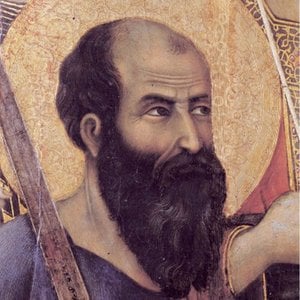
The painting depicts the biblical event of Pentecost, where the Holy Spirit descended upon the Virgin Mary and the Apostles, marking the birth of the Church. While not a traditional depiction of flaming tongues, Duccio focuses on the *aftermath* – the quiet contemplation and burgeoning faith within the assembled group. Mary is centrally positioned, receiving the divine grace, surrounded by figures representing the early Christian community. The composition isn’t focused on dramatic action but rather on internal transformation.
  • The varied attire of the figures—robes alongside more casual dress—suggests a universality to this spiritual experience, encompassing all levels of society.
  • The woman seated with folded hands embodies prayerful devotion and serves as a focal point for contemplation within the scene.
  • Even seemingly minor details like the chair in the lower right corner contribute to the sense of grounded reality within this sacred moment, anchoring the divine event in a recognizable human space.

Artistic Style & Technique: A Sienese Master at Work

Duccio was a pivotal figure in the development of the Sienese School of painting. *Pentecost* exemplifies his distinctive style, which blends Byzantine traditions with emerging Italian naturalism.
  • Tempera on Panel: The use of tempera—pigments mixed with egg yolk—allowed for precise detail and luminous color, characteristic of the period.
  • Spatial Representation: While not employing fully developed linear perspective, Duccio skillfully creates depth through overlapping figures and subtle variations in scale.
  • Emotional Restraint: The emotional impact is conveyed through nuanced facial expressions and body language rather than overt displays of feeling—a hallmark of Sienese art.

Historical Context: The Maestà & Duccio’s Legacy

*Pentecost* is one of many panels originally created as part of the monumental *Maestà* altarpiece for Siena Cathedral. This ambitious project cemented Duccio's reputation and profoundly influenced subsequent generations of Italian artists, including Simone Martini and Ferrer Bassa. The *Maestà* represented a turning point in Italian art, moving away from rigid Byzantine conventions towards greater realism and emotional depth. Duccio’s innovative approach to narrative storytelling and his sensitive portrayal of human emotion paved the way for the Renaissance.

Emotional Resonance & Interior Design

*Pentecost* evokes a sense of peaceful reverence and spiritual awakening. The muted color palette and intimate scale create an atmosphere conducive to contemplation. Its small size makes it ideal for placement in private devotional spaces, libraries, or as a focal point within a curated collection. For interior designers, this piece offers a touch of historical elegance and understated spirituality, complementing both traditional and contemporary settings. Its rich symbolism and artistic merit make it not just a beautiful object but also a conversation starter—a testament to the enduring power of faith and art.

A művész életrajza

The Sienese Luminary: Duccio di Buoninsegna and the Dawn of a New Italian Vision

Duccio di Buoninsegna, born in Siena around 1255, stands as a pivotal figure bridging the stylistic chasm between the Byzantine world and the burgeoning artistic sensibilities of Italy. While biographical details remain frustratingly scarce—the man himself often obscured by the brilliance of his art—his impact on the Sienese School and the trajectory of Italian painting is undeniable. He emerged during a period where religious iconography was deeply entrenched, yet a yearning for greater naturalism and emotional resonance was beginning to stir within artistic circles. Duccio wasn’t merely a painter; he was an innovator who dared to infuse sacred narratives with human feeling, subtly shifting the focus from rigid formality towards a more intimate connection between the divine and the earthly realm. His early training remains somewhat mysterious, though speculation suggests possible influences ranging from Florentine masters to direct exposure to Byzantine artistry—perhaps even travels to Constantinople itself. Whatever his formative experiences, they coalesced into a unique style that would define an era.

A Synthesis of Tradition and Innovation

Duccio’s artistic development wasn't a sudden rupture with the past but rather a graceful evolution. His initial works were deeply rooted in Byzantine conventions: the lavish use of gold leaf to evoke celestial light, stylized figures possessing an ethereal quality, and a meticulous attention to religious symbolism. These elements, characteristic of Byzantine art, formed the foundation upon which he built his distinctive style. However, even within these established parameters, Duccio began to subtly introduce elements that foreshadowed his later innovations. He experimented with spatial arrangements, hinting at depth where flatness had previously reigned supreme. His color palettes, while still vibrant and rich—reflecting the opulence of Byzantine iconography—gained a newfound subtlety and harmony, moving beyond simple brilliance towards nuanced shades and delicate transitions. More importantly, he started imbuing his figures with a nascent sense of humanity—a gentle curve of the mouth suggesting a smile, a slight tilt of the head conveying contemplation. This wasn’t a rejection of Byzantine ideals but a refinement, an infusion of life into what had often been static representations. He skillfully blended tradition and innovation, creating a style that was both reverent and remarkably fresh.

Masterpieces of Faith and Artistry

Two works stand as testaments to Duccio’s genius: the *Rucellai Madonna* (1285) and, most famously, the *Maestà* (1308-1311). The *Rucellai Madonna*, commissioned for a chapel in Florence, marked a significant departure from conventional Byzantine iconography. While still adhering to traditional forms—the Virgin Mary presented with serene dignity, the Child Jesus nestled in her lap—its composition displayed a greater sense of spatial organization and a more naturalistic depiction of the figures. The faces were no longer purely stylized; they possessed a subtle realism that hinted at individual personalities. This work demonstrated Duccio’s growing command of perspective and his ability to create a believable, three-dimensional space. But it was the *Maestà*—a monumental altarpiece created for Siena Cathedral—that truly cemented Duccio’s legacy. This sprawling masterpiece comprises numerous panels depicting scenes from the life of the Virgin Mary and Christ, each one a miniature work of art in itself. The Maestà is not merely a collection of paintings; it's a visual narrative, unfolding with breathtaking detail and emotional depth. Duccio’s mastery of light and shadow—creating an ethereal glow around the figures—his ability to convey complex emotions through subtle gestures, and his innovative use of perspective all converge in this single, awe-inspiring work. The *Maestà* is considered one of the most important works of Italian Gothic art.

Influences and Artistic Development

Duccio’s artistic journey was shaped by a complex interplay of influences. His early training undoubtedly involved exposure to Byzantine artistry, particularly the rich iconography and meticulous detail characteristic of Sienese painting at the time. However, he also absorbed elements from Florentine masters, such as Cimabue, who had begun to introduce greater naturalism into his work. Some scholars speculate that Duccio may have even traveled to Constantinople itself, immersing himself in the artistic traditions of the Eastern Roman Empire. Regardless of the precise details of his training, Duccio synthesized these diverse influences into a unique style—one that was both deeply rooted in tradition and remarkably innovative. He didn’t simply copy Byzantine models; he adapted them to his own artistic vision, creating works that were distinctly Italian.

A Lasting Legacy: Shaping the Future of Italian Art

Duccio di Buoninsegna’s influence extended far beyond his lifetime. He revolutionized Italian painting, paving the way for the development of the Sienese School—a distinct artistic tradition characterized by its elegance, refinement, and emotional intensity. His emphasis on naturalism, spatial depth, and human emotion directly impacted subsequent generations of artists, influencing not only those within Siena but also painters in Florence and beyond. While Giotto is often credited with initiating the Renaissance style, Duccio’s contributions were equally crucial, laying the groundwork for the artistic innovations that would define the 14th century and beyond. His legacy continues to inspire artists today, demonstrating the enduring power of art to capture the beauty and complexity of the human experience. His works are celebrated in museums across Europe, offering a window into a pivotal moment in the history of Western art.

Duccio di Buoninsegna

Duccio di Buoninsegna

1255 - 1319 , Olaszország

A művészről röviden

  • Artistic Movement Or Style: Góthikus, Sienai iskola
  • Artists Or Movements Influenced By This Artist:
    • Sienai iskola
    • Olasz gotika
  • Artists Who Influenced This Artist: ['Bizánci művészet']
  • Date Of Birth: c. 1255
  • Date Of Death: 1319
  • Full Name: Duccio di Buoninsegna
  • Nationality: Olasz
  • Notable Artworks:
    • Rucellai Madonna
    • Maestà
    • Polyptych No. 28
  • Place Of Birth: Siena, Olaszország
Fedezze fel a műalkotásokat témák, stílusok és jellemzők szerint csoportosítva.