MegtekintésMegtekintés Műalkotás AR előnézeteMűalkotás AR előnézete Áttérés Nyomtatványra Áttérés NyomtatványraKézzel festett másolat rendelése Kézzel festett másolat rendelése KüldésKüldés
RészletekRészletek Kedvencekhez ad Kedvencekhez ad LetöltésLetöltés Hasonló darabokHasonló darabok X-ray felvételX-ray felvétel DiavetítésDiavetítés StatisztikaStatisztika

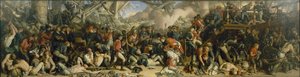
A Scene from 'Undine'

Experience 'A Scene from Undine' by Daniel Maclise – a captivating Victorian masterpiece depicting romance & folklore. Explore this stunning oil painting reproduction, perfect for art lovers.

"Hungarian Meta Description": "Daniel Maclise (1806-1870) ír festő, aki a viktorián korszak ikonikus történelmi freskóival, irodalmi illusztrációival és portréival vált híressé. A Westminster Palota díszítője, művei a történelem és a kultúra tükre."

Vásároljon nagy felbontású, javított digitális képet, amely minőségében messze felülmúlja az online előnézetet.

Minden fájlt szakembereink a legmodernebb eszközök és precíz, kézi retusálás segítségével készítenek el aprólékosan. Gondoskodunk arról, hogy minden kép kivételes tisztasággal, pontos színhelyességgel és részletgazdag finomsággal rendelkezzen.

A végleges fájl 72 órán belül e-mailben megérkezik, professzionális, szerkesztői és nyomtatási környezetbe optimalizálva az azonnali használathoz. Ez ugyanaz a minőség, amelyben a legmeghatározóbb tervezőstúdiók, kiadók és galériák is megbízhatnak.

Digitális kép

Töltsön le nagy felbontású fájlt személyes kiállításokhoz, nyomtatáshoz és kreatív projektekhez. (Áttérés Nyomtatványra Áttérés NyomtatványraKézzel festett másolat rendelése Kézzel festett másolat rendelése)

Összesített ár

$ 24,90

Minden digitális kép rendeléséhez tartozó extrák

Szakértői digitális kézbesítés, garantáltan

Amikor a WahooArt.com szolgáltatást választja, nem csupán egy képet kap – professzionálisan felmagasított digitális műalkotást kap, amely precizitással készült, és amelyet megelégsedési gwarancia tesz biztoslássá. Az alábbiakban automatikusan minden benne 】

shipping_icon
Gyors e-mail teslimítés

A nagy felbontású digitális képmásolatát a megrendelést követő 72 órán belül e-mailben elküldjük Önnek – azonnal használható formátumban.

canvas_icon
MI-alapú digitális fejlesztésű fájl

Műve professzionális módon kerül optimalizálásra fejlett mesterséges intelligencia eszközök és manuális szerkesztés segítségével, biztosítva a maximális részletességet, tisztaságot és színpontosságot.

insurance_icon
Örök életű ingyenes újradelivery

Véletlenül törölted vagy elvesztetted a fájlodat? Ne aggódj – bármikor ingyen újra megküldjük neked.

tax_icon
Nincs importköltség – soha

Élvezze műalkotásait azonnal, vám, illeték vagy szállítási költség nélkül – a digitális letöltések mindig adamentesek.

color_icon
Színpontosság garantálása

Professzionális eszközök és színkezelés segítségével garantáljuk, hogy digitális képe a lehető legpontosabban tükrözze az eredeti színeket.

return_icon
100 napos elégedettségi garancia

Ha nemມີ elégedett a digitális képével, 100 napon belül felülvizsgáljuk vagy 100% visszatérítjük az amountot – kérdés बिना.

guarantee_icon
100% Pénzvisszatérítési garancia

Nem tetszett a vásárlás? 100 napon belül teljes visszatérítést garantálunk a digitális fájl megvételétől számítva – kérdés बिना.

discount_icon
Tömegrendelési kedvezmények

Vásároljon 3 képet, spóroljon 10%-et - Vásároljon 5-öt, spóroljon 15%-et - Vásároljon 10+ képet, spóroljon 20%-at. Kiváló kreatív projektekhez, galériákhoz és ügynökségekhez.

Gyors információk

  • Artist: Daniel Maclise
  • Artistic style: Historical painting, narrative
  • Notable elements or techniques: Detailed figures, fantasy elements
  • Location: Private Collection
  • Dimensions: 45 x 61 cm
  • Title: A Scene from "Undine"
  • Medium: Oil on canvas

A Scene from ‘Undine’ by Daniel Maclise – A Victorian Romance of Water and Soul

Daniel Maclise's “A Scene from ‘Undine’,” painted in 1843, is more than a mere depiction of a fairy tale; it’s a meticulously crafted tableau brimming with Romantic ideals, symbolic weight, and the burgeoning anxieties of Victorian society. This captivating work, now housed within the Royal Gallery at the Palace of Westminster, transports us to a shadowed forest glen, where a young knight, Huldbrand, confronts the elemental forces embodied by Undine, a water spirit yearning for a soul. Maclise’s masterful handling of light, color, and composition creates an atmosphere both alluring and subtly unsettling, reflecting the complex interplay between beauty, danger, and the eternal quest for redemption.

The painting is deeply rooted in Friedrich de la Motte Fouqué's 1819 novella of the same name – a story that resonated powerfully with Victorian audiences. The narrative centers on Undine’s desire to transcend her watery existence and attain a human soul through marriage. Maclise doesn’t simply illustrate the plot; he amplifies its themes of transformation, sacrifice, and the struggle between opposing forces. The scene depicted captures a pivotal moment – Huldbrand's resolute defense against Kuhleborn, the malevolent water spirit who seeks to prevent Undine from achieving her goal. This confrontation isn’t merely physical; it represents a battle for the very essence of existence.

A Symphony of Color and Detail

Maclise was renowned for his meticulous attention to detail and his ability to render textures with astonishing realism. “A Scene from ‘Undine’” exemplifies this skill, showcasing a rich tapestry of colors and intricate details. The deep greens and browns of the forest floor contrast sharply with the ethereal blues and whites of Undine's watery realm. Notice the careful rendering of the foliage – each leaf, branch, and root meticulously depicted to create a sense of depth and immersion. The figures themselves are rendered with remarkable precision; Huldbrand’s determined expression, Undine’s delicate beauty, and Father Heilmann’s solemnity are all conveyed through subtle shifts in posture and facial expression.

Technically, Maclise employed a combination of oil paints on canvas. He was particularly adept at capturing the effects of light and shadow, creating a dramatic chiaroscuro that emphasizes the scene's emotional intensity. The use of glazing techniques – applying thin layers of translucent paint over dried underlayers – allowed him to build up color gradually, achieving remarkable luminosity and depth. Furthermore, Maclise’s background elements are not merely decorative; they contribute significantly to the overall narrative, hinting at the hidden world of spirits and folklore that underlies the story.

Symbolism and Victorian Anxieties

Beyond its surface beauty, “A Scene from ‘Undine’” is laden with symbolism. Undine herself represents a yearning for transcendence – a desire to escape the limitations of her watery existence and achieve something more meaningful. Huldbrand embodies courage and determination, willing to risk his life to protect her. Kuhleborn, the antagonist, symbolizes the destructive forces that threaten to thwart this transformation. The presence of Father Heilmann suggests the influence of Christian morality in guiding the characters towards a virtuous path.

The painting also reflects the anxieties prevalent in Victorian society – particularly those surrounding nature and the supernatural. The Romantic movement had instilled a fascination with the wild, untamed aspects of the natural world, while simultaneously fostering a sense of unease about its potential dangers. Maclise’s depiction of the forest as both alluring and menacing captures this duality perfectly. The inclusion of elves, goblins, and water nymphs further reinforces the painting's connection to folklore and mythology – themes that were experiencing a resurgence during the Victorian era.

A Legacy of Beauty and Intrigue

“A Scene from ‘Undine’,” completed in 1843, remains a powerful testament to Daniel Maclise’s artistic skill and his ability to capture the spirit of his time. Its enduring appeal lies not only in its technical brilliance but also in its evocative storytelling and profound exploration of universal themes. Today, reproductions of this masterpiece continue to captivate audiences, offering a glimpse into a world where romance, danger, and the eternal quest for redemption converge.

Consider commissioning a high-quality reproduction from WahooArt.com – a faithful recreation that will bring the drama and beauty of Maclise’s “A Scene from ‘Undine’” to your home or office.


A művész életrajza

Early Life and Artistic Beginnings

Daniel Maclise, a name synonymous with the grandeur of Victorian history painting, was born on January 25th, 1806, in Cork, Ireland – a city steeped in both artistic tradition and the burgeoning spirit of the Industrial Revolution. His father, Alexander McLish, was a tanner and shoemaker, providing a practical grounding for a young boy who instinctively sought to capture beauty and narrative through art. From an early age, Daniel displayed a remarkable talent for drawing, a gift nurtured by his mother, Rebecca McLeish, who recognized and encouraged his artistic inclinations. He began his formal training at the Cork School of Art, immersing himself in the study of anatomy, perspective, and classical techniques – foundational elements that would shape his later work. It was during this period that he honed his skills, developing a keen eye for detail and an appreciation for the dramatic potential within historical subjects. The seeds of his future success were sown in these formative years, laying the groundwork for a career that would ultimately command national attention.

London Calling: A Career Takes Shape

Driven by ambition and a desire to immerse himself fully in the vibrant art scene of London, Daniel Maclise embarked on a pivotal move in 1827, relocating to the bustling capital city. This decision marked the beginning of a new chapter in his artistic journey, one characterized by relentless dedication and a growing reputation for excellence. He enrolled at the Royal Academy Schools, where he excelled in life drawing and, crucially, history painting – a genre that would become the cornerstone of his career. It was here that he truly began to refine his technique, mastering the complex challenges of depicting historical events with both accuracy and dramatic flair. Notably, he adopted the surname "Maclise" at this time, streamlining his professional identity. Early successes included winning the Silver Medal for drawing from the antique in 1829 and later, the Schools’ Gold Medal for history painting in 1835 – accolades that signaled his rising prominence within the artistic community.

The Shadow of "Alfred Croquis"

Maclise's career took an unexpected turn when he began contributing illustrations to *Fraser’s Magazine* under the pseudonym “Alfred Croquis.” This clever disguise allowed him to explore a wider range of subjects and develop his distinctive style – particularly in capturing character portraits. These sketches, often depicting London’s social elite with remarkable wit and insight, quickly gained immense popularity, significantly boosting his reputation and establishing him as a master of portraying human personality. “Alfred Croquis” became a celebrated figure within the magazine's readership, showcasing Maclise’s ability to capture not just likeness but also mood and character – a skill that would later translate seamlessly into his grand historical paintings. This period demonstrated his versatility and solidified his position as a respected artist beyond the confines of the Royal Academy.

Monumental Achievements: Westminster’s Masterpieces

Maclise's most enduring legacy lies in his monumental murals adorning the walls of Westminster Palace – specifically, *The Meeting of Wellington and Blücher after the Battle of Waterloo* and *The Death of Nelson*. These colossal works, completed between 1848 and 1865, represent the pinnacle of his artistic ambition and technical skill. *The Death of Nelson*, in particular, is widely considered a masterpiece, a breathtaking depiction of heroism and sacrifice that continues to captivate viewers today. The sheer scale of these paintings demanded immense patience, meticulous planning, and an unwavering commitment to detail – qualities that Maclise possessed in abundance. His dedication, however, came at a significant cost to his health, ultimately contributing to his decline in later years. These murals stand as testaments to his artistic vision and enduring contribution to British art history.

A Legacy of Influence

Daniel Maclise’s influence extends far beyond the grand scale of his Westminster murals. His work profoundly shaped the direction of Victorian history painting, blending meticulous historical research with a strong sense of narrative drama and realistic characterization. He drew inspiration from both French Neoclassicism – particularly the works of David – and classical art traditions, incorporating elements of grandeur, idealism, and emotional intensity into his compositions. Furthermore, his illustrations for Charles Dickens’ Christmas books helped to popularize the author's stories and introduced a wider audience to the beauty of Victorian literature. Maclise’s legacy is one of artistic innovation, technical mastery, and a profound engagement with the historical and cultural currents of his time. He remains a significant figure in British art history, remembered not only for his magnificent murals but also for his contributions to illustration and his enduring influence on generations of artists.
Daniel Maclise

Daniel Maclise

1806 - 1870 , Írország

Érdekességek

  • Artistic Movement Or Style: Történelmi festészet
  • Artists Or Movements Influenced By This Artist: ['Neobarokk']
  • Artists Who Influenced This Artist:
    • Scott
    • Fischer
  • Date Of Birth: 1806-01-25
  • Date Of Death: 1870-04-25
  • Full Name: Daniel Maclise
  • Nationality: Ír
  • Notable Artworks:
    • Waterlooi találkozás
    • Nelson halála
    • Lovagi esküt
  • Place Of Birth: Cork, Írország