MegtekintésMegtekintés Műalkotás AR előnézeteMűalkotás AR előnézete Kézzel festett másolat rendelése Kézzel festett másolat rendeléseSwitch to Digital Image Switch to Digital Image KüldésKüldés
RészletekRészletek Kedvencekhez ad Kedvencekhez ad LetöltésLetöltés Hasonló darabokHasonló darabok X-ray felvételX-ray felvétel DiavetítésDiavetítés StatsStats

Ensemble

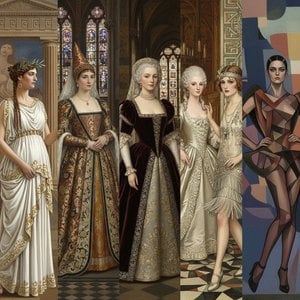
Cristóbal Balenciaga’s Ensemble embodies understated elegance—a masterful exploration of texture and geometric forms rooted in Surrealism and Primitive Art. Witness the sculptural beauty of this 1960s couture gown, inspired by Balenciaga's revolutionary vision.

Balenciaga: A legend of haute couture! Elegáns, szokatlan formák, avantgárd hatás. Fedezd fel a művész mesterségét és ikonikus ruhadezőinek világát!

Giclée / Műnyomat

Múzeumi minőségű giclée vagy vászonnyomat, gyors gyártással és rugalmas finomítási lehetőségekkel. (Kézzel festett másolat rendelése Kézzel festett másolat rendeléseSwitch to Digital Image Switch to Digital Image)

P118B $10
P118H $10
P118W $10
P438Z $10
P508JH $12
P508YH $12
P805H $10
P805Z $10
P919BZ $10
P919G $10
P919XJ $10
P959ZH $10
P968JZ $12
W106C $8
W218G $10
W218JH $8
W218Y $10
W307PJ $10
W316G $10
W316PJ $8
W316Y $10
W398PJ $8
W4111J $10
W500HY $15
W500JH $15
W692G $12
W849H $8
W940BG $15
W953PJ $8

Standard méret
egyedi méretű
CM
INCH

Válasszon előre meghatározott méreteink közül, amelyek megfelelnek a műalkotás eredeti arányainak.

szélesség
magasság

Megadhat saját méreteket is egy konkrét kerethez vagy helyszínhez igazítva. Amennyiben a kiválasztott méret nem egyezik az eredeti kép arányokkal, a műalkotást le fogjuk vágni, vagy kiegészítjük a képet tükrözött vagy egyszínű szélekkel. A gyártás megkezdése előtt egy digitális tervezetet küldünk jóváhagyásra.
Kérjük, vegye figyelembe, hogy a képernyőn látható előnézet nem tükrözi a tényleges levágást vagy kiegészítést. Csak a tervezet mutatja pontosan a végső kompozíciót.
Bár az egyedi méretek is elérhetőek, az eredeti arányok megőrzése érdekében azt javasoljuk, hogy válasszon a előre meghatározott listából származó méretet.

Világszerte történő kiszállítás területére mindössze 2 hét alatt, a szokásos 4-5 hét helyett. (8 szeptember)

why_choose_icon
Ingyenes globális expressz szállítás
why_choose_icon
Prémium minőségű len vászon
why_choose_icon
Teljes körű szállítási biztosítás
why_choose_icon
Vámvisszatérítési Garancia
why_choose_icon
Hiteles színpontosság garancia
why_choose_icon
100 napos visszaküldési lehetőség (csak hibás termékek esetén)
why_choose_icon
100% pénzvisszatérítési garancia
why_choose_icon
Több darab vásárlása esetén kedvezmény

Összesített ár

$ 68

reproduction

Ensemble

Giclée / Műnyomat

Reprodukció mérete

-

Összesített ár

$ 68

Gyors információk

  • Dimensions: 50 x 100 cm
  • Medium: Oil on Canvas
  • Artist: Cristóbal Balenciaga Eizaguirre
  • Year: 1960
  • Subject or theme: Nature
  • Movement: Post-Impressionism
  • Influences: Primitive Art

The Silent Symphony of Texture: Cristóbal Balenciaga’s Ensemble

Cristóbal Balenciaga Eizaguirre (1895 – 1972), born in the Basque fishing village of Getaria, Spain, wasn't merely a fashion designer; he was an architect of elegance, sculpting garments with meticulous precision and redefining couture standards. Revered by contemporaries like Christian Dior and Coco Chanel as “the master of us all” and “the only couturier in the truest sense of the word,” Balenciaga’s legacy extends far beyond mere aesthetics—it resides in his unwavering commitment to artistic integrity and a profound understanding of visual storytelling. His influence continues to inspire designers today, cementing his place as one of the most significant figures in 20th-century fashion history.

A Study in Contrasts: Style and Technique

Balenciaga’s artistic vision was rooted in a fascination with avant-garde movements like Surrealism and Primitive Art, influences that manifested powerfully in his oeuvre. Unlike many of his peers who embraced flamboyant embellishments and theatrical silhouettes, Balenciaga championed simplicity—a deliberate rejection of excess—that paradoxically amplified the impact of his designs. He favored clean lines, geometric shapes, and a masterful manipulation of fabric texture to create garments that possessed an understated grandeur. His technique involved painstaking draping and shaping, transforming raw materials into sculptural forms that defied convention. The meticulous attention to detail – from perfectly positioned seams to precisely folded pleats – underscored his belief that beauty resided in subtlety and precision.

Roots of Innovation: Historical Context

The 1960s witnessed a burgeoning interest in experimental art forms, mirroring Balenciaga’s own rebellious spirit. This era saw artists pushing boundaries and challenging established norms, exploring themes of subconsciousness and irrationality – concepts that found resonance within Balenciaga's artistic sensibilities. He drew inspiration from the raw beauty of nature, particularly tree roots, capturing their intricate patterns and textures on canvas with a masterful blend of Post-Impressionism and Surrealist techniques. This deliberate juxtaposition of styles reflected Balenciaga’s desire to transcend traditional artistic conventions and communicate profound emotional truths through visual imagery.

Symbolic Resonance: The Dress as Canvas

Balenciaga's “Ensemble,” depicted in the monochrome photograph, embodies more than just sartorial elegance; it speaks to a deeper symbolic language. The checkered pattern of the dress – reminiscent of traditional Basque textiles – represents heritage and tradition interwoven with modernity. Simultaneously, the coat-like structure conveys strength and resilience, mirroring Balenciaga’s unwavering dedication to his craft. Furthermore, the placement of the hat atop the mannequin's head symbolizes aspiration and ambition—a visual declaration of confidence and artistic vision. These elements coalesce into a cohesive narrative that elevates the dress beyond mere clothing, transforming it into an emblem of Balenciaga’s enduring aesthetic principles.

Emotional Impact: Beyond Decoration

Ultimately, Balenciaga’s “Ensemble” transcends decorative considerations, eliciting a visceral response from viewers. The stark simplicity of the design compels contemplation—encouraging us to appreciate the profound beauty found in restraint and precision. Like his other paintings – "Tree Roots" and "Acrobat"—Balenciaga sought to evoke emotion through visual form, conveying feelings of quiet contemplation and artistic reverence. Reproductions of this iconic piece offer collectors and interior designers alike a chance to experience firsthand the transformative power of Balenciaga’s aesthetic legacy—a testament to his unwavering belief that art should inspire and elevate the human spirit.

A művész életrajza

Early Life and Artistic Beginnings

Cristóbal Balenciaga Eizaguirre, a name synonymous with revolutionary elegance in the world of haute couture, was born in 1895 in Getaria, a small fishing village nestled on the rugged coast of Spain’s Basque Country. This remote location, steeped in maritime tradition and surrounded by dramatic cliffs and crashing waves, would profoundly shape his artistic sensibility – a deep appreciation for structure, precision, and the inherent beauty of natural forms. His early life was marked by a close connection to his mother, a seamstress who instilled in him a profound respect for textiles and the meticulous craft of garment construction. Witnessing her dedication to detail and the artistry involved in transforming simple fabrics into wearable works of art ignited within him a lifelong passion for design. He began his apprenticeship at just twelve years old, learning the fundamentals of tailoring from a local master craftsman, absorbing techniques that would later become hallmarks of his distinctive style. This formative period laid the groundwork for his future mastery – an understanding of materials, construction, and the subtle power of form.

The Rise to Parisian Prominence

Following his apprenticeship, Balenciaga’s ambition led him to San Sebastián, where he honed his skills further, eventually opening his own couture house in 1917. His early successes were fueled by patronage from prominent Spanish figures, including the Marchioness of Casa Torres, a wealthy socialite who recognized and nurtured his talent. This connection provided invaluable experience and exposure, allowing him to refine his designs and establish a reputation for impeccable quality and innovative silhouettes. In 1937, seeking new challenges and opportunities, Balenciaga moved to Paris – the undisputed heart of the fashion world. Here, he quickly established himself as a force to be reckoned with, opening a prestigious atelier on Avenue George V. His Parisian career was marked by a relentless pursuit of perfection, a commitment to pushing the boundaries of design, and an unwavering belief in his own artistic vision. He collaborated with some of the most influential figures in fashion, including Coco Chanel and Christian Dior, each of whom recognized and admired his unparalleled skill and unique aesthetic.

A Revolutionary Approach to Design

Balenciaga’s designs were characterized by a remarkable departure from the prevailing trends of the mid-20th century. He rejected the overtly feminine silhouettes popularized by designers like Dior, instead favoring clean lines, geometric shapes, and an almost sculptural quality in his garments. His influence stemmed from a deep understanding of construction – he meticulously studied the way fabrics draped and moved on the human form, creating designs that were both elegant and remarkably comfortable. Key to his style was the introduction of the “barrel line” in 1947, a dramatic shift away from the traditional waistline, resulting in voluminous shapes that redefined women’s fashion. He also pioneered the "sack dress" in 1957 – a deceptively simple garment with no discernible waist – and the cocoon coat, demonstrating his ability to create garments that were both innovative and timeless. Balenciaga's work was deeply influenced by art movements such as Surrealism and Primitivism, evident in his experimental use of materials and forms.

Legacy and Enduring Influence

Cristóbal Balenciaga’s impact on the world of fashion is immeasurable. He wasn’t merely a couturier; he was an architect of elegance, a master craftsman who elevated garment construction to an art form. His designs continue to inspire contemporary designers, demonstrating that true innovation lies not in fleeting trends but in a profound understanding of form, structure, and the beauty of simplicity. The Museo Balenciaga in Getaria, his birthplace, serves as a testament to his enduring legacy, preserving and celebrating his remarkable creations. He remains an iconic figure – “The Master” as he was affectionately known by his peers – whose influence continues to shape the aesthetic landscape of fashion today. His work stands as a powerful reminder that true artistry lies in the meticulous execution of a clear vision.

Cristóbal Balenciaga

Cristóbal Balenciaga

1895 - 1972 , Spanyolország

A művészről röviden

  • Artistic Movement Or Style: Avant-garde / Surrealista
  • Artists Or Movements Influenced By This Artist: ['Hubert de Givenchy']
  • Artists Who Influenced This Artist:
    • Christian Dior
    • Coco Chanel
  • Date Of Birth: 1895. jan 21.
  • Date Of Death: 1972. már 23.
  • Full Name: Cristóbal Balenciaga Eizaguirre
  • Nationality: Spanyol
  • Notable Artworks:
    • Study 'Song of Songs IV'
    • Állapot gyökerei
    • Acrobata
  • Place Of Birth: Getaria, Spanyolország
Fedezze fel a műalkotásokat témák, stílusok és jellemzők szerint csoportosítva.