Előnézet AR előnézet Kézzel festett másolat vásárlása Áttérés digitális képre Megosztás
Részletek Útmutató Kedvencekhez ad Letöltés Hasonló darabok X-ray felvétel Diavetítés Statisztika

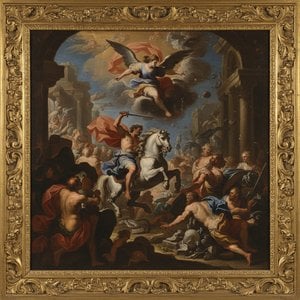
Hercules (detail)

Explore Charles Le Brun's 'Hercules (detail)' – a Baroque masterpiece showcasing mythological strength & divine intervention. Discover the painting’s rich symbolism and artistic brilliance.

Charles Le Brun (1619-1690) a francia barokk festő és art teoretikus! Fedezd fel a Versailles palota díszítőjét, a nagyszerű alkotásait és a francia művészet meghatározó alakját.

Giclée / Műnyomat

Múzeumi minőségű giclée vagy vászonnyomat, gyors gyártással és rugalmas finomítási lehetőségekkel. ( Kézzel festett másolat vásárlása Áttérés digitális képre)

P118B $10
P118H $10
P118W $10
P438Z $10
P508JH $12
P508YH $12
P805H $10
P805Z $10
P919BZ $10
P919G $10
P919XJ $10
P959ZH $10
P968JZ $12
W106C $8
W218G $10
W218JH $8
W218Y $10
W307PJ $10
W316G $10
W316PJ $8
W316Y $10
W398PJ $8
W4111J $10
W500HY $15
W500JH $15
W692G $12
W849H $8
W940BG $15
W953PJ $8

Standard méret
egyedi
CM
INCH

Válasszon előre meghatározott méreteink közül, amelyek megfelelnek a műalkotás eredeti arányainak.

szélesség
magasság

Megadhat saját méreteket is egy konkrét kerethez vagy helyszínhez igazítva. Amennyiben a kiválasztott méret nem egyezik az eredeti kép arányokkal, a műalkotást le fogjuk vágni, vagy kiegészítjük a képet tükrözött vagy egyszínű szélekkel. A gyártás megkezdése előtt egy digitális tervezetet küldünk jóváhagyásra.
Kérjük, vegye figyelembe, hogy a képernyőn látható előnézet nem tükrözi a tényleges levágást vagy kiegészítést. Csak a tervezet mutatja pontosan a végső kompozíciót.
Bár az egyedi méretek is elérhetőek, az eredeti arányok megőrzése érdekében azt javasoljuk, hogy válasszon a előre meghatározott listából származó méretet.

Világszerte történő kiszállítás területére mindössze 2 hét alatt, a szokásos 4-5 hét helyett. (23 szeptember)

why_choose_icon
Ingyenes globális expressz szállítás
why_choose_icon
Prémium minőségű len vászon
why_choose_icon
Teljes körű szállítási biztosítás
why_choose_icon
Vámvisszatérítési Garancia
why_choose_icon
Tökéletes színarányosság garancia
why_choose_icon
100 napos visszaküldési garancia (csak gyártási hibás termékek esetén)
why_choose_icon
100% pénzvisszatérítési garancia
why_choose_icon
Több darab vásárlásakor kedvezmény

Összesített ár

$ 68

reproduction

Hercules (detail)

Giclée / Műnyomat

Reprodukció méretei

-

Összesített ár

$ 68

Rövid tények

  • Subject or theme: Hercules Apotheosis
  • Location: Private Collection
  • Movement: Baroque Classicism
  • Influences:
    • Poussin
    • Raphael
  • Medium: Oil on canvas
  • Year: 1658
  • Notable elements or techniques: Detailed figures, dynamic composition

Művészeti kvíz

Minden kérdésre csak egy helyes válasz létezik.

Kérdés 1:
What mythological figure is depicted ascending to heaven in Charles Le Brun’s ‘Hercules (detail)?”
Kérdés 2:
The painting ‘Hercules (detail)’ is primarily associated with which artistic movement?
Kérdés 3:
What is a key characteristic of Charles Le Brun’s style as evidenced in this work?
Kérdés 4:
According to the description
Kérdés 5:
In what year was Charles Le Brun born?

The Grandeur of Myth and Majesty

Charles Le Brun’s “Hercules (detail)” is not merely a depiction of a mythological hero; it's an immersive experience, a vibrant tableau vivant that transports the viewer to the heart of 17th-century French courtly life. Painted in 1658, this exquisite work embodies the height of Baroque artistry – a potent blend of classical ideals, dramatic dynamism, and opulent detail. It’s a testament to Le Brun's mastery as both a painter and a theorist, reflecting his profound influence on the artistic landscape of his era.

Hercules (detail) by Charles Le Brun

Image from Wikimedia Commons

A Symphony of Classical Elements

Le Brun’s composition is a carefully orchestrated dance of classical motifs. At the center, Hercules dominates the scene, his muscular physique and resolute gaze radiating strength and divine authority. He ascends towards heaven, guided by a host of radiant angels – their wings spread wide in a gesture of benediction and protection. The clouds swirling behind them create an ethereal backdrop, lending a sense of weightlessness and transcendence to the narrative. The painting’s foundation rests firmly on classical principles: the balanced composition, the idealized forms, and the use of light and shadow to sculpt volume and drama are hallmarks of Le Brun's training under Poussin.

Technique and Palette – A Masterclass in Baroque Detail

Le Brun’s technique is characterized by a remarkable level of detail and virtuosity. He employs a rich, layered approach, building up the image through countless glazes and scumbles to achieve an astonishingly luminous surface. The colors are predominantly earthy—ochres, siennas, and umbers—creating a sense of groundedness and gravitas. However, these muted tones are punctuated by flashes of gold and crimson in the angels’ robes and the celestial light, adding moments of intense brilliance. The artist's meticulous attention to texture – from the folds of Hercules’ drapery to the delicate feathers of the angels – is a testament to his skill and dedication.

Symbolism and Royal Patronage

Beyond its purely visual appeal, “Hercules” is laden with symbolism. The hero represents strength, courage, and virtue—qualities highly valued by Louis XIV and his court. His apotheosis – his ascent into heaven – signifies divine recognition and the fulfillment of heroic destiny. The painting was commissioned for the Salon d’Hercule at Vaux-le-Vicomte, a lavish chateau built by Nicolas Fouquet as a display of wealth and power. Le Brun's work served to elevate the space with mythological grandeur, reflecting the king’s own ambition and desire for immortality. The inclusion of figures like Hercules, associated with Roman virtue and military prowess, reinforced the ideals of royal authority and the glory of France.

A Legacy Enduring

“Hercules (detail)” stands as a pivotal work in Charles Le Brun’s oeuvre and a defining example of French Baroque painting. Its influence can be seen in countless subsequent works, shaping the artistic sensibilities of generations of artists. Reproductions of this magnificent piece continue to captivate viewers today, offering a glimpse into the splendor of the French court and the enduring power of classical mythology. It is a reminder that art can not only reflect history but also embody its most cherished values.


A művész életrajza

Early Life and Training

Charles Le Brun, a name synonymous with the grandeur of 17th-century French art, was born in Paris in 1619, a city already brimming with artistic ambition. From an early age, it became evident that this young boy possessed a remarkable talent for drawing – a gift nurtured under the watchful eye of his father, a skilled craftsman. At just eleven years old, he entered the prestigious studio of Simon Vouet, a leading Mannerist painter and a prominent figure in the Parisian art scene. This apprenticeship was further enriched by the patronage of Chancellor Séguier, a wealthy nobleman who recognized Le Brun’s potential and provided him with invaluable support.

Le Brun's artistic journey continued to evolve as he sought knowledge from other masters. He diligently studied under François Perrier, another influential painter of his time, absorbing techniques and stylistic nuances. However, it was a four-year sojourn in Rome (1642-1646) that truly shaped the trajectory of his career. During this transformative period, he found himself apprenticed to Nicolas Poussin, one of the most celebrated painters of the era. Poussin’s influence was profound; Le Brun immersed himself in the study of ancient Roman sculpture, meticulously copying works by Raphael and other masters. This experience instilled within him a deep appreciation for classical ideals – a foundation that would later inform his own artistic style.

Artistic Development and Style

Returning to Paris in 1646, Charles Le Brun swiftly established himself as a force to be reckoned with. Initially, his work reflected the stylistic influences of Vouet and Poussin – a harmonious blend of Mannerist elegance and classical restraint. However, he was not content to simply imitate; instead, he embarked on a gradual but deliberate evolution, forging a distinctly personal artistic voice.

Le Brun’s artistic development involved moving away from strict adherence to the rigid conventions of classical models towards a more dynamic and expressive Baroque style. He embraced dramatic compositions, vibrant colors, and meticulous detail – elements that would become hallmarks of his oeuvre. His paintings were not merely representations of reality; they were carefully constructed narratives designed to evoke emotion and inspire awe.

A particularly significant series of works showcased Le Brun’s ability to seamlessly integrate historical narrative with artistic grandeur: a monumental depiction of the history of Alexander the Great. This ambitious undertaking demonstrated his mastery of perspective, color theory, and compositional techniques – skills honed through years of dedicated study and practice. His style was characterized by an almost theatrical quality, as if he were staging a grand drama on canvas.

Major Achievements and Royal Service

Le Brun’s career reached its zenith during the reign of Louis XIV, the “Sun King,” who recognized his immense talent and appointed him First Painter to the King in 1664. This prestigious position granted Le Brun unparalleled influence over French art, effectively making him the arbiter of artistic production within the kingdom.

He played a pivotal role in transforming the Palace of Versailles into a dazzling symbol of royal power and magnificence. His contributions extended far beyond mere decoration; he was responsible for designing countless statues, fountains, and architectural details that contributed to the palace’s overall splendor. Among his most celebrated achievements are the Ambassadors’ Staircase, the Hall of Mirrors (where he oversaw the intricate application of gold leaf), and the Peace and War Rooms – spaces imbued with a sense of history and grandeur.

Furthermore, Le Brun was entrusted with overseeing the creation of the lavish gobelins (large tapestries) that adorned the royal chambers. His designs were both aesthetically stunning and technically masterful, representing a pinnacle of textile art. His influence permeated virtually every aspect of the court’s artistic endeavors.

Legacy and Historical Significance

Charles Le Brun's legacy extends far beyond his individual works; he played a vital role in establishing and promoting French art on an international stage. His meticulous attention to detail, dramatic compositions, and masterful use of color set a new standard for artists throughout Europe.

As a theorist, Le Brun emphasized the importance of intellectual engagement over mere visual appeal. He believed that art should not simply be beautiful; it should also convey meaning and inspire contemplation. This philosophy profoundly influenced artistic education for generations to come, shaping the way young painters were trained and encouraged to approach their craft.

His decorative schemes at Versailles – particularly the Hall of Mirrors – remain iconic examples of Baroque design, setting a standard for royal palaces throughout Europe. Le Brun’s work continues to be studied and admired by art historians and enthusiasts alike, solidifying his place as one of the most important figures in French artistic history.

Charles Le Brun

Charles Le Brun

1619 - 1690 , Franciaország

Gyors információk

  • Artistic Movement Or Style: Barokk
  • Artists Or Movements Influenced By This Artist: ['André-Charles Boulle']
  • Artists Who Influenced This Artist:
    • Simon Vouet
    • Nicolas Poussin
  • Date Of Birth: 1619. Feb 24.
  • Date Of Death: 1690. Feb 12.
  • Full Name: Charles Le Brun
  • Nationality: Francia
  • Notable Artworks:
    • Ambassadorok lépcsője
    • Üvegcsarnok
    • Hóhérlófalkszín
  • Place Of Birth: Párizs, Francia