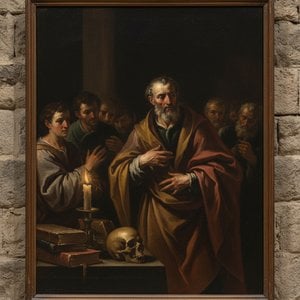
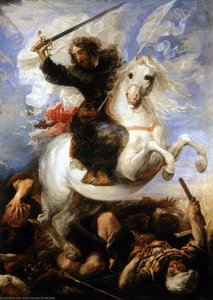
A Legacy of Royal Likenesses: The Life and Art of Juan Carreño de Miranda
Juan Carreño de Miranda (Avilés, 1614. március 25. – Madrid 1685.október 3.) a barokk korszakának neves spanyol festője volt. Élete és munkássága a spanyol művészet egyik legjelentősebb időszakát idézi, különösen a királyi udvar életét és portréfestészetének új dimenzióját. A korabeli reneszánszihoz képest, Carreño a realista megközelítést választotta, melynek köszönhetően a spanyol művész egyedülállóan képes volt az emberek belső világát ábrázolni.
- Kezdetek és Kaland: Juan Carreño de Miranda Avilésben született 1614-ben, egy festő családba. Apja, szintén Juan Carreño, is művész volt, így a festészet már az ösztönzésekor jelen volt a fiú életében. Családjuk 1623-ban Madridba költözött, ami jelentős változásokat hozott a fiatal festő számára.
- Tanulás és Tanárok: Madridban kezdte meg tanulmányait, ahol Pedro de las Cuevas és Bartolomé Román voltak a tanárai. Ezek a mesterek nemcsak a művészi technikát, hanem az esztétikai elveket is elsajátította tőle, melyek meghatározták későbbi munkásságát.
- Velázquez Hatása: Diego Velázquez, a kor egyik legjelentősebb festője hamar felfigyelte a fiatal festő tehetségét. Velázquez tanácsait és inspirációit követve Carreño egyre kifinomultabbá vált.
Ascension to Court Painter: A Royal Appointment
Carreño’s ascent was marked by both artistic merit and fortunate circumstance. In 1658, he secured a crucial role as an assistant on a royal commission—the creation of frescoes for the Alcázar of Madrid. Though tragically lost in the devastating fire of 1734, this project provided invaluable experience working within the grand scale and demanding expectations of royal patronage. However, it was the death of Sebastián de Herrera in 1671 that truly cemented Carreño’s position. He was appointed *pintor de cámara*, or court painter to the Queen, a role that would define his career for decades. This appointment wasn't merely a title; it was an immersion into the very fabric of Spanish power and prestige. He became intimately acquainted with the personalities, intrigues, and subtle nuances of the royal family and their courtiers—knowledge he masterfully translated onto canvas. He refused knighthood in the Order of Santiago, famously stating that painting itself bestowed honor upon the world, a testament to his unwavering dedication to his craft.
- A Királyi Udvar: Carreño a királyi udvarban dolgozott, ahol a királynő és a király családjának portréit festette.
- Sebastián de Herrera Halála: Sebastián de Herrera halálával Carreño lett a királynő udvari festője, ami a karrierének csúcspontját jelentette.
The Art of Character: Style and Influences
Carreño de Miranda’s style is deeply rooted in the Spanish Baroque tradition, yet it possesses a unique character all its own. He wasn't simply mimicking Velázquez; he was building upon that foundation, infusing his work with a distinct sensibility. His portraits are characterized by an unwavering commitment to realism—a meticulous depiction of physical features and opulent clothing. But beyond mere likeness, Carreño possessed the remarkable ability to capture the *inner* character of his subjects, their status, and even their psychological state. This wasn’t achieved through dramatic gestures or exaggerated expressions but rather through subtle details: a carefully rendered hand, a knowing glance, the precise fall of light across a face. The influence of Velázquez is undeniable—particularly in Carreño’s masterful use of *chiaroscuro*, the interplay of light and shadow that lends depth and drama to his compositions. However, he also drew inspiration from Flemish masters like Anthony van Dyck, incorporating elements of aristocratic elegance and refined detail into his portraits. His work embodies a Baroque drama through dramatic lighting and composition, enhancing visual impact while maintaining an air of dignified restraint.
Fontos elemek:
- Realizmus: Carreño a valóságra törekedett, részletekre odafigyelve a portrékban.
- Velázquez hatása: A fény és árnyék játék (chiaroscuro) használata.
- Flemish hatás: Az udvari elegancia ábrázolása.
Masterworks and Enduring Significance
While Carreño produced religious altarpieces early in his career, it is for his portraits that he is most celebrated today. Among his most renowned works are *Charles II as Grandmaster of the Golden Fleece*, a striking depiction of the young king embodying regal authority; *Portrait of Queen Mariana of Austria*, capturing her austere grace and political power; and *Portrait of the Duke of Pastrana*, showcasing the nobleman’s wealth and status. These paintings, along with countless others depicting members of the Spanish royal family and court, offer an invaluable glimpse into a pivotal period in Spanish history. They are not merely portraits but historical documents—testaments to the lives, personalities, and power dynamics of those who shaped Spain's destiny. Carreño’s legacy extends beyond his own artistic achievements; he was also a dedicated teacher, nurturing a generation of talented pupils including Mateo Cerezo, Cabezalero, Donoso, Ledesma, and Sotomayor, ensuring the continuation of his style and influence long after his death in 1685. His ability to document the royal family with such unprecedented realism cemented his place as a key figure in Spanish Baroque art—a master of likeness who captured not just *what* they looked like, but *who* they were.
Carreño munkássága a spanyol művészet egyik legjelentősebb időszakát idézi, és a mai napig inspirálja a festők.