MegtekintésMegtekintés Műalkotás AR előnézeteMűalkotás AR előnézete Áttérés Nyomtatványra Áttérés NyomtatványraKézzel festett másolat rendelése Kézzel festett másolat rendelése KüldésKüldés
RészletekRészletek Kedvencekhez ad Kedvencekhez ad LetöltésLetöltés Hasonló darabokHasonló darabok X-ray felvételX-ray felvétel DiavetítésDiavetítés StatisztikaStatisztika

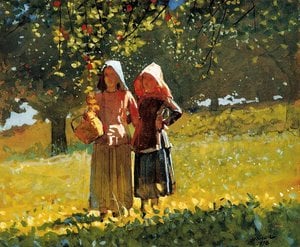
Apple Picking

Experience Camille Pissarro’s Impressionistic brilliance in ‘Apple Picking,’ capturing the radiant orchard light and collaborative spirit of rural labor. This 1886 masterpiece showcases loose brushstrokes and vibrant hues, inviting you to immerse yourself in a timeless depiction of nature's beauty.

Fedezd fel Pissarro festményeit: lenyűgöző tájak és hétköznapi jelenetek! A művészet egyik legjelentősebb alakja, aki nagy hatással volt Van Goghurt, Cézannre és másokra. Egyedi stílusával a világot ábrázolja!

Vásároljon nagy felbontású, javított digitális képet, amely minőségében messze felülmúlja az online előnézetet.

Minden fájlt szakembereink a legmodernebb eszközök és precíz, kézi retusálás segítségével készítenek el aprólékosan. Gondoskodunk arról, hogy minden kép kivételes tisztasággal, pontos színhelyességgel és részletgazdag finomsággal rendelkezzen.

A végleges fájl 72 órán belül e-mailben megérkezik, professzionális, szerkesztői és nyomtatási környezetbe optimalizálva az azonnali használathoz. Ez ugyanaz a minőség, amelyben a legmeghatározóbb tervezőstúdiók, kiadók és galériák is megbízhatnak.

Digitális kép

Töltsön le nagy felbontású fájlt személyes kiállításokhoz, nyomtatáshoz és kreatív projektekhez. (Áttérés Nyomtatványra Áttérés NyomtatványraKézzel festett másolat rendelése Kézzel festett másolat rendelése)

Összesített ár

$ 24,90

Minden digitális kép rendeléséhez tartozó extrák

Szakértői digitális kézbesítés, garantáltan

Amikor a WahooArt.com szolgáltatást választja, nem csupán egy képet kap – professzionálisan felmagasított digitális műalkotást kap, amely precizitással készült, és amelyet megelégsedési gwarancia tesz biztoslássá. Az alábbiakban automatikusan minden benne 】

shipping_icon
Gyors e-mail teslimítés

A nagy felbontású digitális képmásolatát a megrendelést követő 72 órán belül e-mailben elküldjük Önnek – azonnal használható formátumban.

canvas_icon
MI-alapú digitális fejlesztésű fájl

Műve professzionális módon kerül optimalizálásra fejlett mesterséges intelligencia eszközök és manuális szerkesztés segítségével, biztosítva a maximális részletességet, tisztaságot és színpontosságot.

insurance_icon
Örök életű ingyenes újradelivery

Véletlenül törölted vagy elvesztetted a fájlodat? Ne aggódj – bármikor ingyen újra megküldjük neked.

tax_icon
Nincs importköltség – soha

Élvezze műalkotásait azonnal, vám, illeték vagy szállítási költség nélkül – a digitális letöltések mindig adamentesek.

color_icon
Színpontosság garantálása

Professzionális eszközök és színkezelés segítségével garantáljuk, hogy digitális képe a lehető legpontosabban tükrözze az eredeti színeket.

return_icon
100 napos elégedettségi garancia

Ha nemມີ elégedett a digitális képével, 100 napon belül felülvizsgáljuk vagy 100% visszatérítjük az amountot – kérdés बिना.

guarantee_icon
100% Pénzvisszatérítési garancia

Nem tetszett a vásárlás? 100 napon belül teljes visszatérítést garantálunk a digitális fájl megvételétől számítva – kérdés बिना.

discount_icon
Tömegrendelési kedvezmények

Vásároljon 3 képet, spóroljon 10%-et - Vásároljon 5-öt, spóroljon 15%-et - Vásároljon 10+ képet, spóroljon 20%-at. Kiváló kreatív projektekhez, galériákhoz és ügynökségekhez.

Gyors információk

  • Year: 1886
  • Title: Apple Picking
  • Notable elements or techniques: Loose brushstrokes, vibrant colors
  • Movement: Impressionism
  • Subject or theme: Rural landscape
  • Medium: Oil on canvas
  • Dimensions: 127 x 125 cm

Művészeti kvíz

Minden kérdésre csak egy helyes válasz létezik.

Kérdés 1:
Which artistic movement is most closely associated with Camille Pissarro’s ‘Apple Picking’?
Kérdés 2:
The painting depicts a scene of:
Kérdés 3:
What technique did Pissarro primarily employ to capture the effects of light?
Kérdés 4:
The composition of ‘Apple Picking’ emphasizes:
Kérdés 5:
In what year was ‘Apple Picking’ created?

A Symphony of Orchard Light: Camille Pissarro’s Apple Picking

The painting “Apple Picking,” executed in 1886 by Camille Pissarro, stands as a quintessential embodiment of Impressionistic ideals – capturing fleeting moments of beauty and emotion rather than striving for photographic realism. More than just a depiction of rural labor, it's an exquisitely rendered meditation on the rhythms of nature and the collaborative spirit of everyday life, resonating deeply with viewers even today.

Subject Matter & Composition

At its core, the artwork portrays three women diligently harvesting apples from laden trees in an orchard bathed in dappled sunlight. Pissarro’s masterful composition draws the eye upwards towards the branches overflowing with fruit, creating a sense of verticality that emphasizes the grandeur of the natural world. The figures themselves are positioned strategically within the frame – one woman stands prominently on the left, another occupies the center, and the third is situated on the right – fostering a dynamic interplay between individuals and their environment. This careful arrangement isn’t merely aesthetically pleasing; it subtly conveys the importance of communal effort in achieving a shared goal.

Style & Technique: Impressionistic Brilliance

Pissarro's signature Impressionist style is immediately apparent through his loose brushstrokes and vibrant color palette. Rather than meticulously blending hues to achieve smooth gradients, he applies paint in short, broken strokes that capture the shimmering effects of light filtering through the foliage. The artist skillfully utilizes complementary colors – greens and reds – to heighten visual impact and create a sense of vibrancy. Notice how Pissarro employs optical mixing—allowing the viewer’s eye to blend colors subconsciously—resulting in an illusion of luminosity and depth that surpasses traditional painting methods. He achieves this remarkable feat by layering thin washes of color over textured surfaces, creating a palpable impression of atmosphere.

Historical Context & Artistic Influences

“Apple Picking” emerged during the zenith of Impressionism, a movement that challenged academic conventions and championed subjective experience as paramount to artistic expression. Inspired by artists like Claude Monet and Eugène Boudin, Pissarro embraced plein air painting—working outdoors directly from observation—a practice considered revolutionary at the time. The painting reflects the broader societal shift toward valuing rural life and labor alongside urban sophistication, mirroring the burgeoning interest in capturing the beauty of the natural world during this period. Furthermore, it aligns with Impressionists' fascination for portraying ordinary scenes infused with emotion and capturing the ephemeral qualities of light and color.

Symbolism & Emotional Resonance

Beyond its visual splendor, “Apple Picking” carries symbolic weight. The apples themselves represent abundance, fertility, and the rewards of honest toil – themes central to Impressionist artistic sensibilities. More profoundly, however, the painting speaks to a deeper human connection with nature and the importance of community. The women’s collaborative activity symbolizes unity and cooperation, conveying a sense of contentment and harmony amidst the challenges of daily life. Pissarro's ability to evoke such emotion stems from his profound understanding of human psychology and his unwavering commitment to portraying authentic experiences.

Conclusion: An Enduring Legacy

“Apple Picking” remains an enduring testament to Camille Pissarro’s artistic genius and the transformative power of Impressionism. Its luminous colors, dynamic composition, and evocative depiction of rural life continue to inspire admiration and captivate audiences worldwide. Reproductions of this masterpiece offer a window into a bygone era—a time when artists sought not merely to represent reality but to capture its essence, transforming fleeting moments into timeless expressions of beauty and emotion.

A művész életrajza

A Life Rooted in Observation: The World of Camille Pissarro

Camille Pissarro, a name synonymous with both the birth and evolution of Impressionism, was an artist whose life mirrored the shifting landscapes he so devotedly captured on canvas. Born Jacob Abraham Camille Pissarro on July 10, 1830, in Charlotte Amalie, St. Thomas – then part of the Danish West Indies, now the US Virgin Islands – his origins were as diverse and vibrant as the scenes that would later define his artistic vision. His father, a Portuguese Jewish merchant with French nationality, and his mother, from a French-Jewish family on the island, instilled in him a unique cultural heritage. This upbringing, somewhat unconventional due to familial complexities, fostered an early sensitivity to the world around him, a quality that would become the cornerstone of his artistic practice. His initial formal training at the Savary Academy near Paris provided a foundation in traditional techniques, but it was his return to St. Thomas and subsequent work as a cargo clerk that truly ignited his passion for observation. The bustling harbor, the vibrant local life, and the raw beauty of the Caribbean landscape became his first subjects, shaping an eye keenly attuned to the nuances of everyday existence.

From Realism to Revolution: Artistic Development

Pissarro’s artistic journey was one of constant exploration and refinement. After a period assisting Danish painter Anton Melbye in Paris, he immersed himself in the works of masters like Gustave Courbet, Jean-Baptiste-Camille Corot, and Honoré Daumier – artists who championed realism and social commentary. He initially sought acceptance within the established art world, exhibiting at the Paris Salon, but soon found its constraints stifling. A pivotal moment came with his embrace of *plein air* painting—working outdoors directly from nature—a practice encouraged by Corot that would become central to Impressionism. This shift wasn’t merely technical; it represented a philosophical change, a desire to capture the fleeting effects of light and atmosphere, the very essence of a scene rather than its precise representation. He began experimenting with looser brushwork and brighter palettes, moving away from academic conventions towards a more subjective and expressive style. His early landscapes, though still grounded in realism, hinted at the revolutionary path he was about to forge. This period saw him grappling with finding his own voice amidst the burgeoning artistic ferment of Paris, a city undergoing rapid transformation that provided endless inspiration.

The Father Figure of Impressionism

Camille Pissarro wasn’t simply *an* Impressionist; he was arguably its most steadfast and unifying force. Uniquely, he exhibited at all eight Paris Impressionist exhibitions between 1874 and 1886, acting as a stabilizing presence within a group often characterized by internal disagreements and individual ambitions. He wasn’t merely present—he actively encouraged his fellow artists, offering support, guidance, and a much-needed sense of camaraderie. This earned him the affectionate nickname “the father figure” of the movement. His commitment to artistic freedom and innovation was unwavering, even in the face of critical scorn and public indifference. He believed in the power of collective action and championed the idea of artists exhibiting independently from the Salon’s restrictive rules. Beyond his own work, Pissarro's influence extended to a younger generation of artists, including Paul Cézanne, Vincent van Gogh, and Paul Gauguin, whom he mentored and profoundly impacted. He provided them with not only technical advice but also a philosophical framework for their artistic explorations. His willingness to experiment led him briefly into Neo-Impressionism, influenced by Georges Seurat and Paul Signac’s pointillist techniques, before ultimately returning to a more personal style that blended his earlier influences with new discoveries.

Landscapes of Life: Themes and Legacy

Pissarro's artistic output was remarkably diverse, yet consistently focused on the world around him. He is celebrated for his depictions of both rural and urban landscapes, often portraying scenes of everyday life—peasants working in fields, bustling Parisian streets, quiet village squares. His paintings weren’t simply picturesque views; they were social commentaries, reflecting his deep empathy for the working class and his commitment to depicting their lives with dignity and respect.
  • Landscapes: Renowned for capturing the beauty of both countryside and city life.
  • Scenes of Parisian Life: Vivid portrayals of a rapidly changing metropolis.
  • Peasant Life: Reflecting his social consciousness and empathy for the working class.
His later works, particularly those created during periods of political unrest or personal hardship, often carry a sense of melancholy and social critique. Pissarro’s legacy extends far beyond his beautiful paintings. He was a champion of artistic freedom, a mentor to generations of artists, and a pioneer in the development of modern art. His commitment to *plein air* painting revolutionized landscape art, while his willingness to experiment with different styles demonstrated his intellectual curiosity and unwavering dedication to his craft. Camille Pissarro’s art is not merely a record of the world as it was; it is a testament to the power of observation, empathy, and artistic innovation.

Pissarro

Pissarro

1830 - 1903 , Dán-Antillák

Érdekességek

  • Artistic Movement Or Style: Impressionista, Divizionista
  • Artists Or Movements Influenced By This Artist:
    • Cézanne
    • Van Gogh
    • Gauguin
  • Artists Who Influenced This Artist:
    • Courbet
    • Corot
    • Daubigny
  • Date Of Birth: 1830. július 10.
  • Date Of Death: 1903. november 13.
  • Full Name: Camille Pissarro
  • Nationality: Dán-francia
  • Notable Artworks:
    • A Boulevard Montmartre
    • Betakarítás Pontoise-ban
  • Place Of Birth: Charlotte Amalie, USA