Megtekintés AR előnézet Kézzel festett másolat rendelése Áttérés digitális képre Küldés
Részletek Útmutató Kedvencekhez ad Letöltés Hasonló darabok X-ray felvétel Diavetítés Q&A Statisztika

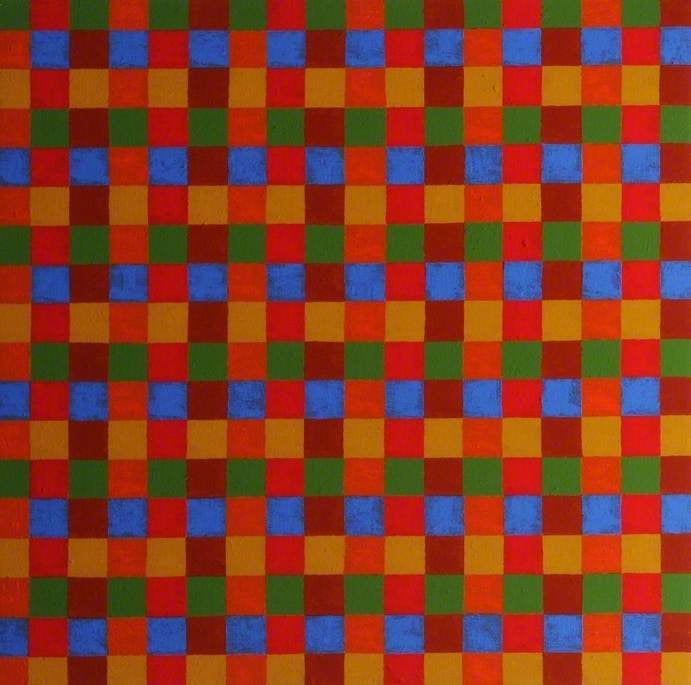
Orange Blocks

A vibrant explosion of colorful checkered patterns defines this captivating abstract painting by Bob Brighton, offering a dynamic rhythmic display of geometric squares that invites you to bring energy into your home.

Explore the captivating world of Bob Brighton’s geometric squares & abstract art. Discover his iconic style – a unique blend of color, form, & visual rhythm. See his work!

Az ezen az oldalon megjelenített műalkotások szerzői jogi védelem alatt állnak, ami azt jelenti, hogy törvényileg nem készíthetünk és nem adhatunk el belőlük pontos másolatokat. Ez a védelem olyan nemzetközi megállapodások alapján érvényesül, mint például a Berni Egyezmény és a nemzeti jogszabályok által, beleértve azokat is, amelyeket meghatározott Az USA szerzői jogi törvénye – 17. cím.

Ez a módszer teljes mértékben megfelel a szerzői jogi szabályozásnak, mivel nem tartalmazza a védett műalkotás másolását vagy duplikálását. Ehelyett ez egy kreatív újinterpretáció – egy új festmény, amely az eredetivel való összefüggései miatt hatással van rá, de nem az az.

Giclée / Műnyomat

Múzeumi minőségű giclée vagy vászonnyomat, gyors gyártással és rugalmas finomítási lehetőségekkel. ( Kézzel festett másolat rendelése Áttérés digitális képre)

Corner sample of the P118B picture frame: formázott polisztirol, 5 cm wide and 3 cm thick
P118B Ft10
Corner sample of the P118H picture frame: formázott polisztirol, 5 cm wide and 3 cm thick
P118H Ft10
Corner sample of the P118W picture frame: formázott polisztirol, 5 cm wide and 3 cm thick
P118W Ft10
Corner sample of the P438Z picture frame: formázott polisztirol, 5.5 cm wide and 3.5 cm thick
P438Z Ft10
Corner sample of the P508JH picture frame: formázott polisztirol, 7 cm wide and 3.5 cm thick
P508JH Ft12
Corner sample of the P508YH picture frame: formázott polisztirol, 7 cm wide and 3.5 cm thick
P508YH Ft12
Corner sample of the P805H picture frame: formázott polisztirol, 5 cm wide and 3.5 cm thick
P805H Ft10
Corner sample of the P805Z picture frame: formázott polisztirol, 5 cm wide and 3.5 cm thick
P805Z Ft10
Corner sample of the P919BZ picture frame: formázott polisztirol, 7 cm wide and 3.5 cm thick
P919BZ Ft10
Corner sample of the P919G picture frame: formázott polisztirol, 7 cm wide and 3.5 cm thick
P919G Ft10
Corner sample of the P919XJ picture frame: formázott polisztirol, 7 cm wide and 3.5 cm thick
P919XJ Ft10
Corner sample of the P959ZH picture frame: formázott polisztirol, 5 cm wide and 3 cm thick
P959ZH Ft10
Corner sample of the P968JZ picture frame: formázott polisztirol, 6 cm wide and 4 cm thick
P968JZ Ft12
Corner sample of the W106C picture frame: tömörfa, 5 cm wide and 3 cm thick
W106C Ft8
Corner sample of the W218G picture frame: tömörfa, 5 cm wide and 3 cm thick
W218G Ft10
Corner sample of the W218JH picture frame: tömörfa, 5 cm wide and 3 cm thick
W218JH Ft8
Corner sample of the W218Y picture frame: tömörfa, 5 cm wide and 3 cm thick
W218Y Ft10
Corner sample of the W307PJ picture frame: tömörfa, 6 cm wide and 3 cm thick
W307PJ Ft10
Corner sample of the W316G picture frame: tömörfa, 6 cm wide and 3 cm thick
W316G Ft10
Corner sample of the W316PJ picture frame: tömörfa, 6 cm wide and 3 cm thick
W316PJ Ft8
Corner sample of the W316Y picture frame: tömörfa, 6 cm wide and 3 cm thick
W316Y Ft10
Corner sample of the W398PJ picture frame: tömörfa, 5 cm wide and 3 cm thick
W398PJ Ft8
Corner sample of the W4111J picture frame: tömörfa, 6.5 cm wide and 3.5 cm thick
W4111J Ft10
Corner sample of the W500HY picture frame: tömörfa, 7 cm wide and 5 cm thick
W500HY Ft15
Corner sample of the W500JH picture frame: tömörfa, 7 cm wide and 5 cm thick
W500JH Ft15
Corner sample of the W692G picture frame: tömörfa, 8 cm wide and 4 cm thick
W692G Ft12
Corner sample of the W849H picture frame: tömörfa, 5 cm wide and 3 cm thick
W849H Ft8
Corner sample of the W940BG picture frame: tömörfa, 7.5 cm wide and 4.5 cm thick
W940BG Ft15
Corner sample of the W953PJ picture frame: tömörfa, 6 cm wide and 3.5 cm thick
W953PJ Ft8

Standard méret
egyedi méretű
CM
INCH

Válasszon előre meghatározott méreteink közül, amelyek megfelelnek a műalkotás eredeti arányainak.

szélesség
magasság

Írja be a keretének vagy a falának megfelelő szélességet és magasságot. A nyomatot csak le lehet vágni, soha nem tehető nagyobbá, mint az eredeti kép, így egy eltérő alakú méretnél a kép egy része elveszik. Mielőtt bármit kinyatintanánk, küldünk egy digitális próbamodellt jóváhagyásra. Az oldalon látható kép nem tartalmazza a valós levágást — ezt csak a próbamodell mutatja meg.

Világszerte történő kiszállítás területére mindössze 2 hét alatt, a szokásos 4-5 hét helyett. (28 október)

Ingyenes globális expressz szállítás
Prémium minőségű len vászon
Teljes körű szállítási biztosítás
Vámvisszatérítési Garancia
Hiteles színarányosság garancia
100 napos visszaküldési lehetőség (csak hibás termékek esetén)
100% pénzvisszatérítési garancia
Több darab vásárlásakor kedvezmény

Összesített ár

Ft 21999

Orange Blocks

Giclée / Műnyomat

Reprodukció mérete

-

Összesített ár

Ft 21999

Gyors információk

  • Title: Orange Blocks
  • Subject or theme: Abstract color fields and geometric forms
  • Dimensions: 46 x 46 cm
  • Artist: Bob Brighton

A Symphony of Geometry: The Vibrant World of Orange Blocks

In the realm of abstract expressionism, few artists possess the ability to transform simple geometric shapes into a rhythmic dance of light and color as masterfully as Bob Brighton. His work, Orange Blocks, serves as a breathtaking testament to his lifelong pursuit of visual order and chromatic harmony. Created in 2009, this piece is not merely a collection of squares; it is a meticulously composed mosaic that invites the viewer into a playground of pure sensation. The painting presents a vibrant checkered pattern where red, yellow, blue, green, and orange squares intersect, creating a kaleidoscopic effect that feels both structured and infinitely energetic. Each square varies slightly in size and placement, a deliberate technique that breathes life into the composition, preventing the pattern from becoming static and instead imbuing it with a sense of organic movement.

The soul of this artwork lies in its profound connection to Brighton’s unique history. Having been trained in the disciplined craft of carpentry, Brighton brought an architect's eye for structure and a craftsman's respect for precision to his canvas. This foundational understanding of form allows him to manipulate the weight and balance of each color block with unparalleled skill. In Orange Blocks, the interplay between the warm, sun-drenched oranges and yellows against the grounding presence of deep blues and greens creates a tension that is both stimulating and soothing. The technique suggests a deliberate layering of pigment, where the edges of the shapes feel crisp yet integrated into a singular, cohesive rhythm, much like the interlocking pieces of a finely crafted wooden mosaic.

For the discerning collector or interior designer, Orange Blocks offers more than just aesthetic pleasure; it provides a focal point of transformative energy. The painting’s ability to command attention through its high-contrast palette makes it an ideal centerpiece for modern, minimalist, or eclectic spaces. It possesses a rare emotional versatility—it can act as a burst of joy in a bright, sunlit room or provide a sophisticated layer of complexity within a more muted, contemporary setting. To possess a reproduction of this work is to bring a piece of Brighton’s "geometric soul" into one's home, offering a permanent window into a world where chaos is conquered by color and every shape tells a story of balance, light, and enduring beauty.

Kérdések és válaszok

Milyen technikával készült és mikor született meg „Orange Blocks”, Bob Brighton alkotása?

A „Orange Blocks”, Bob Brighton alkotása technikája Painting, a mű alkotási éve pedig 2009.

Milyen helyet foglal el a művészettörténelemben a "Orange Blocks"?

A „Orange Blocks”, Bob Brighton alkotása a Abstract Art irányzat alkotása, a Contemporary korszakból. Ezek együtt adják meg a mű helyét a művészettörténetben.

Milyen érzelmet közvetít a Abstract Art korszakból származó "Orange Blocks" című alkotás?

A Abstract Art irányzat részeként a "Orange Blocks" egy Joyful hangulatban készült.


A művész életrajza

The Geometric Soul of Bob Brighton

Bob Brighton, a name now synonymous with the captivating world of geometric squares and abstract color fields, wasn’t initially destined for the art world. Born in 1936 in Hastings, East Sussex, his early life was rooted in the practicalities of carpentry – a trade he learned from his father, a skilled craftsman. This foundational experience, working with wood and understanding its inherent structure, would profoundly influence his later artistic explorations. Brighton’s journey into art began somewhat unexpectedly, driven by a desire to create order out of chaos, a need to impose visual rhythm on the seemingly random. He initially experimented with collage techniques, but it wasn't until he discovered the power of simple geometric forms – primarily squares – that his unique style truly emerged. This shift represents a deliberate move away from representational art and towards an intensely focused exploration of color, shape, and composition.

Early Influences and Artistic Evolution

Brighton’s artistic development wasn't entirely solitary; he drew inspiration from a diverse range of sources. The reductive aesthetic of Piet Mondrian, with its emphasis on primary colors and orthogonal lines, undoubtedly played a significant role in shaping his approach to composition. However, Brighton’s work transcends mere mimicry. He developed a distinctly personal vocabulary within this framework, prioritizing the interplay of color and the dynamic tension between positive and negative space. The influence of Josef Albers' "Homage to the Square" is also evident – Albers’ exploration of how colors interact when placed adjacent to each other served as a crucial guide for Brighton, demonstrating that the meaning of a color isn’t inherent but rather emerges from its relationship with others. Furthermore, his background in carpentry instilled an appreciation for structure and precision, which he translated into the deliberate arrangement of his squares. Early works often featured muted palettes and subtle variations in tone, gradually evolving towards bolder, more saturated colors as his style matured.

The Rise of the Squares: Technique and Process

Brighton’s technique was remarkably consistent yet subtly nuanced. He typically began with a large sheet of paper – often watercolor paper – and would meticulously draw a grid of squares using a ruler and pencil. The size, spacing, and orientation of these squares were determined intuitively, reflecting his subconscious state at the time. He then applied acrylic paint directly to the surface, building up layers of color through a process of controlled layering and blending. Crucially, he avoided brushes, preferring instead to use sponges, rags, and other tools to manipulate the paint and create textures and variations in tone. This hands-on approach resulted in a tactile quality to his work – a sense that the paintings are not merely flat surfaces but rather three-dimensional entities. The repetition of squares creates a mesmerizing visual rhythm, while the subtle shifts in color and value maintain a dynamic tension within each composition. His process was deeply meditative; he often worked for extended periods, losing himself in the act of creation.

Themes and Interpretations

While Brighton resisted offering definitive interpretations of his work, it’s clear that his paintings explore fundamental concepts such as order, chaos, balance, and harmony. The squares themselves can be seen as symbols of stability and structure, while the vibrant colors evoke a sense of energy and vitality. Critics have noted parallels between his work and Zen Buddhist philosophy, suggesting that he sought to capture the essence of emptiness – the space between things – through the repetition of simple forms. The paintings are not about depicting anything specific but rather about creating an experience—a visual meditation for the viewer. The seemingly random arrangement of squares can be interpreted as a reflection of the complexities and uncertainties of life, while the bold colors represent the potential for joy and beauty.

Legacy and Recognition

Bob Brighton’s work gained significant recognition in the late 1980s and early 1990s, establishing him as a leading figure in British abstract art. His paintings have been exhibited widely throughout the UK and internationally, and are held in numerous public collections, including those of the Tate Gallery, Sheffield City Council, and Brighton & Hove Museums. He continued to paint until his death in 2017, consistently refining his style and exploring new approaches to color and composition. Despite eschewing overt self-promotion, Brighton’s influence on contemporary abstract artists is undeniable. His dedication to simplicity, his masterful control of color, and his profound understanding of visual rhythm have left an enduring legacy—a testament to the power of geometric abstraction to evoke emotion and stimulate contemplation. His work remains a vibrant reminder that beauty can be found in the most unexpected places, even within the repetition of squares.

Bob Brighton

Bob Brighton

1936 - 2017

Rövid információk

  • Artistic Movement Or Style: Geometric squares
  • Artists Or Movements Influenced By This Artist: ['None known']
  • Artists Who Influenced This Artist:
    • Minimalist Art
    • Color Field Painting
  • Date Of Birth: 1936
  • Date Of Death: 2017
  • Full Name: Bob Brighton
  • Nationality: British
  • Notable Artworks:
    • Four
    • Purple Squares
    • Yellow Blue 1
    • Small Squares 1
  • Place Of Birth: WahooArt, UK