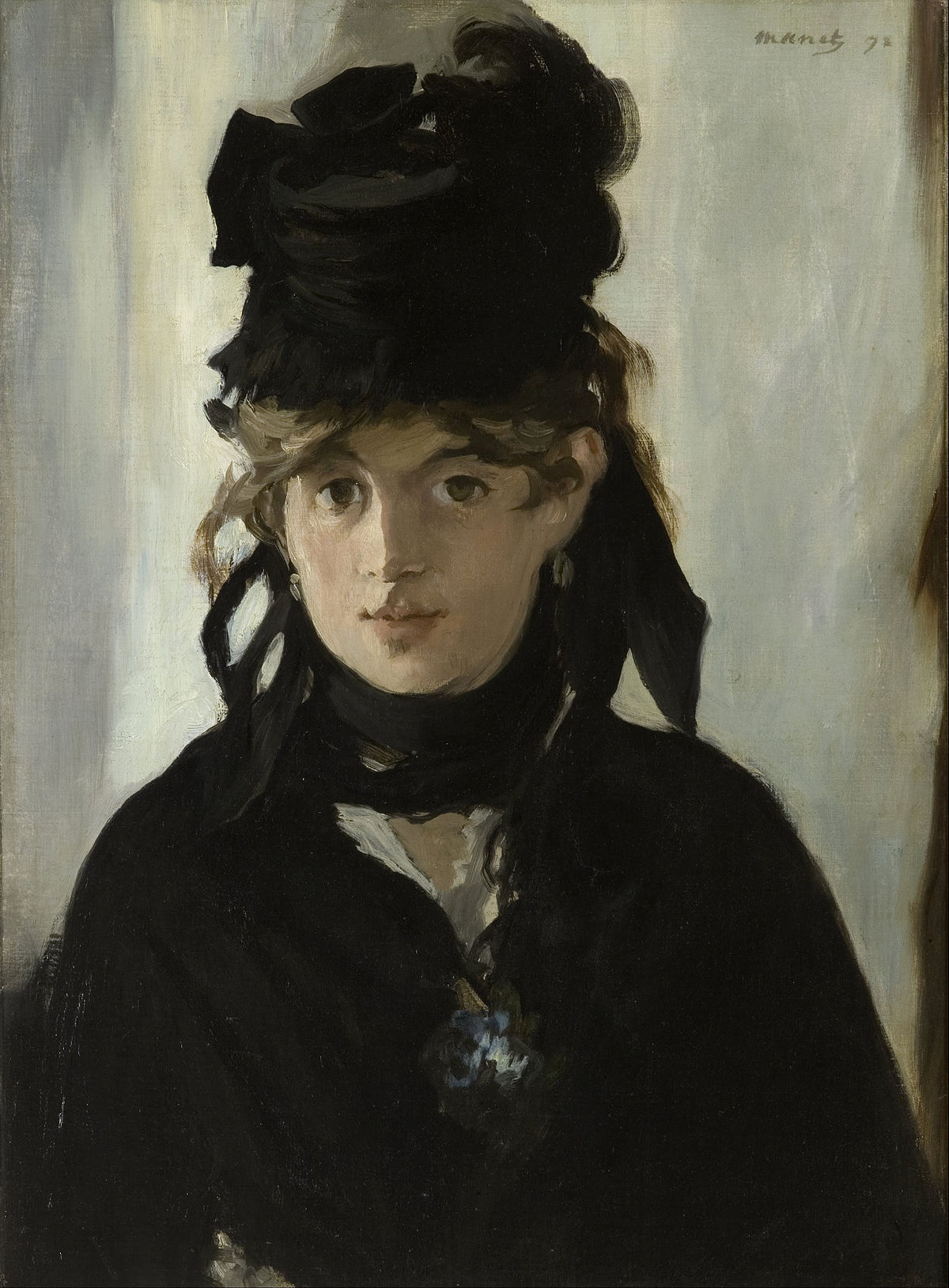
A művész életrajza
A Life Immersed in Light and Intimacy
Berthe Morisot, born in Bourges, France, in 1841, emerged as a pivotal figure within the Impressionist movement, yet her story extends far beyond simply being a “female Impressionist.” To define her solely by gender diminishes the profound originality of her artistic vision and her unwavering commitment to capturing the fleeting moments of modern life. Descended from a bourgeois family with artistic lineage – she was related to the celebrated Rococo painter Jean-Honoré Fragonard – Morisot received an education uncommon for women of her era, one that nurtured her innate talent and fostered a lifelong dedication to painting. Early lessons with Geoffroy-Alphonse Chocarne and Joseph Guichard provided foundational skills, but it was exposure to the masterpieces within the Louvre, copying works by the Old Masters, that truly ignited her artistic sensibility. This period of rigorous training laid the groundwork for her later explorations of light, color, and form. The influence of Jean-Baptiste-Camille Corot proved particularly significant; his emphasis on *plein air* painting – working outdoors directly from nature – became a cornerstone of Morisot’s approach, allowing her to capture the ephemeral qualities of light and atmosphere with remarkable sensitivity.
Navigating the Impressionist Circle
Morisot's artistic journey intertwined closely with that of Édouard Manet, whom she met in 1864. Their relationship was one of mutual respect and intellectual exchange, with Manet serving as a mentor and friend. He painted her numerous times, immortalizing her presence within his own evolving style. However, Morisot wasn’t merely a subject; she actively participated in the burgeoning Impressionist movement, becoming a founding member alongside Monet, Degas, Renoir, and Pissarro. In 1874, she boldly exhibited with this group of “rejected” artists, defying the conservative standards of the official Salon. This first Impressionist exhibition marked a turning point in art history, challenging traditional academic conventions and paving the way for new modes of artistic expression. Morisot participated in nearly all subsequent Impressionist exhibitions, consistently showcasing her unique perspective and solidifying her position within the avant-garde. Her work, often depicting intimate scenes of domestic life – women reading, mothers with children, leisurely moments in gardens – offered a distinctly feminine gaze, challenging prevailing societal norms and expanding the scope of acceptable subject matter for female artists.
A Distinctive Artistic Voice
What sets Morisot apart is not simply *what* she painted, but *how* she painted it. Her brushwork is characterized by its delicate fluidity, a lightness of touch that conveys an impression of spontaneity and immediacy. She masterfully employed broken color – applying small strokes of pure pigment side-by-side to create a shimmering effect of light and atmosphere. Unlike some of her Impressionist colleagues who focused on grand landscapes or bustling cityscapes, Morisot often chose intimate interior scenes and portraits, exploring the nuances of human relationships and the quiet beauty of everyday life. Her palette is typically soft and harmonious, favoring pastel shades and subtle gradations of color. This isn’t to say her work lacks strength; rather, it possesses a refined elegance and emotional depth that resonates with viewers even today. Critics like Gustave Geffroy recognized this unique quality, hailing her as one of “les trois grandes dames” of Impressionism – alongside Marie Bracquemond and Mary Cassatt – acknowledging her significant contribution to the movement.
Influences and Development
Morisot’s artistic development was shaped by a confluence of factors. Her early training with Corot instilled in her a deep appreciation for *plein air* painting, emphasizing direct observation of nature and capturing its fleeting effects of light. The Louvre, with its vast collection of Old Master paintings, provided a crucial foundation in technique and composition. However, it was Manet’s influence that truly liberated her artistic vision. He encouraged her to embrace brighter colors, looser brushwork, and a more modern approach to subject matter. Her relationship with him wasn't solely one of mentorship; she also influenced his style, introducing him to the possibilities of capturing fleeting moments and subtle nuances of light. The works of other artists, such as Delacroix and Millet, also contributed to her evolving artistic vocabulary, though she always maintained a distinctly personal voice.
Legacy and Lasting Influence
Berthe Morisot’s life was tragically cut short in 1895, but her artistic legacy endures. Married to Eugène Manet, brother of Édouard, she navigated a world that often underestimated female artists, yet she persevered with unwavering determination. She exhibited under her full maiden name – a subtle act of independence and self-assertion – and consistently challenged conventional expectations. Her work continues to captivate audiences with its delicate beauty, emotional honesty, and innovative technique. Morisot’s influence extends beyond the realm of Impressionism; she paved the way for future generations of female artists, demonstrating that women could achieve artistic excellence and contribute meaningfully to the evolution of art history. Today, her paintings are held in prestigious collections around the world, serving as a testament to her enduring talent and her pivotal role in shaping modern art. Woman in the Green Dress, *The Cradle*, and *Summer’s Day* remain iconic examples of her mastery, inviting viewers into a world of light, intimacy, and quiet contemplation.



 Megtekintés
 Áttérés Nyomtatványra
 Küldés
 Megosztás
 Részletek

 Letöltés
 Hasonló darabok
 X-ray felvétel
 Diavetítés
 Statisztika


 Összes részlet megjelenítése






































 Az üvegkeretes opció csak 110 cm alatti méretben érhető el