A Tender Encounter in Gold and Grace
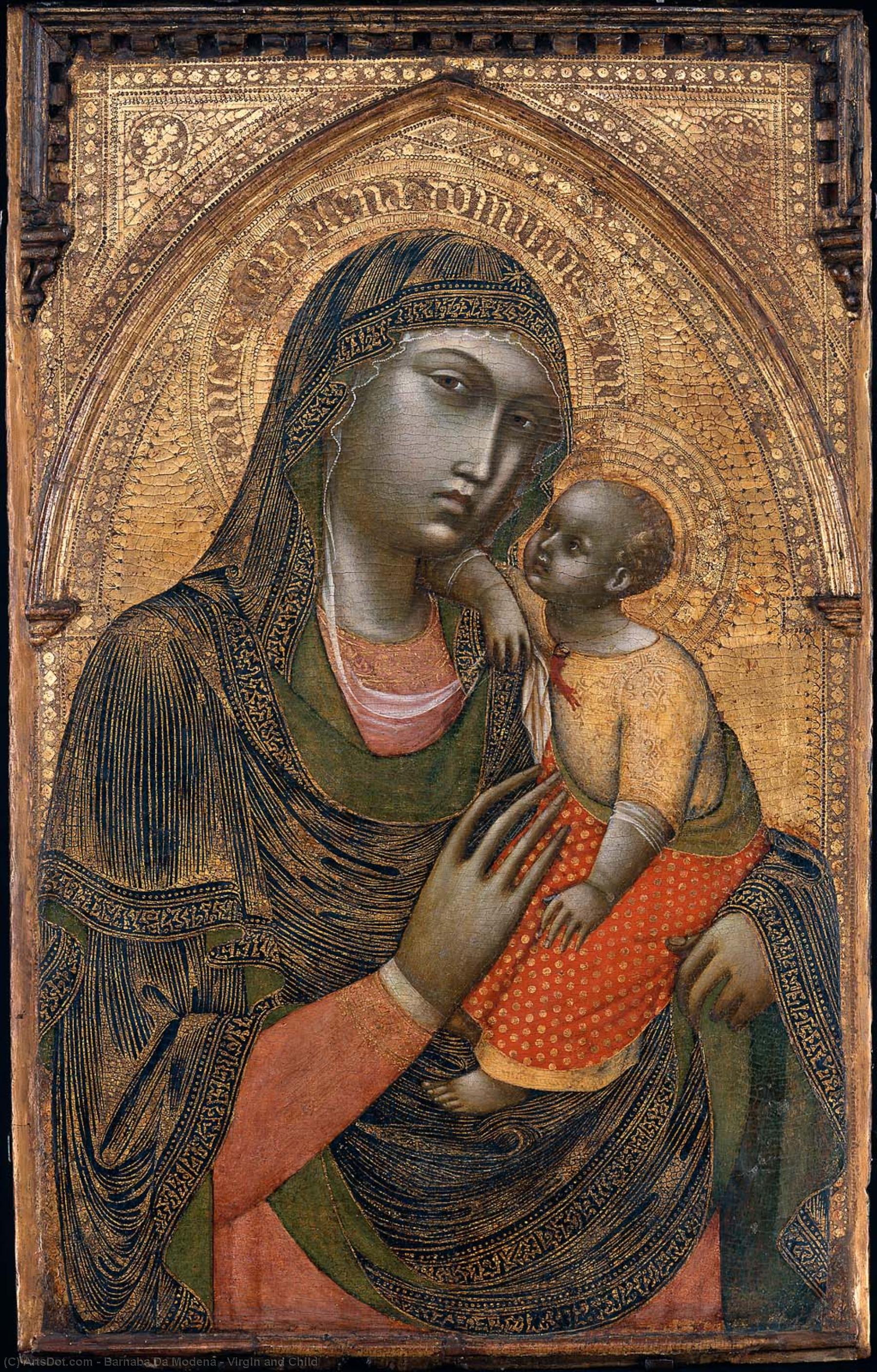
In the quiet intimacy of Barnaba da Modena’s Virgin and Child, we are invited into a sacred moment that transcends the centuries. Created around 1360, this masterpiece serves as a profound window into the spiritual heart of the Trecento period. The painting captures a deeply human connection between the Virgin Mary and her infant son, presenting a scene where divine majesty meets maternal tenderness. As she cradles the young boy, there is an unmistakable sense of protection and warmth; the way she holds him close suggests a sanctuary of love amidst the grandeur of her celestial station. This is not merely a religious icon, but a poignant study of the bond between mother and child, rendered with a delicacy that speaks directly to the soul.
The visual language of the piece is heavily influenced by the Byzantine tradition, a stylistic choice that Barnaba da Modena championed with singular devotion. This influence is most evident in the luminous, ethereal quality of the figures and the use of ornate, symbolic elements. Above the Virgin’s head, an intricate crown rests, signaling her status as the Queen of Heaven, while the decorative archway framing the scene provides a sense of architectural permanence and sanctity. The interplay of light and shadow across the soft features of the Christ child creates a lifelike presence, grounding the divine subject matter in a palpable, earthly reality that continues to captivate viewers today.
A Masterpiece of Byzantine Echoes
To behold this work is to witness the bridge between the rigid formality of Eastern iconography and the burgeoning naturalism of the Italian Renaissance. Barnaba da Modena, working during a time of great cultural transition in Lombardy and beyond, utilized a technique that emphasizes texture and symbolic depth. The composition is balanced yet emotionally charged, making it an ideal centerpiece for those looking to infuse a space with historical gravity and contemplative peace. For the discerning collector or interior designer, this painting offers more than just aesthetic beauty; it provides a focal point of profound narrative strength.
Integrating a high-quality reproduction of this Virgin and Child into a curated collection allows for the introduction of a timeless, classical elegance. Whether placed in a sunlit gallery or a sophisticated contemporary living space, the painting’s rich historical context and emotive power act as a conversation starter. It evokes an era of craftsmanship where every brushstroke was an act of devotion, making it a perfect acquisition for those who appreciate art that possesses both a scholarly pedigree and a deeply moving emotional resonance.


 Megtekintés
 Váltás nyomtatványra
 Küldés
 Megosztás
 Részletek
 Útmutató

 Letöltés
 Hasonló darabok
 X-ray felvétel
 Diavetítés
 Q&A
Q&A Statisztika


 Összes részlet megjelenítése






































 Az üvegkeretes opció csak 110 cm alatti méretben érhető el