Megtekintés AR előnézet Kézzel festett másolat rendelése Áttérés digitális képre Küldés
Részletek Útmutató Kedvencekhez ad Letöltés Hasonló darabok X-ray felvétel Diavetítés Q&A Statisztika

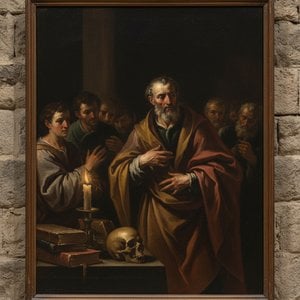
The Holy Trinity

Explore Antonio de Pereda's masterpiece 'The Holy Trinity,' a stunning Baroque still life depicting the divine trinity with symbolic globes and angelic figures – a testament to Spanish artistic heritage.

Antonio de Pereda (1611-1678): a spanyol barokk mégterméket és vallásos művészet mestere. Fedezze fel az 'El Socorro a Génova' című alkotását és drámai tenebrizmusát.

Giclée / Műnyomat

Múzeumi minőségű giclée vagy vászonnyomat, gyors gyártással és rugalmas finomítási lehetőségekkel. ( Kézzel festett másolat rendelése Áttérés digitális képre)

Corner sample of the P118B picture frame: formázott polisztirol, 5 cm wide and 3 cm thick
P118B Ft10
Corner sample of the P118H picture frame: formázott polisztirol, 5 cm wide and 3 cm thick
P118H Ft10
Corner sample of the P118W picture frame: formázott polisztirol, 5 cm wide and 3 cm thick
P118W Ft10
Corner sample of the P438Z picture frame: formázott polisztirol, 5.5 cm wide and 3.5 cm thick
P438Z Ft10
Corner sample of the P508JH picture frame: formázott polisztirol, 7 cm wide and 3.5 cm thick
P508JH Ft12
Corner sample of the P508YH picture frame: formázott polisztirol, 7 cm wide and 3.5 cm thick
P508YH Ft12
Corner sample of the P805H picture frame: formázott polisztirol, 5 cm wide and 3.5 cm thick
P805H Ft10
Corner sample of the P805Z picture frame: formázott polisztirol, 5 cm wide and 3.5 cm thick
P805Z Ft10
Corner sample of the P919BZ picture frame: formázott polisztirol, 7 cm wide and 3.5 cm thick
P919BZ Ft10
Corner sample of the P919G picture frame: formázott polisztirol, 7 cm wide and 3.5 cm thick
P919G Ft10
Corner sample of the P919XJ picture frame: formázott polisztirol, 7 cm wide and 3.5 cm thick
P919XJ Ft10
Corner sample of the P959ZH picture frame: formázott polisztirol, 5 cm wide and 3 cm thick
P959ZH Ft10
Corner sample of the P968JZ picture frame: formázott polisztirol, 6 cm wide and 4 cm thick
P968JZ Ft12
Corner sample of the W106C picture frame: tömörfa, 5 cm wide and 3 cm thick
W106C Ft8
Corner sample of the W218G picture frame: tömörfa, 5 cm wide and 3 cm thick
W218G Ft10
Corner sample of the W218JH picture frame: tömörfa, 5 cm wide and 3 cm thick
W218JH Ft8
Corner sample of the W218Y picture frame: tömörfa, 5 cm wide and 3 cm thick
W218Y Ft10
Corner sample of the W307PJ picture frame: tömörfa, 6 cm wide and 3 cm thick
W307PJ Ft10
Corner sample of the W316G picture frame: tömörfa, 6 cm wide and 3 cm thick
W316G Ft10
Corner sample of the W316PJ picture frame: tömörfa, 6 cm wide and 3 cm thick
W316PJ Ft8
Corner sample of the W316Y picture frame: tömörfa, 6 cm wide and 3 cm thick
W316Y Ft10
Corner sample of the W398PJ picture frame: tömörfa, 5 cm wide and 3 cm thick
W398PJ Ft8
Corner sample of the W4111J picture frame: tömörfa, 6.5 cm wide and 3.5 cm thick
W4111J Ft10
Corner sample of the W500HY picture frame: tömörfa, 7 cm wide and 5 cm thick
W500HY Ft15
Corner sample of the W500JH picture frame: tömörfa, 7 cm wide and 5 cm thick
W500JH Ft15
Corner sample of the W692G picture frame: tömörfa, 8 cm wide and 4 cm thick
W692G Ft12
Corner sample of the W849H picture frame: tömörfa, 5 cm wide and 3 cm thick
W849H Ft8
Corner sample of the W940BG picture frame: tömörfa, 7.5 cm wide and 4.5 cm thick
W940BG Ft15
Corner sample of the W953PJ picture frame: tömörfa, 6 cm wide and 3.5 cm thick
W953PJ Ft8

Standard méret
egyedi méretű
CM
INCH

Válasszon előre meghatározott méreteink közül, amelyek megfelelnek a műalkotás eredeti arányainak.

szélesség
magasság

Írja be a keretének vagy a falának megfelelő szélességet és magasságot. A nyomatot csak le lehet vágni, soha nem tehető nagyobbá, mint az eredeti kép, így egy eltérő alakú méretnél a kép egy része elveszik. Mielőtt bármit kinyatintanánk, küldünk egy digitális próbamodellt jóváhagyásra. Az oldalon látható kép nem tartalmazza a valós levágást — ezt csak a próbamodell mutatja meg.

Világszerte történő kiszállítás területére mindössze 2 hét alatt, a szokásos 4-5 hét helyett. (30 október)

Ingyenes globális expressz szállítás
Prémium minőségű len vászon
Teljes körű szállítási biztosítás
Vámvisszatérítési Garancia
Hiteles színarányosság garancia
100 napos visszaküldési lehetőség (csak hibás termékek esetén)
100% pénzvisszatérítési garancia
Több darab vásárlásakor kedvezmény

Összesített ár

Ft 22234

The Holy Trinity

Giclée / Műnyomat

Reprodukció mérete

-

Összesített ár

Ft 22234

Gyors információk

  • Subject or theme: Religious iconography
  • Dimensions: 143 x 230 cm
  • Notable elements or techniques: Detailed depiction of spheres representing the divine.
  • Artist: Antonio de Pereda
  • Medium: Oil on canvas

Művészeti kvíz

Minden kérdésre csak egy helyes válasz létezik.

Kérdés 1:
What is the primary subject matter of ‘The Holy Trinity’?
Kérdés 2:
Describe the visual representation of Jesus in the painting.
Kérdés 3:
Who mentored Antonio de Pereda during his formative years?
Kérdés 4:
What was Giovanni Battista Crescenzi’s role in Pereda's artistic development?
Kérdés 5:
What stylistic movement is ‘The Holy Trinity’ associated with?

A Vision of Faith: Exploring Antonio de Pereda’s “The Holy Trinity”

Antonio de Pereda y Salgado (1611 – 1678) stands as a cornerstone of Spanish Baroque painting, renowned for his masterful depictions of still lifes that nonetheless possess an undeniable spiritual resonance. Born in Valladolid, Spain, he benefited from a familial legacy steeped in artistic tradition—his father, mother, and two brothers were all painters—a formative influence undoubtedly shaping his burgeoning talent.

Early Training and Patronage

Pereda’s artistic journey commenced under the tutelage of Pedro de las Cuevas, a respected painter within Madrid’s vibrant Baroque milieu. This mentorship proved invaluable, grounding him in established stylistic conventions. However, his career took an extraordinary turn with the arrival of Giovanni Battista Crescenzi at the Spanish court. Crescenzi recognized Pereda's potential and welcomed him into his studio, providing crucial guidance and fostering collaborations that propelled his artistic development.

The Court Patronage and Artistic Flourishing

Following Crescenzi’s untimely demise in 1635, Pereda faced a significant setback – expulsion from the court. Undeterred by this challenge, he skillfully navigated the complexities of the artistic landscape, securing commissions from influential religious institutions and establishing himself as a respected artist throughout Spain.

Style and Technique: The Language of Symbolism

Pereda’s distinctive style is characterized by meticulous observation and an unwavering commitment to realism. He employed oil paint on canvas with painstaking detail, capturing the subtle nuances of texture and light—techniques honed through years of experience and influenced by the prevailing artistic currents of his time. Yet, beyond mere representation lies a profound symbolic intent.

"The Holy Trinity," completed sometime before 1678, exemplifies this approach perfectly. The composition centers around three figures – Jesus Christ at the apex, flanked by Saint John the Baptist and Saint Peter – each positioned within a sphere or globe. These globes are not merely decorative elements; they represent the cosmos itself, symbolizing God’s dominion over creation and highlighting the interconnectedness of all things.

Historical Context and Artistic Significance

Pereda's work emerged during a period of intense religious fervor in Spain—the Counter-Reformation—where art served as a powerful tool for disseminating Catholic dogma. The painting reflects this spirit, conveying a sense of solemn reverence and spiritual contemplation. It stands alongside other masterpieces of the Baroque era, demonstrating the movement’s ability to blend technical virtuosity with profound theological themes.

Emotional Impact: A Reflection of Faith

"The Holy Trinity" transcends its formal elements to evoke a palpable emotional response. The serene expressions of the figures convey tranquility and devotion, inviting viewers into a meditative state. The luminous quality of the paint—characteristic of Baroque technique—further enhances this effect, creating an atmosphere of ethereal beauty that speaks to the viewer’s soul.

Conclusion

Antonio de Pereda's “The Holy Trinity” remains a testament to the enduring power of art as a vehicle for spiritual expression. Its meticulous realism combined with symbolic richness continues to captivate audiences today, cementing its place as an iconic work of Spanish Baroque art.

Kérdések és válaszok

Hogyan ötvölik a kontraszt és a harmónia a(z) "The Holy Trinity" alkotásban?

A "The Holy Trinity" alkotásban egy Bold kontraszt párosul egy Strong Color Unity harmóniával.

Hol vásárolhatok egy nyomtatványt a(z) „The Holy Trinity”, Antonio De Pereda alkotása alkotásból?

A „The Holy Trinity”, Antonio De Pereda alkotása nyomata közvetlenül a következő oldalon rendelhető meg: Művészeti nyomtatvány: minőségi giclée nyomat pamutvászonon vagy archiváló vászonpapíron.

Hová sorolható a "The Holy Trinity" Antonio De Pereda életművében?

Antonio De Pereda munkásságán belül a "The Holy Trinity" a Spanish Baroque stílus képét képviseli, a religious symbolism, spanish baroque tradition, court patronage influence, biblical imagery dominance, artist legacy significance témakörével összefüggésben.


A művész életrajza

Antonio de Pereda: A Spanyol Barokk Mestere

Antonio de Pereda y Salgado (1611 – 1678) a spanyol barokk kor egyik legkiemelkedőbb festője volt, akit elsősorban lélegzetelállító tárgystillei miatt tisztelnek. Spanyolország Valladolid városa született, és később a madridi festőiskola meghatározó alakjává vált.

Korai Élet és Művészcsalád

Pereda egy mélyen művészi szellemiségű családból származott; édesapja, édesanyja és két testvére is festőként tevékenykedett. Ez a családi környezet kétségtelenül altermészetesen ösztönözte korai művészeti érdeklődését és fejlődését. Első szakmai képzését Madridban szerezte Pedro de las Cuevas, a kor egyik tekintélyes festője alatt.

Mecénások és a Karrier Kezdete

Pereda pályafutásának egy döntő pillanatát a spanyol udvar egyik befolyásos alakja, Giovanni Battista Crescenzi protekciója jelentette. Crescenzi befogadta Peredát a szűkebb körébe, lehetőséget biztosítva számára és szakmai iránymutatást nyújtva. Azonban Crescenzi 1635-ös halála után Pereda kirúgták az udvarról, így kénytelen volt vallási intézmények megbízásait vállalni.

Művészeti Fejlődés és Stílus

Pereda művészeti stílusát a tenebrizmus mesteri használata jellemzi, amely a fény és az árnyék közötti drámai kontrasztra épül. Ez a technika, amely alapvető elem volt a barokk festészetben, mélységet és érzelmi intenzitást kölcsönöz alkotmányainak. Bár leginkább tárgystillei miatt ismert, Pereda kiválóan járt vallási festmények és történelmi kompozíciók készítésében is.

Főbb Művek és Értéktörténelmi Jelentőség

A művész életműve rendkívül sokszínű, különböző műfajokban érvelt:

  • Tárgystillek: Pereda tárgystillei híresek a realizmusukról, a precíz részletgazdagságukról és szimbolikus jelentésükről. Ilyen példák közé tartozik a „Gyümölcsös tárgystill” és az „Ebony tőzsérvel” (Still-Life with an Ébén tőzsér).
  • Történelmi festmények: Jelentős hozzájárulást tett a madridi Buen Retiro Palota Salón de Reinos nevű díszprogramjához. Legkiemelkedőbb történelmi alkotása a „Génova felszabadítása” (1635), amely egy sorozat részeként készült Velázquez más műveivel, például a „Breda megadásával” együtt.
  • Vallási festmények: Számos vallásos alkotást készített, amelyek gyakran ábrázolják a szentek életét és bibliai narratívákat. A „Szent Jeromos” kiváló példája tudásának ezen a műfajon belül.

Hatások

Pereda munkásságát több kulcsfontosságú művész és irányzat is meghatározta:

  • Pedro de las Cuevas: Korai tanára, aki az alapvető képzést biztosította számára.
  • Giovanni Battista Crescenzi: Ő nyújtotta a protekciót és a vezérlést az udvari évek alatt.
  • Caravaggio és a Caravaggisták: A tenebrizmus drámai alkalmazása közvetlen visszukkanást mutat Caravaggio és követőinek stílusába.

Történelmi Jelentőség

Antonio de Pereda fontos helyet foglal el a spanyol barokk művészet történetében. Tárgystillei a műfaj egyik legnemesebb példájának számítanak, lenyűgöző képességgel örökítve meg az anyagok textúráját, a fényt és a formát. Történelmi festményei pedig sokoldalúságát és készségét bizonyítják mint nagy lélekű narratív festő. Jelentős contributiont tett a 17. századi Spanyolország művészeti tájához, olyan mesteri alkotások örökségét hagyva себе, amelyeket ma is csodálunk.

Antonio De Pereda

Antonio De Pereda

1611 - 1678 , Spanyolország

Rövid információk

  • Birth Date: 1611
  • Birth Place: Valladolid, Spanyolország
  • Death Date: 1678
  • Influenced By: Pedro de las Cuevas, Giovanni Battista Crescenzi
  • Movement: Barokk
  • Name: Antonio de Pereda y Salgado
  • Nationality: Spanyol
  • Notable Works:
    • Génova felszabadítása
    • Életrendszer ebony szekrénygel
    • Szent Jeromos
    • A lovag álma