MegtekintésMegtekintés Műalkotás AR előnézeteMűalkotás AR előnézete Kézzel festett másolat rendelése Kézzel festett másolat rendeléseKép letöltése Kép letöltése KüldésKüldés
RészletekRészletek Kedvencekhez ad Kedvencekhez ad LetöltésLetöltés Hasonló darabokHasonló darabok X-ray felvételX-ray felvétel DiavetítésDiavetítés

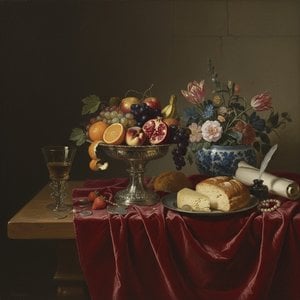
Still Life on the Table

Experience the bold colors of Fauvism with André Derain's Still Life on the Table (1904), a vibrant masterpiece capturing abundant life; discover this iconic work today.

André Derain (1880-1954): A fauve festő, a színek erejével és kifejező stílusával. Fedezd fel London ikonikus tájképeit, valamint klasszikus irányba való fejlődését!

Giclée / Műnyomat

Múzeumi minőségű giclée vagy vászonnyomat, gyors gyártással és rugalmas finomítási lehetőségekkel. (Kézzel festett másolat rendelése Kézzel festett másolat rendeléseKép letöltése Kép letöltése)

P118B $10
P118H $10
P118W $10
P438Z $10
P508JH $12
P508YH $12
P805H $10
P805Z $10
P919BZ $10
P919G $10
P919XJ $10
P959ZH $10
P968JZ $12
W106C $8
W218G $10
W218JH $8
W218Y $10
W307PJ $10
W316G $10
W316PJ $8
W316Y $10
W398PJ $8
W4111J $10
W500HY $15
W500JH $15
W692G $12
W849H $8
W940BG $15
W953PJ $8

Standard méret
egyedi méretű
CM
INCH

Válasszon előre meghatározott méreteink közül, amelyek megfelelnek a műalkotás eredeti arányainak.

szélesség
magasság

Megadhat saját méreteket is egy konkrét kerethez vagy helyszínhez igazítva. Amennyiben a kiválasztott méret nem egyezik az eredeti kép arányokkal, a műalkotást le fogjuk vágni, vagy kiegészítjük a képet tükrözött vagy egyszínű szélekkel. A gyártás megkezdése előtt egy digitális tervezetet küldünk jóváhagyásra.
Kérjük, vegye figyelembe, hogy a képernyőn látható előnézet nem tükrözi a tényleges levágást vagy kiegészítést. Csak a tervezet mutatja pontosan a végső kompozíciót.
Bár az egyedi méretek is elérhetőek, az eredeti arányok megőrzése érdekében azt javasoljuk, hogy válasszon a előre meghatározott listából származó méretet.

Világszerte történő kiszállítás területére mindössze 2 hét alatt, a szokásos 4-5 hét helyett. (6 szeptember)

why_choose_icon
Ingyenes globális expressz szállítás
why_choose_icon
Prémium minőségű len vászon
why_choose_icon
Teljes körű szállítási biztosítás
why_choose_icon
Vámvisszatérítési Garancia
why_choose_icon
Hiteles színpontosság garancia
why_choose_icon
100 napos visszaküldési lehetőség (csak hibás termékek esetén)
why_choose_icon
100% pénzvisszatérítési garancia
why_choose_icon
Több darab vásárlása esetén kedvezmény

Összesített ár

$ 68

reproduction

Still Life on the Table

Giclée / Műnyomat

Reprodukció mérete

-

Összesített ár

$ 68

Gyors információk

  • Medium: Oil on canvas
  • Artistic style: Fauvism
  • Dimensions: 115 x 161 cm
  • Movement: Fauvism
  • Notable elements or techniques: Bold, vibrant colors; Loose brushstrokes
  • Year: 1904

Művészeti kvíz

Minden kérdésre csak egy helyes válasz létezik.

Kérdés 1:
What art movement is André Derain's 'Still Life on the Table' a quintessential example of?
Kérdés 2:
In what year was 'Still Life on the Table' painted by André Derain?
Kérdés 3:
Which characteristic is most associated with the Fauvist movement, as seen in this painting?
Kérdés 4:
According to the photo description, which item is located towards the left side of the table?
Kérdés 5:
Who was the art critic who coined the term 'Fauvism' after viewing works by Derain and Matisse?

A Burst of Fauvist Joy: Exploring Derain's Still Life

To stand before André Derain’s Still Life on the Table is to be enveloped in a sudden, vibrant explosion of color. This painting from 1904 is not merely a depiction of objects; it is a celebration of pure chromatic energy. The arrangement—a collection of bowls, bottles, a ripe apple nestled near the left edge, and a graceful banana curving through the middle ground, all resting upon a draped table cloth—is rendered with an almost joyous abandon. Derain captures the mundane elements of daily life, yet elevates them to the status of high art through sheer audacity of color.

The Spirit of Fauvism in Every Stroke

This work stands as a quintessential testament to the Fauvist movement. Emerging at the dawn of the twentieth century, Fauvism was a radical departure from academic tradition, championing emotion and raw feeling over meticulous realism. The term itself, coined by critics observing its intensity, speaks volumes about its impact. Here, Derain employs color not descriptively, but emotionally. The hues are bold, vibrant, and unapologetically saturated, seeming to vibrate against one another. Observe the way the light interacts with the surfaces; it is filtered through a prism of intense pigment, giving the entire scene an electric, almost feverish vitality.

Technique and Composition: A Study in Spontaneity

Derain’s handling of paint is masterful in its apparent carelessness. The brushstrokes are loose, visible, and immediate, lending the composition a palpable sense of spontaneity. This technique forces the viewer to acknowledge the act of painting itself—the physical gesture of the artist at work. While the objects on the table suggest a harmonious abundance, it is the underlying structure, the way Derain balances the weight of the bottles against the curve of the fruit, that speaks to his profound compositional skill. The rich, earthy tones forming the backdrop serve only to intensify the brilliance of the foreground subjects.

Bringing Modern Color Home

For the collector or designer seeking a piece that ignites a room with intellectual depth and visual warmth, this reproduction offers an unparalleled opportunity. Owning Still Life on the Table is inviting a conversation into your space—a dialogue about color theory, artistic rebellion, and the sheer pleasure of seeing the world through an energized lens. It speaks to a period when art shed its polite constraints and embraced visceral expression. Whether you are curating a gallery wall or seeking a singular focal point for a grand hall, this piece promises not just decoration, but an enduring emotional resonance.


A művész életrajza

Early Life and the Seeds of Fauvism

André Derain, born in 1880 in the charming village of Chatou near Paris, wasn’t initially destined for a life steeped in paint and canvas. Contrary to some narratives suggesting an immediate artistic awakening through encounters with fellow painters like Vlaminck or Matisse, Derain embarked on his artistic journey independently around 1895. These early explorations were often undertaken alongside Father Jacomin and his sons during countryside excursions—a formative experience that instilled a deep appreciation for the natural world. He briefly pursued engineering at the Académie Camillo in 1898, where fatefully, he crossed paths with Henri Matisse, initiating a pivotal artistic partnership. Further studies under Eugène Carrière honed his foundational skills, but it was military service from 1901 to 1904 that temporarily interrupted his burgeoning career. Upon his return, persuaded by the unwavering belief of Matisse, Derain decisively abandoned engineering and fully committed himself to painting, continuing his education at the Académie Julian. This commitment marked a turning point, setting him on a path toward becoming a central figure in one of modern art’s most revolutionary movements.

The Explosive Birth of Color: Fauvism

The summer of 1905 proved to be an explosive moment for Derain and Matisse as they collaborated in the sun-drenched coastal village of Collioure. This period birthed works like “Mountains at Collioure,” characterized by a radical departure from representational color. The landscapes weren’t merely depictions of places; they were expressions of feeling, rendered through intensely vibrant, non-naturalistic hues. When their work was exhibited at the Salon d'Automne that same year, it provoked outrage and astonishment. Critic Louis Vauxcelles famously dubbed them “Les Fauves”—the wild beasts—a name initially intended as derisive but ultimately embraced by the artists themselves. Derain’s contribution to this movement wasn’t merely stylistic; he possessed a unique ability to translate emotional intensity into pure color. In 1906, Ambroise Vollard commissioned him to paint London, resulting in a series of striking canvases depicting the Thames and Tower Bridge. These weren't conventional cityscapes; they were bold interpretations, capturing the energy and atmosphere of London through an unconventional lens—a testament to Derain’s innovative vision. Influenced by artists like Van Gogh and Cézanne, he pushed the boundaries of color and form, laying the groundwork for future generations of expressionist painters.

Beyond Fauvism: A Shifting Aesthetic

The initial fervor of Fauvism didn't define Derain’s entire artistic trajectory. Around 1907, his style began a significant evolution, moving away from the unrestrained chromatic exuberance toward more subdued tones and an increased emphasis on form. This period, often referred to as his “gothic” phase (1911-1914), reflected a growing interest in structure and composition. He immersed himself in the study of Old Masters, incorporating elements of Cubism while simultaneously seeking inspiration from classical forms. This wasn’t a rejection of his earlier work but rather an expansion of his artistic vocabulary. Derain's versatility extended beyond painting; in 1919, he designed the ballet “La Boutique Fantasque” for Sergei Diaghilev’s Ballets Russes, demonstrating his aptitude for theatrical design and further showcasing his diverse talents. Key works from this era, such as "Harlequin and Pierrot" and the monumental mural "Return of Ulysses," exemplify this stylistic shift—a move toward a more controlled and intellectually rigorous approach to artmaking.

Legacy and Complexities

André Derain’s place in art history is secure as a co-founder of Fauvism, a movement that irrevocably altered the course of modern painting. His unique vision of London, captured in his vibrant canvases, offered a fresh perspective on an iconic city. After World War I, he gained renewed recognition for his contributions to a revival of classicism, demonstrating his adaptability and enduring artistic relevance. However, Derain’s later life was marked by controversy. During World War II, his presence in Germany drew criticism, leading to ostracization from some former supporters after the war. Despite this shadow, his influence on subsequent generations of artists remains undeniable. He died in 1954, leaving behind a body of work that continues to captivate and inspire. *His legacy is not simply one of bold colors and expressive brushstrokes but also of an artist who constantly challenged himself, explored new avenues of expression, and left an indelible mark on the landscape of modern art.* He stands as a testament to the power of artistic innovation and the complexities inherent in navigating a rapidly changing world. Derain’s journey reminds us that true artistry lies not in adhering to a single style but in the relentless pursuit of creative truth.
André Derain

André Derain

1880 - 1954 , Franciaország

A művészről röviden

  • Artistic Movement Or Style: Fauvizmus, Kubizmus
  • Artists Or Movements Influenced By This Artist:
    • Matisse
    • Kubizmus
  • Artists Who Influenced This Artist:
    • Van Gogh
    • Cézanne
  • Date Of Birth: 1880. június 10.
  • Date Of Death: 1954. szeptember 8.
  • Full Name: André Derain
  • Nationality: Francia
  • Notable Artworks:
    • A Collioure hegyei
    • Harlekin és Pierrot
    • A teázás
  • Place Of Birth: Chatou, Franciaország
Fedezze fel a műalkotásokat témák, stílusok és jellemzők szerint csoportosítva.