Szerezzen be nyomtatásra kész fájlt, amely messze túlmutat a webes előnézeten. Minden általunk értékesített digitális kép az adatbázisunkban található nagy felbontású mesterfájlból származik – általában 5 000 és 15 000 pixel szélességű –, így magabiztosan nyomtathat nagy méretben, sokat vághat a képen, vagy reprodukálhatja a legfinomabb részleteket is.
Stúdiómból egyetlen fájl sem távozik feltartózkodás nélkül. Egy digitális szakértő az eredeti festménnyel összehasonlítja a színeket, és szükség esetén korrigálja azokat, majd professzionális retusználó eszközökkel javítja a tisztaságot és a részletgazdagságot — miközben mindig hű marad a művész vonalvezetéséhez és stílusához. Az eredmény egy olyan kép, amely úgy néz ki, mint egy festmény, és nem úgy, mint egy szűrőzött szkenn.
A végső munka befejezése előtt jóvá kell hagynia a képet: szakértőnk 72 órán belül elküldi azt e-mailben ellenőrzésre. Nem tetszett? Kérhet javításokat vagy korrekciókat, illetve visszatérítést kérhet, amennyiben a minőség nem felel meg az elvárásoknak.
Ez az a minőség, amelyre a kiadók, a design stúdiók, a galériák és a nyomdaték megbízhatnak.
Töltsön le nagy felbontású fájlt személyes kiállításokhoz, nyomtatáshoz és kreatív projektekhez. ( Váltás nyomtatványra
Kézzel festett másolat rendelése)
Amikor a WahooArt.com szolgáltatást választja, nem csupán egy képet kap – professzionálisan felmagasított digitális műalkotást kap, amely precizitással készült, és amelyet megelégsedési gwarancia tesz biztoslássá. Az alábbiakban automatikusan minden benne 】
A nagy felbontású digitális képmásolatát a megrendelést követő 72 órán belül e-mailben elküldjük Önnek – azonnal használható formátumban.
Műve professzionális módon kerül optimalizálásra fejlett mesterséges intelligencia eszközök és manuális szerkesztés segítségével, biztosítva a maximális részletességet, tisztaságot és színpontosságot.
Véletlenül törölted vagy elvesztetted a fájlodat? Ne aggódj – bármikor ingyen újra megküldjük neked.
Élvezze műalkotásait azonnal, vám, illeték vagy szállítási költség nélkül – a digitális letöltések mindig adamentesek.
Professzionális eszközök és színkezelés segítségével garantáljuk, hogy digitális képe a lehető legpontosabban tükrözze az eredeti színeket.
Ha nemມີ elégedett a digitális képével, 100 napon belül felülvizsgáljuk vagy 100% visszatérítjük az amountot – kérdés बिना.
Nem tetszett a vásárlás? 100 napon belül teljes visszatérítést garantálunk a digitális fájl megvételétől számítva – kérdés nélkül.
Vásároljon 3 képet, spóroljon 10%-et - Vásároljon 5-öt, spóroljon 15%-et - Vásároljon 10+ képet, spóroljon 20%-at. Kiváló kreatív projektekhez, galériákhoz és ügynökségekhez.
Alphonse Maria Mucha (1860 – 1939), born in Ivanačice, Moravia, stands as a monumental figure within the Art Nouveau movement—a stylistic revolution that swept across Europe between 1890 and 1910. Rejecting the academic conventions of his time, Mucha forged an utterly original path, prioritizing fluidity, ornamentation, and a profound connection to nature’s rhythms.
His formative years were marked by a rebellious spirit; disillusioned with the rigid formalism of Prague’s Academy of Fine Arts, he abandoned traditional painting for illustration—a decision that proved pivotal in shaping his distinctive aesthetic. Paris beckoned in 1887, offering him not only artistic freedom but also exposure to influential avant-garde circles.
Mucha's style is instantly recognizable: a mesmerizing blend of organic forms and stylized lines reminiscent of flowing drapery and blossoming flowers. Heavily influenced by artists like Pierre-Auguste Renoir and Gustave Moreau, Mucha developed a technique characterized by meticulous watercolor washes layered upon textured paper—a process that captured the ethereal beauty he sought to convey.
His most celebrated works exemplify this approach. “The Slavonic Uprising,” for instance, brilliantly synthesizes Czech folklore with Art Nouveau’s decorative sensibilities. The painting depicts a woman warrior adorned in flowing robes and intricate floral motifs, embodying strength and grace simultaneously. Mucha's masterful use of color—particularly vibrant yellows and oranges—amplifies the emotional resonance of the scene.
Beyond mere decoration, Mucha imbued his images with symbolic meaning. Recurring motifs such as lilies, peacocks, and serpents represent purity, nobility, and primal forces respectively – elements carefully orchestrated to communicate complex narratives within a visually captivating framework. His illustrations for publications like “Salon des Cent” and “Young Farmers Breaking Flax” further cemented his reputation as a visionary artist who transcended stylistic boundaries.
The legacy of Alphonse Mucha extends far beyond the confines of Art Nouveau itself. His influence can be discerned in subsequent artistic endeavors, demonstrating the enduring power of his aesthetic principles. Today, reproductions of Mucha’s paintings continue to inspire interior designers and collectors alike—testament to the timeless beauty and intellectual depth of a singular artistic genius.
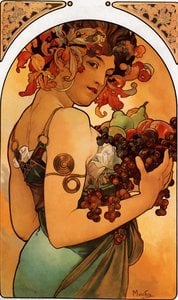
A „Topaz”, Alphonse Mucha alkotása művészeti alkotás érzelmi tónusa Romantic. Ez foglalja össze a mű által kifejezett érzést.
A „Topaz”, Alphonse Mucha alkotása kontrasztját Bold teszi.
A „Topaz”, Alphonse Mucha alkotása ajánlott nyomtatási mérete: Large.
Alphonse Maria Mucha, a name synonymous with the opulent beauty of Art Nouveau, was born on July 15, 1860, in the small Moravian town of Ivanačice. His early life, steeped in the traditions of his Czech homeland, laid the foundation for an artistic vision that would soon captivate Europe. From a young age, Alphonse displayed a remarkable talent for drawing – a gift nurtured by his family’s modest circumstances and a supportive local merchant who provided him with paper, a luxury at the time. This nascent skill blossomed into a passionate pursuit, leading him to study at the Academy of Fine Arts in Prague, though he quickly grew disillusioned with the academy's rigid adherence to classical conventions.
Seeking a more expressive and personal style, Mucha embarked on a journey to Paris in 1887. This move marked a pivotal moment, as it propelled him into the heart of the burgeoning Art Nouveau movement – a period characterized by its celebration of natural forms, flowing lines, and intricate ornamentation. Paris offered a vibrant artistic landscape, influenced by artists like Pierre-Auguste Renoir and Gustave Moreau, whose works subtly shaped Mucha’s developing aesthetic.
Alphonse Mucha's career took an extraordinary turn in 1894 when he was unexpectedly commissioned to design a poster for the play Gismonda, starring the legendary actress Sarah Bernhardt. This seemingly simple task ignited a phenomenal success that catapulted him to international fame. The poster, a masterpiece of Art Nouveau elegance featuring Bernhardt’s captivating image surrounded by swirling floral motifs, became an instant sensation and established what would become known as the “Mucha Style” – a distinctive blend of decorative beauty, stylized femininity, and graceful movement.
This collaboration with Bernhardt proved to be transformative. It launched a prolific period of poster design, magazine illustrations, and theatrical set designs, solidifying Mucha’s reputation as one of the foremost artists of his time. He continued to create stunning visuals for Bernhardt throughout the 1890s, further cementing his signature style.
The pinnacle of Mucha's early career arrived in 1900 with the invitation to decorate the Bosnia and Herzegovina Pavilion at the Universal Exposition in Paris. This prestigious commission brought him unprecedented international recognition. Alongside his work on the Bosnian pavilion, he collaborated on the Austrian Pavilion, showcasing his artistic versatility and expanding his influence across Europe. The sheer scale of these projects demonstrated Mucha’s ability to translate his distinctive style into grand, public displays – a testament to his growing reputation as a leading figure in the Art Nouveau movement.
Following his success in Paris, Charles Richard Crane, an American industrialist and passionate supporter of Slavic culture, recognized Mucha’s unique talent and provided him with substantial financial backing. This generous patronage enabled Mucha to embark on a monumental project – The Slav Epic (1912-1930) – a series of twenty large-scale paintings depicting the history and mythology of all the Slavic peoples. This ambitious undertaking, spanning nearly two decades, became Mucha’s magnum opus and remains one of the most significant works in his oeuvre. The *Slav Epic* is not merely a historical chronicle; it's a vibrant tapestry of cultural identity, rendered with Mucha’s signature elegance and symbolic richness.
Alphonse Mucha’s impact on art and design extends far beyond his individual creations. His distinctive Art Nouveau style profoundly influenced generations of artists, designers, and illustrators. His emphasis on decorative beauty, flowing lines, and idealized female figures continues to resonate today, evident in everything from graphic design to fashion. Furthermore, his work served as a powerful symbol of Czech national identity, particularly during the period of Czechoslovakia’s independence. Alphonse Mucha's legacy is not simply one of artistic brilliance; it’s a testament to the enduring power of beauty, symbolism, and cultural expression.

1860 - 1939 , Csehország