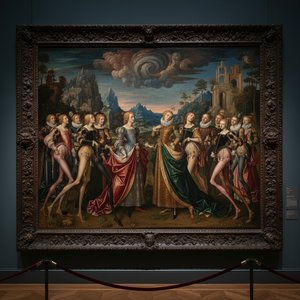
A letrest, visszafogott elegancia florentói mestere
Agnolo di Cosimo, akit a történelem Bronzinként ismer, 1503-ban született a reneszánsz Firenze vibráló művészeti tájában, egy olyan korszakban, amely már tele volt zsenialitással. A hentár fijaként született, de pályája élesen eltért családi szakmájától; helyette egy olyan veleszületett tehetség vezette, amely lehetővé tette számára, hogy korának egyik legkeresettebb portréfestőjévé és a manierizmus meghatározó alakjává váljon. Korai képzése Raffaellino del Garbo műtermében kezdődött, de Bronzino művészeti érzékisége valóban Jacopo da Pontormo tanításai alatt formálódott meg. Miközben befogadta Pontormo innovatív stílusát, végül kialakította saját, egyedi hangját – amelyet a hideg nyugalom és a kifinomult részletesség jellemzett, jelentősen eltérve tanárának gyakran érzelmileg töltött műveitől. Ezt az időszakot Andrea del Sarto mellett végzett tanulmányai is befolyásolták, amelyek során megismerhette Michelangelo és Leonardo da Vinci örökségét, alapvető hatások, amelyek finoman átszivárogtak érett stílusába. A fiatal Bronzino már legkorábbi megbízásai során is gyorsan bizonyította képességét, hogy ne csak a fizikai hasonlságot, hanem egyfajta pszichológiai mélységet is megörökítsen.
Megtált a Medici-udvaron
Bronzino pályája drámai áttörést ért Cosimo I. de’ Medici, Toscana hercege protekciójával. Ez a kapcsolat 1539-ben, miután Bronzino hozzájárult Cosimo és Eleonora di Toledo házasságát ünneplő pompás dísztartalom elkészítéséhez végleg megeremetelt, és életének nagy részében hivatalos udvari festőként biztosította helyét. Ez egy olyan szerep volt, amelyet rendíthetetlen odaadással és lenyűgöző szakértelemmel töltött meg. Ebből az időszakból származó portrék nem csupán hasonlatok; ezek a hatalom, státusz és dinasztikus ambíció carefult felépített kinyilatkozatai. Maga Cosimo és Eleonora is gyakori almaz lett, örökébe véselve őket olyan festmények, amelyek aristokratikus távolságtartást és csiszoltságú eleganciát árasztanak. Ezek a művek nem csupán a fizikai hasonlóság megörökítéséről szóltak, hanem a Medici hatalom tartós szimbólumainak megalkotásáról.
Bronzino mesterműve túlmutatott a portréfestésen; bizalommal bízták rá Eleonora kápolnájának díszítését is, egy olyan projekt, amely két évtizedet ölt magában, és bemutatta sokoldalúságát freskókészítőként. Ezen művekben látható aprólékos részletesség és kifinomult technika établirta Bronzint a florentói udvar kiemelkedő művészeként, meghatározva a hatalom vizuális nyelvét a következő generációk számára is.
A manierista kifinomultság művészete
Bronzino művészeti stílusa lényegesen manierista – egy olyan irányzat, amely a 16. század közepe felé virágzott Olaszországban, reagálásként a magánhonú reneszánsz naturalizmusára és harmonikus egyensúlyára. Elfogadta az megnyúlt formákat, a stilizált pózokat és a gyakran hideg, távolságtartó érzelmi áramlatot. Alakjai ritkán caught momentary spontán akcióban; helyette gondosan felállított, szinte szobrászi csendben állnak.
Vénusz, Kupidó, Bolgaság és Idő törés körülbelül 1544-45, talán legünnepélyebb alegóriás műve, példaként szolgál erre a megközelítésre. A festmény a szimbolizmus összetett szövetese, amely számos értelmezésre invitál, miközben egyidejűleg rejtélyes távolságtartást fenntart. Portréi híresek az aprólékos részletezésről – az anyagok textúrája, ékszerek csillogása, az arckifejezések finom árnyalatai –, amelyek mind egyfajta zománcszerű precizitással születtek meg. Ez a felületi kifinomultság iránti elkötelezettség és az intellektuális összetettség distinguishes Bronzino munkáját kortársaitól. Nem az egyszerű valóság másolásával volt foglalkozni; célja a valóság stilisztikus kontrollon és mesterségesen való megemelése volt.
Örökség és maradandó hatás
A festőként alkotott bőséges munkásságán túl Bronzino fontos szerepet játszott a florentai művészeti közösségben is. 1563-ban a Accademia delle Arti del Disegno alapító tagja volt, egy olyan intézmény, amely a művészet tanulmányának előmozdítása és a művészi kiválóság ösztönzése mellett tevékenykedett. Hatása Messze túlmutatott Firenzén, generációkon át befolyásolva az európai udvari portréfestészetet. A hideg elegancia és a kifinomult technika, amelyet ő képviselt, az aristokratikus ábrázolás jellegzetességeivé vált. Bár stílusa néha hátrányba került azokban az időszakokban, amelyek az érzelmesebb vagy naturalisztikusabb megkövetseléseket részesítették előnyben, Bronzino munkássága az utóbbi évtizedekben újrateljes mértékű elismerésre عقد. A tudósok ma már felismerték művészetében rejlő intellektuális mélységet és stilisztikai innovációt. 1572-ben Firenzében hunyt el, hagyva magán után örökségét az egyik legfontosabb manierista festőként – a visszafogott elegancia mesterét, akinek portréi évszázadokkal később is lenyűgözik és megkeres certain nézőket. Képessége, hogy nemcsak a hasonlságot, hanem a hatalom és a státusz lényegét is megörökítette, biztosítja örök helyét a művészettörténetben.
- Született: Firenze, Olaszország, 1503
- Meghalt: Firenze, Olaszország, 1572
- Főbb irányzat: Manierizmus
- Jelentős művek: *Vénusz, Kupidó, Bolgaság és Idő*, Cosimo I. de’ Medici és Eleonora di Toledo portréi



 Megtekintés
 Áttérés Nyomtatványra
 Küldés
 Megosztás
 Részletek

 Letöltés
 Hasonló darabok
 X-ray felvétel
 Diavetítés
 Statisztika


 Összes részlet megjelenítése






































 Az üvegkeretes opció csak 110 cm alatti méretben érhető el