biography of a visionary artist
yinyuan longqi, also known as ingen ryūki, was a prominent chinese poet, calligrapher, and monk of linji chan buddhism from china. born on december 7, 1592, in fuqing, fujian, during the ming dynasty, yinyuan's life was marked by his significant contributions to the world of art and zen buddhism.
early life and ordination
at the age of 20, while searching for his father, yinyuan arrived at mount putuo off zhejiang province, where he served tea to monks. this encounter sparked a spiritual journey that led him to be ordained as a monk at wanfu temple, mount huangbo, fujian, at the age of 28.
founding the ōbaku school of zen in japan
in 1654, yinyuan traveled to nagasaki, japan with around 30 monks and artisans, including his disciple muyan. he established the
ōbaku head temple manpuku-ji at uji, kyoto in 1661, founding the ōbaku school of zen.
calligraphy and artistic legacy
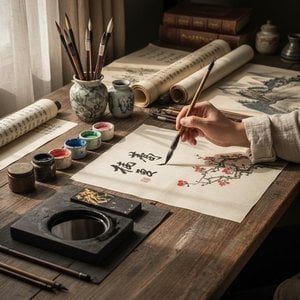
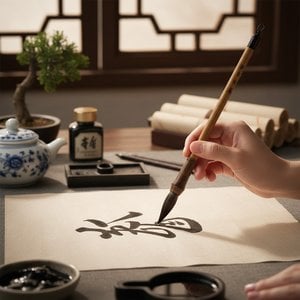
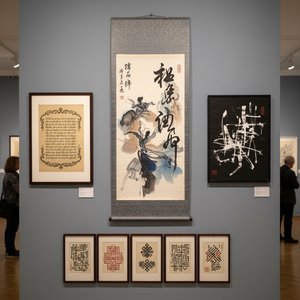
yinyuan was a skilled calligrapher, introducing the ming style of calligraphy to japan. along with his disciples muyan and sokuhi nyoitsu, he was one of the
ōbaku no sanpitsu ("three brushes of ōbaku"). his published writings encompass 35 works in 46 publications.
legacy and remembrance
yinyuan passed away on may 21, 1673 (enpō 1, 5th day of the 4th month), at mampuku-ji. his legacy as a master of poetry, calligraphy, and zen buddhism continues to inspire artists and scholars alike.
important dates: * december 7, 1592: born in fuqing, fujian * 1633: received dharma transmission from feiyin tongrong * 1654: traveled to nagasaki, japan with around 30 monks and artisans * may 21, 1673: passed away at mampuku-ji



 Pregledaj u stvarnoj veličini
 Prebacite na print
 Pošalji
 Podijeli
 Detalji o umjetničkom djelu

 Preuzmi
 Slični predmeti
 Rentgenska snimka
 Automatska prezentacija
 Statistika


 Prikaži više






































 Opcija stakla dostupna je samo za dimenzije manje od 110 cm