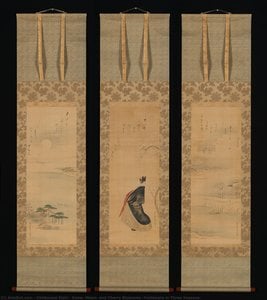
Ukiyo-e masters, in order
The most famous Ukiyo-e कलाकार is होकुसाई (1760–1849), known for महा समंदर का ज्वार और फुजी, स्पष्ट मौसम (लाल फुजी). Next come एंदो हिरोशिघे, कितागावा उतामारो, त्सुकिओका योशीतोशी और तोरी कियोनागा. This ranking of the 39 most famous Ukiyo-e कलाकार runs from हिशिकावा मोरोनोबु (born 1618) to Goyō Hashiguchi (born 1880), across 2 countries.
How this list is ranked. Artists whose works our catalogue files under Ukiyo-e, in the order of our fame ranking of artists. Artists without a Wikidata identifier born after 1955 are left out until verified. The Wikipedia figure next to each name is the number of our 32 languages in which Wikipedia has an article on the artist.
The essentials
Ranked, with their masterpieces
3of 39
जापानी Born in कावागोई उकियो-ए (Ukiyo-e) Wikipedia in 27/32 languages

4of 39
जापानी Born in टोक्यो उकियो-ए Wikipedia in 15/32 languages
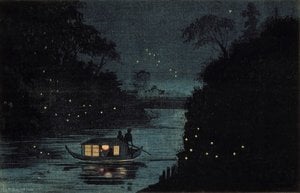
Uesugi Kenshin Nyudo Terutora Riding into Battle (लगभग 1883). Hidaka नदी पर सर्प में बदलती कियोहिमे (लगभग 1890).
6of 39
Born in टोक्यो Wikipedia in 24/32 languages

Pupil of Utagawa Toyokuni I #13 · Teacher of Utagawa Yoshitora #32, Kawanabe Kyōsai #11
8of 39
जापानी Born in होता उकियो-ए (Ukiyo-e) Wikipedia in 20/32 languages
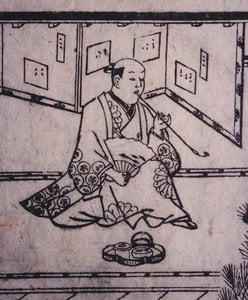
Moronobu’s subject matter centered on the pleasures and pastimes of Edo society. Samurai tales, though romanticized, offered a glimpse into the warrior ethos that still held sway in Japanese culture. Artists like Torii Kiyonobu, his adopted son and pupil, continued his style, further popularizing ukiyo-e.
9of 39
जापानी Born in हंजो उकियो-ए (Ukiyo-e) Wikipedia in 17/32 languages

Pupil of Utagawa Toyokuni I #13
10of 39
जापानी Born in टोक्यो उकियो-ए, बिजिन-गा Wikipedia in 11/32 languages

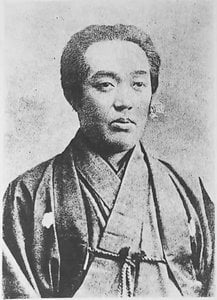
His grandfather, Hosoda Tokitoshi, had served as Treasury Minister to the shogunate, providing his family with a secure position within the imperial system. The name “Eishi,” bestowed upon him – whether by Shogun Ieharu or through tradition – marked a significant step in his artistic journey, signifying his recognition as a skilled artist. He was granted the honorary title Jibukyō (治部卿), recognizing his exceptional talent and contributions to the arts.
11of 39
Japanese Born in Koga Ukiyo-e, Caricature, Manga pioneer Wikipedia in 10/32 languages

In 1874, he helped create what is considered the first manga magazine, Eshinbun Nipponchi, alongside Kanagaki Robun.
12of 39
Japanese Born in Edo Bunsei Era Ukiyo-e Wikipedia in 15/32 languages

This shift defined the aesthetic of the Bunsei era (1818–1830), a period often characterized by its decadent and psychologically complex atmosphere.
13of 39
Japanese Born in Shiba Ukiyo-e Wikipedia in 13/32 languages

Unlike some artists blessed with immediate, innate talent, Toyokuni appears to have been a dedicated student, meticulously absorbing the techniques and aesthetics of those who preceded him. He wasn't simply copying their styles but rather dissecting them, understanding their strengths, and ultimately synthesizing them into something uniquely his own. While Sharaku is often lauded by modern art historians for his psychological insight, it was Toyokuni who captured the hearts of the Edo public.
Teacher of Utagawa Kunimasa #15, Utagawa Toyokuni II #35
15of 39
Japanese Born in Aizuwakamatsu Utagawa School

Though his life was tragically short, ending in 1810, Kunimasa’s influence rippled through the subsequent generations of the Utagawa school. To study Kunimasa is to witness the moment when the decorative beauty of Japanese tradition met the dramatic intensity of human emotion, creating a legacy that continues to captivate art historians and enthusiasts alike. Born in 1773 in the rugged landscape of Aizuwakamatsu, Kunimasa’s journey to becoming a master of the Ukiyo-e woodblock print was one of unexpected transformation.
16of 39
Japanese Born in Kyoto Ukiyo-e Wikipedia in 9/32 languages

These works demonstrate his versatility as an artist and underscore his commitment to exploring diverse artistic mediums—a testament to his intellectual curiosity and artistic ambition. Legacy & Recognition: Nishikawa Sukenobu’s enduring legacy resides in his contribution to Japanese art history, particularly his groundbreaking portrayal of women. Influence on Subsequent Artists: Sukenobu’s influence extended far beyond his own lifetime, inspiring subsequent generations of printmakers like Suzuki Harunobu and Kitao Shigemasa.
17of 39
Japan ukiyo-e Wikipedia in 19/32 languages

Sharaku's technique involved the use of woodblock prints, sometimes employing extravagant methods such as the dusting of mica in the backgrounds to create a glittering effect. His reputation rests largely on his earlier prints, while his later output is often considered to have a declining artistry. His portraits are noted for their ability to capture the psychology of a character through heightened theatrical gestures and expressive, almost caricature-like exaggerations.
18of 39
Japanese Ukiyo-e

This quiet revolution – a departure from the more flamboyant styles of his predecessors – established Hiroshige as a uniquely sensitive and poetic artist, whose work continues to inspire awe and contemplation centuries later. Hiroshige’s prints are not simply images; they are windows into the soul of Japan. Following this triumph, he embarked on One Hundred Famous Views of Edo (1856–1858), a vertical-format series that celebrated his hometown with an unprecedented level of detail and emotional depth.
19of 39
Japanese Born in Miyagawa Ukiyo-e Wikipedia in 9/32 languages

The works of Chōshun are instantly recognizable for their evocative atmosphere and tender execution. This sense of physical weight and warmth contributed to a realism that was both captivating and deeply human. His pupils, including his son Miyagawa Isshō and the talented Miyagawa Chōki, carried forward his dedication to depicting the tastes and textures of urban life.
20of 39
Dutch Born in Kagoshima Post-Impressionism

Goyō’s initial foray into the art world wasn't through printmaking but rather illustration. In 1907 he won recognition for an ukiyo-e oil painting in the first Bunten show, but felt unfulfilled by public acceptance and returned to woodblock printing. Despite his frail health, exacerbated by beriberi, Goyō continued to produce prints at a remarkable pace from 1915 until his untimely death in 1921 at the age of forty-one.
21of 39
Japanese Born in Tokyo Ukiyo-e Wikipedia in 10/32 languages

In the vibrant, bustling heart of the Edo period, a golden age of Japanese creativity, few names resonate with as much elegance and prolific energy as Isoda Koryūsai.
22of 39
Japanese Born in Tokyo Ukiyo-e, Nihonga Wikipedia in 9/32 languages

His most celebrated series, “One Hundred Views of Mount Fuji” (1896-1905), exemplifies his mastery. Rather than simply depicting the iconic mountain as a static subject, Gekko captured its ever-changing moods and vistas with an astonishing range of perspectives and atmospheric conditions. The First Sino-Japanese War (1894-1895) provided him with opportunities to document this tumultuous period in Japanese history, producing powerful and evocative prints that captured the spirit of national pride and resilience.
23of 39
जापानी Born in टोक्यो उकियो-ए, कोसेन-गा Wikipedia in 10/32 languages

Pupil of Kawanabe Kyōsai #11
24of 39
Japanese Ukiyo-e

In the vibrant, transformative era of the late Meiji period, few artists captured the shifting soul of Japan as vividly as Adachi Ginkō.
25of 39
Japanese Shin-hanga

In the twilight of the Edo period and the dawn of a modernizing Japan, few artists captured the profound tension between tradition and transformation as masterfully as Toyohara Chikanobu. Born in 1838, an era of profound cultural shifts, Chikanobu—often recognized by his art name Yōshū Chikanobu —emerged as a monumental figure in the world of Japanese woodblock printing.
26of 39
Japanese Born in Toyooka Ukiyo-e Wikipedia in 8/32 languages

In the vibrant tapestry of the Edo period, few names resonate with the quiet elegance and technical mastery of Utagawa Toyohiro.
27of 39
Japanese Born in Tokyo Ukiyo-e, Kuchi-e

Unlike the often-dramatic compositions favored by Yoshitoshi, Toshikata's works are imbued with an understated elegance and a profound sense of sentimentality. He skillfully employed subtle gradations of tone to create atmospheric effects and to convey nuanced emotional states. During the Sino-Japanese War (1894-1895), Toshikata further established himself as a war artist, producing lithographs that offered a nuanced perspective on the conflict – moving beyond simplistic depictions of battles to capture the human cost of war and the anxieties of a nation at odds with its neighbors.
28of 39
Japanese Born in Tokyo Ukiyo-e (Lacquer Print Art) Wikipedia in 7/32 languages

A hallmark of these compositions was a deliberate stillness, an impassivity in the faces of the subjects reminiscent of the Kaigetsudō school's aesthetic.
29of 39
Japanese Noh Theatre Prints

He was awarded a prize at the Panama Pacific International Exposition in San Francisco in 1915 for his woodcut “The Horse Market at Kiso,” cementing his reputation as one of Japan's foremost printmakers. Technique & Style: Sakamaki employed a distinctive watercolor -like technique, layering translucent washes to achieve luminous effects that captured the subtle nuances of Noh theatre—a stylistic innovation that distinguished him from his contemporaries.
30of 39
Born in Tokyo Wikipedia in 8/32 languages

This ambitious project, undertaken in the 1840s, represents a culmination of his artistic sensibilities. The Tale of Genji, considered one of the greatest works of Japanese literature, depicts the complex lives and romantic entanglements within the Heian court. He was undoubtedly influenced by earlier masters of ukiyo-e, particularly Kanenobu and the traditions of Edo period painting.
31of 39
Japanese Born in Tokyo Ukiyo-e

In the vibrant, pulsing heart of Edo-period Japan, where the concept of ukiyo —the floating world—defined the very essence of existence, Utagawa Sadatora emerged as a master of capturing the ephemeral. His formative years were spent under the rigorous and inspiring tutelage of masters such as Utagawa Yoshitora and Kunisada. Through works such as Women Visiting a Shrine or his celebrated seasonal studies, Sadatora continues to invite us into a world where beauty is most potent precisely because it is fleeting, reminding us to find stillness within the ever-changing winds of life.
32of 39

Utagawa Yoshitora, a name resonating within the vibrant world of ukiyo-e, stands as a compelling figure whose career bridged traditional Japanese artistry with an increasingly globalized aesthetic. While his work may not be as widely recognized as that of Hokusai or Kuniyoshi, Yoshitora’s contributions are increasingly appreciated by scholars and collectors alike.
33of 39
जापानी Born in टोक्यो उकियो-ए (याकुशा-ए, बिजिन्गा) Wikipedia in 10/32 languages

kunichika successfully worked during the edo period, carrying those traditions into the meiji period. his contemporaries and modern art historians view this as a significant achievement during a transitional period of great social and political change in japan's history. key contributions:. preservation of traditional japanese print-making techniques. influence on the development of modern japanese art.
34of 39
जापानी Born in टोक्यो उकियो-ए (याकुशा-ए) Wikipedia in 6/32 languages

AllPaintingsStore.com पर उतागावा कुनिसदा II की कलाकृतियाँ देखें. AllPaintingsStore.com पर होक्काइडो संग्रहालय ऑफ मॉडर्न आर्ट (जापान) का अन्वेषण करें.
35of 39
Japanese Ukiyo-e Wikipedia in 4/32 languages

This ambitious undertaking demanded exceptional artistic skill and logistical organization, cementing Hiroshige’s reputation as a visionary artist who could transform ordinary scenes into sublime expressions of beauty. He skillfully employed Prussian blue, a pigment imported from Europe during this period, to render distant mountains with breathtaking realism —a bold departure from traditional Japanese monochrome prints.
Pupil of Utagawa Toyokuni I #13
Key works · The 100 most famous works
36of 39
Japanese Born in Osaka Ukiyo-e Wikipedia in 4/32 languages

He mastered the complex techniques of nishiki-e (錦絵), utilizing multiple woodblocks to achieve a full spectrum of hues – a significant advancement over earlier monochrome or limited-color prints. The influence of Kuniyoshi is evident in Yoshitaki’s bold outlines and dramatic lighting, but he developed a distinctly personal style characterized by a remarkable sensitivity to human expression. Ichiyosai Yoshitaki’s prolific output provides an invaluable window into 19th-century Japanese society.
37of 39
Japanese Ukiyo-e

Pinpointing Kunitsuna’s artistic lineage proves challenging due to the limited documentation surrounding his early career. He also appears to have been influenced by the emerging trends in Western art, particularly in his use of perspective and shading – though he never fully abandoned the traditional conventions of ukiyo-e. However, scholars believe he was heavily influenced by earlier masters of bijin-ga such as Kitagawa Utamaro and Keisai Eisen.
38of 39
Japanese Born in Edo Ukiyo-e, Yokohama-e Wikipedia in 3/32 languages

As with most Ukiyo-e artists of his time, Yoshikazu employed the traditional collaborative process of woodblock printing. The influence of Kuniyoshi is noticeable in his use of dramatic lighting and bold outlines, though Yoshikazu developed a more restrained and observational style.
39of 39
Japanese Born in Osaka Kamigata-e Wikipedia in 3/32 languages

Shunkōsai Hokuchō (春曙斎 北頂), born around 1802 in Osaka, Japan, stands as a fascinating figure within the vibrant tapestry of Edo-period art history. The Osaka Style Emerges: Unlike the Edo-period’s dominant trend of producing prints in Tokyo, Hokuchō remained firmly rooted in Osaka. While Hokuchō may not command the same level of fame as Hokusai or Hiroshige, his quiet mastery of tsukuri-e and his profound understanding of theatrical emotion solidified his place as a pivotal figure in Osaka’s artistic heritage.
The paintings behind the names
Through time
In figures
| Japan | 21 |
|---|---|
| जापान | 15 |
| 17thवीं सदी | 3 |
|---|---|
| 18thवीं सदी | 17 |
| 19thवीं सदी | 12 |
| Bujalance Collection | 11 |
|---|---|
| Keio University Library | 11 |
| मेट्रोपॉलिटन म्यूज़ियम ऑफ़ आर्ट | 9 |
| इंडियनपोलिस संग्रहालय कला | 2 |
| Minneapolis Institute of Art | 2 |
| ब्रुकलिन संग्रहालय | 2 |
| आर्ट इंस्टीट्यूट ऑफ शिकागो | 2 |
| Kimbell Art Museum | 2 |
All of them, in order
 होकुसाईजापानी · 1760–1849
 एंदो हिरोशिघेजापानी · 1797–1858कितागावा उतामारोजापानी · 1753–1806त्सुकिओका योशीतोशीजापानी · 1839–1892
 तोरी कियोनागाजापानी · 1752–1815उतागावा कुनियोशी1798–1861
 सुजुकी हारुनोबु1724–1770हिशिकावा मोरोनोबुजापानी · 1618–1694उतागावा कुनिसदाजापानी · 1786–1865चोबुनसाई एइशीजापानी · 1756–1829Kawanabe KyōsaiJapanese · 1831–1889Keisai EisenJapanese · 1790–1848Utagawa Toyokuni IJapanese · 1769–1825
 हिरोशिगे प्रथम (Hiroshige I)Japanese · 1797–1858Utagawa KunimasaJapanese · 1773–1810Nishikawa SukenobuJapanese · 1671–1750SharakuJapan · UtashigeJapanese · Miyagawa ChōshunJapanese · 1683–1753Goyō HashiguchiDutch · 1880–1921Isoda KoryūsaiJapanese · 1735–1790Ogata GekkoJapanese · 1859–1920कोबायाशी कियोचिकाजापानी · 1847–1915Adachi GinkoJapanese · जन्म 1853Toyohara ChikanobuJapanese · 1838–1912उतागावा तोयोहिरोJapanese · 1773–1828Mizuno ToshikataJapanese · 1866–1908Ishikawa ToyonobuJapanese · 1711–1785Kogyo SakamakiJapanese · 1869–1927Hokkei1780–1850SadatoraJapanese · Utagawa Yoshitoraटोयोहारा कुनिचिकाजापानी · 1835–1900उतागावा कुनिसदा Iiजापानी · 1823–1880Utagawa Toyokuni IIJapanese · 1777–1835Utagawa YoshitakiJapanese · 1841–1899Utagawa Kunitsuna Ii, Ichiransai, SadashigeJapanese · Utagawa YoshikazuJapanese · Shunkōsai HokushūJapanese ·
Your questions, answered
First place goes to होकुसाई (#1); एंदो हिरोशिघे (#2) and कितागावा उतामारो (#3) complete the podium.
होकुसाई (#1), एंदो हिरोशिघे (#2), कितागावा उतामारो (#3), त्सुकिओका योशीतोशी (#4) और तोरी कियोनागा (#5).
The highest-ranked कलाकार born in जापान are होकुसाई (#1), एंदो हिरोशिघे (#2), कितागावा उतामारो (#3), त्सुकिओका योशीतोशी (#4) और तोरी कियोनागा (#5).
उतागावा कुनियोशी (#6) taught Utagawa Yoshitora (#32) और Kawanabe Kyōsai (#11); Utagawa Toyokuni I (#13) taught Utagawa Kunimasa (#15) और Utagawa Toyokuni II (#35).
टोक्यो: 10 of the कलाकार in this list were born there.
The earliest-born कलाकार in this list is हिशिकावा मोरोनोबु (#8), born in 1618.
The highest-ranked living कलाकार in this list are Adachi Ginko (#24).
The museums holding the most key works of this list are Bujalance Collection (11), Keio University Library (11) और मेट्रोपॉलिटन म्यूज़ियम ऑफ़ आर्ट (9).
Most कलाकार in this list were born in the 18thवीं सदी (17 of 39), between 1618 and 1880 overall.
Japan: 21 of the 39 कलाकार in this list were born there, then जापान (15).
The highest-ranked कलाकार born in Japan are Kawanabe Kyōsai (#11), Keisai Eisen (#12), Utagawa Toyokuni I (#13), Utagawa Kunimasa (#15) और Nishikawa Sukenobu (#16).
Our catalogue holds 5,896 works by these कलाकार. Each one can be ordered as a hand-painted oil reproduction or a print.
Keep reading
Other movements
 प्रसिद्ध Baroque कलाकाररेम्ब्रांट वैन रीन
लीडेन
नीदरलैंड
1606
1669
रेम्ब्रांट वैन रीन
1642
डच गोल्डन एज पेंटिंग में एक क्रांतिकारी क्षण
363 x 437 सेमी
रात्रि प्रहरी
रात्रि प्रहरी · रैम्ब्राण्ट
 प्रसिद्ध Contemporary Realist कलाकारद ग्लीनर्स · जीन-फ्रांस्वा मिले
 प्रसिद्ध Impressionist कलाकारतारांकित रात (न्यूयॉर्क, MoMA) · विन्सेंट वैन गो
 प्रसिद्ध Romanticist कलाकारसैटर्न अपने पुत्र को निगल रहा है · फ्रांसिस्को डि गोया
 प्रसिद्ध Neoclassicist कलाकारThe Death of Marat · जैक्स-लुई डेविड
 प्रसिद्ध Realist कलाकारएक विद्रोही का ब्रश: गुस्ताव कोर्टबेट का जीवन और विरासतऑर्नन के शांत गांव में जन्मे, फ्रांस में 1819, जीन Désiré Gustave Courbet अपने समय की स्थापित कलात्मक मानदंडों के खिलाफ एक defiant शक्ति के रूप में उभरा। उसकी कहानी सिर्फ पेंट और कैनवस की नहीं है; यह · गुस्ताव कूरबे
 प्रसिद्ध Renaissance कलाकारमोना लिसा (ला जियोकोंडा) · लिओनार्दो दा विंची
 प्रसिद्ध Dutch Golden Age कलाकारजोहान्स वेरमियर
उत्तरी प्रकाश में डूबा एक जीवन: जोहान्स वेरमियर की दुनिया
जोहान्स वेरमियर, 17वीं शताब्दी के डच जीवन की शांत अंतरंगता के साथ पर्याय है, विद्वानों के सदियों बाद भी एक रहस्य बना हुआ है। अक्टूबर 1632 को डेलफ्ट में जन्मे, उनका अस्तित्व अभूतपू · जान वर्मीर
 प्रसिद्ध Expressionist कलाकारसं состава सात · वासिली कैंडिंस्की
 प्रसिद्ध Rococo कलाकारप्यार का पाठ · एंथोनी वातेऊ
Other periods
 प्रसिद्ध Early Medieval कलाकारSnowy River · वांग वेई
 प्रसिद्ध High Medieval कलाकारमैडोना इन मेस्ट (ओग्निसंति मैडोना) · गियोट्टो डी बोन्डोन
 प्रसिद्ध Late Medieval कलाकारदेवदूत घोषणा और दो संत · सिमोने मार्टिनी
 प्रसिद्ध Renaissance कलाकारमाइकल एंजेलो बोनारोटी, एक नाम जो उच्च पुनर्जागरण के साथ पर्याय है, सदियों से मानव कलात्मक क्षमता का प्रमाण है। 6 मार्च, 1475 को इटली के टस्कन पहाड़ियों में कैप्रेसे माइकेलांजेलो में जन्मे, उनका जीवन प्रतिभा, महत्वाकांक्षा और दिव्य प्रेरणा का एक असाधारण अभ · माइकल एंजेलो
 प्रसिद्ध Early Modern कलाकारकारावागियो
मिलान
स्पेन
1571
1599
1610
एक क्रांतिकारी क्षण बैरोक कला में
322 x 340 सेमी
सेंट मैथ्यू का आह्वान · कारावाजियो
 प्रसिद्ध 19th Century कलाकारजल लिली (या निम्फीस) · क्लाद मोने
 प्रसिद्ध Modern कलाकारगुएर्निका · पाब्लो पिकासो
 प्रसिद्ध Contemporary कलाकारWind Sculpture III (one in a series of nine) · Yinka Shonibare
More rankings