1of 71
एल ग्रेको 1541–1614
ग्रीक-स्पेनिश Born in हेराक्लिओन मैनरिज़्म, बारोक Wikipedia in 31/32 languages


Mannerist चित्रकार, ranked
The most famous Mannerist चित्रकार is एल ग्रेको (1541–1614), known for यीशु का वस्त्र उतारना (एल एस्पोलियो) और द काउन्ट ऑफ़ ऑर्गेज़ की दफ़न. Next come जाकोपो टिंटोरेटो, ग्यूसेप्पे आर्किंबोल्डो, अग्नोलॉ ब्रोंज़िनो और सोफोनिस्बा अंगुइसोला. This ranking of the 71 most famous Mannerist चित्रकार runs from अमिको अस्परतिनी (born 1475) to क्रिस्टोफ़ानो अल्लोरी (born 1577), across 15 countries.
How this list is ranked. Artists whose works our catalogue files under Mannerist, in the order of our fame ranking of artists. Artists without a Wikidata identifier born after 1955 are left out until verified. The Wikipedia figure next to each name is the number of our 32 languages in which Wikipedia has an article on the artist.
The essentials
Ranked, with their masterpieces
1of 71
ग्रीक-स्पेनिश Born in हेराक्लिओन मैनरिज़्म, बारोक Wikipedia in 31/32 languages
2of 71
इतालवी Born in वेनिस मैनरवाद, वेनिस स्कूल Wikipedia in 31/32 languages

Key works · The 100 most famous works
 अंतिम भोज
artworks_database
/en/art/jacopo-tintoretto-the-last-supper-8Y3K2M-en/
/media/artworks/images/thumbnails/25/02/2502bd1970854e5ba0ea3fbc3890950e.jpg
जाकोपो टिंटोरेटो
1594
विश्वास और विश्वासघात के एक नाटकीय दर्शन
365 x 568 सेमी
अंतिम भोज
 स्ट. मार्क का चमत्कार: दास को मुक्त कराना
 Venus, Mars, and Vulcan
3of 71
इतालवी Born in मिलानो मैनरिज्म, अतियथार्थवाद Wikipedia in 30/32 languages

Key works · The 100 most famous works
 वर्टुमनस (वर्टुम्नो)
 पुस्तकालयाध्यक्ष: पुनर्जागरण कल्पना का एक उत्कृष्ट कृति
गिसेप्पे आर्किम्बोल्डो की "द लाइब्रेरियन", लगभग 1566 में बनाई गई, एक मनोरम और रहस्यमय कलाकृति है जो कलाकार की अनूठी प्रतिभा को प्रदर्शित करती है। यह उत्कृष्ट कृति चित्रों की एक श्रृंखला का हिस्सा है
 शरद ऋतु
4of 71
इतालवी Born in फ़्लोरेन्स मैनिएरिज़्म Wikipedia in 29/32 languages

5of 71
इतालवी Born in क्रेमोना पुनर्जागरण, मैनरवाद Wikipedia in 29/32 languages

8of 71
इतालवी Born in अरेत्जो मैनरिज्म Wikipedia in 31/32 languages

Teacher of Jacopo Zucchi #54, Federico Zuccari #41
10of 71
इतालवी Born in फ़्लोरेन्स मैनरिज्म (Mannerism) Wikipedia in 27/32 languages

12of 71
डच Born in ब्रौन्श्वेइक उत्तरी मैनरिज्म और बारोक नक्काशी Wikipedia in 19/32 languages

13of 71
इतालवी Born in मोंटापर्टो मैनरिज्म, पुनर्जागरण Wikipedia in 21/32 languages

15of 71
फ्लेमिश Born in एंटवर्प उत्तरी मैनरिज्म Wikipedia in 18/32 languages

His paintings are distinguished by their smooth modeling, meticulous detail, and a subtle use of color. He skillfully blended Netherlandish realism with Italian mannerist influences, particularly the Roman tradition of depicting classical mythology. Crucially, his travels extended into Italy, where he spent eight months in Milan and three months in Parma, assisting Bernardino Gatti on the ambitious fresco project for the dome of Santa Maria della Steccata.
16of 71
इतालवी Born in बोलोना मैनरिज्म, बारोक Wikipedia in 26/32 languages

Key works · The 100 most famous works
19of 71
Italian Born in फ्लोरेंस Mannerism Wikipedia in 23/32 languages

24of 71
राष्ट्रीयता: इतालवी Born in फ़्लोरेन्स मैनरिज्म (Mannerism) Wikipedia in 17/32 languages

26of 71
फ्लेमिश Born in म्यूलेबेक उत्तरी मैनरिज्म Wikipedia in 20/32 languages

27of 71
इतालवी Born in वोल्टेरा मैनरिज्म (Mannerism) Wikipedia in 17/32 languages

29of 71
Italian Born in Bologna Late Renaissance & Mannerism Wikipedia in 18/32 languages

Beyond the Adoration, Fontana's contributions are visible in the frescoes at the Palazzo Vecchio in Florence (1563-65), where he skillfully integrated architectural elements into his paintings. Fontana’s legacy endures through his surviving works, which are housed in prestigious collections such as the Pinacoteca di Vicenza and the La collezione Bonello (Malta).
31of 71
Italian Born in बोलोना Mannerism Wikipedia in 22/32 languages

Whether through the delicate line work of a chalk drawing like Ceres or the monumental scale of fresco fragments such as Ulysses Winning the Archery Contest in the Presence of Penelope, Primaticcio’s oeuvre remains a testament to an artist who could navigate the complexities of myth, majesty, and the human psyche with unparalleled grace.
32of 71
फ्लेमिश Born in लेइडेन मैनरिज्म (Mannerism) Wikipedia in 15/32 languages

Pupil of Federico Zuccari #41
33of 71
इतालवी Born in मोनेग्लिया जेनोइस स्कूल, मैनरिज्म Wikipedia in 15/32 languages

34of 71
इतालवी Born in Arpino मैनरिस्ट (Mannerist) Wikipedia in 14/32 languages

35of 71
इतालवी Born in बासानो डेल ग्रापा वेनिस पुनर्जागरण Wikipedia in 12/32 languages

36of 71
Flemish Late Mannerism

Brussels Court Painter: In 1594, De Clerck ascended to the prestigious role of court painter to Archduke Ernest I of Habsburg Austria, securing patronage that afforded him considerable freedom and resources. The Iconoclastic Crisis & Altarpiece Commissions: The Protestant iconoclasm of 1566 profoundly impacted the religious landscape of Flanders, prompting a dramatic shift towards more restrained artistic expression. Collaborations with Jan Brueghel the Elder on landscapes such as “ Paradise ” further cemented De Clerck’s reputation as a visionary artist who skillfully blended tradition and innovation.
37of 71
इतालवी Born in बासानो डेल ग्राप्पा मैनरिज्म (Mannerism) Wikipedia in 13/32 languages

38of 71
Italian Born in Florence Mannerist Painting Wikipedia in 15/32 languages

Beyond the walls of Rome, Perino’s influence stretched into the maritime strength of Genoa and the historic centers of Pistoia.
39of 71
Flemish Born in Bruges Renaissance, 16th Century Painting Wikipedia in 15/32 languages

His arrival coincided with a period of immense artistic patronage and experimentation within the court, orchestrated by Grand Duke Cosimo I de’ Medici and his advisor, Giorgio Vasari. The Metropolitan Museum of Art’s collection features a significant drawing by Stradanus – “ Allegory of America” – offering valuable insight into his artistic vision and providing a tangible connection to this remarkable Florentine master.
Teacher of Antonio Tempesta #56
40of 71
इतालवी Born in फ्र्यूली-विज़ेंज़ा पुनर्जागरण पेंटिंग Wikipedia in 16/32 languages

41of 71
Italian Born in Sant'Angelo in Vado Mannerism Wikipedia in 18/32 languages

One cannot discuss the brilliance of Federico Zuccaro without acknowledging the profound influence of his brother, Taddeo Zuccaro. While Taddeo’s mastery of sculpture provided a structural strength to their shared visions, Federico’s painting prowess brought them to life with ethereal light and movement. Their collaborative spirit yielded masterpieces such as “The Holy Family ” in Palazzo Vecchio, a work that serves as a testament to their unified artistic language.
43of 71
Dutch Born in Gouda Mannerism Wikipedia in 13/32 languages

He spent time in Paris with Jean de la Hame, a glass-painter serving King Charles IX, before securing a position at Fontainebleau during the twilight years of the School of Fontainebleau.
44of 71
Flemish Born in Hulst Mannerism, Renaissance Wikipedia in 8/32 languages

His artistic style was deeply rooted in the Mannerist aesthetic, characterized by a naturalistic portrayal of nature alongside carefully constructed compositions. The influence of Hieronymus Bosch is also readily apparent in Mostaert’s oeuvre, particularly in compositions derived from tapestries based on Bosch's fantastical creations. Gillis Mostaert died in Antwerp in 1598, reportedly burdened by debt, which led to the dispersal of his workshop’s contents among creditors following his death.
45of 71
इतालवी Born in फ्लोरेंस फ्लोरेंटाइन मैनरिज्म Wikipedia in 11/32 languages

47of 71
Italian Born in Florence Proto-Baroque & Counter-Maniera Wikipedia in 14/32 languages

His prolific output, including monumental altarpieces such as The Resurrection for Santa Croce, demonstrated that art could be both profoundly beautiful and deeply communicative.
48of 71
इतालवी Born in कारावागियो मैनरिज्म Wikipedia in 10/32 languages

Partnering with Maturino, he pioneered a technique known as sgraffito, where layers of contrasting plaster were scratched away to reveal underlying designs—a method that allowed for large-scale narrative scenes and architectural motifs directly onto building exteriors. These weren’t merely decorative embellishments; they were public displays of art, accessible to all who traversed the streets of Rome. Though many of his Roman frescoes are lost to time, Polidoro da Caravaggio remains an important and compelling figure in Italian Renaissance history—a testament to the power of artistic innovation and the enduring impact of personal experience on creative expression.
49of 71
इतालवी Born in क्रेमोना फ्लेमिश शैली / लोम्बार्ड प्राकृतिकतावाद Wikipedia in 13/32 languages

50of 71
Italian Born in Zadar Baroque Sculpture; Mannerism Wikipedia in 14/32 languages

The career of Andrea Schiavone was one of prolific achievement, leaving behind a body of work that includes everything from intimate etchings to monumental religious narratives.
51of 71
इतालवी Born in वेरोना उत्तर पुनर्जागरण और मैनरवाद Wikipedia in 11/32 languages

52of 71
Italian Born in Bologna Mannerism Wikipedia in 10/32 languages

His later works, influenced by Tuscan models such as Giorgio Vasari and Prospero Fontana, demonstrate a continuous evolution and an enduring curiosity about the changing tides of aesthetic taste.
53of 71
Italian Born in Vicenza Late Renaissance/Mannerist Wikipedia in 5/32 languages

Through his work, the halls of the palace—including the Sala del Senato and Sala dello Scrutinio—were transformed into theatrical stages where history and myth converged.
54of 71
Italian Born in Florence Mannerist Painting Wikipedia in 11/32 languages

His works often serve as windows into the complex allegories of the 16th century: Religious Devotion: In pieces such as Allegory of the Creation, Zucchi captures profound moments of divine connection, utilizing dramatic lighting and celestial figures to evoke a sense of awe and religious fervor.
56of 71
Italian Born in Florence Mannerism Wikipedia in 11/32 languages

As a fresco painter, he contributed significantly to some of the most celebrated decorative programs of the age, including works for Villa Lante and Palazzo Farnese. Narrative Allegories: Utilizing complex symbolism to communicate religious and political themes, such as in his evocative work The Expulsion of Heliodorus from the Temple. While his roots remained firmly planted in the disciplined Mannerism of Florence, his work anticipated the emotional intensity and theatricality of the Baroque.
Pupil of Stradanus #39
57of 71
इतालवी Born in बोलोना मैनरिज्म (Mannerism) Wikipedia in 11/32 languages

58of 71
German Born in Vienna Northern Mannerism

This rigorous training instilled in him a profound understanding of goldsmithing techniques—a craft that demanded precision, artistry, and meticulous attention to detail. Notably, he studied alongside Euclid's Elements and Plato’s Timaeus, texts considered foundational for geometric reasoning and philosophical contemplation – influences that would profoundly shape his later artistic pursuits. Born in Vienna, Italy, Wenzel was the son of Hans Jamnitzer the Elder, a goldsmith who established a tradition of excellence that would continue through subsequent generations.
59of 71
Italian Born in Vicenza

His monumental two-volume treatise, L'idea dell'architettura universale, published in Venice in 1615, stands as one of the final great works of the Renaissance.
60of 71
Italian Born in Melide Late Renaissance

He honed his skills in Rome before the death of Michelangelo, immersing himself in the architectural principles of the past while simultaneously embracing new approaches. His initial commissions were modest – designing villas for wealthy patrons like Cardinal Montalto – but these early projects laid the groundwork for a career defined by ambition and technical mastery. The Fontana dell'Acqua Felice (Fountain of Moses), built for Pope Sixtus V, stands as a prime example.
61of 71
Born in Antwerp Antwerp Mannerism Wikipedia in 9/32 languages

He was a contemporary of other great figures like Quentin Matsys and may have even collaborated with landscape innovators such as Joachim Patinir.
62of 71
Italian Born in Mazzo di Valtellina Mannerist Wikipedia in 10/32 languages

His most celebrated achievement remains the scaled oil copy of the Last Judgment, commissioned by Cardinal Alessandro Farnese.
63of 71
French Born in Paris Second School Fontainebleau; Mannerism; Italian Art Influence Wikipedia in 8/32 languages

He found endless inspiration in the epic tales of Homer, the poetic explorations of Pierre de Rationale, and the dramatic narratives of Torquato Tasso. Born in Paris around 1561, Dubreuil emerged during a transformative era when the French court sought to mirror the sophisticated aesthetics of the Italian masters.
64of 71
स्विस Born in Schaffhausen मैनरिज्म (Mannerism) Wikipedia in 7/32 languages

65of 71
Italian Born in Florence Mannerist Wikipedia in 10/32 languages

Beyond his fresco cycles, Conte also produced a series of individual portraits, most notably his portrait of Michelangelo (c. 1540). The portrait is characterized by its dramatic lighting, intense gaze, and subtle gestures—elements that reflect Conte's growing mastery of chiaroscuro and his increasing interest in psychological realism. Conte's career took a significant turn in 1547-48 when he joined forces with Siciolante da Sermoneta on the ambitious fresco decoration of the chapel of San Remigio in San Luigi dei Francesi.
66of 71
Flemish Born in Antwerp Landscape with mythological and allegorical Wikipedia in 8/32 languages

In 1580, Fiammingo was tasked with creating extensive series of paintings to adorn Castle Kirchheim in Württemberg.
67of 71
French Born in Bassigny Northern Mannerism Wikipedia in 9/32 languages

Though his life was cut short in 1616, Bellange’s influence endured far beyond the borders of Lorraine.
68of 71
Italian Born in Parma Mannerist Painting Wikipedia in 8/32 languages

His contributions to the decoration of landmarks like the Santa Maria della Steccata underscore his role as a cornerstone of Parma’s artistic golden age.
69of 71
Italian Born in Novellara Mannerist Wikipedia in 7/32 languages

Born in the small town of Novellara around 1508 or 1511, Orsi navigated an era defined by shifting theological certainties and the complex intellectual currents of humanism.
70of 71
Italian Born in Florence Renaissance and Mannerism Wikipedia in 5/32 languages

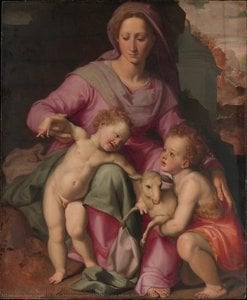
The historical significance of Michele Tosini lies in his role as a bridge between eras. Whether depicting the tender intimacy of a Holy Family or the rustic devotion found in an Adoration of the Shepherds, Tosini possessed the rare ability to capture the profound intersection of the divine and the human. His early training under Lorenzo di Credi and Antonio del Ceraiolo anchored him in the refined traditions of the High Renaissance.
71of 71
Spanish Born in Mascaraque Renaissance, Mannerism Wikipedia in 6/32 languages

Correa's early commissions, such as the altarpiece for the monastery of Santa María de Guadalupe in Mascaraque (circa 1532-1534), demonstrate a clear adherence to Raphael’s principles – elegant figures, balanced compositions, and harmonious color palettes.
The paintings behind the names
Through time
In figures
| इटली | 34 |
|---|---|
| Italy | 15 |
| Belgium | 3 |
| जर्मनी | 2 |
| नीदरलैण्ड | 2 |
| बेल्जियम | 2 |
| फ्रांस | 2 |
| Netherlands | 2 |
| 1470s | 2 |
|---|---|
| 1480s | 3 |
| 1490s | 5 |
| 1500s | 11 |
| 1510s | 10 |
| 1520s | 8 |
| 1530s | 7 |
| 1540s | 11 |
| 1550s | 7 |
| 1560s | 4 |
| 1570s | 3 |
| कुन्स्टहिस्टोरिशेश म्यूज़ियम | 18 |
|---|---|
| एर्मिटेज संग्रहालय | 9 |
| Bavarian State Painting Collections | 9 |
| नेशनल गैलरी | 8 |
| Rijksmuseum | 5 |
| Museo del Prado | 5 |
| मेट्रोपॉलिटन म्यूज़ियम ऑफ़ आर्ट | 4 |
| Palazzo Vecchio | 4 |
All of them, in order
एल ग्रेकोग्रीक-स्पेनिश · 1541–1614जाकोपो टिंटोरेटोइतालवी · 1519–1594ग्यूसेप्पे आर्किंबोल्डोइतालवी · 1527–1593अग्नोलॉ ब्रोंज़िनोइतालवी · 1503–1572सोफोनिस्बा अंगुइसोलाइतालवी · 1532–1625 जैकोपो पोंटोरमो1494–1556
 पार्मीजनीनो1503–1540जॉर्जियो वासारीइतालवी · 1511–1574
 गिउलिओ रोमानोइतालवी · 1499–1546रोसो फियोरेंटिनोइतालवी · 1494–1540
 सेबास्टियानो डेल पिओम्बो1485–1547हेंड्रिक गोलत्ज़ियसडच · 1558–1617डोमेनिको डी पासे बेकाफुमीइतालवी · 1484–1551
 पीटर एर्टसेनडच · 1508–1575बार्थोलोमियस स्प्रेंजरफ्लेमिश · 1546–1611लैविनिया फोंटानाइतालवी · 1552–1614
 फेडरिको बारोची1535–1612
 हंस वॉन आचेनजर्मन · 1552–1615क्रिस्टोफ़ानो अल्लोरीItalian · 1577–1621
 एलेसेंड्रो अलोरी1535–1607
 निकोलो डेल' अबेटेइतालवी · 1512–1571
 जियोवानी बतिस्ता मोरोनी1525–1578
 बेनुवेनतो सेलिनिइतालवी · 1500–1571फ्रांसेस्को साल्विआतीराष्ट्रीयता: इतालवी · 1510–1563
 जियाम्बोलोग्ना1529–1608कारेल वैन मैंडर द एल्डरफ्लेमिश · 1548–1606डैनिएल दा वोल्टेराइतालवी · 1509–1566
 जीन गोजोनफ्रांसीसी · 1510–1567Prospero FontanaItalian · 1512–1597
 जोआचिम व्टेवेलDutch · 1566–1638फ्रांसेस्को प्रिमातिचियोItalian · 1504–1570ऑटो वैन वीनफ्लेमिश · 1556–1629लुका कैम्बियासोइतालवी · 1527–1585ज्यूसेपे सेसारीइतालवी · 1568–1640फ्रांसेस्को बासानो द यंगरइतालवी · 1549–1592Hendrick De ClerckFlemish · 1570–1630लीएंड्रो बासानोइतालवी · 1557–1622Perino del VagaItalian · 1501–1547StradanusFlemish · 1523–1605इल पादेनोनेइतालवी · 1484–1539Federico ZuccariItalian · 1539–1609
 चेकिनो डेल साल्विआटीइतालवी · 1510–1563Cornelis KetelDutch · 1548–1616Gillis MostaertFlemish · 1528–1598फ्रांसेस्को बकियाक्काइतालवी · 1494–1557
 सिपियोन पुलज़ोन1550–1598Santi di TitoItalian · 1536–1603पोलीडोरो दा कारावागियोइतालवी · 1499–1543विन्सेन्ज़ो कैंपीइतालवी · 1536–1591Andrea SchiavoneItalian · 1522–1563जकोपो लिगोत्ज़ीइतालवी · 1547–1627Bartolomeo PassarottiItalian · 1529–1592Andrea VicentinoItalian · 1542–1617Jacopo ZucchiItalian · 1542–1596
 डोमेनिको टिनटोरेटोItalian · 1560–1635Antonio TempestaItalian · 1555–1630अमिको अस्परतिनीइतालवी · 1475–1552Wenzel JamnitzerGerman · 1507–1585Vincenzo ScamozziItalian · 1548–1616Domenico FontanaItalian · 1543–1607Jan De Beer1475–1528Marcello VenustiItalian · 1510–1579Toussaint DubreuilFrench · 1561–1602टोबियास स्टिमरस्विस · 1539–1584Jacopino del ConteItalian · 1510–1598Paolo FiammingoFlemish · 1540–1596Jacques BellangeFrench · 1575–1616Girolamo Mazzola BedoliItalian · 1500–1569Lelio OrsiItalian · 1508–1587Michele TosiniItalian · 1503–1577Juan Correa De VivarSpanish · 1510–1566
Your questions, answered
First place goes to एल ग्रेको (#1); जाकोपो टिंटोरेटो (#2) and ग्यूसेप्पे आर्किंबोल्डो (#3) complete the podium.
एल ग्रेको (#1), जाकोपो टिंटोरेटो (#2), ग्यूसेप्पे आर्किंबोल्डो (#3), अग्नोलॉ ब्रोंज़िनो (#4) और सोफोनिस्बा अंगुइसोला (#5).
Most चित्रकार in this list were born in the 1540s (11 of 71), between 1475 and 1577 overall.
The highest-ranked चित्रकार born in Italy are Prospero Fontana (#29), Perino del Vaga (#38), Federico Zuccari (#41), Santi di Tito (#47) और Bartolomeo Passarotti (#52).
The museums holding the most key works of this list are कुन्स्टहिस्टोरिशेश म्यूज़ियम (18), एर्मिटेज संग्रहालय (9) और Bavarian State Painting Collections (9).
जॉर्जियो वासारी (#8) taught Jacopo Zucchi (#54) और Federico Zuccari (#41); Stradanus (#39) taught Antonio Tempesta (#56).
The highest-ranked चित्रकार born in इटली are जाकोपो टिंटोरेटो (#2), ग्यूसेप्पे आर्किंबोल्डो (#3), अग्नोलॉ ब्रोंज़िनो (#4), सोफोनिस्बा अंगुइसोला (#5) और जैकोपो पोंटोरमो (#6).
Florence: 6 of the चित्रकार in this list were born there.
The earliest-born चित्रकार in this list is अमिको अस्परतिनी (#57), born in 1475.
इटली: 34 of the 71 चित्रकार in this list were born there, then Italy (15) और Belgium (3).
The women of this list (2): सोफोनिस्बा अंगुइसोला (#5) और लैविनिया फोंटाना (#16).
Our catalogue holds 5,179 works by these चित्रकार. Each one can be ordered as a hand-painted oil reproduction or a print.
Keep reading
Other movements
 प्रसिद्ध Baroque कलाकाररेम्ब्रांट वैन रीन
लीडेन
नीदरलैंड
1606
1669
रेम्ब्रांट वैन रीन
1642
डच गोल्डन एज पेंटिंग में एक क्रांतिकारी क्षण
363 x 437 सेमी
रात्रि प्रहरी
रात्रि प्रहरी · रैम्ब्राण्ट
 प्रसिद्ध Contemporary Realist कलाकारद ग्लीनर्स · जीन-फ्रांस्वा मिले
 प्रसिद्ध Impressionist कलाकारतारांकित रात (न्यूयॉर्क, MoMA) · विन्सेंट वैन गो
 प्रसिद्ध Romanticist कलाकारसैटर्न अपने पुत्र को निगल रहा है · फ्रांसिस्को डि गोया
 प्रसिद्ध Neoclassicist कलाकारThe Death of Marat · जैक्स-लुई डेविड
 प्रसिद्ध Realist कलाकारएक विद्रोही का ब्रश: गुस्ताव कोर्टबेट का जीवन और विरासतऑर्नन के शांत गांव में जन्मे, फ्रांस में 1819, जीन Désiré Gustave Courbet अपने समय की स्थापित कलात्मक मानदंडों के खिलाफ एक defiant शक्ति के रूप में उभरा। उसकी कहानी सिर्फ पेंट और कैनवस की नहीं है; यह · गुस्ताव कूरबे
 प्रसिद्ध Renaissance कलाकारमोना लिसा (ला जियोकोंडा) · लिओनार्दो दा विंची
 प्रसिद्ध Dutch Golden Age कलाकारजोहान्स वेरमियर
उत्तरी प्रकाश में डूबा एक जीवन: जोहान्स वेरमियर की दुनिया
जोहान्स वेरमियर, 17वीं शताब्दी के डच जीवन की शांत अंतरंगता के साथ पर्याय है, विद्वानों के सदियों बाद भी एक रहस्य बना हुआ है। अक्टूबर 1632 को डेलफ्ट में जन्मे, उनका अस्तित्व अभूतपू · जान वर्मीर
 प्रसिद्ध Expressionist कलाकारसं состава सात · वासिली कैंडिंस्की
 प्रसिद्ध Rococo कलाकारप्यार का पाठ · एंथोनी वातेऊ
Other periods
 प्रसिद्ध Early Medieval कलाकारSnowy River · वांग वेई
 प्रसिद्ध High Medieval कलाकारमैडोना इन मेस्ट (ओग्निसंति मैडोना) · गियोट्टो डी बोन्डोन
 प्रसिद्ध Late Medieval कलाकारदेवदूत घोषणा और दो संत · सिमोने मार्टिनी
 प्रसिद्ध Renaissance कलाकारमाइकल एंजेलो बोनारोटी, एक नाम जो उच्च पुनर्जागरण के साथ पर्याय है, सदियों से मानव कलात्मक क्षमता का प्रमाण है। 6 मार्च, 1475 को इटली के टस्कन पहाड़ियों में कैप्रेसे माइकेलांजेलो में जन्मे, उनका जीवन प्रतिभा, महत्वाकांक्षा और दिव्य प्रेरणा का एक असाधारण अभ · माइकल एंजेलो
 प्रसिद्ध Early Modern कलाकारकारावागियो
मिलान
स्पेन
1571
1599
1610
एक क्रांतिकारी क्षण बैरोक कला में
322 x 340 सेमी
सेंट मैथ्यू का आह्वान · कारावाजियो
 प्रसिद्ध 19th Century कलाकारजल लिली (या निम्फीस) · क्लाद मोने
 प्रसिद्ध Modern कलाकारगुएर्निका · पाब्लो पिकासो
 प्रसिद्ध Contemporary कलाकारWind Sculpture III (one in a series of nine) · Yinka Shonibare
More rankings