A Renaissance Ode to Beauty: Exploring Raphael’s *The Three Graces*
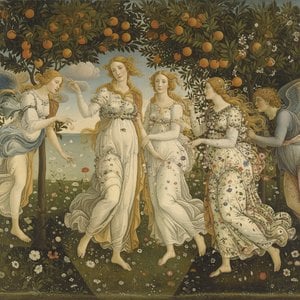
Raphael’s *The Three Graces*, housed in the prestigious Musée Condé in Chantilly, France, is a captivating embodiment of High Renaissance ideals. This oil painting isn't merely a depiction of mythological figures; it’s a celebration of idealized beauty, grace, and harmonious form that continues to resonate with viewers centuries later.
Subject & Mythological Roots
The artwork portrays the three Graces – Chastity (represented by the veiled figure on the left), Beauty, and Voluptas (or mature joy, embodied by the figure on the right). These figures originate from Greek mythology, daughters of Zeus and Euronyme, known for bestowing charm, beauty, creativity, and fertility. Raphael’s interpretation subtly hints at different stages of feminine development, adding layers of meaning to their serene presence. Each Grace delicately holds a red sphere – symbols often interpreted as representing the apple of discord or celestial bodies, hinting at themes of love, desire, and abundance.
Artistic Style & Technique
*The Three Graces* exemplifies Raphael’s mastery of *sfumato*, a technique pioneered by Leonardo da Vinci involving subtle gradations of light and shadow to create soft, almost ethereal forms. The composition is remarkably balanced and symmetrical, arranged in a gentle triangular formation that draws the eye across the figures. This deliberate arrangement reflects Renaissance principles of harmony and proportion. Raphael’s innovative approach lies in his depiction of the nude female form from both front and back views – a groundbreaking move for its time demonstrating his profound understanding of human anatomy and sculptural form. The delicate glazing technique imparts a luminous quality to the skin tones, enhancing their radiant beauty.
Historical Context & Influences
Created sometime after Raphael’s arrival in Urbino around 1500, *The Three Graces* reflects the burgeoning interest in classical mythology during the Italian Renaissance. While firmly rooted in Renaissance aesthetics, art historian Julia Cartwright suggests a notable influence from the Ferrarese school of painting, particularly its emphasis on elegant poses and refined color palettes. The work emerged during a period where artists were actively rediscovering and reinterpreting ancient Greek and Roman artistic traditions.
Interpretations & Debates
The artwork has sparked scholarly debate over its original context. Professor Erwin Panofsky proposed that it was intended as part of a diptych alongside *Vision of a Knight*, representing the Hesperides with golden apples. However, this theory remains contested by other art historians like Roger Jones and Nicholas Penny, who point to discrepancies in scale between the two works. Regardless of its original pairing, *The Three Graces* stands powerfully on its own as a testament to Raphael’s artistic genius.
Symbolism & Emotional Impact
Beyond their mythological identities, the Graces represent abstract virtues – purity, beauty, and joy. Their intertwined forms suggest harmony, connection, and the interconnectedness of these qualities. The painting evokes a sense of serenity, grace, and idealized beauty—qualities highly valued during the Renaissance. It’s an artwork that invites contemplation on themes of love, desire, and the enduring power of aesthetic perfection.
For Collectors & Interior Designers
- A Timeless Aesthetic: *The Three Graces* offers a classic Renaissance motif suitable for a variety of interior styles, from traditional to contemporary.
- Color Palette Versatility: The warm yellows, golds, and subtle reds complement many color schemes, adding a touch of sophistication and elegance.
- Focal Point Potential: Its balanced composition and captivating subject matter make it an ideal focal point for living rooms, bedrooms, or studies.
- A Statement Piece: A high-quality reproduction of this masterpiece elevates any space with a sense of artistic refinement and historical significance.
This painting is more than just a visual delight; it’s a window into the Renaissance mind, a celebration of human form, and an enduring symbol of beauty.
प्रश्न और उत्तर
ऐतिहासिक रूप से "The Three Graces" का स्थान क्या है?
ऐतिहासिक रूप से, "The Three Graces" व्यापक पुनर्जागरण युग की एक High Renaissance कृति है।
"The Three Graces" का वर्गाकार फॉर्मेट कहाँ प्रदर्शित करने की सलाह दी जाती है?
अपने वर्गाकार आकार के साथ, "The Three Graces" की यह प्रतिकृति लिविंग रूम के लिए उपयुक्त है।
"The Three Graces" किस कलाकार की रचना है?
"The Three Graces" की रचना राफेल द्वारा की गई थी। इस पृष्ठ पर दी गई जानकारी राफेल की मूल कृति का वर्णन करती है।
क्या मैं "The Three Graces" की ऑयल रिप्रोडक्शन (तेल चित्रकला प्रतिलिपि) ऑर्डर कर सकता हूँ?
आप यह पृष्ठ पर सीधे राफेल द्वारा "The Three Graces" की हाथ से पेंट की गई प्रतिकृति (reproduction) ऑर्डर कर सकते हैं: लिनन कैनवास पर हाथ से पेंट किया गया एक ऑयल रिप्रोडक्शन, जो विशेष रूप से आपके आदेश पर बनाई जाती है।
राफेल द्वारा "The Three Graces" में कंट्रास्ट का स्तर क्या है?
राफेल द्वारा "The Three Graces" का कंट्रास्ट स्तर कथन है।
राफेल द्वारा "The Three Graces" में कौन से रंग प्रमुख हैं?
राफेल द्वारा "The Three Graces" की रंग पहचान: एक मिट्टी के रंग जैसा पैलेट, जिसमें एस्प्रेसो जैसा गहरा भूरा (#3a1f27) का प्रभुत्व है।
क्या "The Three Graces" एक फाइन आर्ट प्रिंट के रूप में उपलब्ध है?
राफेल द्वारा "The Three Graces" की प्रिंट प्राप्त करने के लिए, बस यह पृष्ठ पर ऑर्डर करें: कॉटन कैनवास या आर्काइवल कैनवास पेपर पर एक फाइन आर्ट प्रिंट।



 पूर्वावलोकन देखें
 प्रिंट विकल्प पर जाएँ
 भेजें
भेजें साझा करें
 विवरण देखें
 मार्गदर्शिका

 डाउनलोड करें
 समान वस्तुएं
 एक्स-रे
 स्लाइड शो देखें
 आंकड़े

 और पढ़ें






































 ग्लास का विकल्प केवल 110 सेमी से कम आकार में ही उपलब्ध है।




![स्टान्ज़े वेटिकने - मंदिर से हेलियोडोरस का निष्कासन (विवरण) [02]](/media/artworks/images-thumb/3a/23/3a2308b63b60b5cb105575e135028d92.jpg)


