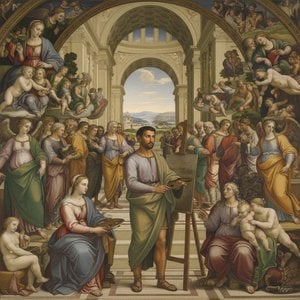
राफेल: पुनर्जागरण के सौंदर्य का प्रतीक
रफाएल, जिनका असली नाम राफेल सान्ज़ियो दा उरबीनो था, इतालवी कला इतिहास में एक अद्वितीय स्थान रखते हैं। 1483 में उरबीनो शहर में जन्मे राफेल ने अपनी कम उम्र में ही कला की दुनिया में क्रांति ला दी। उरबीनो, उस समय कला और संस्कृति का केंद्र था, जहाँ ड्यूक फेडरिको दा मोंटेफेल्ट्रो के संरक्षण में कलाकारों को फलने-फूलने का अवसर मिला था। उनके पिता जियोवानी सान्ती भी एक चित्रकार थे और उन्होंने राफेल को शुरुआती प्रशिक्षण दिया। बचपन से ही राफेल की प्रतिभा स्पष्ट थी, लेकिन उनके जीवन में एक महत्वपूर्ण मोड़ तब आया जब 11 साल की उम्र में उनके पिता की मृत्यु हो गई। इस घटना ने उन्हें परिवार के व्यवसाय को संभालने और अपनी कलात्मक कौशल को विकसित करने के लिए प्रेरित किया।
पिएत्रो पेरुगिनो से फ्लोरेंस तक: कलात्मक विकास
अपनी प्रारंभिक शिक्षा के बाद, राफेल पिएत्रो पेरुगिनो के अधीन प्रशिक्षु बने। पेरुगिनो के मार्गदर्शन में, उन्होंने उम्ब्रिया शैली की बारीकियों को सीखा, जो अपनी कोमल मॉडलिंग, सामंजस्यपूर्ण रचनाओं और शांत धार्मिक दृश्यों के लिए जानी जाती है। हालांकि, राफेल की जिज्ञासा उन्हें नई चुनौतियों की तलाश करने और अपने कलात्मक क्षितिज का विस्तार करने के लिए प्रेरित करती रही। 1504 में, उन्होंने फ्लोरेंस की यात्रा की, जो उस समय कलात्मक नवाचारों से भरा हुआ था। वहाँ, उन्होंने लियोनार्डो दा विंची और माइकल एंजेलो जैसे महान कलाकारों के कार्यों को देखा और उनसे प्रेरणा ली। लियोनार्डो की स्फुमाटो तकनीक, जिसमें प्रकाश और छाया के सूक्ष्म ग्रेडेशन का उपयोग किया जाता है, और माइकल एंजेलो की शक्तिशाली शारीरिक सटीकता और नाटकीय रचनाएँ राफेल के कलात्मक विकास में महत्वपूर्ण भूमिका निभाते हैं। फ्लोरेंस में बिताया गया समय राफेल के लिए एक परिवर्तनकारी अनुभव था, जिसने उन्हें अपनी अनूठी शैली विकसित करने में मदद की।
रोम में विजय: कमीशन और उत्कृष्ट कृतियाँ
1508 में, पोप जूलियस द्वितीय ने राफेल को रोम बुला लिया, जो उनके करियर का एक महत्वपूर्ण मोड़ साबित हुआ। रोम में, उन्हें कला के भव्य कार्यों को करने का अवसर मिला, जिससे उन्होंने वैटिकन के पैलेस की दीवारों को शानदार भित्ति चित्रों से सजाया। "स्कूल ऑफ एथेंस", उनकी सबसे प्रसिद्ध कृतियों में से एक है, जो मानव तर्क और ज्ञान की खोज का जश्न मनाता है। इस भित्ति चित्र में, राफेल ने प्लेटो, अरस्तू, पाइथागोरस और यूक्लिड जैसे प्राचीन काल के महान दार्शनिकों को एक साथ चित्रित किया है। उन्होंने बाद में पोप लियो एक्स के लिए भी कई महत्वपूर्ण परियोजनाएँ कीं, जिनमें स्टैंजा डेला सेग्नाटुरा और स्टैंजा डी'एलियोडोरो का अलंकरण शामिल था। राफेल के रोम के भित्ति चित्र न केवल सजावटी हैं, बल्कि वे पोप शक्ति, धार्मिक विश्वासों और पुनर्जागरण के आदर्शों पर गहन विचार व्यक्त करते हैं।
सौंदर्य और भव्यता का संश्लेषण: राफेल की कलात्मक शैली
राफेल की कलात्मक शैली को अक्सर सौंदर्य, स्पष्टता और आदर्शित सुंदरता के सामंजस्यपूर्ण मिश्रण के रूप में वर्णित किया जाता है। उनके पास रचनाओं की योजना बनाने की असाधारण क्षमता थी, जो पुनर्जागरण सिद्धांतों की गहरी समझ को दर्शाती है। उनकी आकृतियाँ शांत गरिमा और भावनात्मक अभिव्यक्ति का संचार करती हैं, जो मानव पूर्णता के मानवतावादी आदर्श को मूर्त रूप देती हैं। वे एक कुशल रंगज्ञ भी थे, जिन्होंने समृद्ध, चमकदार रंगों का उपयोग करके ऐसे कार्य बनाए जो न केवल नेत्रहीन आकर्षक हैं बल्कि बौद्धिक रूप से उत्तेजक भी हैं। माइकल एंजेलो की अक्सर नाटकीय और अशांत शैली के विपरीत, राफेल के कार्यों में शांति और सद्भाव की भावना है - एक ऐसी गुणवत्ता जिसने सदियों से दर्शकों को मोहित किया है।
विरासत और स्थायी प्रभाव
राफेल की असामयिक मृत्यु 1520 में मात्र 37 वर्ष की आयु में हुई, लेकिन उनकी विरासत कला इतिहास के सबसे महत्वपूर्ण आंकड़ों में से एक के रूप में जीवित रही। उनके कार्यों ने उच्च पुनर्जागरण सौंदर्यशास्त्र का आधार बनाया, जो पीढ़ियों के कलाकारों के लिए एक मॉडल बन गए। राफेल का प्रभाव अनगिनत कार्यों में देखा जा सकता है, जिससे पश्चिमी कला पर उनका स्थायी प्रभाव स्थापित हो गया है। उनकी कृतियाँ आज भी दर्शकों को आश्चर्य और प्रशंसा से भर देती हैं, अपनी तकनीकी प्रतिभा, भावनात्मक गहराई और चिरस्थायी अपील के साथ। वे वास्तव में पुनर्जागरण के एक महान स्वामी थे - एक चित्रकार जिन्होंने न केवल अपने विषयों की शारीरिक समानता को कैद किया बल्कि मानव गरिमा और सौंदर्य का सार भी दर्शाया।



 पूर्वावलोकन देखें
 हाथ से बनी पेंटिंग खरीदें
 साझा करें
 साझा करें
 विस्तृत विवरण
 मार्गदर्शिका

 डाउनलोड करें
 समान कलाकृतियाँ
 एक्स-रे
 स्लाइड शो देखें
 आंकड़े
 पूरा देखें






































 ग्लास का विकल्प केवल 110 सेमी से कम आकार में ही उपलब्ध है।