पूर्वावलोकन देखें AR में प्रीव्यू देखें हाथ से बनी पेंटिंग खरीदें डिजिटल इमेज पर जाएँ भेजें
विवरण देखें मार्गदर्शिका पसंदीदा में जोड़ें डाउनलोड करें समान वस्तुएं एक्स-रे स्लाइड शो देखें Q&A आंकड़े

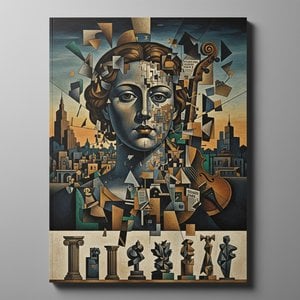
Maya with boat

A surrealist exploration of childhood innocence, Pablo Picasso's 1938 Maya with Boat uses fragmented Cubism to depict a woman cradling a boat, inviting you to explore the depths of this iconic masterpiece.

पाब्लो पिकासो (1881-1973) एक क्रांतिकारी स्पेनिश चित्रकार और मूर्तिकार थे, जो क्यूबिज्म के सह-संस्थापक और विविध शैलियों के उस्ताद थे। 'गुएर्निका' जैसी उत्कृष्ट कृतियों के लिए प्रसिद्ध, उनकी विरासत आज भी प्रेरित करती है।

इस पृष्ठ पर प्रदर्शित कलाकृति कॉपीराइट कानून द्वारा संरक्षित है, जिसका अर्थ है कि हम कानूनी रूप से इसकी हूबहू प्रतिलिपि बनाने या बेचने का अधिकार नहीं रखते हैं। यह संरक्षण अंतर्राष्ट्रीय समझौतों के तहत लागू किया जाता है, जैसे कि बर्न कन्वेंशन और राष्ट्रीय कानूनों द्वारा, जिनमें % द्वारा निर्धारित कानून भी शामिल हैं। अमेरिकी कॉपीराइट कानून - शीर्षक 17।

यह विधि कॉपीराइट नियमों का पूरी तरह से पालन करती है क्योंकि इसमें संरक्षित कलाकृति की नकल या प्रतिलिपि बनाना शामिल नहीं है। इसके बजाय, यह एक रचनात्मक पुनर्व्याख्या है - एक ऐसी नई पेंटिंग जो मूल कृति से प्रेरित तो है, लेकिन उसके समान नहीं है।

गिक्ली / आर्ट प्रिंट

तेज़ उत्पादन और विभिन्न फिनिश विकल्पों के साथ म्यूजियम-क्वालिटी गिकली (giclée) या कैनवस प्रिंट। ( हाथ से बनी पेंटिंग खरीदें डिजिटल इमेज पर जाएँ)

Corner sample of the P118B picture frame: मोल्डेड पॉलीस्टायरीन, 5 cm wide and 3 cm thick
P118B ₹10
Corner sample of the P118H picture frame: मोल्डेड पॉलीस्टायरीन, 5 cm wide and 3 cm thick
P118H ₹10
Corner sample of the P118W picture frame: मोल्डेड पॉलीस्टायरीन, 5 cm wide and 3 cm thick
P118W ₹10
Corner sample of the P438Z picture frame: मोल्डेड पॉलीस्टायरीन, 5.5 cm wide and 3.5 cm thick
P438Z ₹10
Corner sample of the P508JH picture frame: मोल्डेड पॉलीस्टायरीन, 7 cm wide and 3.5 cm thick
P508JH ₹12
Corner sample of the P508YH picture frame: मोल्डेड पॉलीस्टायरीन, 7 cm wide and 3.5 cm thick
P508YH ₹12
Corner sample of the P805H picture frame: मोल्डेड पॉलीस्टायरीन, 5 cm wide and 3.5 cm thick
P805H ₹10
Corner sample of the P805Z picture frame: मोल्डेड पॉलीस्टायरीन, 5 cm wide and 3.5 cm thick
P805Z ₹10
Corner sample of the P919BZ picture frame: मोल्डेड पॉलीस्टायरीन, 7 cm wide and 3.5 cm thick
P919BZ ₹10
Corner sample of the P919G picture frame: मोल्डेड पॉलीस्टायरीन, 7 cm wide and 3.5 cm thick
P919G ₹10
Corner sample of the P919XJ picture frame: मोल्डेड पॉलीस्टायरीन, 7 cm wide and 3.5 cm thick
P919XJ ₹10
Corner sample of the P959ZH picture frame: मोल्डेड पॉलीस्टायरीन, 5 cm wide and 3 cm thick
P959ZH ₹10
Corner sample of the P968JZ picture frame: मोल्डेड पॉलीस्टायरीन, 6 cm wide and 4 cm thick
P968JZ ₹12
Corner sample of the W106C picture frame: ठोस लकड़ी, 5 cm wide and 3 cm thick
W106C ₹8
Corner sample of the W218G picture frame: ठोस लकड़ी, 5 cm wide and 3 cm thick
W218G ₹10
Corner sample of the W218JH picture frame: ठोस लकड़ी, 5 cm wide and 3 cm thick
W218JH ₹8
Corner sample of the W218Y picture frame: ठोस लकड़ी, 5 cm wide and 3 cm thick
W218Y ₹10
Corner sample of the W307PJ picture frame: ठोस लकड़ी, 6 cm wide and 3 cm thick
W307PJ ₹10
Corner sample of the W316G picture frame: ठोस लकड़ी, 6 cm wide and 3 cm thick
W316G ₹10
Corner sample of the W316PJ picture frame: ठोस लकड़ी, 6 cm wide and 3 cm thick
W316PJ ₹8
Corner sample of the W316Y picture frame: ठोस लकड़ी, 6 cm wide and 3 cm thick
W316Y ₹10
Corner sample of the W398PJ picture frame: ठोस लकड़ी, 5 cm wide and 3 cm thick
W398PJ ₹8
Corner sample of the W4111J picture frame: ठोस लकड़ी, 6.5 cm wide and 3.5 cm thick
W4111J ₹10
Corner sample of the W500HY picture frame: ठोस लकड़ी, 7 cm wide and 5 cm thick
W500HY ₹15
Corner sample of the W500JH picture frame: ठोस लकड़ी, 7 cm wide and 5 cm thick
W500JH ₹15
Corner sample of the W692G picture frame: ठोस लकड़ी, 8 cm wide and 4 cm thick
W692G ₹12
Corner sample of the W849H picture frame: ठोस लकड़ी, 5 cm wide and 3 cm thick
W849H ₹8
Corner sample of the W940BG picture frame: ठोस लकड़ी, 7.5 cm wide and 4.5 cm thick
W940BG ₹15
Corner sample of the W953PJ picture frame: ठोस लकड़ी, 6 cm wide and 3.5 cm thick
W953PJ ₹8

मानक आकार
अनुकूलित
CM
INCH

कलाकृति के मूल अनुपात से मेल खाने वाले हमारे पूर्व निर्धारित आकारों में से चुनें।

चौड़ाई
ऊँचाई

अपने फ्रेम या अपनी दीवार के अनुसार आवश्यक चौड़ाई और ऊंचाई दर्ज करें। प्रिंट को केवल काटा जा सकता है, चित्र से बड़ा कभी नहीं बनाया जा सकता, इसलिए अलग आकार का साइज चित्र का एक हिस्सा खो देता है। किसी भी चीज़ को प्रिंट करने से पहले हम आपकी स्वीकृति के लिए आपको एक डिजिटल मॉकअप भेजते हैं। इस पृष्ठ पर दिखाया गया चित्र वास्तविक कटिंग नहीं दिखाता है — केवल मॉकअप ही इसे दर्शाता है।

विश्वव्यापी डिलीवरी (), मानक 4/5 सप्ताह के बजाय मात्र 2 सप्ताह में। (29 अक्टूबर)

दुनिया भर में मुफ़्त एक्सप्रेस शिपिंग
प्रीमियम ग्रेड लिनेन कैनवास
पूर्ण शिपिंग बीमा
सीमा शुल्क और आयात कर वापसी की गारंटी
सटीक रंग मिलान की गारंटी
100 दिनों की वापसी नीति (केवल निर्माण दोष होने पर)
100% पैसे वापसी की गारंटी
थोक छूट का अवसर

कुल कीमत

₹ 6532

Maya with boat

गिक्ली / आर्ट प्रिंट

प्रतिकृति का आकार

-

कुल मूल्य

₹ 6532

मुख्य विवरण

  • Movement: Surrealism
  • Subject or theme: Childhood innocence; Symbolic representation
  • Notable elements or techniques: Fragmented figure; Bold color contrasts; Flat composition
  • Medium: Oil on Canvas
  • Year: 1938
  • Dimensions: 61 x 46 cm

कला प्रश्नोत्तरी

प्रत्येक प्रश्न का केवल एक ही सही उत्तर है।

प्रश्न 1:
What artistic movement is Pablo Picasso’s ‘Maya with Boat’ primarily associated with?
प्रश्न 2:
Who was Olga Khokhlova, and why is she referenced in the painting?
प्रश्न 3:
What symbolic element appears on the left side of the canvas, contributing to the painting's overall visual experience?
प्रश्न 4:
The painting reflects Picasso’s reaction to what significant historical event?
प्रश्न 5:
What technique is most characteristic of ‘Maya with Boat,’ distinguishing it from traditional painting styles?

Pablo Picasso’s “Maya with Boat”: A Surrealist Exploration of Childhood Innocence

Pablo Picasso's "Maya with Boat," painted in 1938, stands as a cornerstone of Surrealist art—a bold declaration that challenges conventional artistic boundaries and delves into the subconscious realm. Measuring 61 x 46 cm, this oil on canvas masterpiece captures a moment frozen in time, presenting a woman cradling a boat, an image imbued with layers of symbolism and reflecting Picasso’s personal life during his marriage to Olga Khokhlova. At https://WahooArt.com, we unravel the complexities of this iconic artwork, examining its artistic innovations and enduring relevance in modern art history.

Composition and Symbolism: Fractured Reality

The painting’s visual arrangement is deliberately unsettling yet profoundly evocative. Picasso employs a fragmented perspective—characteristic of Cubism—to depict Maya, Khokhlova's daughter, holding the boat aloft. The woman’s elongated torso and stylized hairstyle mirror Khokhlova herself, subtly anchoring the image in reality while simultaneously elevating it to an ethereal plane. Scattered across the canvas are elements that amplify this duality: a clock positioned on the left side symbolizes time passing, juxtaposed against the stillness of Maya's posture; a chair resides in the lower right corner, representing domestic comfort and stability—elements deliberately placed in opposition to create visual tension. Furthermore, bowls strategically positioned center stage and above contribute to the overall sense of balance and harmony, despite the fractured aesthetic. These objects aren’t merely decorative; they serve as conduits for conveying deeper meanings related to memory, contemplation, and perhaps even anxieties about the future.

Historical Context: Guernica's Shadow

“Maya with Boat” emerged during a turbulent period in Picasso’s artistic career—immediately following the devastating bombing of Guernica during the Spanish Civil War. Like “Weeping Woman,” this painting reflects Picasso’s visceral reaction to political violence and suffering, channeling his emotional turmoil into an artistic idiom that prioritizes psychological depth over literal representation. The Surrealist movement itself was born from disillusionment with rational thought and fueled by anxieties surrounding societal upheaval—themes powerfully conveyed in "Maya with Boat." Picasso's exploration of dreamlike imagery aligns perfectly with the Surrealists’ desire to liberate art from the constraints of realism, inviting viewers to confront unsettling truths about human experience.

Artistic Style: Cubist Fragmentation Meets Dreamlike Emotion

Picasso’s masterful technique exemplifies the core principles of Surrealism—a fusion of disparate visual elements that disrupts conventional perception. The painting's flatness defies traditional perspective, emphasizing instead the emotional impact of the scene. Picasso utilizes bold color palettes—primarily blues and yellows—to heighten dramatic effect, mirroring the intensity of his artistic vision. The angularity of Maya’s torso and costume reflects Cubist influence, demonstrating Picasso’s commitment to dismantling established artistic conventions. Yet, beneath this geometric rigor lies a palpable sense of melancholy and tenderness—a testament to Picasso's ability to capture profound human emotion through abstract forms.

Relevance in Modern Art: Bourgeois Legacy & Beyond

“Maya with Boat” resonates powerfully within the broader context of 20th-century art history, alongside works by Louise Joséphine Bourgeois, whose own explorations of psychological landscapes share a similar preoccupation with confronting inner turmoil. The Museum Öffentliche Kunstsammlung (Basel, Switzerland) houses an impressive collection showcasing Picasso’s groundbreaking contributions to Surrealism and Cubism—a testament to his enduring influence on subsequent generations of artists. At https://WahooArt.com, we offer meticulously crafted oil painting reproductions of “Maya with Boat,” allowing you to experience the artwork's captivating beauty and intellectual depth firsthand. Explore more Picasso masterpieces at https://WahooArt.com.

प्रश्न और उत्तर

मैं पाब्लो पिकासो द्वारा "Maya with boat" का प्रिंट कैसे प्राप्त कर सकता हूँ?

"Maya with boat" कॉटन कैनवास या आर्काइवल कैनवास पेपर पर एक फाइन आर्ट प्रिंट के रूप में उपलब्ध है। ऑर्डर इसके फाइन आर्ट प्रिंट पेज पर अपनी पसंद के आकार में दिए जा सकते हैं।

पाब्लो पिकासो द्वारा "Maya with boat" के लिए किस स्थान का सुझाव दिया गया है?

पाब्लो पिकासो द्वारा "Maya with boat" के लिए अनुशंसित स्थान एक Living Room है। बेशक, इस सुझाव को आपके इंटीरियर के अनुसार बदला जा सकता है।

पाब्लो पिकासो द्वारा "Maya with boat" की रचना में कौन सा रंग प्रमुख है?

Gray (#65755e), पाब्लो पिकासो द्वारा "Maya with boat" का प्रमुख रंग है।


कलाकार का परिचय

पाब्लो पिकासो की चिरस्थायी विरासत

पाब्लो रुइज़ वाई पिकासो, एक ऐसा नाम जो कलात्मक क्रांति का पर्याय है, उनका जन्म 25 अक्टूबर 1881 को मलागा, स्पेन में हुआ था। उनका अस्तित्व ही रचनात्मक अभिव्यक्ति के लिए नियत प्रतीत होता था; किंवदंती है कि उनके पहले बोले गए शब्द “पिज, पिज़” थे, जो 'पेंसिल' कहने का एक प्रयास था। इस प्रारंभिक झुकाव को उनके पिता, जोसे रुइज़ वाई ब्लास्को द्वारा पोषित किया गया, जो एक चित्रकार और कला शिक्षक थे, जिन्होंने युवा पाब्लो को बुनियादी प्रशिक्षण प्रदान किया। हालाँकि, छात्र ने जल्द ही अपने प्रशिक्षक को पीछे छोड़ दिया, और प्राकृतिक चित्रण के लिए एक उल्लेखनीय योग्यता का प्रदर्शन किया जिसने उनके भीतर छिपी असाधारण प्रतिभा का संकेत दिया। परिवार के बाद के प्रवास – पहले ए कोरुना, फिर बार्सिलोना – व्यक्तिगत त्रासदियों से चिह्नित थे, विशेष रूप से पिकासो की बहन का निधन, ऐसे अनुभव जिन्होंने सूक्ष्म रूप से उनके बाद के कार्यों में उदासी और मृत्यु दर के विषयों को भर दिया। बार्सिलोना के स्कूल ऑफ फाइन आर्ट्स में औपचारिक अध्ययन और मैड्रिड के रॉयल एकेडमी ऑफ सैन फर्नांडो में एक संक्षिप्त कार्यकाल के दौरान भी, पिकासो ने कठोर शैक्षणिक सीमाओं का विरोध किया, और इसके बजाय वेल्ज़क्वेज़ और गोया जैसे उस्तादों की कृतियों में खुद को डुबोना पसंद किया, जिससे उन्होंने कलात्मक नवाचार की ओर अपना स्वयं का मार्ग बनाया।

उदासी के नीले रंग से गुलाबी आभा तक

20वीं सदी के शुरुआती वर्षों ने पिकासो की कला में दो अलग-अलग कालखंडों का उदय देखा: नीला दौर (लगभग 1901-1904) और गुलाबी दौर (1904-1906)। नीला दौर, जो व्यक्तिगत कठिनाइयों और सामाजिक पीड़ा के प्रति गहरी संवेदनशीलता से उपजा था, नीले और नीले-हरे रंग की गंभीर छायाओं में डूबी पेंटिंग्स के लिए जाना जाता है। इन कृतियों में हाशिए पर रहने वाले पात्र – भिखारी, अंधे, वेश्याएं – एक ऐसे मर्मस्पर्शी सहानुभूति के साथ चित्रित हैं जो अलगाव और निराशा के विषयों को व्यक्त करते हैं। ला वी (1903) और द ओल्ड गिटारिस्ट (1903-1904) इस भावनात्मक रूप से आवेशित चरण के मार्मिक उदाहरण हैं। पिकासो के व्यक्तिगत जीवन में आए बदलाव और पेरिस प्रवास ने गुलाबी दौर के आगमन की घोषणा की। उनके रंगों का पैलेट काफी गर्म हो गया, जिसमें गुलाबी, नारंगी और लाल रंगों को अपनाया गया, जो एक अधिक आशावादी दृष्टिकोण को दर्शाता था। इस काल में सर्कस के कलाकारों – हार्लेक्विन, कलाबाज और पारिवारिक समूहों – के प्रति आकर्षण देखा गया, वे पात्र जो नाजुकता और लचीलेपन दोनों का प्रतीक थे। फैमिली ऑफ साल्टिम्बैंक्स (1905) इस परिवर्तन को खूबसूरती से समेटता है, जो आगे आने वाले शैलीगत अन्वेषणों की ओर संकेत करता है।

परिप्रेक्ष्य का विखंडन: क्यूबिज्म और उससे परे

वर्ष 1907 कला के इतिहास में लेस डेमोसेल्स डी’एविग्नन के निर्माण के साथ एक महत्वपूर्ण मोड़ लेकर आया। इबेरियन मूर्तिकला और अफ्रीकी मुखौटों से प्रभावित, इस क्रांतिकारी पेंटिंग ने परिप्रेक्ष्य और प्रतिनिधित्व की पारंपरिक धारणाओं को तोड़ दिया। यह सदियों पुरानी परंपराओं का एक पूर्ण त्याग था, जिसने क्यूबिज्म (घनवाद) का मार्ग प्रशकी। जॉर्जेस ब्राक के साथ घनिष्ठ सहयोग करते हुए, पिकासो ने इस क्रांतिकारी आंदोलन की सह-स्थापना की, जिससे कलाकारों द्वारा वास्तविकता को देखने और चित्रित करने के तरीके में मौलिक परिवर्तन आया। विश्लेषणात्मक क्यूबिज्म (1909-1912) में वस्तुओं को ज्यामितीय आकृतियों में विभाजित किया गया था, जिन्हें मद्धम रंगों में प्रस्तुत किया गया था, जैसे कि स्वयं रूप का विच्छेदन किया जा रहा हो। यह बाद में सिंथेटिक क्यूबिज्म (1912-1919) में विकसित हुआ, जिसमें कोलाज तत्वों – समाचार पत्रों की कतरनें, कपड़े के टुकड़े – को शामिल किया गया, जिससे बनावट और दृश्य जटिलता की नई परतें जुड़ गईं। पिकासो केवल दुनिया का प्रतिनिधित्व करने से संतुष्ट नहीं थे; उन्होंने इसे अपने तरीके से विखंडित करने और पुनर्गठित करने का प्रयास किया।

एक बेचैन प्रयोगवादी: नवशास्त्रीयवाद, अतियथार्थवाद और युद्ध

1920 के दशक में पिकासो ने संक्षिप्त रूप से नवशास्त्रीय शैलियों का अन्वेषण किया, ऐसी विशाल आकृतियाँ बनाईं जो आधुनिक संवेदनशीलता बनाए रखते हुए शास्त्रीय रूपों की प्रतिध्वनि करती थीं। साथ ही, उन्होंने उभरते हुए अतियथार्थवादी (Surrealist) आंदोलन के साथ भी जुड़ाव किया, हालांकि वे कभी भी पूरी तरह से इसके सिद्धांतों के साथ संरेखित नहीं हुए। इस अवधि के दौरान उनके कार्य ने प्रारंभिक शैलीगत प्रभावों को अतियथार्थवादी कल्पना और विकृत परिप्रेक्ष्य के साथ मिश्रित किया, जो उनके निरंतर प्रयोगों को प्रदर्शित करता है। स्पेनिश गृहयुद्ध की भयावहता ने पिकासो को गहराई से प्रभावित किया, जिसका चरमोत्कर्ष गुएर्निका (1937) के निर्माण में हुआ, जो गुएर्निका की बमबारी के प्रति एक मर्मभेदी और भावनात्मक रूप से विनाशकारी प्रतिक्रिया थी। यह स्मारकीय कृति युद्ध की अत्याचारों का एक स्थायी प्रतीक बन गई, जिसने न केवल एक कलाकार के रूप में बल्कि शांति और सामाजिक न्याय के लिए एक शक्तिशाली आवाज के रूप में पिकासो की भूमिका को सुदृढ़ किया। 1950 और 60 के दशक के दौरान, उन्होंने अटूट जिज्ञासा और कौशल के साथ सिरेमिक, मूर्तिकला और प्रिंटमेकिंग का पता लगाते हुए सीमाओं को आगे बढ़ाना जारी रखा। 1961 में जैकलिन रोके के साथ उनके विवाह ने उनके व्यक्तिगत जीवन और कलात्मक अभिव्यक्ति में एक नया आयाम जोड़ा।

एक असीमित प्रभाव

पाब्लो पिकासो का निधन 8 अप्रैल, 1973 को मौजिन्स, फ्रांस में हुआ, वे अपने पीछे कार्यों का एक आश्चर्यजनक भंडार छोड़ गए – जिसका अनुमान 50,000 से अधिक कृतियों का है – जो आज भी मंत्रमुग्ध और प्रेरित करता है। उनके कलात्मक विकास को विविध प्रभावों ने आकार दिया, जिसमें वेल्ज़क्वेज़ और गोया जैसे स्पेनिश उस्तादों से लेकर इबेरियन मूर्तिकला, अफ्रीकी कला और हेनरी मातिस के जीवंत रंग पैलेट तक शामिल थे। 20वीं सदी की कला पर उनका प्रभाव असीमित है। उन्होंने क्यूबिज्म की सह-स्थापना की, कोलाज और निर्मित मूर्तिकला का नेतृत्व किया, और लगातार कलात्मक परंपराओं को चुनौती दी। पिकासो के निरंतर प्रयोगों ने आधुनिक कला को पुनरपरिभाषित किया, कलाकारों की पीढ़ियों पर एक अमिट छाप छोड़ी और इतिहास के सबसे महत्वपूर्ण और प्रभावशाली व्यक्तित्वों में से एक के रूप में अपनी स्थिति मजबूत की। उनकी विरासत कैनवास से परे तक फैली हुई है, जो समकालीन संस्कृति के अनगिनत पहलुओं में गूंजती है और हमें कलात्मक दृष्टि की परिवर्तनकारी शक्ति की याद दिलाती है।

पाब्लो पिकासो

पाब्लो पिकासो

1881 - 1973 , स्पेन

संक्षिप्त जानकारी

  • Artistic Movement Or Style: क्यूबिज्म, अतियथार्थवाद
  • Artists Or Movements Influenced By This Artist:
    • क्यूबिज्म
    • आधुनिक कला
  • Artists Who Influenced This Artist:
    • वेलज़क्वेज़
    • गोया
    • मातिस
  • Date Of Birth: 25 अक्टूबर 1881
  • Date Of Death: 8 अप्रैल 1973
  • Full Name: पाब्लो रुइज़ पिकासो
  • Nationality: स्पेनिश
  • Notable Artworks:
    • लेस डेमेइसल्स डी'एविग्नन
    • ग्वेर्निका
    • द ओल्ड गिटारिस्ट
    • ला विए
    • फैमिली ऑफ़ साल्टिम्बैंक्स
  • Place Of Birth: मलागा, स्पेन
विषयों, शैलियों और विशेषताओं के आधार पर व्यवस्थित कलाकृतियों का अन्वेषण करें।