पूर्वावलोकन देखें AR में प्रीव्यू देखें हाथ से बनी पेंटिंग खरीदें डिजिटल इमेज पर जाएँ भेजें
विवरण देखें मार्गदर्शिका पसंदीदा में जोड़ें डाउनलोड करें समान वस्तुएं एक्स-रे स्लाइड शो देखें आंकड़े

About Young Sister

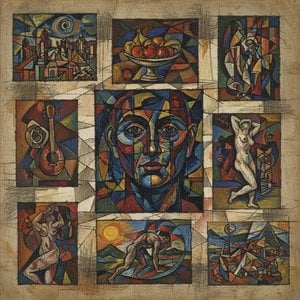
Explore Marcel Duchamp’s "About Young Sister" (1911). An abstract Expressionist piece featuring muted tones & layered textures, embodying early 20th-century art's innovative spirit.

मार्सेल डुशांप एक फ्रांसीसी-अमेरिकी कलाकार थे जिन्होंने 'फाउंटेन' जैसी कलाकृतियों से कला की परिभाषा को चुनौती दी। दादावाद और रेडीमेड कला के अग्रणी, उनकी रचनाएँ आधुनिक कला पर गहरा प्रभाव छोड़ती हैं।

इस पृष्ठ पर प्रदर्शित कलाकृति कॉपीराइट कानून द्वारा संरक्षित है, जिसका अर्थ है कि हम कानूनी रूप से इसकी हूबहू प्रतिलिपि बनाने या बेचने का अधिकार नहीं रखते हैं। यह संरक्षण अंतर्राष्ट्रीय समझौतों के तहत लागू किया जाता है, जैसे कि बर्न कन्वेंशन और राष्ट्रीय कानूनों द्वारा, जिनमें % द्वारा निर्धारित कानून भी शामिल हैं। अमेरिकी कॉपीराइट कानून - शीर्षक 17।

यह विधि कॉपीराइट नियमों का पूरी तरह से पालन करती है क्योंकि इसमें संरक्षित कलाकृति की नकल या प्रतिलिपि बनाना शामिल नहीं है। इसके बजाय, यह एक रचनात्मक पुनर्व्याख्या है - एक ऐसी नई पेंटिंग जो मूल कृति से प्रेरित तो है, लेकिन उसके समान नहीं है।

गिक्ली / आर्ट प्रिंट

तेज़ उत्पादन और विभिन्न फिनिश विकल्पों के साथ म्यूजियम-क्वालिटी गिकली (giclée) या कैनवस प्रिंट। ( हाथ से बनी पेंटिंग खरीदें डिजिटल इमेज पर जाएँ)

Corner sample of the P118B picture frame: मोल्डेड पॉलीस्टायरीन, 5 cm wide and 3 cm thick
P118B ₹10
Corner sample of the P118H picture frame: मोल्डेड पॉलीस्टायरीन, 5 cm wide and 3 cm thick
P118H ₹10
Corner sample of the P118W picture frame: मोल्डेड पॉलीस्टायरीन, 5 cm wide and 3 cm thick
P118W ₹10
Corner sample of the P438Z picture frame: मोल्डेड पॉलीस्टायरीन, 5.5 cm wide and 3.5 cm thick
P438Z ₹10
Corner sample of the P508JH picture frame: मोल्डेड पॉलीस्टायरीन, 7 cm wide and 3.5 cm thick
P508JH ₹12
Corner sample of the P508YH picture frame: मोल्डेड पॉलीस्टायरीन, 7 cm wide and 3.5 cm thick
P508YH ₹12
Corner sample of the P805H picture frame: मोल्डेड पॉलीस्टायरीन, 5 cm wide and 3.5 cm thick
P805H ₹10
Corner sample of the P805Z picture frame: मोल्डेड पॉलीस्टायरीन, 5 cm wide and 3.5 cm thick
P805Z ₹10
Corner sample of the P919BZ picture frame: मोल्डेड पॉलीस्टायरीन, 7 cm wide and 3.5 cm thick
P919BZ ₹10
Corner sample of the P919G picture frame: मोल्डेड पॉलीस्टायरीन, 7 cm wide and 3.5 cm thick
P919G ₹10
Corner sample of the P919XJ picture frame: मोल्डेड पॉलीस्टायरीन, 7 cm wide and 3.5 cm thick
P919XJ ₹10
Corner sample of the P959ZH picture frame: मोल्डेड पॉलीस्टायरीन, 5 cm wide and 3 cm thick
P959ZH ₹10
Corner sample of the P968JZ picture frame: मोल्डेड पॉलीस्टायरीन, 6 cm wide and 4 cm thick
P968JZ ₹12
Corner sample of the W106C picture frame: ठोस लकड़ी, 5 cm wide and 3 cm thick
W106C ₹8
Corner sample of the W218G picture frame: ठोस लकड़ी, 5 cm wide and 3 cm thick
W218G ₹10
Corner sample of the W218JH picture frame: ठोस लकड़ी, 5 cm wide and 3 cm thick
W218JH ₹8
Corner sample of the W218Y picture frame: ठोस लकड़ी, 5 cm wide and 3 cm thick
W218Y ₹10
Corner sample of the W307PJ picture frame: ठोस लकड़ी, 6 cm wide and 3 cm thick
W307PJ ₹10
Corner sample of the W316G picture frame: ठोस लकड़ी, 6 cm wide and 3 cm thick
W316G ₹10
Corner sample of the W316PJ picture frame: ठोस लकड़ी, 6 cm wide and 3 cm thick
W316PJ ₹8
Corner sample of the W316Y picture frame: ठोस लकड़ी, 6 cm wide and 3 cm thick
W316Y ₹10
Corner sample of the W398PJ picture frame: ठोस लकड़ी, 5 cm wide and 3 cm thick
W398PJ ₹8
Corner sample of the W4111J picture frame: ठोस लकड़ी, 6.5 cm wide and 3.5 cm thick
W4111J ₹10
Corner sample of the W500HY picture frame: ठोस लकड़ी, 7 cm wide and 5 cm thick
W500HY ₹15
Corner sample of the W500JH picture frame: ठोस लकड़ी, 7 cm wide and 5 cm thick
W500JH ₹15
Corner sample of the W692G picture frame: ठोस लकड़ी, 8 cm wide and 4 cm thick
W692G ₹12
Corner sample of the W849H picture frame: ठोस लकड़ी, 5 cm wide and 3 cm thick
W849H ₹8
Corner sample of the W940BG picture frame: ठोस लकड़ी, 7.5 cm wide and 4.5 cm thick
W940BG ₹15
Corner sample of the W953PJ picture frame: ठोस लकड़ी, 6 cm wide and 3.5 cm thick
W953PJ ₹8

मानक आकार
अनुकूलित
CM
INCH

कलाकृति के मूल अनुपात से मेल खाने वाले हमारे पूर्व निर्धारित आकारों में से चुनें।

चौड़ाई
ऊँचाई

अपने फ्रेम या अपनी दीवार के अनुसार आवश्यक चौड़ाई और ऊंचाई दर्ज करें। प्रिंट को केवल काटा जा सकता है, चित्र से बड़ा कभी नहीं बनाया जा सकता, इसलिए अलग आकार का साइज चित्र का एक हिस्सा खो देता है। किसी भी चीज़ को प्रिंट करने से पहले हम आपकी स्वीकृति के लिए आपको एक डिजिटल मॉकअप भेजते हैं। इस पृष्ठ पर दिखाया गया चित्र वास्तविक कटिंग नहीं दिखाता है — केवल मॉकअप ही इसे दर्शाता है।

विश्वव्यापी डिलीवरी (), मानक 4/5 सप्ताह के बजाय मात्र 2 सप्ताह में। (28 अक्टूबर)

दुनिया भर में मुफ़्त एक्सप्रेस शिपिंग
प्रीमियम ग्रेड लिनेन कैनवास
पूर्ण शिपिंग बीमा
सीमा शुल्क और आयात कर वापसी की गारंटी
सटीक रंग मिलान की गारंटी
100 दिनों की वापसी नीति (केवल निर्माण दोष होने पर)
100% पैसे वापसी की गारंटी
थोक छूट का अवसर

कुल कीमत

₹ 6532

About Young Sister

गिक्ली / आर्ट प्रिंट

प्रतिकृति का आकार

-

कुल मूल्य

₹ 6532

मुख्य विवरण

  • year: 1911
  • movement:
    • Early Expressionism
    • Cubism
  • notable elements:
    • Muted color palette
    • Loose brushwork
    • Amorphous shapes
    • Abstraction
  • style: Abstract, Painterly
  • subject: Seated figure playing a musical instrument (possibly violin)

कला प्रश्नोत्तरी

प्रत्येक प्रश्न का केवल एक ही सही उत्तर है।

प्रश्न 1:
In what year was Marcel Duchamp's 'About Young Sister' created?
प्रश्न 2:
Which artistic movements are most closely associated with the style of 'About Young Sister'?
प्रश्न 3:
What is the approximate size of 'About Young Sister'?
प्रश्न 4:
The color palette of 'About Young Sister' is best described as:
प्रश्न 5:
What technique is prominently used in 'About Young Sister' to create texture?

About “About Young Sister” – A Glimpse into Duchamp’s Early Style

Marcel Duchamp's *About Young Sister*, painted in 1911, offers a fascinating window into the artist’s formative period—a time of stylistic exploration before his radical departures into Conceptual Art. This 73 x 60 cm canvas isn’t a straightforward portrait; rather, it’s an evocative study of form and atmosphere, hinting at a figure engaged with music while simultaneously dissolving into abstraction.

Subject & Composition

The artwork centers on a seated individual, strongly suggested to be playing a stringed instrument – likely a violin – though the depiction is far from literal. The figure isn’t sharply defined; instead, it emerges from and blends with large, amorphous shapes that surround it. Duchamp deliberately positions the subject slightly off-center, creating a dynamic tension within the composition. These surrounding forms aren't merely background elements but active participants in defining space and mood.

Style & Technique

*About Young Sister* showcases Duchamp’s early leanings towards both Expressionism and Cubism. Visible brushstrokes and a loose, painterly style dominate the surface, prioritizing emotional expression over precise representation. The color palette is deliberately muted – primarily beige, brown, and gray – contributing to a somber yet contemplative atmosphere. Duchamp employs expressive lines to delineate forms, favoring soft transitions over harsh edges. Layering of paint creates texture and depth, while the diffused lighting minimizes strong contrasts, flattening the image plane. The lack of traditional perspective further emphasizes this flatness, relying instead on spatial relationships between shapes.

Historical Context & Artistic Evolution

Created in 1911, *About Young Sister* predates Duchamp’s most famous and provocative works like *Fountain*. It represents a crucial stage in his artistic development, demonstrating his engagement with the avant-garde movements of the time. While still rooted in representational painting, the work foreshadows his later rejection of traditional artistic conventions. Duchamp was beginning to question the very definition of art, moving away from purely “retinal” experiences (pleasing the eye) towards works that engaged the intellect.

Symbolism & Emotional Impact

The piece evokes a sense of introspection and perhaps melancholy. The abstracted form of the figure and the muted color scheme contribute to this mood. The musical instrument suggests themes of creativity, expression, and possibly longing. The ambiguity inherent in the work invites viewers to project their own interpretations onto it, fostering a personal connection with the artwork. It’s not simply *about* a young sister; it's about memory, emotion, and the elusive nature of perception.

For Collectors & Designers

*About Young Sister* is an exceptional example of Duchamp’s early work, offering collectors a rare opportunity to acquire a piece that demonstrates his artistic transition. Its subdued palette and abstract forms make it incredibly versatile for interior design. It would complement modern or minimalist spaces, adding depth and sophistication without overwhelming the room.
  • Ideal for living rooms, studies, or bedrooms.
  • Pairs well with neutral color schemes and natural materials.
  • A conversation starter that showcases discerning taste.
This artwork is a testament to Duchamp’s genius – even in his early explorations, he was challenging conventions and paving the way for a new era of artistic expression.

प्रश्न और उत्तर

मार्सेल डुशाँ द्वारा "About Young Sister" में रंगों का संतृप्ति स्तर (saturation) कैसा है?

मार्सेल डुशाँ द्वारा "About Young Sister" के रंगों में Balanced Soft संतृप्ति (saturation) है। संतृप्ति यह बताती है कि रंग कितने जीवंत या मंद हैं।

"About Young Sister" में मार्सेल डुशाँ की अन्य कृतियों के साथ क्या समानता है?

मार्सेल डुशाँ की कृतियों के बीच, "About Young Sister" में Expressionism शैली के साथ-साथ cubist & expressionist blend, rejection of realism's gaze, challenging artistic norms, dada's spirit, subtle shift, exploring inner perception, sisterhood and introspection, early experimentation" के विषय देखने को मिलते हैं।

मार्सेल डुशाँ द्वारा "About Young Sister" का भावनात्मक स्वर क्या है?

मार्सेल डुशाँ द्वारा "About Young Sister" के लिए दर्ज किया गया भावनात्मक स्वर Melancholic है। यह उस भावना का सार प्रस्तुत करता है जो यह कृति व्यक्त करती है।


कलाकार का परिचय

मार्सेल डुशांप: कला के पारंपरिक विचारों को चुनौती देने वाला एक क्रांतिकारी

मार्सेल डुशांप, जिनका जन्म हेनरी-रॉबर्ट-मार्सेल डुशांप 1887 में ब्लैनविले-सुर-मर्, नॉर्मंडी, फ्रांस में हुआ था, सिर्फ एक कलाकार ही नहीं थे; वे एक दार्शनिक उत्तेजक थे जिन्होंने आधुनिक कला के पाठ्यक्रम को मौलिक रूप से बदल दिया। उनका प्रारंभिक जीवन, जो प्रतीत होता है कि पारंपरिक है - उनकी दोनों भाइयों ने सफल कलाकारों के रूप में करियर बनाया - आने वाले विध्वंस का संकेत देता था। डुशांप ने शुरू में औपचारिक प्रशिक्षण लिया, पारंपरिक तकनीकों में महारत हासिल की और पोस्ट-इंप्रेशनिस्ट शैलियों के साथ प्रयोग किया। हालाँकि, यह अकादमिक नींव अपने आप में एक अंत नहीं थी, बल्कि कला की प्रकृति, इसके उद्देश्य और इसकी परिभाषा पर सवाल उठाने के लिए एक शुरुआती बिंदु थी। वह दुनिया को चित्रित करने से संतुष्ट नहीं थे; उन्होंने चुनौती दी कि हम इसे कैसे देखते हैं, और कलात्मक मूल्य क्या है। उनकी यह बेचैन बौद्धिक जिज्ञासा उनके विपुल करियर की परिभाषित विशेषता बन जाएगी।

क्यूबिज्म से दादावाद: परंपरा का त्याग

डुशांप की कलात्मक यात्रा निरंतर विकास के साथ चिह्नित थी, स्थापित मानदंडों को जानबूझकर त्यागने के साथ। क्यूबिज्म के साथ उनका प्रारंभिक जुड़ाव, *चेस प्लेयर्स का चित्र* (1911) में स्पष्ट है, जो खंडित रूपों और कई दृष्टिकोणों में रुचि दर्शाता है - पारंपरिक प्रतिनिधित्व से एक प्रस्थान। हालाँकि, उन्होंने जल्द ही विशुद्ध रूप से सौंदर्य संबंधी चिंताओं से आगे बढ़ गए, यह महसूस करते हुए कि केवल दृश्य तत्वों को पुनर्व्यवस्थित करना गहरे सवालों का समाधान करने के लिए पर्याप्त नहीं था। प्रथम विश्व युद्ध की भयावहता ने इस असंतोष को बढ़ावा दिया, जिससे डुशांप दादावाद को अपनाने के लिए प्रेरित हुआ, एक आंदोलन जो निराशा और तर्क, कारण और पारंपरिक कलात्मक मूल्यों के अस्वीकरण से पैदा हुआ था। दादावादी ढांचे के भीतर ही डुशांप ने वास्तव में कला की पारंपरिक धारणाओं को ध्वस्त करना शुरू कर दिया। वह सुंदर वस्तुओं का निर्माण करने में रुचि नहीं रखते थे; वे विचारोत्तेजक करना चाहते थे, मान्यताओं को चुनौती देना चाहते थे और सौंदर्य संबंधी निर्णय की मनमानी को उजागर करना चाहते थे। इस अवधि ने उनका सबसे कट्टरपंथी नवाचार देखा: 'रेडीमेड'।

रेडीमेड्स और कला के विघटन

रेडीमेड्स - चयनित और कला के रूप में प्रस्तुत साधारण निर्मित वस्तुएं - 20वीं सदी में डुशांप का सबसे महत्वपूर्ण योगदान था। ये केवल पाई गई वस्तुएँ नहीं थीं; वे कलात्मक विघटन के जानबूझकर किए गए कार्य थे। एक रोजमर्रा की वस्तु, जैसे कि एक मूत्रालय (*फౌंटेन*, 1917), को "आर. मट" नाम से हस्ताक्षर करके और इसे कला प्रदर्शनी में प्रस्तुत करके, डुशांप कलात्मक कौशल और लेखकत्व की बहुत परिभाषा को चुनौती दी। क्या काम कलाकार के हाथ का निर्माण था, या कलाकार का *विचार*? यह सवाल उनके अभ्यास के केंद्र में आ गया और इसने अवधारणात्मक कला के लिए मार्ग प्रशस्त किया। अन्य उल्लेखनीय रेडीमेड्स जैसे कि *एल.एच.ओ.ओ.क्यू.* (1919), मोना लिसा की एक पोस्टकार्ड प्रतिकृति जिसे मूंछ और दाढ़ी से विकृत किया गया था, कला इतिहास और स्थापित सांस्कृतिक प्रतीकों की चंचल लेकिन तीखी आलोचना थी। ये काम अपनी सौंदर्य गुणवत्ता के लिए सराहनीय होने का इरादा नहीं था; वे दर्शकों को उनके पूर्वकल्पित विचारों पर पुनर्विचार करने के लिए प्रेरित करने के उद्देश्य से थे कि क्या कला है। डुशांप का मानना ​​था कि कला मन में होनी चाहिए, केवल आँख में नहीं।

विरासत और स्थायी प्रभाव

मार्सेल डुशांप का बाद की पीढ़ियों के कलाकारों पर प्रभाव असीम है। उन्होंने हमारी कला की समझ को मौलिक रूप से बदल दिया, अवधारणात्मक कला, न्यूनतमवाद, पॉप आर्ट और अनगिनत अन्य जैसे आंदोलनों के लिए मार्ग प्रशस्त किया। कलाकार के विचार - काम के पीछे की अवधारणा - उसकी सौंदर्य गुणवत्ता से अधिक पर जोर देना आज भी कलाकारों को प्रेरित करता रहता है।
  • क्यूबिज्म: खंडित रूपों और स्थानिक प्रतिनिधित्व की प्रारंभिक खोज।
  • दादावाद: प्रथम विश्व युद्ध के जवाब में तर्क, कारण और पारंपरिक कलात्मक मूल्यों का अस्वीकरण।
  • अवधारणात्मक कला: कलाकृति की सौंदर्य गुणवत्ता के बजाय इसके पीछे के विचार पर जोर।
उनका काम आज भी बहस को भड़काता रहता है और दर्शकों को रचनात्मकता और सामाजिक जीवन में कला की भूमिका के बारे में अपनी मान्यताओं पर पुनर्विचार करने की चुनौती देता है। डुशांप सिर्फ एक कलाकार नहीं थे; वे एक दार्शनिक, एक उत्तेजक और एक क्रांतिकारी थे जिन्होंने सब कुछ सवाल करने का साहस किया। वह आधुनिक कला जगत में चर्चाओं में एक केंद्रीय व्यक्ति बने हुए हैं, उनकी विरासत समकालीन कला जगत में शक्तिशाली रूप से गूंजती रहती है। *द लार्ज ग्लास* (1915-1923), अपनी जटिल प्रतीकवाद और रहस्यमय कल्पना के साथ, उनकी बौद्धिक कठोरता और स्थायी प्रभाव का प्रमाण है। डुशांप का काम उत्तर प्रदान करने के बारे में नहीं है; यह सवाल पूछने के बारे में है - ऐसे प्रश्न जो आज भी हमें चुनौती देते हैं और प्रेरित करते हैं।
मार्सेल डुशाँ

मार्सेल डुशाँ

1887 - 1968 , फ्रांस

संक्षिप्त जानकारी

  • कलात्मक शैली:
    • घनवाद
    • डाडाइज़्म
    • संकल्पनात्मक कला
  • जन्म तिथि: 28 जुलाई 1887
  • जन्म स्थान: ब्लेनविले-सुर-मर्, फ्रांस
  • पूरा नाम: मार्सल डुशाम्प
  • प्रभावित आंदोलन:
    • संकल्पनात्मक कला
    • पॉप आर्ट
    • न्यूनतमवाद
  • प्रमुख कृतियाँ:
    • फव्वारा
    • एल.एच.ओ.ओ.क्यू.
    • द लार्ज ग्लास
    • बोइट-एन-वेलिस
  • मृत्यु तिथि: 2 अक्टूबर 1968
  • राष्ट्रीयता: फ्रांसीसी-अमेरिकी
विषयों, शैलियों और विशेषताओं के आधार पर व्यवस्थित कलाकृतियों का अन्वेषण करें।