मुफ़्त कला परामर्श सेवा

x
प्रिंट खरीदें प्रिंट खरीदेंछवि खरीदें छवि खरीदें साझा करेंसाझा करें
DetailsDetails पसंदीदा में जोड़ें पसंदीदा में जोड़ें डाउनलोड करेंडाउनलोड करें समान कलाकृतियाँसमान कलाकृतियाँ X-RayX-Ray स्लाइड शो देखेंस्लाइड शो देखें

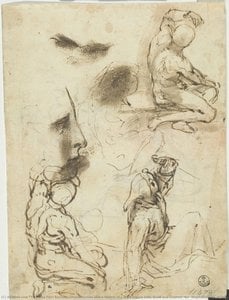
Five Classical Heads

Discover Inigo Jones’ ‘Five Classical Heads,’ a striking 1639 pen & ink drawing showcasing Mannerist portraits of male heads. A study in form, detail, and classical beauty.

Discover Inigo Jones (1573-1652), the pioneering English architect who introduced classical architecture & Renaissance design to Britain. Explore his iconic works like Queen's House & Banqueting Hall, influenced by Palladio & Vitruvius.

हाथ से बनी ऑयल रिप्रोडक्शन

आपके आकार और फ्रेम के अनुसार कैनवास पर हाथ से बनी ऑयल पेंटिंग, हमारे कलाकारों द्वारा विशेष रूप से ऑर्डर पर तैयार।

P118B 10
P118H 10
P118W 10
P438Z 10
P508JH 12
P508YH 12
P805H 10
P805Z 10
P919BZ 10
P919G 10
P919XJ 10
P959ZH 10
P968JZ 12
W106C 8
W218G 10
W218JH 8
W218Y 10
W307PJ 10
W316G 10
W316PJ 8
W316Y 10
W398PJ 8
W4111J 10
W500HY 15
W500JH 15
W692G 12
W849H 8
W940BG 15
W953PJ 8

Standard
custom
CM
INCH

कलाकृति के मूल अनुपात से मेल खाने वाले हमारे पूर्व निर्धारित आकारों में से चुनें।

चौड़ाई
ऊँचाई

आप किसी विशिष्ट फ्रेम या स्थान के अनुसार अपने स्वयं के आयाम (dimensions) दर्ज कर सकते हैं। यदि आपके द्वारा चुना गया आकार मूल छवि के अनुपात से मेल नहीं खाता है, तो हम कलाकृति को क्रॉप करेंगे या पेंटिंग में अतिरिक्त हाथ से चित्रित तत्व जोड़कर उसका विस्तार करेंगे। उत्पादन शुरू होने से पहले आपकी स्वीकृति के लिए एक डिजिटल मॉकअप भेजा जाएगा।
कृपया ध्यान दें कि स्क्रीन पर दिखने वाला पूर्वावलोकन वास्तविक क्रॉपिंग या विस्तार को नहीं दर्शाता है। केवल मॉकअप ही अंतिम रचना को सटीक रूप से दिखाएगा।
यद्यपि कस्टम आकार उपलब्ध हैं, फिर भी हम मूल अनुपात बनाए रखने के लिए पूर्व-निर्धारित सूची से आयाम चुनने की सलाह देते हैं।

बदलाव के कुछ उदाहरण: चेहरे को ग्राहक की फोटो से बदलें; पालतू जानवर जोड़ें (जैसे बिल्ली की जगह कुत्ता); बैकग्राउंड में कोई छिपा हुआ संदेश शामिल करें; बैकग्राउंड का परिदृश्य या तत्व बदलें।
ऑर्डर देने के बाद, WahooArt.com टीम निर्देशों के लिए क्लाइंट को ईमेल करेगी और एक मॉकअप प्रीव्यू प्रदान करेगी

विश्वव्यापी वितरण () मानक 5 सप्ताह के बजाय मात्र 3/4 सप्ताह में। (30 जून)। गुणवत्ता से कोई समझौता नहीं।

why_choose_icon
दुनिया भर में मुफ़्त एक्सप्रेस शिपिंग
why_choose_icon
उच्च गुणवत्ता वाला लिनेन कैनवास
why_choose_icon
पूर्ण शिपिंग बीमा
why_choose_icon
सीमा शुल्क और आयात कर वापसी की गारंटी
why_choose_icon
सटीक रंग मिलान की गारंटी
why_choose_icon
60-दिन की वापसी नीति (केवल दोषों के लिए)
why_choose_icon
100% पैसे वापसी की गारंटी
why_choose_icon
थोक छूट का लाभ

कुल कीमत

-

reproduction

Five Classical Heads

प्रतिकृति की विधि

प्रतिकृति का आकार

-

कुल देय राशि

-

प्रमुख विशेषताएँ

  • Artist: Inigo Jones
  • Influences:
    • Palladio
    • Vitruvius
  • Year: 1639
  • Notable elements or techniques: Detailed hatching, cross-hatching and stippling
  • Title: Five Classical Heads
  • Dimensions: 8 x 20 cm
  • Subject or theme: Human form & expression

कला प्रश्नोत्तरी

प्रत्येक प्रश्न का केवल एक ही सही उत्तर है।

प्रश्न 1:
What artistic movement is “Five Classical Heads” primarily associated with?
प्रश्न 2:
Who created the artwork “Five Classical Heads”?
प्रश्न 3:
What technique was predominantly used in creating “Five Classical Heads”?
प्रश्न 4:
In what year was “Five Classical Heads” completed?
प्रश्न 5:
What is a key characteristic of Mannerist art that distinguishes it from earlier styles?

कलाकृति का विवरण

The Legacy of Palladio and the Birth of Classical Architecture in England

Before Inigo Jones arrived on British shores, architectural ambition was largely dictated by Gothic sensibilities—pointed arches dominating cathedrals and palaces alike. The prevailing aesthetic prioritized verticality and ornamentation, reflecting a spiritual worldview rooted in medieval tradition. However, the burgeoning Renaissance fervor sweeping across Europe, particularly Italy, offered an entirely different paradigm: Palladio’s villas championed harmony, proportion, and symmetry, embodying humanist ideals of beauty and rationality.

  • Palladio's Influence: Andrea Palladio’s architectural treatises—most notably “Four Books on Architecture”—became Jones’s bible. Palladio’s meticulous attention to detail and his embrace of classical geometric forms profoundly shaped Jones’s vision for English buildings, establishing Vitruvian rules as the cornerstone of design principles.
  • Vitruvius: The Roman architect Vitruvius's writings further solidified Palladio’s influence by advocating for mathematical precision and structural integrity—concepts antithetical to the prevailing Gothic style. Jones meticulously studied Vitruvius’s texts, incorporating these precepts into his designs with unwavering conviction.

Five Classical Heads: A Study in Mannerist Portraiture

Andrea del Sarto's “Five Classical Heads,” completed around 1639, stands as a testament to the transformative power of Palladio and Vitruvius’s ideas. Executed with masterful pen and ink technique—a method favored by Mannerist artists—the drawing captures five male heads in strikingly varied poses and expressions.

  • Technique: Jones employed hatching, cross-hatching, and stippling to achieve remarkable textural depth and volume, skillfully modeling the contours of each face. This meticulous layering of lines demonstrates a profound understanding of chiaroscuro—the interplay between light and shadow—a technique perfected by Renaissance masters like Leonardo da Vinci.
  • Composition: The heads are arranged side-by-side within a tightly cropped rectangular frame, emphasizing their unity and conveying a sense of intellectual contemplation. The deliberate positioning underscores the artist’s commitment to classical ideals of balance and harmony.

A Pioneer Forged in Classical Ideals

Inigo Jones's journey to Italy marked an irreversible turning point in British architectural history. Witnessing firsthand the grandeur of Roman villas and palaces—designed according to Palladio’s principles—Jones returned with a renewed conviction that English buildings could achieve comparable beauty and sophistication.

  • The Queen’s House: Jones immediately applied his newfound knowledge to the design of the Queen's House in Greenwich, marking the inaugural instance of pure classical architecture in England. This groundbreaking edifice embodies Palladio’s vision for harmonious proportions and symmetrical layouts—a radical departure from Gothic conventions.
  • Banqueting Hall: Similarly, Jones conceived the Banqueting Hall at Whitehall as a monumental celebration of royal authority, incorporating Vitruvian rules to create an imposing space that commanded respect and awe. The hall stands as a lasting symbol of England’s embrace of classical culture.

Symbolism and Emotional Resonance

"Five Classical Heads" transcends mere technical virtuosity; it embodies profound symbolic significance—reflecting the humanist preoccupation with idealized beauty and human intellect. Each head conveys a distinct mood—ranging from serene contemplation to intense focus—capturing the essence of human experience within the framework of classical ideals.

The drawing’s subdued palette and meticulous detailing evoke a sense of quiet dignity and intellectual engagement, inviting viewers to contemplate the enduring legacy of Palladio and Vitruvius—architects who irrevocably transformed the artistic landscape of Europe and inspired generations of artists to pursue excellence in form and expression.

संबद्ध कलाकृतियाँ

मिखाइल एंजेलो - Study for Porta Pia
मिखाइल एंजेलो
Study for Porta Pia
मिखाइल एंजेलो - Study for the Porta Pia
मिखाइल एंजेलो
Study for the Porta Pia
एल ग्रेको - The Marriage of the Virgin
एल ग्रेको
The Marriage of the Virgin
जॉर्ज ह्युडसन रिचेल्ड्स - The Honorable Henry Fane (1739–1802) with Inigo Jones and Charles Blair
जॉर्ज ह्युडसन रिचेल्ड्स
The Honorable Henry Fane (1739–1802) with Inigo Jones and Charles Blair
मिखाइल एंजेलो - Conversion of Saint Paul
मिखाइल एंजेलो
Conversion of Saint Paul
जकोपो सानसोविनो - Madonna with the Child
जकोपो सानसोविनो
Madonna with the Child
लुबो क्रिस्टेक - Temptation of St Anthony
लुबो क्रिस्टेक
Temptation of St Anthony
जॉर्ज ह्युडसन रिचेल्ड्स - The Honourable Henry Fane with Inigo Jones and Charles Blair
जॉर्ज ह्युडसन रिचेल्ड्स
The Honourable Henry Fane with Inigo Jones and Charles Blair
एडवर्ड बर्ने-जोन्स - Portrait of Baronne Madeleine Deslandes, three-quarter-length
एडवर्ड बर्ने-जोन्स
Portrait of Baronne Madeleine Deslandes, three-quarter-length

कलाकार का जीवन परिचय

A Pioneer Forged in Classical Ideals

Inigo Jones, a name synonymous with the birth of classical architecture in England, stands as a monumental figure bridging the artistic sensibilities of the Renaissance and the burgeoning aesthetic landscape of the 17th century. Born in London in 1573, his origins remain somewhat shrouded in mystery—a Welsh lineage is suggested but never definitively confirmed by contemporary records. What *is* certain is that Jones’s path diverged from traditional architectural training; he wasn't apprenticed through a guild or established workshop. Early indications point to a background as a joiner, yet it was an innate artistic talent recognized by a discerning patron—perhaps the Earl of Pembroke or Rutland—that propelled him toward his destiny. Around 1603, this benefactor facilitated a transformative journey to Italy, a pilgrimage that would irrevocably shape Jones’s vision and establish the foundation for his groundbreaking work. This initial foray into Italian art and architecture was followed by a period serving King Christian IV in Denmark, contributing designs to Rosenborg and Frederiksborg Palaces—experiences crucial in honing his skills before returning to England with a burgeoning architectural philosophy.

From Stagecraft to Stone: The Evolution of an Artistic Vision

Jones initially gained prominence not through buildings, but through the ephemeral world of theatrical design. He revolutionized English stagecraft as a designer of masques—lavish, elaborate spectacles combining poetry, music, dance, and visual artistry—commissioned primarily by Queen Anne of Denmark. His innovations were radical: movable scenery, the introduction of the proscenium arch, and an overall commitment to spectacle that elevated these performances beyond mere entertainment. This period fostered a collaborative yet often contentious relationship with playwright Ben Jonson. While they worked together on numerous productions, their partnership was marked by a fundamental disagreement regarding the primacy of design versus literature in theatrical experience—Jonson favoring the power of words, Jones championing the impact of visual grandeur. Over 450 surviving drawings attest to Jones’s artistic development during this time, revealing an evolution from initial hesitancy in Renaissance draughtsmanship to a sophisticated “Italianate manner,” influenced by masters like Alfonso and Giulio Parigi. A second journey to Italy around 1606, guided by the ambassador Henry Wotton, proved pivotal, deepening his understanding of classical principles and solidifying his commitment to Palladian architecture—particularly Andrea Palladio’s *I quattro libri dell'architettura*, a volume Jones owned and meticulously annotated with references to Wotton. He also drew inspiration from the ancient Roman writer Vitruvius, prioritizing the authority of antiquity over contemporary Italian trends.

Architectural Manifestations: Defining a New Aesthetic

The culmination of Jones’s studies and evolving vision manifested in his architectural achievements, forever altering the landscape of English design. The Queen's House, Greenwich—begun for James I and completed under Charles I for Henrietta Maria—is widely considered his earliest surviving masterpiece and a landmark achievement. It stands as the first truly classical building in England, embodying Palladian principles of symmetry, proportion, and harmony. The elegant simplicity of its design, with its emphasis on geometric forms and refined detailing, was a stark departure from prevailing English styles. Equally significant is the Banqueting House, Whitehall—a magnificent example of Baroque architecture distinguished by its imposing scale and, most notably, the breathtaking ceiling painted by Peter Paul Rubens. Jones’s influence extended beyond individual structures to urban planning; he designed the layout for Covent Garden Square, which served as a model for subsequent developments in London's West End, establishing a new standard for elegant and organized public spaces. His appointment as Surveyor of the King’s Works in 1613, followed by Surveyor-General in 1615, cemented his position and allowed him to realize numerous ambitious projects under the patronage of both James I and Charles I.

A Lasting Legacy: The Father of English Classical Architecture

Inigo Jones’s historical significance lies not merely in the buildings he created but in the paradigm shift he instigated. He broke decisively with traditional English building styles, establishing a new aesthetic grounded in Roman antiquity and Renaissance ideals. His designs weren't simply imitations; they were thoughtful interpretations of classical principles adapted to an English context. He introduced a level of sophistication and refinement previously unseen in British architecture, influencing generations of architects who followed in his footsteps. His work represents the conscious adoption of a new visual language—one that emphasized order, reason, and harmony. While his architectural output wasn’t vast, its impact was profound. He laid the groundwork for a distinctly English classical tradition, shaping not only the physical landscape but also the cultural sensibilities of an era. Jones is rightfully regarded as the father of English classical architecture—a visionary who transformed the built environment and left an enduring legacy that continues to inspire awe and admiration today.

Inigo Jones

Inigo Jones

1573 - 1652 , United Kingdom

मुख्य तथ्य

  • Artistic Movement Or Style: Classical architecture
  • Artists Or Movements Influenced By This Artist: ['English architecture']
  • Artists Who Influenced This Artist:
    • Andrea Palladio
    • Vitruvius
  • Date Of Birth: 1573
  • Date Of Death: 1652
  • Full Name: Inigo Jones
  • Nationality: English
  • Notable Artworks:
    • Queen's House
    • Banqueting House
    • Covent Garden Square
  • Place Of Birth: London, UK