पूर्वावलोकन देखेंपूर्वावलोकन देखें AR में देखेंAR में देखें हाथ से बनी पेंटिंग खरीदें हाथ से बनी पेंटिंग खरीदेंडिजिटल इमेज पर स्विच करें डिजिटल इमेज पर स्विच करें साझा करेंसाझा करें
विस्तृत विवरणविस्तृत विवरण पसंदीदा में जोड़ें पसंदीदा में जोड़ें डाउनलोड करेंडाउनलोड करें समान कलाकृतियाँसमान कलाकृतियाँ एक्स-रेएक्स-रे स्लाइड शो देखेंस्लाइड शो देखें आंकड़ेआंकड़े

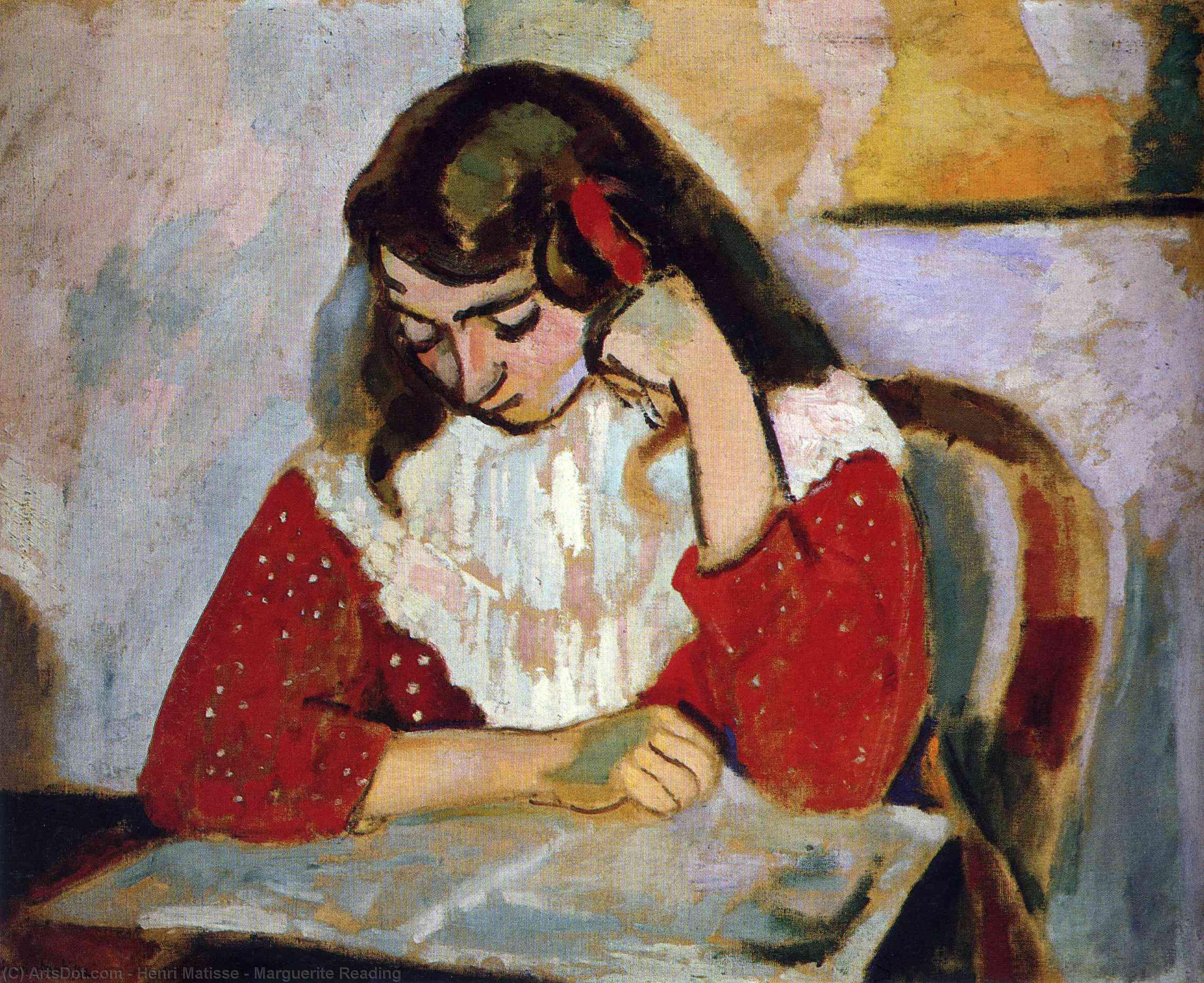
Marguerite Reading

Experience the vibrant world of Henri Matisse's 'Marguerite Reading.' This iconic 1906 oil on panel captures intimacy and contemplation with bold colors & expressive lines. A masterpiece by a Fauvist pioneer.

हेनरी मटिस एक फ्रांसीसी चित्रकार थे जिन्हें आधुनिक कला के सबसे महत्वपूर्ण कलाकारों में से एक माना जाता है। वे फाउविस्ट आंदोलन के नेता थे और उन्होंने अपने पूरे करियर में रंग को अभिव्यक्ति का आधार बनाया। उनके चित्रों में शांत वातावरण और सुंदर रंगों का उपयोग किया गया था।

गिक्ली / आर्ट प्रिंट

तेज़ उत्पादन और विभिन्न फिनिश विकल्पों के साथ म्यूजियम-क्वालिटी गिकली (giclée) या कैनवस प्रिंट। (हाथ से बनी पेंटिंग खरीदें हाथ से बनी पेंटिंग खरीदेंडिजिटल इमेज पर स्विच करें डिजिटल इमेज पर स्विच करें)

P118B $10
P118H $10
P118W $10
P438Z $10
P508JH $12
P508YH $12
P805H $10
P805Z $10
P919BZ $10
P919G $10
P919XJ $10
P959ZH $10
P968JZ $12
W106C $8
W218G $10
W218JH $8
W218Y $10
W307PJ $10
W316G $10
W316PJ $8
W316Y $10
W398PJ $8
W4111J $10
W500HY $15
W500JH $15
W692G $12
W849H $8
W940BG $15
W953PJ $8

मानक
कस्टम
CM
INCH

कलाकृति के मूल अनुपात से मेल खाने वाले हमारे पूर्व निर्धारित आकारों में से चुनें।

चौड़ाई
ऊँचाई

आप किसी विशिष्ट फ्रेम या स्थान के अनुसार अपने स्वयं के आयाम (dimensions) दर्ज कर सकते हैं। यदि आपके द्वारा चुना गया आकार मूल छवि के अनुपात से मेल नहीं खाता है, तो हम कलाकृति को क्रॉप कर देंगे या मिरर किए गए या सॉलिड-फिल किनारे के साथ छवि का विस्तार करेंगे। उत्पादन शुरू होने से पहले आपकी स्वीकृति के लिए एक डिजिटल मॉकअप भेजा जाएगा।
कृपया ध्यान दें कि स्क्रीन पर दिखने वाला प्रीव्यू वास्तविक क्रॉपिंग या विस्तार को नहीं दर्शाता है। केवल मॉकअप ही अंतिम संरचना को सटीक रूप से दिखाएगा।
हालाँकि कस्टम आकार उपलब्ध हैं, फिर भी हम मूल अनुपात बनाए रखने के लिए पूर्व-निर्धारित सूची में से एक आयाम चुनने की सलाह देते हैं।

विश्वव्यापी डिलीवरी (), मानक 4/5 सप्ताह के बजाय मात्र 2 सप्ताह में। (11 सितमबर)

why_choose_icon
दुनिया भर में मुफ़्त एक्सप्रेस शिपिंग
why_choose_icon
उच्च गुणवत्ता वाला लिनेन कैनवास
why_choose_icon
पूर्ण शिपिंग बीमा
why_choose_icon
सीमा शुल्क और आयात कर वापसी की गारंटी
why_choose_icon
सटीक रंग मिलान की गारंटी
why_choose_icon
100-दिन की वापसी नीति (केवल दोषपूर्ण होने पर)
why_choose_icon
100% पैसे वापसी की गारंटी
why_choose_icon
थोक छूट का लाभ

कुल कीमत

$ 68

reproduction

Marguerite Reading

गिक्ली / आर्ट प्रिंट

प्रतिकृति का आकार

-

कुल देय राशि

$ 68

प्रमुख विशेषताएँ

  • Artist: Henri Matisse
  • Dimensions: 65 x 80 cm
  • Notable elements: Bold colors, fluid lines
  • Medium: Oil on panel
  • Artistic style: Expressive brushstrokes
  • Location: Musée des Beaux-Arts, Grenoble
  • Title: Marguerite Reading

कला प्रश्नोत्तरी

प्रत्येक प्रश्न का केवल एक ही सही उत्तर है।

प्रश्न 1:
What artistic movement is Henri Matisse’s ‘Marguerite Reading’ primarily associated with?
प्रश्न 2:
What is the primary focus of Marguerite's expression in the painting?
प्रश्न 3:
Which of the following best describes the use of color in ‘Marguerite Reading’?
प्रश्न 4:
How many chairs are visible in the painting?
प्रश्न 5:
What does the book symbolize within the context of the artwork?

A Moment of Quietude: Marguerite Reading by Henri Matisse

Henri Matisse’s “Marguerite Reading,” painted in 1906, isn't merely a portrait; it’s an exquisitely rendered distillation of intimacy and contemplative serenity. This oil on panel, now residing within the hallowed halls of the Musée des Beaux-Arts in Grenoble, France, stands as a cornerstone of Fauvist art – a movement defined by its audacious use of color and emotionally charged brushstrokes. More than just a depiction of a young girl absorbed in a book, “Marguerite Reading” offers a profound glimpse into Matisse’s artistic vision and the burgeoning spirit of modernism at the turn of the 20th century.

At first glance, the painting presents a deceptively simple composition. A young woman, Marguerite, is seated comfortably in two chairs – one behind her, suggesting a private space, and another further back, adding depth to the scene. She’s dressed in a vibrant red gown that immediately commands attention, a bold choice for Matisse who was known to use color not just to represent reality but to evoke emotion. Her long hair cascades around her shoulders, framing a face of quiet engagement; she holds a book open before her, seemingly lost within its pages. The subtle inclusion of the books serves as a potent symbol – an invitation to knowledge, intellectual pursuit, and perhaps, a moment of solitary reflection. The careful placement of the objects contributes to a sense of carefully constructed narrative, inviting the viewer into this intimate tableau.

The Language of Color: Fauvist Techniques

Matisse’s mastery lies not just in his subject matter but also in his revolutionary approach to color and technique. “Marguerite Reading” is a prime example of Fauvism's distinctive style. Bold, non-naturalistic hues dominate the canvas – fiery reds, deep blues, and vibrant greens are applied with swift, confident brushstrokes. These aren’t colors meant to mimic reality; they’re instruments used to convey mood and feeling. Notice how the red of Marguerite’s dress contrasts sharply with the cooler tones of the background, creating a dynamic visual tension. The loose, expressive lines, devoid of traditional shading or detail, further contribute to the painting's energetic and almost impulsive quality. Matisse deliberately rejected academic conventions, prioritizing direct emotional impact over precise representation – a radical shift in artistic practice at the time.

A Window into Early 20th Century Art

“Marguerite Reading” was created during a period of immense upheaval and innovation in the art world. The early 1900s witnessed a rejection of established norms, with artists like Matisse challenging traditional notions of perspective, form, and subject matter. Fauvism, emerging from this climate of experimentation, sought to liberate color from its descriptive function, using it instead as a primary means of artistic expression. This painting is therefore not just a beautiful portrait; it’s a document of a pivotal moment in art history – a testament to Matisse's pioneering spirit and his willingness to push the boundaries of creative possibility. The work reflects the broader cultural shifts occurring at the time, including a growing interest in psychology and the exploration of subjective experience.

Symbolism and Emotional Resonance

Beyond its formal qualities, “Marguerite Reading” is rich in symbolic meaning. The act of reading itself represents intellectual curiosity, introspection, and escape – themes that resonated deeply with artists and audiences alike at the time. Marguerite’s expression—one of quiet absorption—suggests a state of peaceful solitude, inviting viewers to share in her moment of contemplation. The painting's overall atmosphere is one of serenity and intimacy, creating a powerful emotional connection between the viewer and the subject. It’s a reminder that art can transcend mere representation and tap into universal human experiences – the desire for knowledge, the solace of quiet reflection, and the beauty of simple moments.

A Timeless Masterpiece: Reproduction Possibilities

WahooArt offers meticulously crafted hand-painted reproductions of “Marguerite Reading,” allowing you to bring this iconic artwork into your home or office. Our skilled artists faithfully recreate Matisse’s vibrant colors and expressive brushstrokes, ensuring that the painting's emotional impact is preserved with stunning accuracy. Available in a range of sizes and mediums – from luxurious canvas prints to elegant framed reproductions – our “Marguerite Reading” reproductions provide an authentic and captivating addition to any art collection or interior design scheme. Experience the timeless beauty and profound symbolism of this masterpiece firsthand.


कलाकार का जीवन परिचय

हेनरी मैटिस: रंग और रूप के जादूगर

हेनरी मैटिस, जिनका जन्म 31 दिसंबर 1869 को ले काटो-कैम्ब्रेसीस, फ्रांस में हुआ था, आधुनिक कला के इतिहास में एक अद्वितीय स्थान रखते हैं। उन्होंने अपने जीवनकाल में रंगों और आकारों के साथ जो प्रयोग किए, उन्होंने कला की दुनिया को हमेशा के लिए बदल दिया। मैटिस ने कानून की पढ़ाई शुरू की थी, लेकिन एक बीमारी के दौरान उन्हें चित्रकला का शौक लगा और फिर उन्होंने पीछे मुड़कर नहीं देखा। उनका शुरुआती जीवन बोहाइन-एन-वर्मंडोइस में बीता, जहाँ उनके माता-पिता अनाज व्यापारी थे। उनकी कला यात्रा पारंपरिक शिक्षा से शुरू हुई, लेकिन जल्द ही उन्होंने अपनी अनूठी शैली विकसित कर ली जो उन्हें अन्य कलाकारों से अलग करती थी।

फाविज़्म का उदय और रंग का विस्फोट

1905 में मैटिस के जीवन में एक महत्वपूर्ण मोड़ आया जब उन्होंने बेले आइल की यात्रा की और जॉन रसेल जैसे कलाकारों से मुलाकात की। इस मुलाकात ने उन्हें प्रभाववाद और विशेष रूप से विन्सेंट वैन गॉग के भावपूर्ण चित्रों से परिचित कराया। वैन गॉग के रंगों का प्रयोग मैटिस के मन पर गहरा प्रभाव पड़ा, जिससे वे अपने पहले के संयमित रंग पैलेट को त्यागकर अधिक साहसी और व्यक्तिपरक दृष्टिकोण अपनाने लगे। इसी खोज ने फाविज़्म नामक कला आंदोलन को जन्म दिया, जिसमें मैटिस एक प्रमुख व्यक्ति बन गए। "फाव" शब्द का अर्थ है "जंगली जानवर," जो उनके चित्रों में रंगों की तीव्र और अपरंपरागत प्रकृति को दर्शाता है। इस दौर में उन्होंने द gourds जैसे उत्कृष्ट कृतियों के माध्यम से रंगों का विस्फोट किया, जहाँ उन्होंने पारंपरिक परिप्रेक्ष्य और यथार्थवादी चित्रण को त्यागकर भावनाओं को व्यक्त करने पर ध्यान केंद्रित किया। उनकी शैली की मुख्य विशेषताओं में गहन रूप से संतृप्त रंग पैलेट, सरलीकृत आकार, अभिव्यंजक ब्रशस्ट्रोक और पारंपरिक प्रतिनिधित्व को अस्वीकार करना शामिल था।

सजावटी सामंजस्य की ओर विकास

फाविज़्म के शुरुआती उत्साह के बाद, मैटिस की शैली में एक सूक्ष्म लेकिन महत्वपूर्ण बदलाव आया। उन्होंने रंगों के प्रति अपने प्रेम को त्यागना नहीं चाहा, बल्कि उनके काम में अधिक परिष्कार और सजावटी सौंदर्यशास्त्र का समावेश किया। उन्होंने शांत वातावरण में अवकाश, घरेलू जीवन और मानव आकृति जैसे विषयों का पता लगाया, जिससे ऐसी रचनाएँ बनीं जो सामंजस्यपूर्ण और भावनात्मक रूप से गूंजती थीं। 1917 में नीस में फ्रांसीसी रिवेरा में स्थानांतरित होने से इस बदलाव को और बढ़ावा मिला, जिससे उनके काम में शांति और शास्त्रीय संतुलन की भावना आ गई। मैटिस ने विभिन्न माध्यमों, जैसे कि सिरेमिक्स और टेक्सटाइल के साथ प्रयोग करके अपनी कलात्मक दृष्टि का विस्तार किया, एक ऐसा वातावरण बनाया जो दर्शकों को सौंदर्य और शांति के अनुभव में डुबो देता था।

सीमितता से नवाचार: कट-आउट तकनीक

जैसे-जैसे बढ़ती उम्र के कारण मैटिस की शारीरिक क्षमताएँ कम होने लगीं, उन्होंने अपने कलात्मक जीवन के एक नए अध्याय की शुरुआत की - कागज के कट-आउट (découpages) का निर्माण। 1947 के आसपास शुरू हुई यह तकनीक आवश्यकता से प्रेरित थी। व्हीलचेयर पर रहने के बाद, वे पारंपरिक रूप से पेंट करने में असमर्थ थे, लेकिन कागज को कैंची से काटकर कलात्मक अभिव्यक्ति जारी रख सकते थे। इस व्यावहारिक समाधान ने एक अभूतपूर्व कलात्मक तकनीक का जन्म दिया। उन्होंने चमकीले रंगों में बड़े कागज़ की शीटें रंगा करती थीं और फिर उन्हें आकारों में काटती थीं - जैविक रूप, पत्तियाँ, आकृतियाँ - और उन्हें कैनवास पर व्यवस्थित करती थीं, जिससे गतिशील और दिखने में सरल रचनाएँ बनती थीं। ये कट-आउट पेंटिंग के लिए सिर्फ़ विकल्प नहीं थे; वे रंग, आकार और संरचना के बारे में सोचने का एक नया तरीका थे। उन्होंने अपनी कलात्मक दृष्टि को शारीरिक सीमाओं के सामने भी विकसित करने की क्षमता का प्रदर्शन किया।
  • कट-आउट तकनीक ने उन्हें ऐसे रूपों और रंगों की शुद्धता प्राप्त करने की अनुमति दी जो पेंट से हासिल करना मुश्किल था।
  • इन कार्यों में अक्सर उनके चित्रों के पहले के विषयों और रूपांकनों को संदर्भित किया जाता था, लेकिन एक नए और नवीन तरीके से प्रस्तुत किया गया था।
  • उन्होंने अपने पूरे करियर में कलाकार के रूप में अनुकूलन और विकास करने की अपनी क्षमता का प्रदर्शन किया।

आधुनिक कला पर स्थायी प्रभाव

3 नवंबर 1954 को नीस में हेनरी मैटिस का निधन हो गया, लेकिन उन्होंने एक ऐसी विरासत छोड़ दी जो दुनिया भर के दर्शकों को प्रेरित करती और मोहित करती रहती है। उनकी कलात्मक दुनिया पर प्रभाव निर्विवाद है; उन्होंने प्रतिनिधित्व की पारंपरिक धारणाओं को चुनौती दी, रंग की अभिव्यंजक शक्ति का समर्थन किया और भविष्य की पीढ़ियों के कलाकारों के लिए मार्ग प्रशस्त किया। पाब्लो पिकासो के साथ मिलकर आधुनिक कला के सबसे प्रभावशाली शख्सियतों में से एक माने जाने वाले मैटिस ने आधुनिकता को मौलिक रूप से आकार दिया है। उनकी विरासत उनके कलाकृतियों तक ही सीमित नहीं है - यह आनंद, सौंदर्य और रंग की परिवर्तनकारी क्षमता का जश्न मनाने वाली दर्शनशास्त्र को समाहित करती है। मैटिस केवल वही चित्रित नहीं कर रहे थे जो वे देखते थे; वे दर्शकों के लिए एक भावनात्मक अनुभव बना रहे थे, उन्हें अपने रंगों से भरे दुनिया के दृष्टिकोण को साझा करने के लिए आमंत्रित कर रहे थे।
हेनरी मातिस

हेनरी मातिस

1869 - 1954 , फ्रांस

मुख्य तथ्य

  • Artistic Movement Or Style: फौविज़्म, आधुनिक कला
  • Artists Or Movements Influenced By This Artist:
    • आधुनिकतावाद
    • अभिव्यक्तिवाद
  • Artists Who Influenced This Artist:
    • विनसेंट वैन गॉग
    • चार्डेन
    • जॉन रसेल
  • Date Of Birth: 31 दिसंबर 1869
  • Date Of Death: 3 नवंबर 1954
  • Full Name: हेनरी एमील बेनोइट मैटिस
  • Nationality: फ्रांसीसी
  • Notable Artworks:
    • द गर्ड्स
    • लॉरेट्टे इन अ व्हाइट टर्बन
  • Place Of Birth: ले काटो-कैम्ब्रेसीस, फ्रांस
विषयों, शैलियों और विशेषताओं के आधार पर व्यवस्थित कलाकृतियों का अन्वेषण करें।



































