Giuseppe Arcimboldo's "The Lawyer": A Renaissance Portrait of Authority
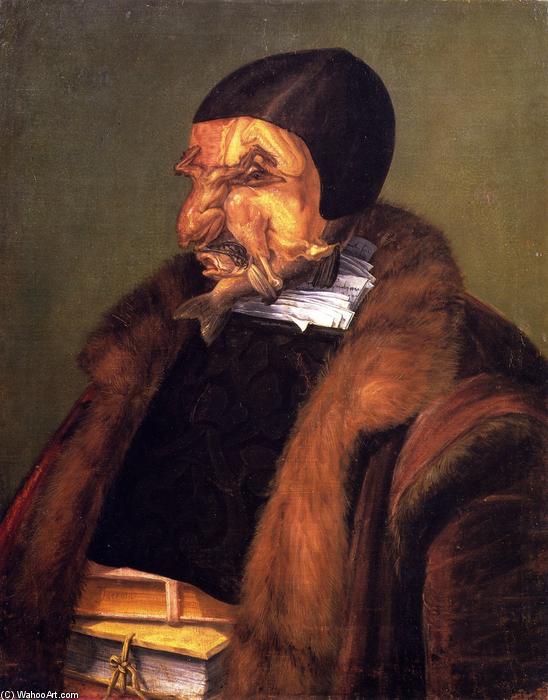
Giuseppe Arcimboldo’s “The Lawyer,” painted in 1566, is more than just a portrait; it’s a meticulously constructed meditation on profession, knowledge, and the very nature of representation. Housed within the Finnish National Gallery, this oil-on-canvas masterpiece offers a captivating glimpse into the Renaissance mind – a world where art was inextricably linked to intellect, status, and even religious symbolism. The painting immediately arrests the viewer with its audacious composition: a man rendered entirely from meticulously arranged objects—fruits, vegetables, books, and luxurious fabrics—creating an arresting image of a legal professional at the height of his power.
- Subject & Style: Arcimboldo’s signature “portrait-plants” technique is on full display here. The subject, identified as a lawyer or judge, embodies the formality and seriousness expected of such a role during the 16th century. His attire – a black hat, fur coat, and formal clothing – speaks to his elevated status, while his carefully groomed beard and mustache underscore his attention to detail and professional demeanor.
- Technique & Materials: Executed in oil on canvas, Arcimboldo’s masterful control of texture and light is evident. The rich layering of objects creates a remarkable sense of depth, mimicking the three-dimensionality of a traditional portrait while simultaneously challenging conventional artistic norms. The use of dark hues combined with vibrant colors adds to the painting's dramatic effect.
Symbolism Woven into the Composition
“The Lawyer” is rich in symbolic elements that reflect the intellectual and cultural currents of the Renaissance. The most obvious symbol is the book, prominently placed on the left side of the composition. Books represented knowledge, learning, and the legal profession itself – a cornerstone of education during this period. Further reinforcing this theme are two additional books visible within the scene, one near the bottom right corner and another at the top right corner. These additions suggest a broader engagement with literature and scholarship, highlighting the importance of intellectual pursuits alongside professional duties. The inclusion of fruits and vegetables adds another layer of meaning, often associated with abundance, prosperity, and even allegory – representing virtues or vices depending on their arrangement.
Historical Context & Arcimboldo’s Vision
Created in 1566, “The Lawyer” reflects the societal values and expectations of the Renaissance. The legal profession held a position of considerable power and influence during this era, and Arcimboldo's depiction captures this authority with precision. Arcimboldo was not simply creating portraits; he was crafting allegorical statements about human nature and the world around him. His work reflects the humanist ideals prevalent at the time – an emphasis on reason, observation, and the study of classical antiquity. The painting serves as a window into the past, offering insights into the lives and roles of lawyers during the Renaissance.
Emotional Impact & Artistic Legacy
“The Lawyer” continues to captivate viewers centuries after its creation. Arcimboldo’s innovative approach to portraiture challenges our perceptions of identity and representation. The painting evokes a sense of both admiration for the subject's authority and wonder at the artist's ingenuity. It is a testament to Arcimboldo’s unique vision and his ability to transform ordinary objects into extraordinary works of art. This piece remains a powerful example of Renaissance artistry, demonstrating the profound connection between art, intellect, and social commentary.


 पूर्वावलोकन देखें
 हाथ से बनी पेंटिंग खरीदें
 साझा करें
 साझा करें
 विस्तृत विवरण
 मार्गदर्शिका

 डाउनलोड करें
 समान कलाकृतियाँ
 एक्स-रे
 स्लाइड शो देखें
 आंकड़े


 पूरा देखें






































 ग्लास का विकल्प केवल 110 सेमी से कम आकार में ही उपलब्ध है।