पूर्वावलोकन देखें AR में प्रीव्यू देखें हाथ से बनी पेंटिंग खरीदें डिजिटल इमेज पर जाएँ भेजें
विवरण देखें मार्गदर्शिका पसंदीदा में जोड़ें डाउनलोड करें समान वस्तुएं एक्स-रे स्लाइड शो देखें आंकड़े

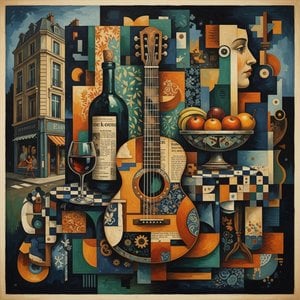
Bottle, Glass, And Pipe

Georges Braque's 'Bottle, Glass & Pipe' (1910) is a seminal Cubist collage—a vibrant exploration of form and perspective through newspaper clippings and wallpaper. Discover the innovative spirit behind this iconic work.

जॉर्ज ब्राक (1882-1963) एक फ्रांसीसी चित्रकार थे जिन्होंने पिकासो के साथ मिलकर क्यूबिज्म आंदोलन को जन्म दिया। 'हाउसेस एट ल'एस्ताक' जैसी उत्कृष्ट कृतियों के लिए जाने जाते हैं, उन्होंने कला में परिप्रेक्ष्य और प्रतिनिधित्व की पारंपरिक धारणाओं को चुनौती दी।

गिक्ली / आर्ट प्रिंट

तेज़ उत्पादन और विभिन्न फिनिश विकल्पों के साथ म्यूजियम-क्वालिटी गिकली (giclée) या कैनवस प्रिंट। ( हाथ से बनी पेंटिंग खरीदें डिजिटल इमेज पर जाएँ)

P118B $10
P118H $10
P118W $10
P438Z $10
P508JH $12
P508YH $12
P805H $10
P805Z $10
P919BZ $10
P919G $10
P919XJ $10
P959ZH $10
P968JZ $12
W106C $8
W218G $10
W218JH $8
W218Y $10
W307PJ $10
W316G $10
W316PJ $8
W316Y $10
W398PJ $8
W4111J $10
W500HY $15
W500JH $15
W692G $12
W849H $8
W940BG $15
W953PJ $8

मानक आकार
अनुकूलित
CM
INCH

कलाकृति के मूल अनुपात से मेल खाने वाले हमारे पूर्व निर्धारित आकारों में से चुनें।

चौड़ाई
ऊँचाई

आप किसी विशिष्ट फ्रेम या स्थान के अनुसार अपने स्वयं के आयाम (dimensions) दर्ज कर सकते हैं। यदि आपके द्वारा चुना गया आकार मूल छवि के अनुपात से मेल नहीं खाता है, तो हम कलाकृति को क्रॉप कर देंगे या मिरर किए गए या सॉलिड-फिल किनारे के साथ छवि का विस्तार करेंगे। उत्पादन शुरू होने से पहले आपकी स्वीकृति के लिए एक डिजिटल मॉकअप भेजा जाएगा।
कृपया ध्यान दें कि स्क्रीन पर दिखने वाला प्रीव्यू वास्तविक क्रॉपिंग या विस्तार को नहीं दर्शाता है। केवल मॉकअप ही अंतिम संरचना को सटीक रूप से दिखाएगा।
हालाँकि कस्टम आकार उपलब्ध हैं, फिर भी हम मूल अनुपात बनाए रखने के लिए पूर्व-निर्धारित सूची में से एक आयाम चुनने की सलाह देते हैं।

विश्वव्यापी डिलीवरी (), मानक 4/5 सप्ताह के बजाय मात्र 2 सप्ताह में। (27 सितमबर)

why_choose_icon
दुनिया भर में मुफ़्त एक्सप्रेस शिपिंग
why_choose_icon
प्रीमियम ग्रेड लिनेन कैनवास
why_choose_icon
पूर्ण शिपिंग बीमा
why_choose_icon
सीमा शुल्क और आयात कर वापसी की गारंटी
why_choose_icon
सटीक रंग मिलान की गारंटी
why_choose_icon
100 दिनों की वापसी नीति (केवल निर्माण दोष होने पर)
why_choose_icon
100% पैसे वापसी की गारंटी
why_choose_icon
थोक छूट का अवसर

कुल कीमत

$ 68

reproduction

Bottle, Glass, And Pipe

गिक्ली / आर्ट प्रिंट

प्रतिकृति का आकार

-

कुल मूल्य

$ 68

मुख्य विवरण

  • Movement: Cubism
  • Subject or theme: Still life objects
  • Artistic style: Fragmented forms
  • Artist: Georges Braque
  • Medium: Collage
  • Title: Bottle, Glass & Pipe

कला प्रश्नोत्तरी

प्रत्येक प्रश्न का केवल एक ही सही उत्तर है।

प्रश्न 1:
Based on the image description, what is the dominant impression conveyed by the arrangement of objects within the bowl?
प्रश्न 2:
Georges Braque is most closely associated with which artistic movement?
प्रश्न 3:
The image description mentions the presence of 'paper' and a 'book'. What does this suggest about the potential subject matter or theme of the artwork?
प्रश्न 4:
Considering Braque's early training as a house painter and decorator, how might this background have influenced his artistic approach?
प्रश्न 5:
The use of collage in ‘Bottle, Newspaper, Pipe, and Glass’ reflects which broader artistic trend?

A Still Life of Disruption: Unpacking Georges Braque's "Bottle, Glass, and Pipe"

Georges Braque’s “Bottle, Glass, and Pipe” (circa 1910-12) isn’t merely a depiction of everyday objects; it’s a carefully orchestrated visual puzzle, a testament to the radical experimentation defining early Cubism. Born in Argenteuil, France, in 1882, Braque's artistic journey began with a grounding in his family’s trade as house painters and decorators – an experience that instilled within him a profound understanding of materials and structure. This practical foundation proved invaluable as he moved beyond traditional representation, dismantling familiar forms to reveal their underlying geometric essence.

The painting immediately confronts the viewer with a deliberately chaotic composition. A dark wooden bowl dominates the center, containing a jumble of items: fragments of paper resembling a book, two cups stacked precariously, and a vase positioned at the lower right corner. It’s a scene brimming with suggestion – a moment frozen in thought, perhaps a study for a larger work or simply an exploration of visual relationships. The deliberate lack of spatial depth, a hallmark of Cubism, forces us to actively engage with the image, reconstructing the scene within our own minds.

The Genesis of Cubism: Fragmentation and Multiple Perspectives

Braque’s development of Cubism was inextricably linked to his collaboration with Pablo Picasso. Initially, both artists were experimenting with ways to represent objects from multiple viewpoints simultaneously – a revolutionary concept at the time. “Bottle, Glass, and Pipe” exemplifies this approach. The bowl itself is broken down into fragmented planes, suggesting its three-dimensional form while simultaneously presenting it as a collection of geometric shapes. The paper fragments, too, are dissected and rearranged, creating an illusion of depth and layering that defies conventional perspective.

This technique wasn’t born in isolation. Braque's early exposure to the work of Paul Cézanne profoundly influenced his thinking. Cézanne’s emphasis on geometric forms and his exploration of multiple viewpoints laid the groundwork for Cubism’s core principles. Braque meticulously studied Cézanne’s paintings, analyzing how he rendered space and form, ultimately adapting these ideas into his own innovative style.

Symbolic Layers: Perfume, Smoke, and the Everyday

Beyond its purely formal concerns, “Bottle, Glass, and Pipe” hints at a deeper symbolic resonance. The inclusion of tobacco – represented by the pipe – evokes themes of contemplation, leisure, and perhaps even melancholy. The presence of perfume, suggested by the violet hues and the delicate glass bottle, adds an element of sensuality and refinement. These seemingly mundane objects are elevated to a level of artistic significance through Braque’s deliberate arrangement and his masterful manipulation of form and color.

Furthermore, the painting's overall sense of disorder can be interpreted as a reflection of the rapidly changing world at the turn of the 20th century – a period marked by industrialization, urbanization, and social upheaval. Braque’s fragmented composition mirrors this feeling of disorientation and uncertainty, capturing the spirit of modernity with remarkable acuity.

A Reproduction for Your Space: Bringing Cubist Innovation Home

WahooArt offers meticulously crafted hand-painted reproductions of “Bottle, Glass, and Pipe,” allowing you to bring this iconic work into your home or office. Our artists replicate Braque’s innovative techniques with the utmost care, ensuring that every detail – from the subtle nuances of color to the precise rendering of fragmented forms – is faithfully reproduced. Whether you're an art enthusiast, a collector, or simply seeking a unique and thought-provoking piece for your interior design, our reproduction provides an authentic representation of this seminal work of modern art.


कलाकार का परिचय

जॉर्जेस ब्राक: आधुनिक कला के एक पथप्रदर्शक

जॉर्जेस ब्राक, जिनका जन्म 1882 में अर्जेंटीनाइल, फ्रांस में हुआ था, बीसवीं सदी के सबसे प्रभावशाली कलाकारों में से एक थे। उनकी यात्रा एक साधारण घर-चित्रकार के बेटे से शुरू हुई, लेकिन जल्द ही उन्होंने कला की दुनिया में अपनी पहचान बनाई। शुरुआती दिनों में, ब्राक ने इंप्रेशनिस्ट शैली का अनुसरण किया, लेकिन 1905 में फाविज़्म (Fauvism) के प्रभाव में आने के बाद उनका काम एक नया मोड़ ले गया। हेनरी मैटिस और आंद्रे डेरेन जैसे कलाकारों के साथ काम करते हुए, उन्होंने रंगों के प्रयोग से कला को नई ऊंचाइयों पर पहुंचाया। हालांकि, ब्राक की रचनात्मकता यहीं नहीं रुकी; उन्होंने पॉल सेज़ान के कार्यों का गहन अध्ययन किया, जिससे उन्हें ज्यामितीय रूपों और बहु-दृष्टिकोणों में रुचि पैदा हुई – यह एक ऐसा मोड़ था जिसने उन्हें पाब्लो पिकासो के साथ मिलकर क्यूबिज्म (Cubism) नामक एक क्रांतिकारी कला आंदोलन की शुरुआत करने के लिए प्रेरित किया।

क्यूबिज्म का जन्म: पिकासो के साथ साझेदारी

ब्राक और पिकासो की साझेदारी आधुनिक कला के इतिहास में एक महत्वपूर्ण अध्याय है। 1907 से लेकर प्रथम विश्व युद्ध तक, इन दोनों कलाकारों ने मिलकर काम किया और क्यूबिज्म को आकार दिया। उन्होंने वस्तुओं को खंडों में विभाजित करके उन्हें विभिन्न दृष्टिकोणों से चित्रित करना शुरू कर दिया, जिससे पारंपरिक परिप्रेक्ष्य का भ्रम टूट गया। उनके शुरुआती कार्यों में "हाउस एट ल'एस्ताक" (Houses at L'Estaque) जैसे चित्रों में भूरे और हरे रंग के सीमित उपयोग ने उनकी कला में एक विशेष आकर्षण जोड़ा। 1909 के आसपास, उन्होंने मिलकर काम करते हुए एक-दूसरे की शैलियों को इतना प्रभावित किया कि उनके कार्यों को अलग करना मुश्किल हो गया था। यह साझेदारी न केवल कलात्मक रूप से महत्वपूर्ण थी, बल्कि इसने क्यूबिज्म को एक नई दिशा दी और इसे दुनिया भर में फैलाया।

कोलाज का नवाचार: कला में वास्तविकता का समावेश

क्यूबिज्म के विकास में ब्राक का सबसे महत्वपूर्ण योगदान कोलाज (collage) का प्रयोग था। 1912 में, उन्होंने अखबार की क्लिपिंग और अन्य रोजमर्रा की वस्तुओं को अपने चित्रों में शामिल करना शुरू कर दिया। यह नवाचार कला और जीवन के बीच की रेखाओं को धुंधला करता है और पारंपरिक चित्रकला की सीमाओं को चुनौती देता है। *पापियर कॉले* (papier collé) नामक तकनीक का उपयोग करके, ब्राक ने अपनी रचनाओं में बनावट और गहराई जोड़ी, जिससे दर्शक वास्तविकता और प्रतिनिधित्व के बीच के संबंध पर विचार करने के लिए मजबूर हो गए। यह प्रयोग न केवल क्यूबिज्म को आगे बढ़ाया बल्कि पॉप आर्ट जैसे भविष्य के कला आंदोलनों के लिए भी मार्ग प्रशस्त किया।

युद्ध के बाद का विकास: शांत चिंतन और व्यक्तिगत अभिव्यक्ति

प्रथम विश्व युद्ध ने ब्राक की रचनात्मक यात्रा में एक महत्वपूर्ण विराम दिया। युद्ध में उनकी भागीदारी ने उन्हें गहरे रूप से प्रभावित किया, जिसके परिणामस्वरूप उनके बाद के कार्यों में अधिक व्यक्तिगत और चिंतनशील विषयों का उदय हुआ। युद्ध के बाद, उन्होंने शास्त्रीय रचनाओं और स्थिर जीवन (still life) में रुचि दिखाई। उनके परिदृश्य और आंतरिक दृश्य शांत वातावरण और रंगों के सूक्ष्म सामंजस्य द्वारा चिह्नित थे। ब्राक ने अपनी कला में ज्यामितीय प्रभावों को बनाए रखा, लेकिन उन्होंने अधिक भावनात्मक गहराई और व्यक्तिगत अभिव्यक्ति को जोड़ा। उनकी कला अब केवल एक बौद्धिक प्रयोग नहीं थी, बल्कि यह मानवीय अनुभव की गहरी समझ का प्रतिबिंब भी थी।

विरासत: आधुनिक कला पर प्रभाव

जॉर्जेस ब्राक की विरासत आधुनिक कला पर उनके गहरे प्रभाव में निहित है। उन्होंने न केवल क्यूबिज्म के विकास में महत्वपूर्ण भूमिका निभाई, बल्कि उन्होंने कलात्मक अभिव्यक्ति के नए तरीकों को भी खोजा। उनकी साझेदारी पाब्लो पिकासो के साथ और कोलाज का उनका नवाचार कला इतिहास में हमेशा याद किया जाएगा। ब्राक की कला ने अनगिनत कलाकारों को प्रेरित किया है और आधुनिक कला के पाठ्यक्रम को आकार दिया है। वे एक सच्चे पथप्रदर्शक थे जिन्होंने कला को नई ऊंचाइयों पर पहुंचाया और हमें दुनिया को देखने के नए तरीके सिखाए।

प्रमुख कृतियाँ

  • हाउस एट ल'एस्ताक (Houses at L'Estaque)
  • द पेशेंस (The Patience)
  • वायोलिन एंड पैलेट (Violin and Palette)
  • मंडोला (Mandola)

प्रभाव और प्रेरणाएँ

  • प्रभावित: हेनरी मैटिस, आंद्रे डेरेन
  • प्रेरणा: पॉल सेज़ान
  • कलात्मक आंदोलन: क्यूबिज्म, फाविज़्म
जॉर्ज ब्राक

जॉर्ज ब्राक

1882 - 1963 , फ्रांस

संक्षिप्त जानकारी

  • कलात्मक शैली: घनवाद, प्रभाववाद
  • जन्म तिथि: 13 मई 1882
  • जन्म स्थान: आर्गेंत्यूइल, फ्रांस
  • पूरा नाम: जॉर्ज ब्राक
  • प्रभावित आंदोलन:
    • पाब्लो पिकासो
    • आधुनिक कला
  • प्रभावित कलाकार:
    • हेनरी मैटिस
    • आंद्रे डेरेन
    • पॉल सेज़ान
  • प्रमुख कलाकृतियाँ:
    • ल'एस्ताक के घर
    • धैर्य
    • वायलिन और पैलेट
  • मृत्यु तिथि: 31 अगस्त 1963
  • राष्ट्रीयता: फ्रांसीसी
विषयों, शैलियों और विशेषताओं के आधार पर व्यवस्थित कलाकृतियों का अन्वेषण करें।