x
पूर्वावलोकन देखेंपूर्वावलोकन देखें AR में देखेंAR में देखें हाथ से बनी पेंटिंग खरीदें हाथ से बनी पेंटिंग खरीदेंछवि खरीदें छवि खरीदें साझा करेंसाझा करें
विस्तृत विवरणविस्तृत विवरण पसंदीदा में जोड़ें पसंदीदा में जोड़ें डाउनलोड करेंडाउनलोड करें समान कलाकृतियाँसमान कलाकृतियाँ एक्स-रेएक्स-रे स्लाइड शो देखेंस्लाइड शो देखें

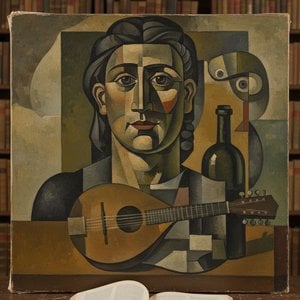
A Black Pedestal

Explore Georges Braque's 'The Pedestal' (1938), a stunning example of Analytical Cubism. This fragmented still life features musical instruments in muted tones, offering a unique blend of abstraction and contemplation. Hand-painted reproductions avai

जॉर्ज ब्राक (1882-1963) एक फ्रांसीसी चित्रकार थे जिन्होंने पिकासो के साथ मिलकर क्यूबिज्म आंदोलन को जन्म दिया। 'हाउसेस एट ल'एस्ताक' जैसी उत्कृष्ट कृतियों के लिए जाने जाते हैं, उन्होंने कला में परिप्रेक्ष्य और प्रतिनिधित्व की पारंपरिक धारणाओं को चुनौती दी।

गिक्ली / आर्ट प्रिंट

तेज़ उत्पादन और विभिन्न फिनिश विकल्पों के साथ म्यूजियम-क्वालिटी गिकली (giclée) या कैनवस प्रिंट। (हाथ से बनी पेंटिंग खरीदें हाथ से बनी पेंटिंग खरीदेंछवि खरीदें छवि खरीदें)

P118B $10
P118H $10
P118W $10
P438Z $10
P508JH $12
P508YH $12
P805H $10
P805Z $10
P919BZ $10
P919G $10
P919XJ $10
P959ZH $10
P968JZ $12
W106C $8
W218G $10
W218JH $8
W218Y $10
W307PJ $10
W316G $10
W316PJ $8
W316Y $10
W398PJ $8
W4111J $10
W500HY $15
W500JH $15
W692G $12
W849H $8
W940BG $15
W953PJ $8

मानक
कस्टम
CM
INCH

कलाकृति के मूल अनुपात से मेल खाने वाले हमारे पूर्व निर्धारित आकारों में से चुनें।

चौड़ाई
ऊँचाई

आप किसी विशिष्ट फ्रेम या स्थान के अनुसार अपने स्वयं के आयाम (dimensions) दर्ज कर सकते हैं। यदि आपके द्वारा चुना गया आकार मूल छवि के अनुपात से मेल नहीं खाता है, तो हम कलाकृति को क्रॉप कर देंगे या मिरर किए गए या सॉलिड-फिल किनारे के साथ छवि का विस्तार करेंगे। उत्पादन शुरू होने से पहले आपकी स्वीकृति के लिए एक डिजिटल मॉकअप भेजा जाएगा।
कृपया ध्यान दें कि स्क्रीन पर दिखने वाला प्रीव्यू वास्तविक क्रॉपिंग या विस्तार को नहीं दर्शाता है। केवल मॉकअप ही अंतिम संरचना को सटीक रूप से दिखाएगा।
हालाँकि कस्टम आकार उपलब्ध हैं, फिर भी हम मूल अनुपात बनाए रखने के लिए पूर्व-निर्धारित सूची में से एक आयाम चुनने की सलाह देते हैं।

विश्वव्यापी डिलीवरी (), मानक 4/5 सप्ताह के बजाय मात्र 2 सप्ताह में। (4 सितमबर)

why_choose_icon
दुनिया भर में मुफ़्त एक्सप्रेस शिपिंग
why_choose_icon
उच्च गुणवत्ता वाला लिनेन कैनवास
why_choose_icon
पूर्ण शिपिंग बीमा
why_choose_icon
सीमा शुल्क और आयात कर वापसी की गारंटी
why_choose_icon
सटीक रंग मिलान की गारंटी
why_choose_icon
60-दिन की वापसी नीति (केवल दोषों के लिए)
why_choose_icon
100% पैसे वापसी की गारंटी
why_choose_icon
थोक छूट का लाभ

कुल कीमत

$ 68

reproduction

A Black Pedestal

गिक्ली / आर्ट प्रिंट

प्रतिकृति का आकार

-

कुल देय राशि

$ 68

प्रमुख विशेषताएँ

  • Subject or theme: Still Life
  • Movement: Cubism
  • Notable elements or techniques: Fragmented geometric shapes
  • Medium: Oil on Canvas
  • Year: 1919
  • Artistic style: Analytical Cubism
  • Influences: Paul Cézanne

कला प्रश्नोत्तरी

प्रत्येक प्रश्न का केवल एक ही सही उत्तर है।

प्रश्न 1:
What artistic movement is Georges Braque’s ‘A Black Pedestal’ primarily associated with?
प्रश्न 2:
The painting depicts a still life featuring musical instruments. What is the dominant stylistic approach employed by Braque in this piece?
प्रश्न 3:
What material was used to create ‘A Black Pedestal’?
प्रश्न 4:
The painting’s composition emphasizes disorder and chaos. What artistic technique contributes to this effect?
प्रश्न 5:
Georges Braque collaborated closely with Pablo Picasso during the Cubist period. How did their artistic styles differ?

The Architecture of Silence: Deconstructing Braque’s Vision

To encounter Georges Braque’s “A Black Pedestal” is to step into a world where the boundaries between object and space begin to dissolve. Painted during a period of profound artistic maturity, this work serves as a masterful window into the heart of Cubism—a movement that sought not to mirror the world, but to reconstruct it through an intellectual lens. At first glance, the composition presents a stark, commanding black pedestal, yet this central anchor supports much more than mere physical weight; it holds a collection of musical instruments—a violin, cello, clarinet, and trumpet—rendered in a way that defies traditional perspective. The painting does not merely show us these objects; it invites us to experience their fragmented essence, pulling the viewer into a rhythmic dance of planes and muted tonal harmonies.

The brilliance of this piece lies in its ability to transform the mundane into the monumental. Braque, whose early life was shaped by the practical precision of his family’s trade as house painters and decorators, brings an unparalleled sensitivity to structure and form. In “A Black Pedestal,” we see the legacy of Analytical Cubism at its most potent. Rather than relying on the fleeting light of Impressionism, Braque employs a meticulous dissection of reality. He breaks down the solid forms of the instruments and the pedestal into constituent geometric planes, creating a sense of depth that is paradoxically flat and multidimensional. This technique forces the eye to wander, reconstructing the scene piece by piece, much like a melody being assembled from individual notes.

A Symphony of Form and Fragmented Reality

Beyond its technical prowess, the artwork carries a profound emotional and symbolic resonance. The choice of musical instruments is far from accidental; music, like Cubism, relies on the relationship between distinct parts to create a cohesive whole. There is a quiet, almost meditative tension within the composition—a sense of "ordered chaos" where the arrangement of a chair, a bowl, or a spoon feels both spontaneous and mathematically precise. The muted color palette, dominated by earthy tones and deep blacks, strips away the distraction of vibrant color to focus our attention on the structural rhythm of the piece. This restraint creates an atmosphere of sophisticated introspection, making it a work that demands slow, contemplative viewing.

For the discerning collector or the interior designer, “A Black Pedestal” offers more than just aesthetic beauty; it provides a focal point of intellectual depth. Its large-scale presence (75 x 129 cm) and commanding subject matter make it an ideal centerpiece for modern, minimalist, or avant-garde interiors. A high-quality reproduction of this masterpiece allows the complex interplay of light and shadow to breathe within a contemporary space, adding a layer of historical gravity and artistic sophistication. It is a piece that does not merely decorate a wall; it initiates a dialogue between the history of modernism and the contemporary soul, reminding us that even in fragmentation, there is a profound and enduring harmony.


कलाकार का जीवन परिचय

जॉर्जेस ब्राक: आधुनिक कला के एक पथप्रदर्शक

जॉर्जेस ब्राक, जिनका जन्म 1882 में अर्जेंटीनाइल, फ्रांस में हुआ था, बीसवीं सदी के सबसे प्रभावशाली कलाकारों में से एक थे। उनकी यात्रा एक साधारण घर-चित्रकार के बेटे से शुरू हुई, लेकिन जल्द ही उन्होंने कला की दुनिया में अपनी पहचान बनाई। शुरुआती दिनों में, ब्राक ने इंप्रेशनिस्ट शैली का अनुसरण किया, लेकिन 1905 में फाविज़्म (Fauvism) के प्रभाव में आने के बाद उनका काम एक नया मोड़ ले गया। हेनरी मैटिस और आंद्रे डेरेन जैसे कलाकारों के साथ काम करते हुए, उन्होंने रंगों के प्रयोग से कला को नई ऊंचाइयों पर पहुंचाया। हालांकि, ब्राक की रचनात्मकता यहीं नहीं रुकी; उन्होंने पॉल सेज़ान के कार्यों का गहन अध्ययन किया, जिससे उन्हें ज्यामितीय रूपों और बहु-दृष्टिकोणों में रुचि पैदा हुई – यह एक ऐसा मोड़ था जिसने उन्हें पाब्लो पिकासो के साथ मिलकर क्यूबिज्म (Cubism) नामक एक क्रांतिकारी कला आंदोलन की शुरुआत करने के लिए प्रेरित किया।

क्यूबिज्म का जन्म: पिकासो के साथ साझेदारी

ब्राक और पिकासो की साझेदारी आधुनिक कला के इतिहास में एक महत्वपूर्ण अध्याय है। 1907 से लेकर प्रथम विश्व युद्ध तक, इन दोनों कलाकारों ने मिलकर काम किया और क्यूबिज्म को आकार दिया। उन्होंने वस्तुओं को खंडों में विभाजित करके उन्हें विभिन्न दृष्टिकोणों से चित्रित करना शुरू कर दिया, जिससे पारंपरिक परिप्रेक्ष्य का भ्रम टूट गया। उनके शुरुआती कार्यों में "हाउस एट ल'एस्ताक" (Houses at L'Estaque) जैसे चित्रों में भूरे और हरे रंग के सीमित उपयोग ने उनकी कला में एक विशेष आकर्षण जोड़ा। 1909 के आसपास, उन्होंने मिलकर काम करते हुए एक-दूसरे की शैलियों को इतना प्रभावित किया कि उनके कार्यों को अलग करना मुश्किल हो गया था। यह साझेदारी न केवल कलात्मक रूप से महत्वपूर्ण थी, बल्कि इसने क्यूबिज्म को एक नई दिशा दी और इसे दुनिया भर में फैलाया।

कोलाज का नवाचार: कला में वास्तविकता का समावेश

क्यूबिज्म के विकास में ब्राक का सबसे महत्वपूर्ण योगदान कोलाज (collage) का प्रयोग था। 1912 में, उन्होंने अखबार की क्लिपिंग और अन्य रोजमर्रा की वस्तुओं को अपने चित्रों में शामिल करना शुरू कर दिया। यह नवाचार कला और जीवन के बीच की रेखाओं को धुंधला करता है और पारंपरिक चित्रकला की सीमाओं को चुनौती देता है। *पापियर कॉले* (papier collé) नामक तकनीक का उपयोग करके, ब्राक ने अपनी रचनाओं में बनावट और गहराई जोड़ी, जिससे दर्शक वास्तविकता और प्रतिनिधित्व के बीच के संबंध पर विचार करने के लिए मजबूर हो गए। यह प्रयोग न केवल क्यूबिज्म को आगे बढ़ाया बल्कि पॉप आर्ट जैसे भविष्य के कला आंदोलनों के लिए भी मार्ग प्रशस्त किया।

युद्ध के बाद का विकास: शांत चिंतन और व्यक्तिगत अभिव्यक्ति

प्रथम विश्व युद्ध ने ब्राक की रचनात्मक यात्रा में एक महत्वपूर्ण विराम दिया। युद्ध में उनकी भागीदारी ने उन्हें गहरे रूप से प्रभावित किया, जिसके परिणामस्वरूप उनके बाद के कार्यों में अधिक व्यक्तिगत और चिंतनशील विषयों का उदय हुआ। युद्ध के बाद, उन्होंने शास्त्रीय रचनाओं और स्थिर जीवन (still life) में रुचि दिखाई। उनके परिदृश्य और आंतरिक दृश्य शांत वातावरण और रंगों के सूक्ष्म सामंजस्य द्वारा चिह्नित थे। ब्राक ने अपनी कला में ज्यामितीय प्रभावों को बनाए रखा, लेकिन उन्होंने अधिक भावनात्मक गहराई और व्यक्तिगत अभिव्यक्ति को जोड़ा। उनकी कला अब केवल एक बौद्धिक प्रयोग नहीं थी, बल्कि यह मानवीय अनुभव की गहरी समझ का प्रतिबिंब भी थी।

विरासत: आधुनिक कला पर प्रभाव

जॉर्जेस ब्राक की विरासत आधुनिक कला पर उनके गहरे प्रभाव में निहित है। उन्होंने न केवल क्यूबिज्म के विकास में महत्वपूर्ण भूमिका निभाई, बल्कि उन्होंने कलात्मक अभिव्यक्ति के नए तरीकों को भी खोजा। उनकी साझेदारी पाब्लो पिकासो के साथ और कोलाज का उनका नवाचार कला इतिहास में हमेशा याद किया जाएगा। ब्राक की कला ने अनगिनत कलाकारों को प्रेरित किया है और आधुनिक कला के पाठ्यक्रम को आकार दिया है। वे एक सच्चे पथप्रदर्शक थे जिन्होंने कला को नई ऊंचाइयों पर पहुंचाया और हमें दुनिया को देखने के नए तरीके सिखाए।

प्रमुख कृतियाँ

  • हाउस एट ल'एस्ताक (Houses at L'Estaque)
  • द पेशेंस (The Patience)
  • वायोलिन एंड पैलेट (Violin and Palette)
  • मंडोला (Mandola)

प्रभाव और प्रेरणाएँ

  • प्रभावित: हेनरी मैटिस, आंद्रे डेरेन
  • प्रेरणा: पॉल सेज़ान
  • कलात्मक आंदोलन: क्यूबिज्म, फाविज़्म
जॉर्ज ब्राक

जॉर्ज ब्राक

1882 - 1963 , फ्रांस

मुख्य तथ्य

  • कलात्मक शैली: घनवाद, प्रभाववाद
  • जन्म तिथि: 13 मई 1882
  • जन्म स्थान: आर्गेंत्यूइल, फ्रांस
  • पूरा नाम: जॉर्ज ब्राक
  • प्रभावित आंदोलन:
    • पाब्लो पिकासो
    • आधुनिक कला
  • प्रभावित कलाकार:
    • हेनरी मैटिस
    • आंद्रे डेरेन
    • पॉल सेज़ान
  • प्रमुख कलाकृतियाँ:
    • ल'एस्ताक के घर
    • धैर्य
    • वायलिन और पैलेट
  • मृत्यु तिथि: 31 अगस्त 1963
  • राष्ट्रीयता: फ्रांसीसी
विषयों, शैलियों और विशेषताओं के आधार पर व्यवस्थित कलाकृतियों का अन्वेषण करें।