पूर्वावलोकन देखें AR में देखें हाथ से बनी पेंटिंग खरीदें डिजिटल इमेज पर स्विच करें साझा करें
विस्तृत विवरण मार्गदर्शिका पसंदीदा में जोड़ें डाउनलोड करें समान कलाकृतियाँ एक्स-रे स्लाइड शो देखें आंकड़े

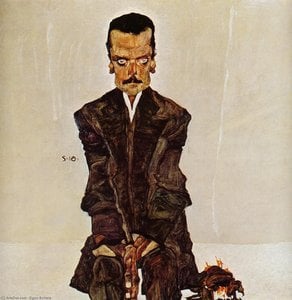
untitled (8005)

Egon Schiele’s ‘Death and the Maiden,’ painted in 1915, confronts viewers with unsettling imagery—death intertwined with feminine beauty—demonstrating Schiele's exploration of psychological anxieties and erotic fascination during WWI. Exhibited at Belvedere Museum, Vienna.

एगॉन शील, ऑस्ट्रियाई अभिव्यक्तिवादी चित्रकार, अपनी तीव्र भावनाओं और मनोवैज्ञानिक चित्रों के लिए जाने जाते हैं। उनकी कला में मृत्यु, कामुकता और अकेलेपन जैसे विषयों को दर्शाया गया है।

गिक्ली / आर्ट प्रिंट

तेज़ उत्पादन और विभिन्न फिनिश विकल्पों के साथ म्यूजियम-क्वालिटी गिकली (giclée) या कैनवस प्रिंट। ( हाथ से बनी पेंटिंग खरीदें डिजिटल इमेज पर स्विच करें)

मानक
कस्टम
CM
INCH

कलाकृति के मूल अनुपात से मेल खाने वाले हमारे पूर्व निर्धारित आकारों में से चुनें।

चौड़ाई
ऊँचाई

आप किसी विशिष्ट फ्रेम या स्थान के अनुसार अपने स्वयं के आयाम (dimensions) दर्ज कर सकते हैं। यदि आपके द्वारा चुना गया आकार मूल छवि के अनुपात से मेल नहीं खाता है, तो हम कलाकृति को क्रॉप कर देंगे या मिरर किए गए या सॉलिड-फिल किनारे के साथ छवि का विस्तार करेंगे। उत्पादन शुरू होने से पहले आपकी स्वीकृति के लिए एक डिजिटल मॉकअप भेजा जाएगा।
कृपया ध्यान दें कि स्क्रीन पर दिखने वाला प्रीव्यू वास्तविक क्रॉपिंग या विस्तार को नहीं दर्शाता है। केवल मॉकअप ही अंतिम संरचना को सटीक रूप से दिखाएगा।
हालाँकि कस्टम आकार उपलब्ध हैं, फिर भी हम मूल अनुपात बनाए रखने के लिए पूर्व-निर्धारित सूची में से एक आयाम चुनने की सलाह देते हैं।

विश्वव्यापी डिलीवरी (), मानक 4/5 सप्ताह के बजाय मात्र 2 सप्ताह में। (22 सितमबर)

why_choose_icon
दुनिया भर में मुफ़्त एक्सप्रेस शिपिंग
why_choose_icon
उच्च गुणवत्ता वाला लिनेन कैनवास
why_choose_icon
पूर्ण शिपिंग बीमा
why_choose_icon
सीमा शुल्क और आयात कर वापसी की गारंटी
why_choose_icon
सटीक रंग मिलान की गारंटी
why_choose_icon
100-दिन की वापसी नीति (केवल दोषपूर्ण होने पर)
why_choose_icon
100% पैसे वापसी की गारंटी
why_choose_icon
थोक छूट का लाभ

कुल कीमत

$ 68

reproduction

untitled (8005)

गिक्ली / आर्ट प्रिंट

प्रतिकृति का आकार

-

कुल देय राशि

$ 68

प्रमुख विशेषताएँ

  • Medium: Oil on canvas
  • Artistic style: Psychological realism
  • Artist: Egon Schiele
  • Movement: Expressionism
  • Title: untitled (8005)
  • Dimensions: 150 x 180 cm
  • Notable elements or techniques: Monk's robe; erotic undertones

कला प्रश्नोत्तरी

प्रत्येक प्रश्न का केवल एक ही सही उत्तर है।

प्रश्न 1:
What is the primary subject matter of “untitled (8005)”?
प्रश्न 2:
The dress depicted in the painting is characterized by:
प्रश्न 3:
What artistic movement is Egon Schiele primarily associated with?
प्रश्न 4:
According to the description, what is the woman’s posture conveying?
प्रश्न 5:
What color dominates the background of “untitled (8005)”?

Egon Schiele’s “Death and the Maiden”: A Portrait of Existential Angst

The painting "Death and the Maiden," completed in 1915 by Egon Schiele, stands as one of his most arresting and unsettling masterpieces—a testament to his profound engagement with themes of mortality, erotic desire, and psychological torment. Exhibited prominently at Belvedere Palace in Vienna, it immediately provoked debate upon its unveiling due to its disturbing imagery and unapologetic exploration of human vulnerability. Yet, today, “Death and the Maiden” is universally recognized as a cornerstone of Expressionism and Schiele’s enduring legacy within the art historical canon.
  • Subject Matter: The composition depicts a young woman—likely Schiele's muse Edith Harms—seated in a monastic robe, clutching the skeletal form of death (represented as a man) in her arms. This juxtaposition immediately establishes a tension between life and death, innocence and corruption, mirroring Schiele’s preoccupation with these concepts throughout his oeuvre.
  • Style: Schiele's distinctive Expressionist style is evident in every brushstroke—characterized by distorted figures, angular lines, and a deliberate rejection of academic conventions. He abandons idealized beauty for raw emotion, conveying the artist’s inner turmoil through stylized representation rather than realistic depiction.
  • Technique: Employing oil paint on canvas, Schiele utilizes a technique that prioritizes textural depth and expressive line work. Thick impasto—the application of paint in thick layers—creates palpable physicality within the figures, emphasizing their vulnerability and conveying a sense of claustrophobia. The artist’s meticulous attention to detail contributes to the painting's unsettling realism despite its stylized form.

Historical Context: Trauma and Artistic Response During Wartime Created during the tumultuous years leading up to World War I, “Death and the Maiden” reflects Schiele’s profound anxieties about mortality—fueled by personal tragedy (the death of his sister Elvira) and heightened by the looming threat of conflict. The painting embodies a broader artistic trend toward confronting psychological darkness and exploring themes of suffering and decay—a response to the pervasive atmosphere of dread and uncertainty that gripped Europe at the time. Schiele’s exploration of eroticism alongside death underscores the artist's fascination with the darker aspects of human experience, mirroring anxieties prevalent in Viennese society during this period.

Symbolism: Death as Eros – A Complex Relationship The central motif—the woman clutching the corpse of a man—represents a complex interplay between death and erotic desire—a recurring theme in Schiele’s art. The deceased figure symbolizes vulnerability, decay, and ultimately, transcendence—while the woman embodies life force, passion, and an unsettling fascination with mortality. The monk's robe serves as a visual shorthand for spiritual contemplation yet simultaneously underscores the painting’s preoccupation with physicality and sexuality. Schiele skillfully employs chiaroscuro—the dramatic contrast between light and dark—to heighten emotional intensity and emphasize the symbolic significance of each element within the composition.

Technique: Expressionist Line – Bold Strokes and Textured Surfaces

Schiele’s distinctive artistic style is characterized by bold, expressive lines—often angular and distorted—that convey raw emotion and psychological turmoil. He employs a technique known as impasto—applying paint thickly onto the canvas—creating textured surfaces that capture the physicality of his vision. Schiele's masterful use of color—primarily muted reds, browns, and yellows—contributes to the painting’s melancholic mood and reinforces its symbolic resonance. The artist meticulously renders anatomical detail with unsettling precision—reflecting a preoccupation with human form and exploring themes of vulnerability and eroticism—demonstrating an unwavering commitment to conveying psychological depth through visual representation.

Historical Context: Vienna at the Turn of the Century – Anxiety and Artistic Innovation

Egon Schiele’s Death and the Maiden emerged from Vienna at the turn of the century, a city grappling with profound social and intellectual upheaval—the Austro-Hungarian Empire was crumbling under internal pressures, while Sigmund Freud's psychoanalytic theories were reshaping understandings of human consciousness. Expressionism—a movement that sought to depict inner emotional experience rather than objective reality—was gaining momentum in Europe, fueled by anxieties about modernity and the horrors of war. Schiele’s work aligns with this broader artistic trend—reflecting a preoccupation with mortality, sexuality, and psychological torment—yet distinguishes itself through its uncompromising honesty and visceral intensity. The painting's genesis coincided with Schiele's military service during World War I—a period marked by widespread trauma and disillusionment—underscoring the artist’s engagement with pressing social concerns and his exploration of existential themes.

Emotional Impact: Confrontation with Mortality – A Portrait of Psychological Depth

Death and the Maiden stands as a testament to Schiele's masterful ability to convey profound psychological depth—a confrontation with mortality rendered in unsettling yet undeniably beautiful form. The painting’s stark composition—characterized by angular lines, muted colors, and an almost claustrophobic intimacy—immediately draws the viewer into a realm of emotional vulnerability. Schiele eschews conventional romantic conventions—rejecting idealized beauty in favor of raw physicality—capturing the essence of human experience with unflinching precision. The woman's posture—clutching death as her lover—symbolizes not merely physical demise but also the inescapable anxieties surrounding loss, desire, and existential uncertainty. Schiele’s distinctive technique—employing a rapid brushstroke and layering pigments to achieve textural richness—further enhances the painting’s expressive power. The result is an artwork that transcends mere visual representation—provoking contemplation on themes of life, death, and the human condition. It remains a hauntingly evocative image, resonating with viewers across generations who recognize its enduring exploration of psychological complexity.

कलाकार का जीवन परिचय

एगॉन शील: ऑस्ट्रियाई अभिव्यक्तिवादी चित्रकार का जीवन और कला

एगॉन लियो एडॉल्फ लुडविग शील (1890-1918) एक ऐसे कलाकार थे जिन्होंने अपनी तीव्र, भावनात्मक रूप से आवेशित चित्रों और रेखाचित्रों के माध्यम से 20वीं सदी की शुरुआत में ऑस्ट्रियाई कला पर अमिट छाप छोड़ी। टूलन में जन्मे, शील का जीवन प्रारंभिक नुकसान और व्यक्तिगत संघर्षों से चिह्नित था, जिसने उनकी कला को गहराई से प्रभावित किया। उनके पिता के शीघ्र निधन और बाद में उनकी बहन की मृत्यु ने उन्हें मृत्यु दर और मानव अस्तित्व की क्षणभंगुरता के प्रति एक गहन संवेदनशीलता प्रदान की, जो उनके कार्यों में बार-बार उभरती है। शील का बचपन पारंपरिक स्थिरता से रहित था, लेकिन इसने उनमें एक मजबूत स्वतंत्र भावना पैदा की। कम उम्र से ही उन्होंने ड्राइंग में असाधारण प्रतिभा दिखाई, हालांकि यह अक्सर उनके पिता द्वारा संदेह के साथ देखा जाता था, जिन्होंने इसे अधिक व्यावहारिक प्रयासों से ध्यान भटकाने के रूप में माना। इन शुरुआती अनुभवों ने उन्हें एक भावनात्मक कच्चापन प्रदान किया जो उनकी कलात्मक अभिव्यक्ति को परिभाषित करेगा, जीवन, मृत्यु और मानव स्थिति के विषयों के साथ निरंतर संघर्ष करते हुए।

वियना का क्रूसिबल: कलात्मक विकास

शील की औपचारिक कला प्रशिक्षण वियना में कुन्स्टगेवेरबुचूले (कला और शिल्प विद्यालय) में शुरू हुआ, लेकिन उन्हें जल्द ही इसकी रूढ़िवादी दृष्टिकोण से निराशा हुई। उन्होंने बाद में अकादमी डेर बिल्डेंडन कुन्स्टन (फाइन आर्ट्स एकेडमी) में स्थानांतरित किया, लेकिन वहां भी वे कठोर शैक्षणिक परंपराओं से निराश हो गए। इस असंतोष ने उन्हें औपचारिक प्रशिक्षण को पूरी तरह से त्यागने के लिए प्रेरित किया, अपने स्वयं के मार्ग को प्रशस्त करते हुए, अपनी कलात्मक दृढ़ विश्वास का प्रमाण। गुस्ताव क्लिमिट का प्रभाव उनके शुरुआती वर्षों में महत्वपूर्ण था; शील ने क्लिमिट की सजावटी शैली और प्रतीकात्मक अन्वेषण की प्रशंसा की, यहां तक कि स्थापित कलाकार से मार्गदर्शन भी प्राप्त किया। हालांकि, शील जल्द ही क्लिमिट के सौंदर्यशास्त्र से अलग हो गए, एक विशिष्ट व्यक्तिगत आवाज विकसित की जो अपनी कच्ची ईमानदारी और मनोवैज्ञानिक तीव्रता द्वारा चिह्नित थी। उन्होंने 1909 में Neues Wiener Kunstgruppe (नया वियना कला समूह) की सह-स्थापना की, खुद को अन्य प्रगतिशील कलाकारों के साथ संरेखित किया जिन्होंने प्रचलित कलात्मक मानदंडों को चुनौती दी। उनके शुरुआती कार्यों, अक्सर परेशान करने वाले चित्र और स्व-चित्रणों ने भावनात्मक उथल-पुथल के शक्तिशाली बयान के रूप में उभरना शुरू कर दिया, जिसमें विकृत आंकड़े और एक स्पष्ट अशांति की भावना थी। ये पेंटिंग केवल भौतिक रूप का प्रतिनिधित्व नहीं थे बल्कि आंतरिक परिदृश्य की खोज थीं - चिंताएं, इच्छाएं और भय जो मानव मन को परेशान करते हैं। उन्होंने उस चीज को चित्रित करने की कोशिश की जिसे वे *देखा* नहीं, बल्कि *महसूस* किया।

कच्ची भावना और निर्भीक सत्य

एगॉन शील की कला अपनी कच्ची ईमानदारी और मनोवैज्ञानिक गहराई के लिए तुरंत पहचानने योग्य है। उन्होंने अक्सर वर्जित माने जाने वाले विषयों - कामुकता, मृत्यु, चिंता, अलगाव - का सामना निर्भीकता से किया। उनकी विशिष्ट शैली में लम्बे आंकड़े, मुड़े हुए आसन और अभिव्यंजक रेखाएं शामिल हैं जो बेचैनी और भावनात्मक तीव्रता की भावना व्यक्त करती हैं। मानव रूप, विशेष रूप से नग्न, उनका प्राथमिक विषय बन गया, आदर्श सौंदर्य के एक वस्तु के रूप में नहीं बल्कि मानव अनुभव की जटिलताओं का पता लगाने के लिए एक बर्तन के रूप में। स्व-चित्रण उनके कार्यों का एक महत्वपूर्ण हिस्सा बनाते हैं, जो उनके आंतरिक जगत की अंतरंग झलक प्रदान करते हैं - अक्सर अकेलापन और आत्म-संदेह से चिह्नित दुनिया। उन्होंने खुद को अनाकर्षक या कमजोर मुद्राओं में चित्रित करने से नहीं हिचकिचाया, जिससे आत्म-जागरूकता और अंतर्दृष्टि के एक गहरे स्तर का खुलासा हुआ। स्व-चित्रों के अलावा, शील ने दूसरों के कई चित्र बनाए, उनकी समानता को एक परेशान करने वाली यथार्थवाद के साथ कैप्चर किया जो सतह के नीचे प्रतीत होता था। उनके परिदृश्य, उनके चित्रात्मक चित्रों की तुलना में कम केंद्रीय होने पर भी, रूप और रंग में उनकी महारत का प्रदर्शन करते हैं, अक्सर उनके चित्रों के समान ही भावनात्मक तीव्रता को दर्शाते हैं। शील के काम में रेखा का उपयोग विशेष रूप से उल्लेखनीय है; यह केवल आकार को परिभाषित करने का एक उपकरण नहीं है बल्कि एक अभिव्यंजक शक्ति है जो भावना और मनोवैज्ञानिक तनाव व्यक्त करती है। *फिसलिस* पौधे जैसे आवर्ती रूपांकनों - इसकी नाजुक, कागजी खोल के साथ मृत्यु और क्षणभंगुरता का प्रतीक - इस मृत्यु दर के प्रति जुनून को और उजागर करते हैं।

समय से पहले एक विरासत: उपलब्धियां और महत्व

सेंसरशिप और कानूनी चुनौतियों का सामना करने के बावजूद - जिसमें नाबालिगों को भ्रष्ट करने के आरोप में संक्षिप्त कारावास भी शामिल है - शील ने वियना के अत्याधुनिक हलकों में मान्यता प्राप्त की। उनके काम ने उस समय के मानदंडों को चुनौती दी, प्रशंसा और आक्रोश दोनों को प्रेरित किया। अपनी समय से पहले मृत्यु के साथ 1918 में 28 वर्ष की आयु में स्पेनिश फ्लू महामारी में उनकी मृत्यु होने तक, उन्होंने खुद को ऑस्ट्रियाई अभिव्यक्तिवाद के एक प्रमुख व्यक्ति के रूप में स्थापित कर लिया था। फिसलिस के साथ स्व-चित्र, एक दूसरे को गले लगाते हुए जोड़ा और क्रुमाऊ के पास Kreuzberg का फील्ड लैंडस्केप जैसे महत्वपूर्ण कार्य उनकी कलात्मक प्रतिभा के प्रमाण के रूप में खड़े हैं। अभिव्यक्तिवादी कलाकारों की अगली पीढ़ी पर उनका प्रभाव निर्विवाद है, विशेष रूप से जो मनोवैज्ञानिक विषयों का पता लगाने और पारंपरिक कलात्मक मानदंडों को चुनौती देने में रुचि रखते हैं। शील का बोल्ड दृष्टिकोण से रूप और विषय वस्तु के प्रति आज भी दर्शकों को आकर्षित करता है, जिससे वे 20वीं सदी की शुरुआत के सबसे महत्वपूर्ण और प्रभावशाली आंकड़ों में से एक बन जाते हैं। उनके चित्रों को अब दुनिया भर के प्रमुख संग्रहालयों के संग्रह में रखा गया है, जिसमें वियना के लेपोल्ड संग्रहालय और चेस्की क्रुम्लोव में एगॉन शील आर्ट सेंटर शामिल हैं, जो उनकी कलात्मक विरासत को सुनिश्चित करते हैं। उन्होंने एक ऐसा काम छोड़ दिया है जो न केवल सौंदर्य की दृष्टि से आकर्षक है बल्कि गहराई से मानवीय भी है - अस्तित्व की जटिलताओं का सामना करने की कला की शक्ति का प्रमाण ईमानदारी, साहस और अटूट दृष्टिकोण के साथ।

  • मुख्य विषय: मृत्यु दर, कामुकता, अलगाव, मनोवैज्ञानिक अशांति।
  • प्रभाव: गुस्ताव क्लिमिट, वियना सेसेशन, व्यक्तिगत आघात।
  • शैली की विशेषताएं: लम्बे आंकड़े, मुड़े हुए आसन, अभिव्यंजक रेखाएं, कच्ची भावना।

एगॉन शील

एगॉन शील

1890 - 1918 , ऑस्ट्रिया

मुख्य तथ्य

  • कलात्मक शैली: अभिव्यक्तिवाद
  • जन्म तिथि: 12 जून 1890
  • जन्म स्थान: टुलन, ऑस्ट्रिया
  • पूरा नाम: एगॉन शील
  • प्रभावित आंदोलन: ['अभिव्यक्तिवाद']
  • प्रभावित कलाकार: ['गुस्ताव क्लिमिट']
  • प्रमुख कलाकृतियाँ:
    • स्व-चित्रित फल
    • मिलन
    • क्षेत्रीय दृश्य
  • मृत्यु तिथि: 31 अक्टूबर 1918
  • राष्ट्रीयता: ऑस्ट्रियाई
विषयों, शैलियों और विशेषताओं के आधार पर व्यवस्थित कलाकृतियों का अन्वेषण करें।